Kirjojen hintavertailu – 12 859 829 kirjaa ja 27 kauppaa

Kirjailija

Suresh Chandra

Kirjat ja teokset yhdessä paikassa: 18 kirjaa, julkaisuja vuosilta 2005–2025, suosituimpiin kuuluu Twin Support Vector Machines. Vertaile teosten hintoja ja tarkista saatavuus suomalaisista kirjakaupoista.

18 kirjaa

Kirjojen julkaisuvuodet: 2005–2025.

Twin Support Vector Machines

Twin Support Vector Machines

Jayadeva; Reshma Khemchandani; Suresh Chandra

Springer International Publishing AG
2018
nidottu
This book provides a systematic and focused study of the various aspects of twin support vector machines (TWSVM) and related developments for classification and regression. In addition to presenting most of the basic models of TWSVM and twin support vector regression (TWSVR) available in the literature, it also discusses the important and challenging applications of this new machine learning methodology. A chapter on “Additional Topics” has been included to discuss kernel optimization and support tensor machine topics, which are comparatively new but have great potential in applications. It is primarily written for graduate students and researchers in the area of machine learning and related topics in computer science, mathematics, electrical engineering, management science and finance.
Twin Support Vector Machines

Twin Support Vector Machines

Jayadeva; Reshma Khemchandani; Suresh Chandra

Springer International Publishing AG
2016
sidottu
This book provides a systematic and focused study of the various aspects of twin support vector machines (TWSVM) and related developments for classification and regression. In addition to presenting most of the basic models of TWSVM and twin support vector regression (TWSVR) available in the literature, it also discusses the important and challenging applications of this new machine learning methodology. A chapter on “Additional Topics” has been included to discuss kernel optimization and support tensor machine topics, which are comparatively new but have great potential in applications. It is primarily written for graduate students and researchers in the area of machine learning and related topics in computer science, mathematics, electrical engineering, management science and finance.
Post Harvest Processing Technology

Post Harvest Processing Technology

Suresh Chandra

New India Publishing Agency
2024
sidottu
Post Harvest Processing Technology provides a practical framework for skill development in agriculture, food processing, and integrated farming systems. It emphasizes hands-on training through instructional farms, model plants, and engineering workshops, enabling learners to master advanced methodologies for producing crops, fruits, vegetables, and other agricultural commodities. The book delves into integrated farming systems, combining fishery, poultry, and livestock production with value-added processing. Internships with private industries and participation in rural development programs enhance practical exposure. Students also gain expertise in project feasibility, record maintenance, inventory management, and enterprise administration. In the food processing sector, the book underscores the significance of quality assurance, safety, and nutrition, emphasizing total quality management to meet health standards. Designed for students and professionals, this resource equips readers with the tools to sustain agricultural productivity, foster rural development, and address the challenges of modern food systems.
MCQ Based Practice Book on Food Technology, Process & Food Engineering

MCQ Based Practice Book on Food Technology, Process & Food Engineering

Suresh Chandra; Shobhi Choudhary; Alka Singh; Amit Kumar

New India Publishing Agency
2024
nidottu
Food Safety Officers (FSOs) areresponsible for analyzing food samples gathered from different places for examination. These professionals examine if there is any suspicious or hazardous material in the ingredients or the food product ensuring the safety of consumers. Many organizations/institutions conduct entrance examination for admission in various disciplines related to food science, dairy science and technology, postharvest technology, food processing technology, agricultural process and food engineering. There are also some competitive examinations such as ICAR-NET/ARS, CSIR-NET, SRF/JRF, GATE and Food Safety Officer by State Public Service Commissions. Hence there is a great need of terminological books covering a lot of important technical words related to Food Science. Every effort has been made to ensure that the information compiles from various sources such as publications and internet sites are accurate and up to date. However, the readers are strictly advised to confirm the data in case of doubt. Mistakes and omissions if any are inadvertent and will be corrected when pointed out by the readers. We request all readers to send their valuable suggestions with regard to the improvement of this book.
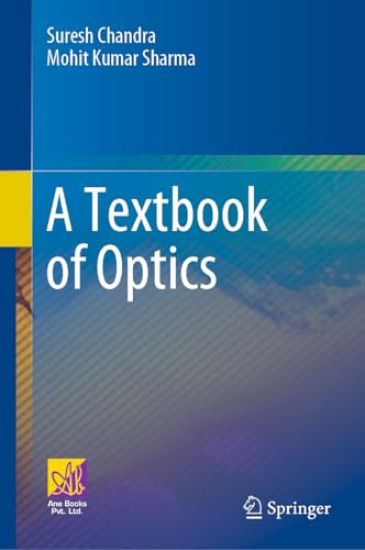
A Textbook of Optics

A Textbook of Optics

Suresh Chandra; Mohit Kumar Sharma

Springer International Publishing AG
2024
sidottu
This book is designed to serve as a textbook for courses offered to upper-undergraduate students enrolled in physics and explains the broad spectrum of optics in a student-friendly way. The textbook covers the entire syllabi of the undergraduate courses being taught at both national and international universities including adequate details of mathematical expressions to help students understand the subject matter. The topics covered in this book are reflection, refraction, cardinal points, interference, Fresnel diffraction, Fraunhofer diffraction, lasers and holography, fiber optics, etc. This book explains each topic in a simple and lucid language with the help of solved problems. Exercises with multiple choice questions have been given at the end of each chapter for self-assessment. The detailed coverage and pedagogical tools make this an ideal textbook for students and researchers enrolled in senior undergraduate and beginning postgraduate physics students.
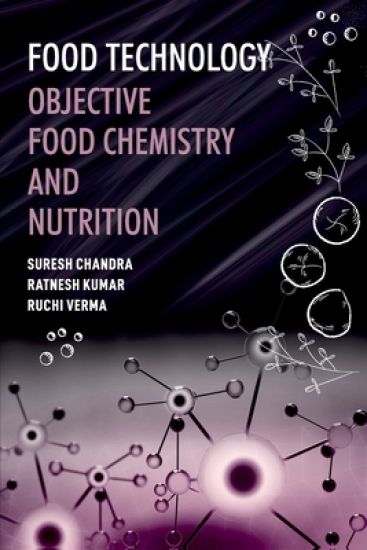
Food Technology

Food Technology

Suresh Chandra; Ratnesh Kumar; Ruchi Verma

New India Publishing Agency
2022
nidottu
The primary aim of the book Food Technology: Objective Food Chemistry and Nutrition is to offer a comprehensive and simplified understanding of the fundamental concepts of Food Chemistry & Nutrition to students studying Food Technology. It comprises 09 chapters, each containing concise notes and multiple-choice questions on various topics such as Carbohydrates, dietary fiber, starch, proteins, lipids, pigments, food flavors, enzymes, nutrition, balanced diets, essential amino acids and essential fatty acids, protein efficiency ratio, water-soluble and fat-soluble vitamins, minerals role in nutrition, co-factors, anti-nutrients, nutraceuticals, and nutrient deficiency diseases. Additionally, it covers chemical and biochemical changes that occur in food during various processing methods. This book is particularly beneficial for students preparing for higher studies or appearing in competitive examinations, such as GATE/NET/ARS/FSSAI, among others. It is also useful for students pursuing Food Processing, Dairy and Food Engineering, Food Science and Technology, Process and Food Engineering, Food Technology, Dairy Science and Technology, Post-Harvest Engineering and Technology, Agricultural Structure and Process Engineering, Horticulture (specialized in Post-Harvest Technology), and Home Science (Food and Nutrition), among other fields. Furthermore, it is helpful for those preparing for competitive examinations, such as ICAR/CSIR/UGC fellowships, NET, ARS, SRF, JRF, and for written exams and interviews for RA/SRF/SMS/Assistant Professor, Food Safety officers, Food inspectors, Public analysts, and national and multinational food process industries, among others.
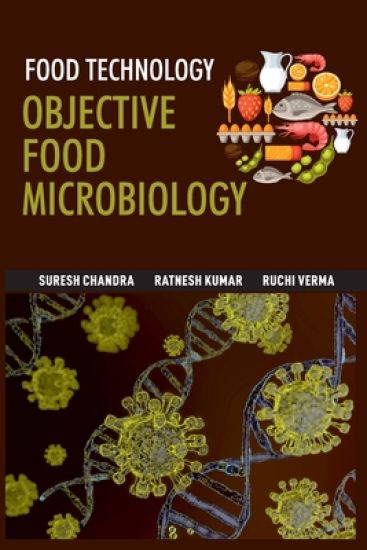
Food Technology

Food Technology

Suresh Chandra; Ratnesh Kumar; Ruchi Verma

New India Publishing Agency
2022
nidottu
The primary goal of Objective Food Technology: Food Microbiology is to offer a comprehensive and accessible understanding of the fundamental concepts of food microbiology to students pursuing a degree in food technology. This book encompasses six chapters that cover essential topics on the syllabus, such as the characteristics of microorganisms, microbial growth kinetics, serial dilution technique, food spoilage, and toxins from microbes, including Staphylococcus, Salmonella, Shigella, Escherichia, Bacillus, Clostridium, and Aspergillus genera. Additionally, the book provides valuable information on fermented foods and beverages, making it an ideal resource for students preparing for competitive examinations such as GATE, NET, ARS, and FSSAI. This book is also beneficial for students pursuing higher studies or those preparing for competitive examinations such as ICAR, CSIR, UGC fellowships, NET, ARS, SRF, JRF, RA, SRF, SMS, Assistant Professor, Food Safety officers, Food inspectors, Public analysts, and national and multinational food process industries.
Are You Interested in Marriage and Family

Are You Interested in Marriage and Family

Suresh Chandra

Balboa Press Au
2021
pokkari
Suresh Chandra had great hopes when he got married, but within two years, he wanted out. More than fifty years later, he is still enjoying a vibrant marriage with the same woman. They're also proud grandparents. In this guide to enjoying marriage, he explains how he did it--- and how you can too Get answers to questions such as: - Why is it so important to be careful with the words you use with your spouse? - In today's world, is the idea of marriage outdated or obsolete? - What do religions say about marriage? - What are the characteristics of a good marriage? Whether you're trying to decide if marriage is for you or you've hit a bump in the road and are wondering if you should stay with your spouse, then you need the challenge, encouragement, and practical aid offered in this book for you to reach your full potential--- and how to enjoy a marriage that lasts.
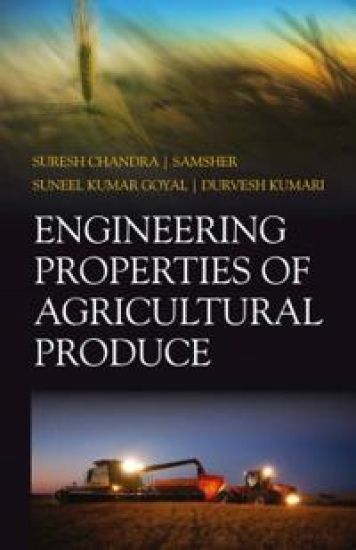
Engineering Properties of Agricultural Produce

Engineering Properties of Agricultural Produce

Suresh Chandra; Suneel Kumar Goyal; Durvesh Kumari

New India Publishing Agency
2019
nidottu
In any agricultural nation, a multitude of agricultural products are cultivated in large quantities, and to manage such quantities during harvest, post-harvest processing, and transportation, various types of equipment are necessary. When designing specific equipment or determining the behavior of products for their handling, physical properties such as size, form, surface area, volume, and density are of utmost importance. The design of cleaning, grading, and separation equipment, for example, is based on the physical properties of seeds such as size, shape, and specific gravity. This book provides a comprehensive understanding of the engineering properties of agricultural produce and combines engineering knowledge with such properties. Each chapter of the book is designed to help students understand the relationship between engineering properties of raw, semi-finished, and processed food products and their desired shelf life and quality. The book discusses fundamental definitions, principles of engineering properties, and their measurement methods, along with recent research findings. It is an excellent resource for self-study and understanding how to analyze experimental data to generate practical information. It is also useful for students who conduct research on engineering properties. The book provides detailed information on methods to measure these properties.
Engineering Properties of Agricultural Produce

Engineering Properties of Agricultural Produce

Suresh Chandra; Suneel Kumar Goyal; Durvesh Kumari

New India Publishing Agency- Nipa
2019
sidottu
In any agricultural country, a large quantity of various types of agricultural commodities are produced, and to handle such quantities during harvest, post-harvest processing, and transportation, various types of equipment are required. In designing specific equipment or determining the behavior of the product during its handling, physical properties such as size, shape, surface area, volume, and density, as well as porosity, play a crucial role. Based on the physical properties of seeds, such as size, shape, and specific gravity, various types of cleaning, grading, and separation equipment are designed. This book aims to provide a fundamental understanding of the engineering properties of agricultural produce and combines engineering knowledge with such properties. Each chapter in the book will assist students in understanding the relationship between engineering properties of raw, semi-finished, and processed food and obtaining products with the desired shelf-life and quality. The book discusses basic definitions, principles of engineering properties, and their measurement methods, along with research findings. It will serve as a valuable resource for students self-study and to gain information on how to analyze experimental data to generate practical information. Additionally, it will benefit students who deal with engineering properties in their research, as it explains in detail the methods to measure these properties.
Fuzzy Portfolio Optimization

Fuzzy Portfolio Optimization

Pankaj Gupta; Mukesh Kumar Mehlawat; Masahiro Inuiguchi; Suresh Chandra

Springer-Verlag Berlin and Heidelberg GmbH Co. K
2016
nidottu
This monograph presents a comprehensive study of portfolio optimization, an important area of quantitative finance. Considering that the information available in financial markets is incomplete and that the markets are affected by vagueness and ambiguity, the monograph deals with fuzzy portfolio optimization models. At first, the book makes the reader familiar with basic concepts, including the classical mean–variance portfolio analysis. Then, it introduces advanced optimization techniques and applies them for the development of various multi-criteria portfolio optimization models in an uncertain environment. The models are developed considering both the financial and non-financial criteria of investment decision making, and the inputs from the investment experts. The utility of these models in practice is then demonstrated using numerical illustrations based on real-world data, which were collected from one of the premier stock exchanges in India. The book addresses both academics and professionals pursuing advanced research and/or engaged in practical issues in the rapidly evolving field of portfolio optimization.
Fuzzy Portfolio Optimization

Fuzzy Portfolio Optimization

Pankaj Gupta; Mukesh Kumar Mehlawat; Masahiro Inuiguchi; Suresh Chandra

Springer-Verlag Berlin and Heidelberg GmbH Co. K
2014
sidottu
This monograph presents a comprehensive study of portfolio optimization, an important area of quantitative finance. Considering that the information available in financial markets is incomplete and that the markets are affected by vagueness and ambiguity, the monograph deals with fuzzy portfolio optimization models. At first, the book makes the reader familiar with basic concepts, including the classical mean–variance portfolio analysis. Then, it introduces advanced optimization techniques and applies them for the development of various multi-criteria portfolio optimization models in an uncertain environment. The models are developed considering both the financial and non-financial criteria of investment decision making, and the inputs from the investment experts. The utility of these models in practice is then demonstrated using numerical illustrations based on real-world data, which were collected from one of the premier stock exchanges in India. The book addresses both academics and professionals pursuing advanced research and/or engaged in practical issues in the rapidly evolving field of portfolio optimization.
Fuzzy Mathematical Programming and Fuzzy Matrix Games

Fuzzy Mathematical Programming and Fuzzy Matrix Games

C. R. Bector; Suresh Chandra

Springer-Verlag Berlin and Heidelberg GmbH Co. K
2010
nidottu
Game theory has already proved its tremendous potential for con?ict resolution problems in the ?elds of Decision Theory and Economics. In the recent past, there have been attempts to extend the results of crisp game theory to those con?ict resolution problems which are fuzzy in nature e.g. Nishizaki and Sakawa [61] and references cited there in. These developments have lead to the emergence of a new area in the literature called fuzzy games. Another area in the fuzzy decision theory, which has been growing very fast is the area of fuzzy mathematical programming and its applications to various branches of sciences, Engineering and Management. In the crisp scenario, there exists a beautiful relationship between two person zero sum matrix game theory and duality in linear p- gramming. It is therefore natural to ask if something similar holds in the fuzzy scenario as well. This discussion essentially constitutes the core of our presentation. The objective of this book is to present a systematic and focussed study of the application of fuzzy sets to two very basic areas of decision theory, namely Mathematical Programming and Matrix Game Theory.
Fuzzy Mathematical Programming and Fuzzy Matrix Games

Fuzzy Mathematical Programming and Fuzzy Matrix Games

C. R. Bector; Suresh Chandra

Springer-Verlag Berlin and Heidelberg GmbH Co. K
2005
sidottu
Game theory has already proved its tremendous potential for con?ict resolution problems in the ?elds of Decision Theory and Economics. In the recent past, there have been attempts to extend the results of crisp game theory to those con?ict resolution problems which are fuzzy in nature e.g. Nishizaki and Sakawa [61] and references cited there in. These developments have lead to the emergence of a new area in the literature called fuzzy games. Another area in the fuzzy decision theory, which has been growing very fast is the area of fuzzy mathematical programming and its applications to various branches of sciences, Engineering and Management. In the crisp scenario, there exists a beautiful relationship between two person zero sum matrix game theory and duality in linear p- gramming. It is therefore natural to ask if something similar holds in the fuzzy scenario as well. This discussion essentially constitutes the core of our presentation. The objective of this book is to present a systematic and focussed study of the application of fuzzy sets to two very basic areas of decision theory, namely Mathematical Programming and Matrix Game Theory.