Kirjojen hintavertailu – 12 903 725 kirjaa ja 27 kauppaa
Kirjailija
Susan B. Neuman
Kirjat ja teokset yhdessä paikassa: 31 kirjaa, julkaisuja vuosilta 1995–2021, suosituimpiin kuuluu From Words to Wisdom. Vertaile teosten hintoja ja tarkista saatavuus suomalaisista kirjakaupoista.
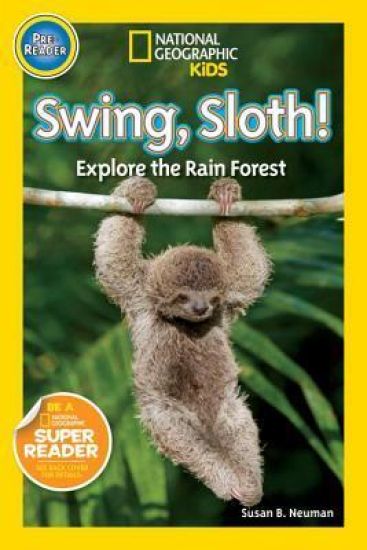
Come along on an adventure through the rain forest. Along the way, you'll meet new friends big and small, see amazing sights, and learn all about the creatures that make their home in the rain forest. Told in simple yet lively text built with sight words and using picture icons to aid reading, National Geographic Pre-readers will enchant kids just beginning their journey with books.
Vocabulary forms a relentless divide between children who succeed and those who do not. This divide is often between poor children and their privileged counterparts. Without vocabulary knowledge, children cannot interpret text meaningfully or respond in ways that enable them to fully participate in classroom discussions. All About Words is a practical guide designed to help early childhood teachers take advantage of the unique opportunity provided by the Common Core State Standards. It offers strategies for planning and presenting vocabulary instruction and for monitoring children's word learning progress, along with helpful appendices that provide specific guidance on which words to teach. Each chapter includes ideas to support home-school connections, recognising the important role parents play in children's vocabulary development. Throughout, the authors encourage readers to examine day-to-day classroom issues, making it an ideal resource for professional development.
Vocabulary forms a relentless divide between children who succeed and those who do not. This divide is often between poor children and their privileged counterparts. Without vocabulary knowledge, children cannot interpret text meaningfully or respond in ways that enable them to fully participate in classroom discussions. All About Words is a practical guide designed to help early childhood teachers take advantage of the unique opportunity provided by the Common Core State Standards. It offers strategies for planning and presenting vocabulary instruction and for monitoring children's word learning progress, along with helpful appendices that provide specific guidance on which words to teach. Each chapter includes ideas to support home-school connections, recognising the important role parents play in children's vocabulary development. Throughout, the authors encourage readers to examine day-to-day classroom issues, making it an ideal resource for professional development.
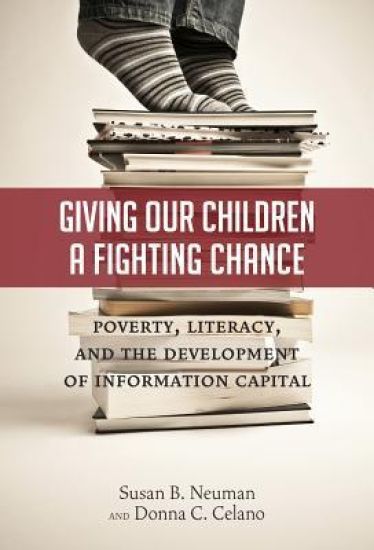
This is a compelling, eye-opening portrait of two communities in Philadelphia with drastically different economic resources. Over the course of their 10-year investigation, the authors of this important new work came to understand that this disparity between affluence and poverty has created a knowledge gap—far more important than mere achievement scores—with serious implications for students’ economic prosperity and social mobility. At the heart of this knowledge gap is the limited ability of students from poor communities to develop information capital. This moving book takes you into the communities in question to meet the students and their families, and by doing so provides powerful insights into the role that literacy can play in giving low-income students a fighting chance.
This is a compelling, eye-opening portrait of two communities in Philadelphia with drastically different economic resources. Over the course of their 10-year investigation, the authors of this important new work came to understand that this disparity between affluence and poverty has created a knowledge gap—far more important than mere achievement scores—with serious implications for students’ economic prosperity and social mobility. At the heart of this knowledge gap is the limited ability of students from poor communities to develop information capital. This moving book takes you into the communities in question to meet the students and their families, and by doing so provides powerful insights into the role that literacy can play in giving low-income students a fighting chance.
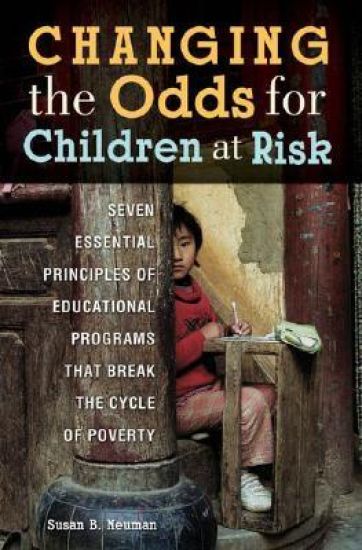
Schools, today, are in the midst of the most major, costly educational reform movement in their history as they grapple with the federal mandates to leave no children behind, says author Susan B. Neuman, former Assistant Secretary for Elementary and Secondary Education under President George W. Bush. Although some efforts for investing resources will be substantially more productive than others, there is little evidence that, despite many heroic attempts to beat the odds, any of these efforts will close more than a fraction of the differences in achievement for poor minority children and their middleclass peers. As Neuman explains in this insightful, revealing book, schools will fail, not due to the soft bigotry of low expectations, but because there are multitudes of children growing up in circumstances that make them highly vulnerable. Children who come to school from dramatically unequal circumstances leave school with similarly unequal skills and abilities. In these pages, however, Neuman shows how the odds can be changed, how we can break the cycle of poverty and disadvantage for children at risk After laying the critical groundwork for the need for change—excessive waste with little effect—this book provides a vivid portrait of changing the odds for high-poverty children. Describing how previous reforms have missed the mark, it offers a framework based on seven essential principles for implementing more effective programs and policies. Building on successes while being fiscally responsible is a message that has been shown to have wide bipartisan appeal, embraced by both liberals and conservatives. Following Neuman's essential principles, chapters describe programs for changing the odds for children, when the cognitive gaps are beginning to form, in these earliest years of their lives. In a highly readable style, Neuman highlights programs that are making a difference in children's lives across the country, weaving together narratives that tell a compelling story of hope and promise for our most disadvantaged children.
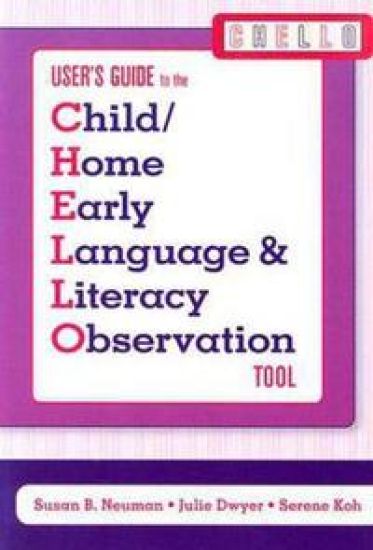
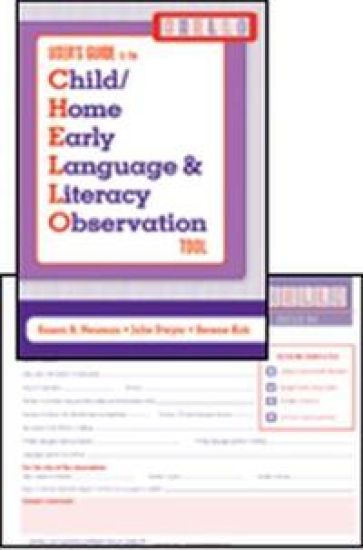
Developed by the nationally respected expert who helped establish Reading First and Early Reading First, ""CHELLO"" is the only observation tool specifically designed to rate the early literacy environment in home-based child care settings. A reliable, field-tested tool derived from the bestselling, classroom-focused ""ELLCO"", ""CHELLO"" has been carefully tailored to assess environments that include children of all different ages, from birth to 5 years. Administrators, program directors, and researchers will use ""CHELLO"" to develop accurate profiles of materials and practices in family/group child care settings, help providers improve their literacy supports and their interactions with children, and measure changes in the quality of environments over time. Shaped by extensive research on effective child care and literacy practices, the CHELLO Tool is easy for professionals with a solid background in early childhood education to use. In less than 2 hours, observers will examine the care provider's methods and interactions. The six-question Provider Interview gives users insight into how care providers interact with children, plan schedules, create learning opportunities, communicate with families, and monitor child progress. Get a quick ""big picture"" view of the environment. With the brief Literacy Environment Checklist, users will evaluate the availability and organization of books, writing materials, toys, and technology. Conduct an in-depth observation. The three-part Group/Family Observation helps users gather detailed information about the physical environment (including cleanliness, furnishings, and the daily schedule), support for learning (such as adult affect and language interactions between care providers and children), and adult teaching strategies (including vocabulary building, verbal encouragement, storytelling, and writing activities). Score the Tool in minutes with the simple two-page Score Form. The complete ""CHELLO"" includes the Tool and a User's Guide with explicit instructions on conducting the observation, photographs that illustrate successful and unsuccessful environments, practical strategies to support literacy development in home-based settings, and the psychometric properties of CHELLO. With this one-of-a-kind tool - also ideal for use in home visiting and family literacy programs - home-based child care providers can make progress toward ensuring high-quality literacy environments that get young children ready for future academic success.
Developed by the nationally respected expert who helped establish Reading First and Early Reading First, ""CHELLO"" is the only observation tool specifically designed to rate the early literacy environment in home-based child care settings. A reliable, field-tested tool derived from the bestselling, classroom-focused ""ELLCO"", ""CHELLO"" has been carefully tailored to assess environments that include children of all different ages, from birth to 5 years. Administrators, program directors, and researchers will use ""CHELLO"" to develop accurate profiles of materials and practices in family/group child care settings, help providers improve their literacy supports and their interactions with children, and measure changes in the quality of environments over time. Shaped by extensive research on effective child care and literacy practices, the CHELLO Tool is easy for professionals with a solid background in early childhood education to use. In less than 2 hours, observers will examine the care provider's methods and interactions. The six-question Provider Interview gives users insight into how care providers interact with children, plan schedules, create learning opportunities, communicate with families, and monitor child progress. Get a quick ""big picture"" view of the environment. With the brief Literacy Environment Checklist, users will evaluate the availability and organization of books, writing materials, toys, and technology. Conduct an in-depth observation. The three-part Group/Family Observation helps users gather detailed information about the physical environment (including cleanliness, furnishings, and the daily schedule), support for learning (such as adult affect and language interactions between care providers and children), and adult teaching strategies (including vocabulary building, verbal encouragement, storytelling, and writing activities). Score the Tool in minutes with the simple two-page Score Form. The complete ""CHELLO"" includes the Tool and a User's Guide with explicit instructions on conducting the observation, photographs that illustrate successful and unsuccessful environments, practical strategies to support literacy development in home-based settings, and the psychometric properties of CHELLO. With this one-of-a-kind tool - also ideal for use in home visiting and family literacy programs - home-based child care providers can make progress toward ensuring high-quality literacy environments that get young children ready for future academic success.
Developed by the nationally respected expert who helped establish Reading First and Early Reading First, ""CHELLO"" is the only observation tool specifically designed to rate the early literacy environment in home-based child care settings. A reliable, field-tested tool derived from the bestselling, classroom-focused ""ELLCO"", ""CHELLO"" has been carefully tailored to assess environments that include children of all different ages, from birth to 5 years. Administrators, program directors, and researchers will use ""CHELLO"" to develop accurate profiles of materials and practices in family/group child care settings, help providers improve their literacy supports and their interactions with children, and measure changes in the quality of environments over time. Shaped by extensive research on effective child care and literacy practices, the CHELLO Tool is easy for professionals with a solid background in early childhood education to use. In less than 2 hours, observers will examine the care provider's methods and interactions. The six-question Provider Interview gives users insight into how care providers interact with children, plan schedules, create learning opportunities, communicate with families, and monitor child progress. Get a quick ""big picture"" view of the environment. With the brief Literacy Environment Checklist, users will evaluate the availability and organization of books, writing materials, toys, and technology. Conduct an in-depth observation. The three-part Group/Family Observation helps users gather detailed information about the physical environment (including cleanliness, furnishings, and the daily schedule), support for learning (such as adult affect and language interactions between care providers and children), and adult teaching strategies (including vocabulary building, verbal encouragement, storytelling, and writing activities). Score the Tool in minutes with the simple two-page Score Form. The complete ""CHELLO"" includes the Tool and a User's Guide with explicit instructions on conducting the observation, photographs that illustrate successful and unsuccessful environments, practical strategies to support literacy development in home-based settings, and the psychometric properties of CHELLO. With this one-of-a-kind tool - also ideal for use in home visiting and family literacy programs - home-based child care providers can make progress toward ensuring high-quality literacy environments that get young children ready for future academic success.
Television represents a potent social influence for today's children. Whether it is a positive or negative force, however, continues to be hotly debated. This is the central issue of this second edition. Has television contributed to a decline in literacy skills? Are the charges justified by existing evidence or by the results of current experimentation? Are there certain cultural biases toward television that narrowly define its uses as a learning tool? Can these issues be resolved to take advantage of new opportunities that the television medium presents? Television's influence on literacy and school learning are examined within a framework of four major themes: the displacement hypothesis, whether television influences the way children learn, the public's concern that television affects school-related behaviors, and television's capacity to whet children's academic interests. This book takes a fresh look at these themes, starting with a review and synthesis of major studies to date and moving on to a new series of studies analyzing the relationship between media and literacy.
Television represents a potent social influence for today's children. Whether it is a positive or negative force, however, continues to be hotly debated. This is the central issue of this second edition. Has television contributed to a decline in literacy skills? Are the charges justified by existing evidence or by the results of current experimentation? Are there certain cultural biases toward television that narrowly define its uses as a learning tool? Can these issues be resolved to take advantage of new opportunities that the television medium presents? Television's influence on literacy and school learning are examined within a framework of four major themes: the displacement hypothesis, whether television influences the way children learn, the public's concern that television affects school-related behaviors, and television's capacity to whet children's academic interests. This book takes a fresh look at these themes, starting with a review and synthesis of major studies to date and moving on to a new series of studies analyzing the relationship between media and literacy.