Kirjailija
Susan Bassnett
Kirjat ja teokset yhdessä paikassa: 26 kirjaa, julkaisuja vuosilta 1992–2025, suosituimpiin kuuluu Ted Hughes. Vertaile teosten hintoja ja tarkista saatavuus suomalaisista kirjakaupoista.
26 kirjaa
Kirjojen julkaisuvuodet: 1992–2025.
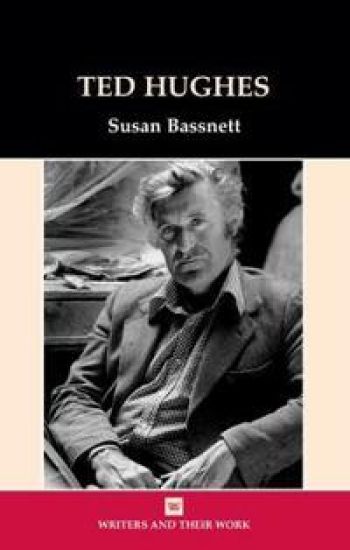
Hughes is seen as a complex, multi-faceted writer, a great poet in the tradition of English nature poetry, who also sought inspiration from international sources, ancient and modern. His lifelong concern for language and his use of mythology and history are explored, while his poetic achievements are examined in context, together with his writing for children and his experiments with forms of theatre.
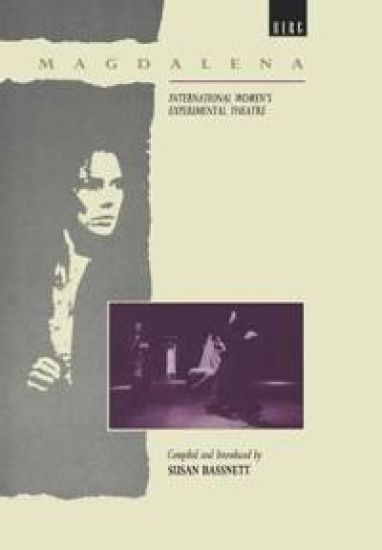
The first International Festival of Women in Experimental Theatre, the Magdalena Project, took place in Cardiff in 1986. Fifteen countries were represented by 30 women. This illustrated volume documents the unique event and offers insight into the origins and organization of the workshop, probes into the problems of authority and power relations within the group, records individual training sessions and presents short profiles of each performer. The author explores some of the theoretical issues relating to women's theatre and the state of experimental theatre, which emerged from the festival.
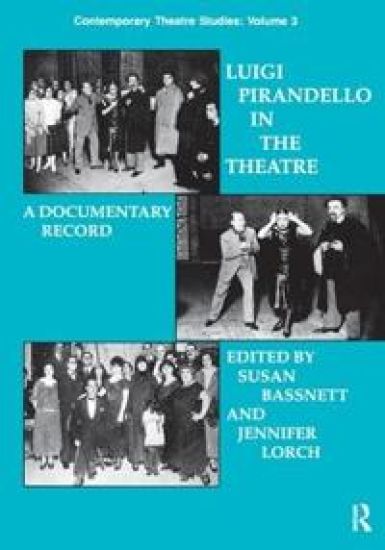
First Published in 1993. Contemporary Theatre Studies is a book series of special interest to everyone involved in theatre. This collection of documents is the first attempt in English to bring together a body of material on Luigi Pirandello as multi-faceted man of the theatre. Because relatively few of his works have been easily available to English language readers, he is thought of most frequently as a playwright, the author of Six Characters in Search of an Author and Henry IV in particular, and his contribution to theatre, both in theory and in practice, has tended to be overlooked. Emphasising his role as a director, the book traces the rise and fall of his own theatre company, the Teatro d’Arte where he struggled to instil new practices and comments on Pirandello’s attempts during the years of Fascism to give Italy a national theatre in a European context.
Luigi Pirandello in the Theatre
Susan Bassnett; Jennifer Lorch
Harwood-Academic Publishers
1993
nidottu
First Published in 1993. Routledge is an imprint of Taylor & Francis, an informa company.
Tales of Travellers and Translators
Susan Bassnett
MODERN HUMANITIES RESEARCH ASSOCIATION
2025
sidottu
The Women’s Movement is usually referred to as if it were a constant, global phenomenon. There are women’s movements in Europe, North and South America, Africa, the Middle East, India, Japan and Australia, and many women and men assume that they are regional manifestations of the same thing, and share a common core. Susan Bassnett has lived and been involved in the struggles of the women’s movement in the United States, Italy and the United Kingdom, and has had extensive contacts with feminists in the German Democratic Republic. On the basis of her personal experiences and study of women’s history and literature in these countries she is able to present a striking picture of the variety of feminist aims, tactics and priorities in the four countries, and of the character of the women’s movement in four very different cultures. In Italy, she focuses on the violence of the women’s movement – its intellectualism and energy. In analysing the American women’s movement she dwells on its roots in the past, and its faith in pragmatic solutions. The GDR presents completely different questions, hinging on the relationship between state socialism and feminism. In the UK, Susan Bassnett finds herself returning to that all-pervasive aspect of British life – class, and its importance for feminists. Throughout, the author writes with a double commitment: first, to furthering our understanding of the diversity of aims of women’s movements and their common ground – the no-man’s land of female existence; second, to making her book as accessible as possible to all feminists, through drawing on her own personal experience of countries in which she has lived, worked, travelled, and made friends.

At a time when millions travel around the planet – some by choice, some driven by economic or political exile – translation of the written and spoken word is of ever increasing importance. This guide presents readers with an accessible and engaging introduction to the valuable position translation holds within literature and society. Leading translation theorist Susan Bassnett traces the history of translation, examining the ways translation is currently utilized as a burgeoning interdisciplinary activity and extending her analysis into developing areas such as developing technologies and new media forms. Translation Studies, fourth edition displays the importance of translation across disciplines, and is essential reading for students and scholars of translation, literary studies, globalisation studies and ancient and modern languages.
In a time when millions travel around the planet; some by choice, some driven by economic or political exile, translation of the written and spoken word is of ever increasing importance. This guide presents readers with an accessible and engaging introduction to the valuable position translation holds within literature and society. Leading translation theorist, Susan Bassnett traces the history of translation, examining the ways translation is currently utilised as a burgeoning interdisciplinary activity and considers more recent research into developing technologies and new media forms. Translation displays the importance of translation across disciplines, and is essential reading for students and scholars of translation, literary studies, globalisation studies, and ancient and modern languages.
British Studies' and 'British Cultural Studies' cover a wide range of facets of contemporary Britain. Studying British Cultures: An Introduction is a unique collection of essays which examine the most significant aspects of this quickly developing area of study, analyzing the ways of teaching and reading British culture. The work covers the contemporary and key issues, including: the terminological distinction between 'British Studies' and 'British Cultural Studies' the problem of national cultures and identities in contemporary Britain studying language and literature from a British Studies perspective models for studying the historical context of the development of ideas of `Britishness' studying contemporary Britain overseas The contributors are some of the key names in current debates surrounding British Studies, and Susan Bassnett holds together their work with a substantial and accessible introduction. Studying British Cultures: An Introduction will be essential reading for students and teachers concerned with the study of contemporary Britain.
The Women’s Movement is usually referred to as if it were a constant, global phenomenon. There are women’s movements in Europe, North and South America, Africa, the Middle East, India, Japan and Australia, and many women and men assume that they are regional manifestations of the same thing, and share a common core. Susan Bassnett has lived and been involved in the struggles of the women’s movement in the United States, Italy and the United Kingdom, and has had extensive contacts with feminists in the German Democratic Republic. On the basis of her personal experiences and study of women’s history and literature in these countries she is able to present a striking picture of the variety of feminist aims, tactics and priorities in the four countries, and of the character of the women’s movement in four very different cultures. In Italy, she focuses on the violence of the women’s movement – its intellectualism and energy. In analysing the American women’s movement she dwells on its roots in the past, and its faith in pragmatic solutions. The GDR presents completely different questions, hinging on the relationship between state socialism and feminism. In the UK, Susan Bassnett finds herself returning to that all-pervasive aspect of British life – class, and its importance for feminists. Throughout, the author writes with a double commitment: first, to furthering our understanding of the diversity of aims of women’s movements and their common ground – the no-man’s land of female existence; second, to making her book as accessible as possible to all feminists, through drawing on her own personal experience of countries in which she has lived, worked, travelled, and made friends.
This collection of essays brings together a decade of writings on translation by leading international translation studies expert, Susan Bassnett. The essays cover a range of topics and will be useful to anyone with an interest in how different cultures communicate. Bassnett draws upon her personal experience to explore issues such as why the same things cannot be expressed in all languages, why translators in war zones risk their lives for their work, whether humour can travel across cultures, why translated menus are often so bad and whether poetry does indeed get lost in translation.
Reflections on Translation
Susan Bassnett
Multilingual Matters
2011
nidottu
Halvin toimitettuna 42,40 €
This collection of essays brings together a decade of writings on translation by leading international translation studies expert, Susan Bassnett. The essays cover a range of topics and will be useful to anyone with an interest in how different cultures communicate. Bassnett draws upon her personal experience to explore issues such as why the same things cannot be expressed in all languages, why translators in war zones risk their lives for their work, whether humour can travel across cultures, why translated menus are often so bad and whether poetry does indeed get lost in translation.
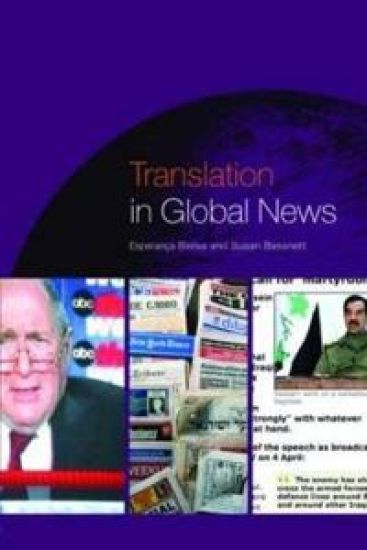
The mass media are of paramount importance in the formulation and transmission of messages about key developments of global significance, such as terrorism and the war in Iraq, yet the key mediating role of translation in the reception of speeches and addresses of figures like Osama Bin Laden and Saddam Hussein has remained largely invisible. Incorporating the results of extensive fieldwork in key global news organizations such as Reuters, Agence France Press and Inter Press Service, this book addresses central issues relating to the new pressures on translation arising from globalization, analyzing new texts from major news agencies as well as alternative media organizations. Co-written by Susan Bassnett, a leading figure in the field of translation studies, this book presents close readings of different English versions of key Arabic texts circulated in Western media to demonstrate the ways in which a cultural and religious 'Other' is framed in different media.
Three Tragic Actresses
Michael Booth; John Stokes; Susan Bassnett
Cambridge University Press
2007
pokkari
This book examines the careers of three performers whose professional lives together spanned the period from the late eighteenth to the late nineteenth centuries, from the heyday of neo-Classicism to the coming of Realism. While the individual essays concentrate on the specific work of Siddons, Rachel and Ristori, a wide-ranging introduction relates their collective achievement to social and cultural change. All three rejuvenated a national repertoire and experimented with new forms of dramatic literature, achieving fame far beyond the boundaries of their own country. As they redefined the nature of tragic experience, as strong and independent women, they contributed greatly to changing concepts of gender and sexuality. Vivid reconstructions of their interpretations and unique accounts of theatrical conditions place the art of three very different but pivotal figures in context.
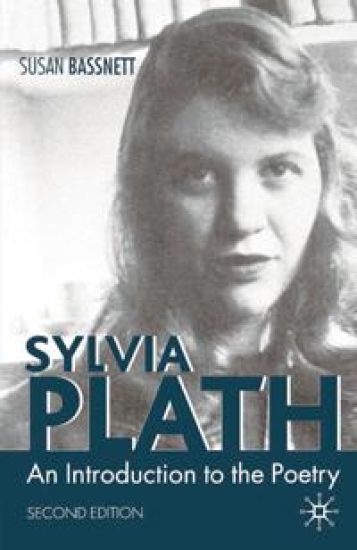
Sylvia Plath is one of the best-known and most widely-studied writers of the twentieth century. Since her death in 1963, critics have presented different images of Plath: the 'suicidal' poet, the frustrated wife and mother, the feminist precursor. In this lively and approachable introduction to the author's poetry, Susan Bassnett offers a balanced view of Plath as one of the finest contemporary poets, and shows the diversity of her work. Bassnett's refreshing perspective on the writer provides a welcome alternative to the many studies which attempt endlessly to psychoanalyse Plath posthumously. Bassnett argues that there can never be any definitive version of the Plath story, but, from close readings of her texts, readers can discover the excitement of her diverse work. Plath is not viewed as an author driven by a death wish, nor does the book focus on her suicide - instead, she is considered in the cultural context in which she wrote, and viewed as a complex writer. Now thoroughly revised and expanded in the light of recent research, the second edition of this essential text contains new chapters and more close reading of the poetry. It concludes with an analysis of Ted Hughes' Birthday Letters, a collection of poems which he wrote about his wife after her death.
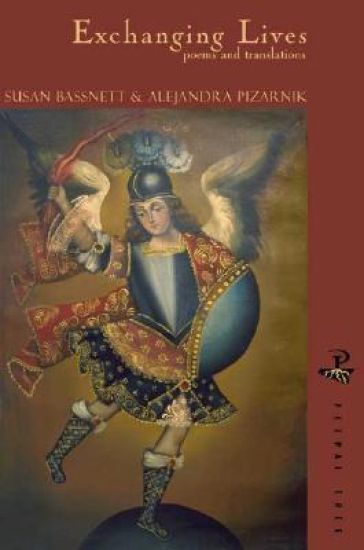
Exchanging Lives makes available for the first time in English the work of an outstanding Latin American poet, the Argentinian Alejandra Pizarnik. Pizarnik's work has been celebrated in feminist criticism for its subversive use of violent myth (comparable to the later work of Angela Carter). But Exchanging Lives is not a conventional translation, because the translator, Susan Bassnett, herself a published poet, enters into a personal dialogue with Pizarnik's poems. The dialogue is both about finding womanist concerns that poet and translator share but also differences. Pizarnik, who described herself as 'a silent woman/... who sometimes flows with language,' speaks of social isolation and not belonging, whereas Bassnett finds herself fighting for personal writing space from the clamours of work and 'the mothering wings [that] hold back my writing hand'. Above all, Bassnett finds that her own poetry has been changed through the act of translating Pizarnik. The effect of the dialogue in the book is to bring the person of Pizarnik, as well as her poems, into closer focus. Exchanging Lives contains four sections. The first is of translations from Pizarnik's Árbol de Diana (1962), a book that put Pizarnik, for Octavio Paz, among the 'finest Latin American writers'. The second juxtaposes translations of Pizarnik with poems by Susan Bassnett, which enter into a dialogue of difference. The third section, 'Asia of my imaginings', is a sequence of poems by Bassnett that could not have been written without the experience of translating Pizarnik's daring, subversive work. The fourth brief section condenses the recognitions of identity and difference. Susan Bassnett is Professor of Comparative Literary Studies at the University of Warwick.
Translation Studies is currently one of the fastest growing interdisciplinary subjects in the world. Constructing Cultures brings together for the first time the work of the two translator/scholars who are regarded as founders of this major field of study. This collection of essays continues to develop some of the principal research lines that both have been pursuing in recent years, most specifically the cultural turn in Translation Studies. Among topics discussed are Chinese and Western theories of translation, the limits of translatability, when is a translation not a translation, why cultures develop certain genres at certain times, what is the relationship between Translation Studies and Cultural Studies. Some essays are genre specific, focusing on theatre translation or the translating of poetry, others are devoted to specific case studies, and consider the fortunes of such major writers as Virgil or Brecht in English. Written in the accessible, jargon-free style that characterises the work of Bassnett and Lefevere, this collection of essays will be invaluable to anyone interested in translation and comparative cultural studies.