Kirjojen hintavertailu – 12 903 735 kirjaa ja 27 kauppaa

Kirjailija

Susan Bibler Coutin

Kirjat ja teokset yhdessä paikassa: 10 kirjaa, julkaisuja vuosilta 2007–2025, suosituimpiin kuuluu U.S. Immigration Law and the Control of Labor. Vertaile teosten hintoja ja tarkista saatavuus suomalaisista kirjakaupoista.

10 kirjaa

Kirjojen julkaisuvuodet: 2007–2025.

On the Record

On the Record

Susan Bibler Coutin

University of California Press
2025
pokkari
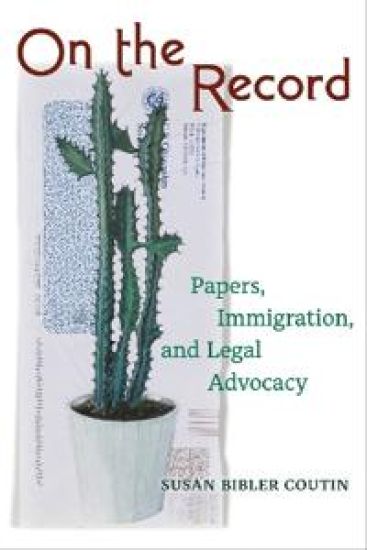
A free ebook version of this title is available through Luminos, University of California Press’s Open Access publishing program. Visit www.luminosoa.org to learn more. ? Immigrant residents seeking legal status in the United States face a catch-22: the documents that they must present to immigration officials—bank records, paycheck stubs, and contracts in their own names—are often challenging for undocumented people to obtain. In this book, Susan Bibler Coutin analyzes how undocumented immigrants and the attorneys and paralegals who represent them attempt to surmount this and other documentary challenges. Based on four years of fieldwork and volunteer work in the legal services department of an immigrant-serving nonprofit and in-depth interviews with those seeking status, On the Record explores these complex dynamics by taking seriously both documents themselves and the legal craft that has developed around their use.
On the Record

On the Record

Susan Bibler Coutin

University of California Press
2025
sidottu
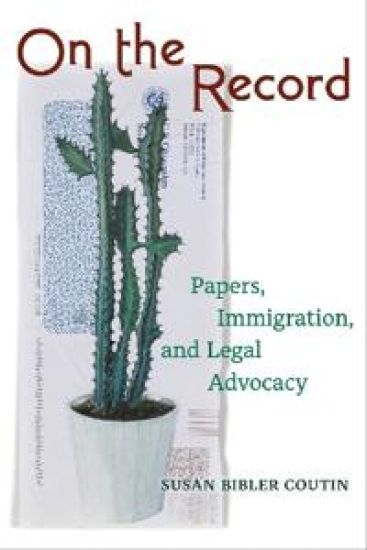
A free ebook version of this title is available through Luminos, University of California Press’s Open Access publishing program. Visit www.luminosoa.org to learn more. ? Immigrant residents seeking legal status in the United States face a catch-22: the documents that they must present to immigration officials—bank records, paycheck stubs, and contracts in their own names—are often challenging for undocumented people to obtain. In this book, Susan Bibler Coutin analyzes how undocumented immigrants and the attorneys and paralegals who represent them attempt to surmount this and other documentary challenges. Based on four years of fieldwork and volunteer work in the legal services department of an immigrant-serving nonprofit and in-depth interviews with those seeking status, On the Record explores these complex dynamics by taking seriously both documents themselves and the legal craft that has developed around their use.
Legal Phantoms

Legal Phantoms

Susan Bibler Coutin; Jennifer M. Chacón; Stephen Lee

STANFORD UNIVERSITY PRESS
2024
sidottu
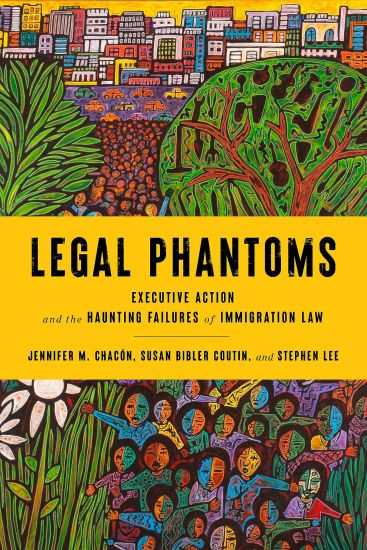
The 2012 Deferred Action for Childhood Arrivals (DACA) program was supposed to be a stepping stone, a policy innovation announced by the White House designed to put pressure on Congress for a broader, lasting set of legislative changes. Those changes never materialized, and the people who hoped to benefit from them have been forced to navigate a tense and contradictory policy landscape ever since, haunted by these unfulfilled promises. Legal Phantoms tells their story. After Congress failed to pass a comprehensive immigration bill in 2013, President Obama pivoted in 2014 to supplementing DACA with a deferred action program (known as DAPA) for the parents of citizens and lawful permanent residents and a DACA expansion (DACA+) in 2014. But challenges from Republican-led states prevented even these programs from going into effect. Interviews with would-be applicants, immigrant-rights advocates, and government officials reveal how such failed immigration-reform efforts continue to affect not only those who had hoped to benefit, but their families, communities, and the country in which they have made an uneasy home. Out of the ashes of these lost dreams, though, people find their own paths forward through uncharted legal territory with creativity and resistance.
Legal Phantoms

Legal Phantoms

Susan Bibler Coutin; Jennifer M. Chacón; Stephen Lee

STANFORD UNIVERSITY PRESS
2024
pokkari
The 2012 Deferred Action for Childhood Arrivals (DACA) program was supposed to be a stepping stone, a policy innovation announced by the White House designed to put pressure on Congress for a broader, lasting set of legislative changes. Those changes never materialized, and the people who hoped to benefit from them have been forced to navigate a tense and contradictory policy landscape ever since, haunted by these unfulfilled promises. Legal Phantoms tells their story. After Congress failed to pass a comprehensive immigration bill in 2013, President Obama pivoted in 2014 to supplementing DACA with a deferred action program (known as DAPA) for the parents of citizens and lawful permanent residents and a DACA expansion (DACA+) in 2014. But challenges from Republican-led states prevented even these programs from going into effect. Interviews with would-be applicants, immigrant-rights advocates, and government officials reveal how such failed immigration-reform efforts continue to affect not only those who had hoped to benefit, but their families, communities, and the country in which they have made an uneasy home. Out of the ashes of these lost dreams, though, people find their own paths forward through uncharted legal territory with creativity and resistance.
Documenting Impossible Realities

Documenting Impossible Realities

Susan Bibler Coutin; Barbara Yngvesson

CORNELL UNIVERSITY PRESS
2023
pokkari
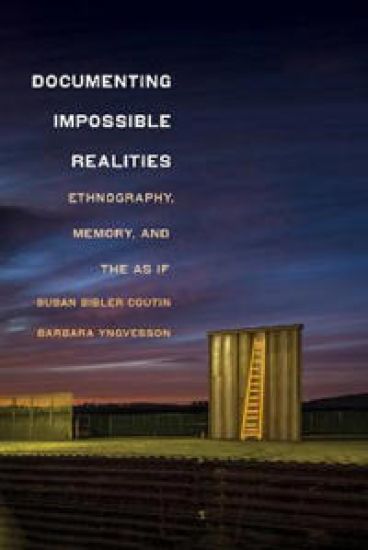
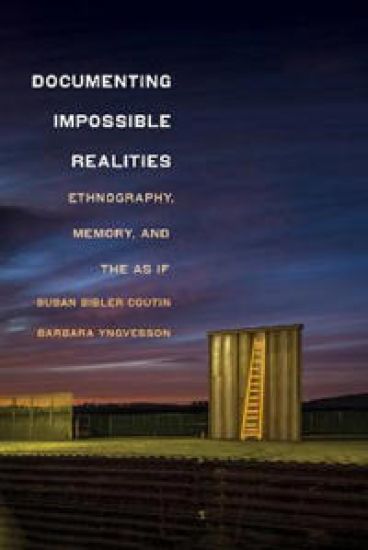
Documenting Impossible Realities explores the limitations of conventional accounts through which belonging is documented, focusing on the experiences of adoptees, deportees, migrants, and other exilic populations. Susan Bibler Coutin and Barbara Yngvesson speak to the current historical moment in which the dichotomy between an "above ground" inhabited by dominant groups and an "underground" to which unauthorized immigrants, political exiles, and transnational adoptees are relegated cannot be sustained. This dichotomy was made possible by the illusion that some people do not belong, that some forms of kin are not real, or that certain ways of knowing do not count. To examine accounts that challenge such illusions, Coutin and Yngvesson focus on the spaces between groups, where difference is constituted and where the potential for new forms of relationship may be realized. By juxtaposing and moving between entangled realities and modes of expression, Documenting Impossible Realities conveys the emotional experience of oscillating between being here and gone, legitimate and treated as counterfeit.
Documenting Impossible Realities

Documenting Impossible Realities

Susan Bibler Coutin; Barbara Yngvesson

CORNELL UNIVERSITY PRESS
2023
sidottu
Documenting Impossible Realities explores the limitations of conventional accounts through which belonging is documented, focusing on the experiences of adoptees, deportees, migrants, and other exilic populations. Susan Bibler Coutin and Barbara Yngvesson speak to the current historical moment in which the dichotomy between an "above ground" inhabited by dominant groups and an "underground" to which unauthorized immigrants, political exiles, and transnational adoptees are relegated cannot be sustained. This dichotomy was made possible by the illusion that some people do not belong, that some forms of kin are not real, or that certain ways of knowing do not count. To examine accounts that challenge such illusions, Coutin and Yngvesson focus on the spaces between groups, where difference is constituted and where the potential for new forms of relationship may be realized. By juxtaposing and moving between entangled realities and modes of expression, Documenting Impossible Realities conveys the emotional experience of oscillating between being here and gone, legitimate and treated as counterfeit.
U.S. Immigration Law and the Control of Labor

U.S. Immigration Law and the Control of Labor

Kitty Calavita; Susan Bibler Coutin

Quid Pro, LLC
2020
sidottu
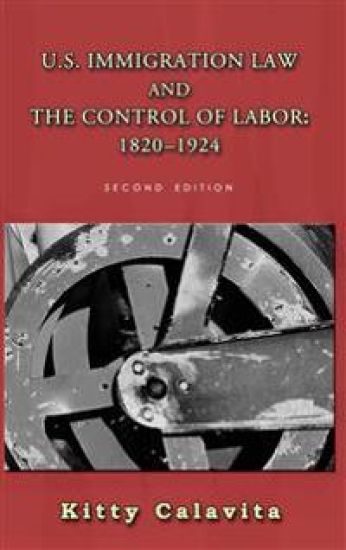
Reagan's 1986 immigration reform law offered a composite of contradictory measures: sanctions curtailed employment of undocumented workers while other programs enhanced labor supply. Immigration law today continues the theme of contradictions and unmet goals. But hasn't it always been so? Examining a century of U. S. immigration laws, from the nation's early stages of industrialization to enactment of the quota system, Calavita explores the hypocrisy, subtext, and racism permeating an unrelenting influx of European labor. Now in its second edition, this groundbreaking book offers a materialist theory of the state to explain the zigzagging policies that alternately encouraged and ostensibly were meant to control the influx. The author adds a 2020 Preface to place the historical record into modern relief. Writing in a new Foreword as well, Susan Bibler Coutin is "struck by the relevance of Calavita's analysis to current debates over immigration policy," as this social history "reveals alternatives to the present moment: over much of U. S. history, government officials actively recruited immigrants, even when segments of the public sought restrictions." The aim was not "social justice or human rights, but rather to fuel economic expansion, depress wages, and counter unionization." The book is recommended to a wide audience: "The theoretical discussion is accessible to new students as well as established scholars, and the rich documentary record sheds light on how current dynamics were set in motion." "Calavita lucidly and brilliantly clarifies the linkages among economic structure, ideology, and law making. She effectively depicts the history of U. S. immigration legislation as a series of attempted resolutions to recurring dilemmas rooted in the fiscal and legitimation crises facing the state." -- Marjorie Zatz, Vice Provost, UC-Merced, in International Migration Review (1986)

Exiled Home

Exiled Home

Susan Bibler Coutin

Duke University Press
2016
sidottu
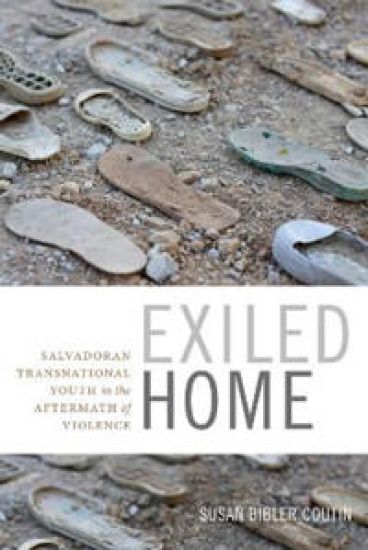
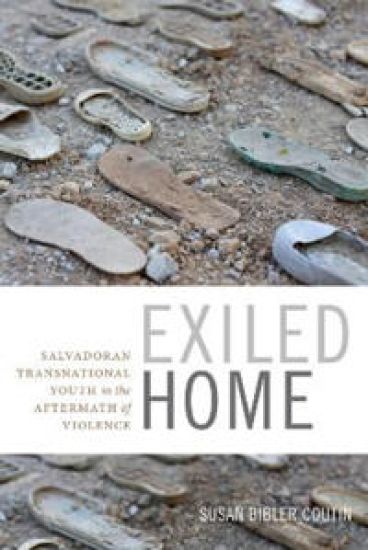
In Exiled Home, Susan Bibler Coutin recounts the experiences of Salvadoran children who migrated with their families to the United States during the 1980–1992 civil war. Because of their youth and the violence they left behind, as well as their uncertain legal status in the United States, many grew up with distant memories of El Salvador and a profound sense of disjuncture in their adopted homeland. Through interviews in both countries, Coutin examines how they sought to understand and overcome the trauma of war and displacement through such strategies as recording community histories, advocating for undocumented immigrants, forging new relationships with the Salvadoran state, and, for those deported from the United States, reconstructing their lives in El Salvador. In focusing on the case of Salvadoran youth, Coutin’s nuanced analysis shows how the violence associated with migration can be countered through practices that recuperate historical memory while also reclaiming national membership.
Exiled Home

Exiled Home

Susan Bibler Coutin

Duke University Press
2016
pokkari
In Exiled Home, Susan Bibler Coutin recounts the experiences of Salvadoran children who migrated with their families to the United States during the 1980–1992 civil war. Because of their youth and the violence they left behind, as well as their uncertain legal status in the United States, many grew up with distant memories of El Salvador and a profound sense of disjuncture in their adopted homeland. Through interviews in both countries, Coutin examines how they sought to understand and overcome the trauma of war and displacement through such strategies as recording community histories, advocating for undocumented immigrants, forging new relationships with the Salvadoran state, and, for those deported from the United States, reconstructing their lives in El Salvador. In focusing on the case of Salvadoran youth, Coutin’s nuanced analysis shows how the violence associated with migration can be countered through practices that recuperate historical memory while also reclaiming national membership.
Nations of Emigrants

Nations of Emigrants

Susan Bibler Coutin

Cornell University Press
2007
pokkari
The violence and economic devastation of the 1980–1992 civil war in El Salvador drove as many as one million Salvadorans to enter the United States, frequently without authorization. In Nations of Emigrants, the legal anthropologist Susan Bibler Coutin analyzes the case of emigration from El Salvador to the United States to consider how current forms of migration challenge conventional understandings of borders, citizenship, and migration itself. Interviews with policymakers and activists in El Salvador and the United States are juxtaposed with Salvadoran emigrants' accounts of their journeys to the United States, their lives in this country, and, in some cases, their removal to El Salvador. These interviews and accounts illustrate the dilemmas that migration creates for nation-states as well as the difficulties for individuals who must live simultaneously within and outside the legal systems of two countries. During the 1980s, U. S. officials generally regarded these migrants as economic immigrants who deserved to be deported, rather than as political refugees who merited asylum. By the 1990s, these Salvadorans were made eligible for legal permanent residency, at least in part due to the lives that they had created in the United States. Remarkably, this redefinition occurred during a period when more restrictive immigration policies were being adopted by the U. S. government. At the same time, Salvadorans in the United States, who send relatives more than $3 billion in remittances annually, have become a focus of policymaking in El Salvador and are considered key to its future.