Kirjojen hintavertailu – 12 859 819 kirjaa ja 27 kauppaa

Kirjailija

Susan F. Hirsch

Kirjat ja teokset yhdessä paikassa: 7 kirjaa, julkaisuja vuosilta 1998–2024, suosituimpiin kuuluu Teaching Peace and Conflict Studies. Vertaile teosten hintoja ja tarkista saatavuus suomalaisista kirjakaupoista.

7 kirjaa

Kirjojen julkaisuvuodet: 1998–2024.

Teaching Peace and Conflict Studies

Teaching Peace and Conflict Studies

Susan F. Hirsch; Agnieszka Paczynska

EDWARD ELGAR PUBLISHING LTD
2024
nidottu
This insightful book guides instructors on how to introduce students to the interdisciplinary work of Peace and Conflict Studies (PACS). Mindful that many students come to PACS with a desire to create positive social change, Susan F. Hirsch and Agnieszka Paczynska highlight engaged learning as a key method for PACS pedagogy and emphasise the need to teach theory with an inclusive and decolonialist approach. The book offers both new and experienced instructors of undergraduate and postgraduate students concrete advice regarding structuring assignments, designing classroom-based engaged learning activities and highlighting reflective practice and ethics. Key Features:Focuses on delivering an engaged, inclusive and decolonialist PACS programme. Provides practical advice on how to design introductory and elective PACS courses for undergraduate and postgraduate students. Includes detailed instructions for developing and implementing in-class experiential learning exercises alongside tools for effectively assessing student learning. Building instructors’ capacity to teach effectively and inclusively with the aim of practical post-course application, Teaching Peace and Conflict Studies will be an invaluable resource across peace and conflict studies, anthropology, sociology, history, political science, international relations, women’s studies, African American studies and global studies. It will also be essential reading for graduate students looking to move into teaching positions, as well as faculty, staff and students in graduate education schools.

Teaching Peace and Conflict Studies

Teaching Peace and Conflict Studies

Susan F. Hirsch; Agnieszka Paczynska

EDWARD ELGAR PUBLISHING LTD
2024
sidottu
This insightful book guides instructors on how to introduce students to the interdisciplinary work of Peace and Conflict Studies (PACS). Mindful that many students come to PACS with a desire to create positive social change, Susan F. Hirsch and Agnieszka Paczynska highlight engaged learning as a key method for PACS pedagogy and emphasise the need to teach theory with an inclusive and decolonialist approach. The book offers both new and experienced instructors of undergraduate and postgraduate students concrete advice regarding structuring assignments, designing classroom-based engaged learning activities and highlighting reflective practice and ethics. Key Features:Focuses on delivering an engaged, inclusive and decolonialist PACS programme. Provides practical advice on how to design introductory and elective PACS courses for undergraduate and postgraduate students. Includes detailed instructions for developing and implementing in-class experiential learning exercises alongside tools for effectively assessing student learning. Building instructors’ capacity to teach effectively and inclusively with the aim of practical post-course application, Teaching Peace and Conflict Studies will be an invaluable resource across peace and conflict studies, anthropology, sociology, history, political science, international relations, women’s studies, African American studies and global studies. It will also be essential reading for graduate students looking to move into teaching positions, as well as faculty, staff and students in graduate education schools.
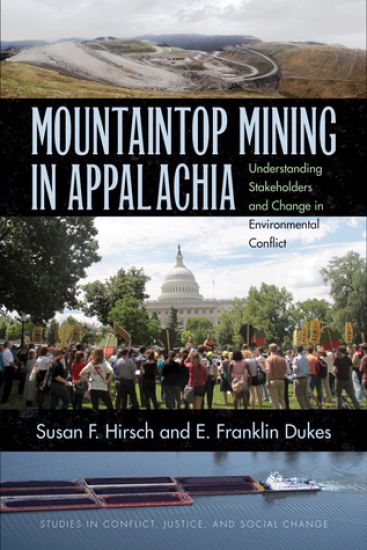
Mountaintop Mining in Appalachia

Mountaintop Mining in Appalachia

Susan F. Hirsch; E. Franklin Dukes

Ohio University Press
2014
sidottu
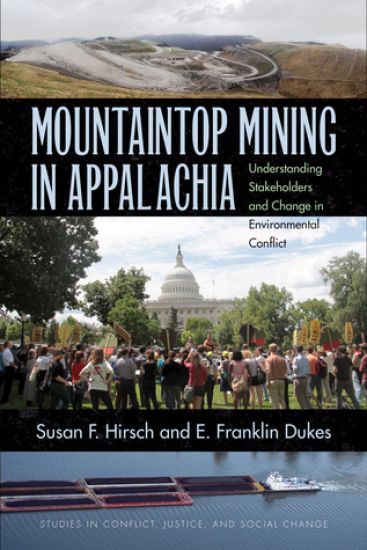
Residents of the Appalachian coalfields share a history and heritage, deep connections to the land, and pride in their own resilience. These same residents are also profoundly divided over the practice of mountaintop mining—that is, the removal and disposal in nearby valleys of soil and rock in order to reach underlying coal seams. Companies and some miners claim that the practice has reduced energy prices, earned income for shareholders, and provided needed jobs. Opponents of mountaintop mining argue that it poisons Appalachia's waters and devastates entire communities for the sake of short-term gains. This conflict is emblematic of many other environmental disputes in the United States and around the world, disputes whose intensity derives not only from economic and environmental stakes but also from competing claims to individual and community identity. Looking beyond the slogans and seemingly irreconcilable differences, however, can reveal deeper causes of conflict, such as flawed institutions, politics, and inequality or the strongly held values of parties for whom compromise is difficult to achieve. Mountaintop Mining in Appalachia focuses on the people of the region, the people who have the most at stake and have been the most active in trying to shift views and practices. By examining the experiences of these stakeholders and their efforts to effect change, Susan F. Hirsch and E. Franklin Dukes introduce key concepts and theories from the field of conflict analysis and resolution. They provide a compelling case study of how stakeholders challenge governance-as-usual, while offering insight into the causes of conflict over other environmental issues.
Mountaintop Mining in Appalachia

Mountaintop Mining in Appalachia

Susan F. Hirsch; E. Franklin Dukes

Ohio University Press
2014
pokkari
Residents of the Appalachian coalfields share a history and heritage, deep connections to the land, and pride in their own resilience. These same residents are also profoundly divided over the practice of mountaintop mining—that is, the removal and disposal in nearby valleys of soil and rock in order to reach underlying coal seams. Companies and some miners claim that the practice has reduced energy prices, earned income for shareholders, and provided needed jobs. Opponents of mountaintop mining argue that it poisons Appalachia's waters and devastates entire communities for the sake of short-term gains. This conflict is emblematic of many other environmental disputes in the United States and around the world, disputes whose intensity derives not only from economic and environmental stakes but also from competing claims to individual and community identity. Looking beyond the slogans and seemingly irreconcilable differences, however, can reveal deeper causes of conflict, such as flawed institutions, politics, and inequality or the strongly held values of parties for whom compromise is difficult to achieve. Mountaintop Mining in Appalachia focuses on the people of the region, the people who have the most at stake and have been the most active in trying to shift views and practices. By examining the experiences of these stakeholders and their efforts to effect change, Susan F. Hirsch and E. Franklin Dukes introduce key concepts and theories from the field of conflict analysis and resolution. They provide a compelling case study of how stakeholders challenge governance-as-usual, while offering insight into the causes of conflict over other environmental issues.
In the Moment of Greatest Calamity

In the Moment of Greatest Calamity

Susan F. Hirsch

Princeton University Press
2008
pokkari
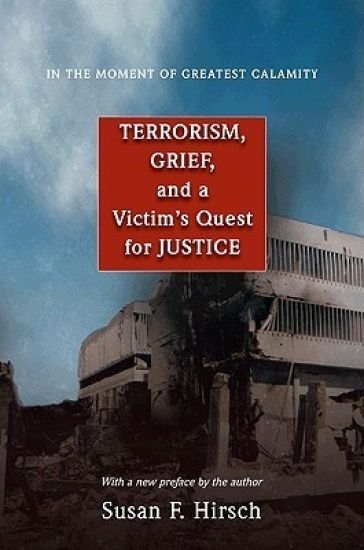
On August 7, 1998, bombs exploded at two United States embassies in East Africa. American anthropologist Susan Hirsch and her husband Jamal, a Kenyan, were among the thousands of victims, and Jamal died. From there, Hirsch went on to face devastating grief with the help of friends and families on two continents, observing the mourning rituals of her husband's community to honor him. When the alleged bombers were captured and sent to New York to stand trial, she witnessed firsthand the attempts of America's criminal justice system to handle terrorism through the law. In the Moment of Greatest Calamity is her story--a tale told on many levels: personal, anthropological, legal, and, finally, political. The book's central chapters describe Hirsch's experience of the bombing trials in a Manhattan federal court in 2001, including a behind-the-scenes look at the investigation leading up to the trial, encounters with some of the FBI's leading terrorism investigators, and many moments of drama from the proceedings themselves. Hirsch reveals the inner conflict that results from her opposition to the death penalty and concludes that the trial was both flawed and indispensable. Hirsch's story of this tragedy and its legal aftermath comes to life through--and is enhanced by--her skills as a social scientist. Her unique viewpoint makes it unlike any other story about terrorism.
Pronouncing and Persevering

Pronouncing and Persevering

Susan F. Hirsch

University of Chicago Press
1998
nidottu
The title of this study reflects the image of gender relations most commonly associated with Islamic law - this being a study of disputes involving Swahili Muslims in coastal Kenya. Men need only "pronounce" divorce to resolve marital conflicts, while embattled wives must persevere by enduring marital hardships. Susan Hirsch's observations of Islamic courts uncover how Muslim women actively use legal processes to transform their domestic lives, achieving victories on some fronts, but reinforcing their image as subordinate to men through the speech they produce in court. The focus of this text is the language used in disputes, particularly how men and women narrate their claims, and how their speech shapes and is shaped by gender hierarchy in postcolonial Swahili society. Based on field research and court testimony, Hirsch's book opposes the conventional view that women are powerless under Islamic law.
Pronouncing and Persevering

Pronouncing and Persevering

Susan F. Hirsch

University of Chicago Press
1998
sidottu
The title of this study reflects the image of gender relations most commonly associated with Islamic law - this being a study of disputes involving Swahili Muslims in coastal Kenya. Men need only "pronounce" divorce to resolve marital conflicts, while embattled wives must persevere by enduring marital hardships. Susan Hirsch's observations of Islamic courts uncover how Muslim women actively use legal processes to transform their domestic lives, achieving victories on some fronts, but reinforcing their image as subordinate to men through the speech they produce in court. The focus of this text is the language used in disputes, particularly how men and women narrate their claims, and how their speech shapes and is shaped by gender hierarchy in postcolonial Swahili society. Based on field research and court testimony, Hirsch's book opposes the conventional view that women are powerless under Islamic law.