
Kirjailija
Susan Fenimore Cooper
Kirjat ja teokset yhdessä paikassa: 79 kirjaa, julkaisuja vuosilta 1995–2026, suosituimpiin kuuluu Elinor Wyllys; Or, The Young Folk of Longbridge. Vertaile teosten hintoja ja tarkista saatavuus suomalaisista kirjakaupoista.
79 kirjaa
Kirjojen julkaisuvuodet: 1995–2026.
Wonder Stories Of History (1895)
Frances A. Humphrey; Sarah Knowles Bolton; Susan Fenimore Cooper
KESSINGER PUBLISHING, LLC
2010
pokkari
The Rhyme And Reason Of Country Life: Or Selections From Fields Old And New (1854)
Susan Fenimore Cooper
KESSINGER PUBLISHING, LLC
2008
sidottu
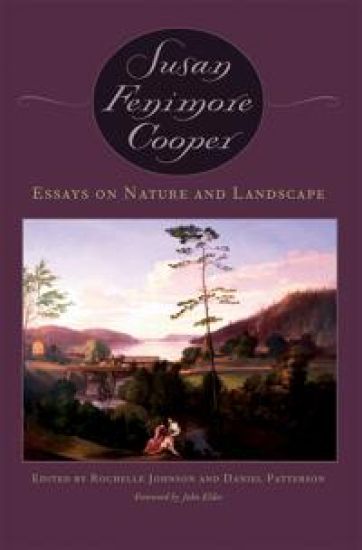
Essays on Nature and Landscape
Susan Fenimore Cooper; John Elder
University of Georgia Press
2002
pokkari
Susan Fenimore Cooper (1813-1894), though often overshadowed by her celebrity father, James Fenimore Cooper, has recently become recognized as both a pioneer of American nature writing and an early advocate for ecological sustainability. Editors Rochelle Johnson and Daniel Patterson have assembled here a collection of ten pieces by Cooper that represent her most accomplished nature writing and the fullest articulation of her environmental principles. With one exception, these essays have not been available in print since their original appearance in Cooper's lifetime. A portrait of her thoughts on nature and how we should live and think in relation to it, this collection both contextualizes Cooper's magnum opus, Rural Hours (1850), and demonstrates how she perceived her work as a nature writer. Frequently her essays are models of how to catch and keep the interest of a reader when writing about plants, animals, and our relationship to the physical environment. By lamenting the decline of bird populations, original forests, and overall biodiversity, she champions preservation and invokes a collective environmental conscience that would not begin to awaken until the end of her life and century. The selections include independent essays, miscellaneous introductions and prefaces, and the first three installments from Cooper's work of literary ornithology, "Otsego Leaves," arguably her most mature and fully realized contribution to American environmental writing. In addition to a foreword by John Elder, one of the nation's leading environmental educators, an introduction analyzes each essay in various cultural contexts. Brief but handy textual notes supplement the essays. Perfect for nature-writing aficionados, environmental historians, and environmental activists, this collection will radically expand Cooper's importance to the history of American environmental thought.
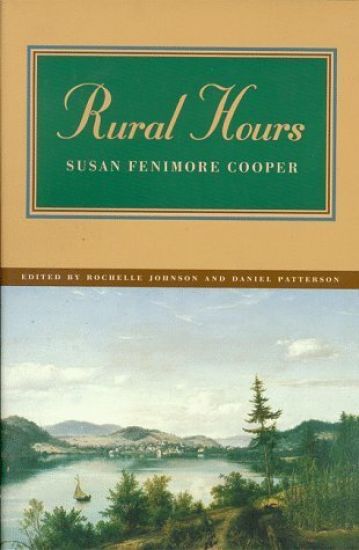
Rural Hours (1850) is one of the earliest pieces of American nature writing and the first by a woman. This new edition, the only printing of the full original text since 1876, restores passages excised by the author for an 1887 edition. The daughter of the novelist James Fenimore Cooper, Susan Fenimore Cooper (1813-1894), uses narratives and descriptions of her walks and excursions to reveal her ideal society as a rural one, carefully poised between the receding wilderness and a looming industrialization. She theorizes that knowledge of place causes people to approach the land humbly and gratefully and asserts the necessity of establishing a society that is sustainable in the natural world and that sees a moral obligation to deepen knowledge of the natural history of the environment.
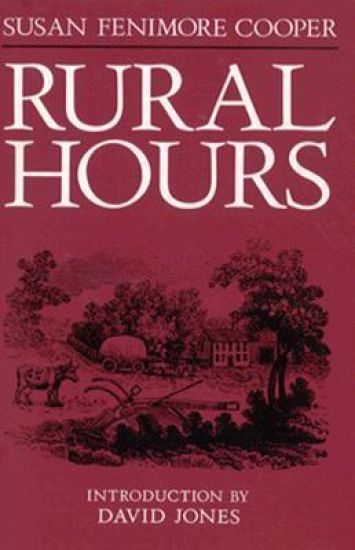
Nature and the mid nineteenth-century American landscape is beautifully revealed in this journal of the seasons. Susan Fennimore Cooper, daughter of the great American novelist, wrote this book in 1850, four years before Walden was published. She described it as her "simple record of those little events which make up the course of the seasons in rural life." As with the works of Thoreau and others in this contemplative genre, including that of Joseph Wood Krutch and Henry Besten, Cooper’s work, with its treasury of information about a way of life of which only remnants remain, is for the nature lover, the folklorist, and history buff. This is the first paperback edition of a book that, when it was originally published, William Cullen Bryant called" one of the sweetest books ever printed." It went through several editions during Cooper’s life and was very popular in the United States and England.