
Kirjojen hintavertailu – 12 903 725 kirjaa ja 27 kauppaa

Kirjailija

Susan Frenk

Kirjat ja teokset yhdessä paikassa: 2 kirjaa, julkaisuja vuodelta 2000, suosituimpiin kuuluu A New History of Spanish Writing, 1939 to the 1990s. Vertaile teosten hintoja ja tarkista saatavuus suomalaisista kirjakaupoista.

2 kirjaa

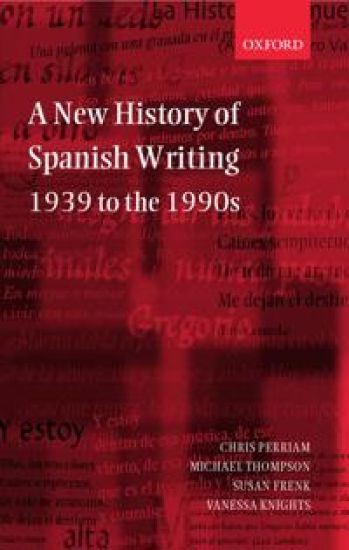
A New History of Spanish Writing, 1939 to the 1990s

A New History of Spanish Writing, 1939 to the 1990s

Chris Perriam; Michael Thompson; Susan Frenk; Vanessa Knights

Oxford University Press
2000
sidottu
A New History of Spanish Writing, 1939 to the 1990s explores the diversity of some sixty years of imaginative writing by Spaniards, its interactions with Spains peculiarly dramatic history since the end of its Civil War, and its wider thematic significance. It covers the famous and canonical texts of the most recent in Modern Spanish literature but also explores areas less well-known outside Spain (essays and editorials, queer narrative, new poetry, comics, and texts of the militant and reactionary Right). More space than is usual in literary histories is allowed for commentary on famous texts, but the book also makes room for the marginalized and for socially contextualized explorations of the interconnectedness of various forms of writing. The overall structure is not chronological but thematic, dealing with abstract and topical issues such as silence, the family, or realism.
A New History of Spanish Writing, 1939 to the 1990s

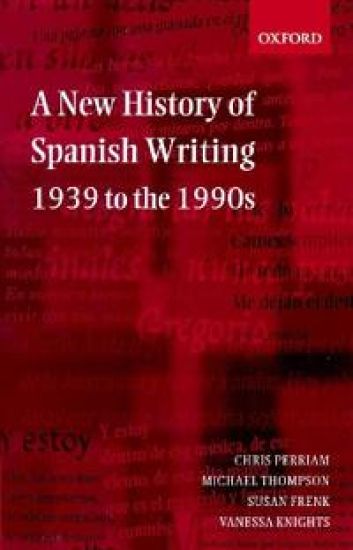
A New History of Spanish Writing, 1939 to the 1990s

Chris Perriam; Michael Thompson; Susan Frenk; Vanessa Knights

Oxford University Press
2000
nidottu
A New History of Spanish Writing, 1939 to the 1990s explores the diversity of some sixty years of imaginative writing by Spaniards, its interactions with Spains peculiarly dramatic history since the end of its Civil War, and its wider thematic significance. It covers the famous and canonical texts of the most recent in Modern Spanish literature but also explores areas less well-known outside Spain (essays and editorials, queer narrative, new poetry, comics, and texts of the militant and reactionary Right). More space than is usual in literary histories is allowed for commentary on famous texts, but the book also makes room for the marginalized and for socially contextualized explorations of the interconnectedness of various forms of writing. The overall structure is not chronological but thematic, dealing with abstract and topical issues such as silence, the family, or realism.