Kirjojen hintavertailu – 12 876 020 kirjaa ja 26 kauppaa

Kirjailija

Susan Gordon

Kirjat ja teokset yhdessä paikassa: 7 kirjaa, julkaisuja vuosilta 2011–2024, suosituimpiin kuuluu Guanacaste Snapshots. Vertaile teosten hintoja ja tarkista saatavuus suomalaisista kirjakaupoista.

7 kirjaa

Kirjojen julkaisuvuodet: 2011–2024.

Guanacaste Snapshots

Guanacaste Snapshots

Susan Gordon

Parchment Global Publishing
2024
sidottu
Like the mirror chips in a rotating ball, these stories provide reflections of the shifting realities of a small-town world in Guanacaste, Costa Rica, before it became the trendy vacation destination and retirement paradise it is today. You can delight in these intimate portraits that provide honest, personal, sometimes funny sometimes painful views of the human ironies and complexities in the experiences with the same people in the same community over a twenty-year period. Costa Rica was a not a vacation spot for the author; it was her home.
Guanacaste Snapshots

Guanacaste Snapshots

Susan Gordon

Parchment Global Publishing
2024
pokkari
Like the mirror chips in a rotating ball, these stories provide reflections of the shifting realities of a small-town world in Guanacaste, Costa Rica, before it became the trendy vacation destination and retirement paradise it is today. You can delight in these intimate portraits that provide honest, personal, sometimes funny sometimes painful views of the human ironies and complexities in the experiences with the same people in the same community over a twenty-year period. Costa Rica was a not a vacation spot for the author; it was her home.
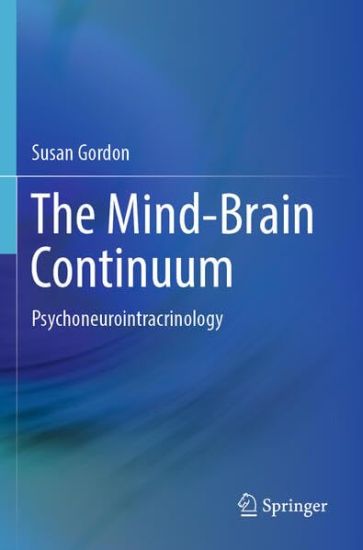
The Mind-Brain Continuum

The Mind-Brain Continuum

Susan Gordon

Springer International Publishing AG
2024
nidottu
This insightful book proposes a holistic theory of the development of self, drawing on interdisciplinary literature in existential-phenomenology, neurophenomenology, intracrinology, endocrinology, and naturopathic medicine. The psychoneurointracrine hypothesis bridges the gap between the mind and brain, providing a framework to explain the complex system that facilitates development of one’s sense of self and well-being. The book challenges assumptions in present day neuroscience and psychiatry, placing the mind and brain on a continuum of health and growth rather than reducing the study of human consciousness to neurobiological terms and pathological classifications. “In this landmark book, Susan Gordon presents a bold hypothesis, one that underscores the importance of psychoneurointracrine activity and links it to female neurology and the development of one’s sense of self. She brilliantly places this activity, which serves as a mind-body bridge, within the frameworks of neurophenomenology and non-linear dynamics. Her psychoneurointracrine hypothesis is a tour de force, one that is holistic, integrating intracrinology with psychology and neurology. This hypothesis undercuts the current assumption that the mind is an epiphenomenon of the brain, creating a paradigm that impacts science’s understanding of behavior, experience, consciousness, and human agency.” Stanley Krippner, PhD, Affiliated Distinguished Faculty, California Institute of Integral Studies, San Francisco, CA “In her fascinating book, Susan Gordon develops a novel theory about the biological connection between mind, brain, and organism. Drawing on empirical research on the role of the female hormonal system in basal states of self and mood, she shows that the biochemistry of the endocrine system must be viewed as an indispensable foundation for the emergence of embodied self-awareness. The homeostasis and hormonal balance of the organism is integral to the sense of well-being and the development of meaning, but it is also continually modulated and influenced by the subject’s experience of his or her world. In this way, she makes a decisive contribution to a theory of embodiment that goes far beyond a computational theory of the brain to focus on the biochemical-organismic processes at the root of the mind.” Thomas Fuchs, MD, PhD, Karl Jaspers Professor of Philosophy and Psychiatry, University of Heidelberg, DE

The Mind-Brain Continuum

The Mind-Brain Continuum

Susan Gordon

Springer International Publishing AG
2023
sidottu
This insightful book proposes a holistic theory of the development of self, drawing on interdisciplinary literature in existential-phenomenology, neurophenomenology, intracrinology, endocrinology, and naturopathic medicine. The psychoneurointracrine hypothesis bridges the gap between the mind and brain, providing a framework to explain the complex system that facilitates development of one’s sense of self and well-being. The book challenges assumptions in present day neuroscience and psychiatry, placing the mind and brain on a continuum of health and growth rather than reducing the study of human consciousness to neurobiological terms and pathological classifications. “In this landmark book, Susan Gordon presents a bold hypothesis, one that underscores the importance of psychoneurointracrine activity and links it to female neurology and the development of one’s sense of self. She brilliantly places this activity, which serves as a mind-body bridge, within the frameworks of neurophenomenology and non-linear dynamics. Her psychoneurointracrine hypothesis is a tour de force, one that is holistic, integrating intracrinology with psychology and neurology. This hypothesis undercuts the current assumption that the mind is an epiphenomenon of the brain, creating a paradigm that impacts science’s understanding of behavior, experience, consciousness, and human agency.” Stanley Krippner, PhD, Affiliated Distinguished Faculty, California Institute of Integral Studies, San Francisco, CA “In her fascinating book, Susan Gordon develops a novel theory about the biological connection between mind, brain, and organism. Drawing on empirical research on the role of the female hormonal system in basal states of self and mood, she shows that the biochemistry of the endocrine system must be viewed as an indispensable foundation for the emergence of embodied self-awareness. The homeostasis and hormonal balance of the organism is integral to the sense of well-being and the development of meaning, but it is also continually modulated and influenced by the subject’s experience of his or her world. In this way, she makes a decisive contribution to a theory of embodiment that goes far beyond a computational theory of the brain to focus on the biochemical-organismic processes at the root of the mind.” Thomas Fuchs, MD, PhD, Karl Jaspers Professor of Philosophy and Psychiatry, University of Heidelberg, DE

Compassionate Equestrian

Compassionate Equestrian

Allen M. Schoen; Susan Gordon

J.A.Allen Co Ltd
2015
nidottu
This marvelous book, borne of a unique collaboration between Dr Allen Schoen - a world-renowned veterinarian and author - and trainer and competitor of many years, Susan Gordon, introduces the 25 principles of compassionate equitation. These principles, conceived by Schoen and Gordon, are a set of developmental guidelines, encouraging a level of personal awareness that may be enacted not only through the reader's engagement with horses, but can be extended to all humans and sentient beings he or she encounters. The 25 Principles share stories and outline studies that identify and support methods of training, handling, and caring for horses that constitute a safe, healthy, non-stressful, and pain-free environment. Through their Compassionate Equestrian programme, the authors encourage all involved in the horse industry, worldwide, to approach training and handling with compassion and a willingness to alleviate suffering. These simple changes, that any horse person can make, can have a vast impact on the horse industry and society as a whole.