Kirjojen hintavertailu – 12 859 828 kirjaa ja 27 kauppaa

Kirjailija

Susan Kellogg

Kirjat ja teokset yhdessä paikassa: 7 kirjaa, julkaisuja vuosilta 1989–2024, suosituimpiin kuuluu A Concise History of the Aztecs. Vertaile teosten hintoja ja tarkista saatavuus suomalaisista kirjakaupoista.

7 kirjaa

Kirjojen julkaisuvuodet: 1989–2024.

A Concise History of the Aztecs

A Concise History of the Aztecs

Susan Kellogg

Cambridge University Press
2024
pokkari
Susan Kellogg's history of the Aztecs offers a concise yet comprehensive assessment of Aztec history and civilization, emphasizing how material life and the economy functioned in relation to politics, religion, and intellectual and artistic developments. Appreciating the vast number of sources available but also their limitations, Kellogg focuses on three concepts throughout – value, transformation, and balance. Aztecs created value, material, and symbolic worth. Value was created through transformations of bodies, things, and ideas. The overall goal of value creation and transformation was to keep the Aztec world—the cosmos, the earth, its inhabitants—in balance, a balance often threatened by spiritual and other forms of chaos. The book highlights the ethnicities that constituted Aztec peoples and sheds light on religion, political and economic organization, gender, sexuality and family life, intellectual achievements, and survival. Seeking to correct common misperceptions, Kellogg stresses the humanity of the Aztecs and problematizes the use of the terms 'human sacrifice', 'myth', and 'conquest'.
A Concise History of the Aztecs

A Concise History of the Aztecs

Susan Kellogg

Cambridge University Press
2024
sidottu
Susan Kellogg's history of the Aztecs offers a concise yet comprehensive assessment of Aztec history and civilization, emphasizing how material life and the economy functioned in relation to politics, religion, and intellectual and artistic developments. Appreciating the vast number of sources available but also their limitations, Kellogg focuses on three concepts throughout – value, transformation, and balance. Aztecs created value, material, and symbolic worth. Value was created through transformations of bodies, things, and ideas. The overall goal of value creation and transformation was to keep the Aztec world—the cosmos, the earth, its inhabitants—in balance, a balance often threatened by spiritual and other forms of chaos. The book highlights the ethnicities that constituted Aztec peoples and sheds light on religion, political and economic organization, gender, sexuality and family life, intellectual achievements, and survival. Seeking to correct common misperceptions, Kellogg stresses the humanity of the Aztecs and problematizes the use of the terms 'human sacrifice', 'myth', and 'conquest'.

100 Questions & Answers About Breast Cancer Sensuality, Sexuality and Intimacy

100 Questions & Answers About Breast Cancer Sensuality, Sexuality and Intimacy

Michael L. Krychman; Susan Kellogg; Sandra Finestone

Jones and Bartlett Publishers, Inc
2010
nidottu
There are almost 2 , new cases of breast cancer diagnosed in the United States every year. Virtually all of the women who undergo treatment are plagued by questions of intimacy, sexuality, and personal and professional relationships. Questions and Answers About Breast Cancer: Sensuality, Sexuality and Intimacy provides authoritative answers to the most common questions asked by women and their partners when coping with intimacy after the trauma of breast cancer. Written by renowned female sexuality and breast cancer physicians, this book offers encouragement and reassurance to those struggling to strengthen and rebuild relationships during and after breast cancer treatment. It is an invaluable guide for anyone dealing with the physical and emotional repercussions of this disease.
Weaving the Past

Weaving the Past

Susan Kellogg

Oxford University Press Inc
2005
nidottu
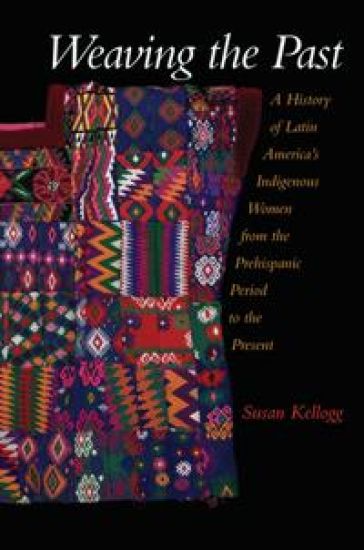
Weaving the Past offers a comprehensive and interdisciplinary history of Latin America's indigenous women. While the book concentrates on native women in Mesoamerica and the Andes, it covers indigenous people in other parts of South and Central America, including lowland peoples in and beyond Brazil, and Afro-indigenous peoples, such as the Garifuna, of Central America. Drawing on primary and secondary sources, it argues that change, not continuity, has been the norm for indigenous peoples whose resilience in the face of complex and long-term patterns of cultural change is due in no small part to the roles, actions, and agency of women. The book provides broad coverage of gender roles in native Latin America over many centuries, drawing upon a range of evidence from archaeology, anthropology, religion, and politics. Primary and secondary sources include chronicles, codices, newspaper articles, and monographic work on specific regions. Arguing that Latin America's indigenous women were the critical force behind the more important events and processes of Latin America's history, Kellogg interweaves the region's history of family, sexual, and labor history with the origins of women's power in prehispanic, colonial, and modern South and Central America. Shying away from interpretations that treat women as house bound and passive, the book instead emphasizes women's long history of performing labor, being politically active, and contributing to, even supporting, family and community well-being.
Weaving the Past

Weaving the Past

Susan Kellogg

Oxford University Press Inc
2005
sidottu
Weaving the Past offers a comprehensive and interdisciplinary history of Latin America's indigenous women. While the book concentrates on native women in Mesoamerica and the Andes, it covers indigenous people in other parts of South and Central America, including lowland peoples in and beyond Brazil, and Afro-indigenous peoples, such as the Garifuna, of Central America. Drawing on primary and secondary sources, it argues that change, not continuity, has been the norm for indigenous peoples whose resilience in the face of complex and long-term patterns of cultural change is due in no small part to the roles, actions, and agency of women. The book provides broad coverage of gender roles in native Latin America over many centuries, drawing upon a range of evidence from archaeology, anthropology, religion, and politics. Primary and secondary sources include chronicles, codices, newspaper articles, and monographic work on specific regions. Arguing that Latin America's indigenous women were the critical force behind the more important events and processes of Latin America's history, Kellogg interweaves the region's history of family, sexual, and labor history with the origins of women's power in prehispanic, colonial, and modern South and Central America. Shying away from interpretations that treat women as house bound and passive, the book instead emphasizes women's long history of performing labor, being politically active, and contributing to, even supporting, family and community well-being.
Law and the Transformation of Aztec Culture, 1500-1700

Law and the Transformation of Aztec Culture, 1500-1700

Susan Kellogg

University of Oklahoma Press
2005
nidottu
In this book, Susan Kellogg explains how Spanish law served as an instrument of cultural transformation and adaptation in the lives of Nahuatl-speaking peoples during the years 1500-1700 - the first two centuries of colonial rule. She shows that law had an impact on numerous aspects of daily life, especially gender relations, patterns of property ownership and transmission, and family and kinship organization. Based on a wide array of local-level Spanish and Nahuatl documentation and an intensive analysis of seventy-three lawsuits over property involving Indians residing in colonial Mexico City (Tenochtitlán), this work reveals how legal documentation offers important clues to attitudes and perceptions.
Domestic Revolutions

Domestic Revolutions

Steven Mintz; Susan Kellogg

The Free Press
1989
pokkari
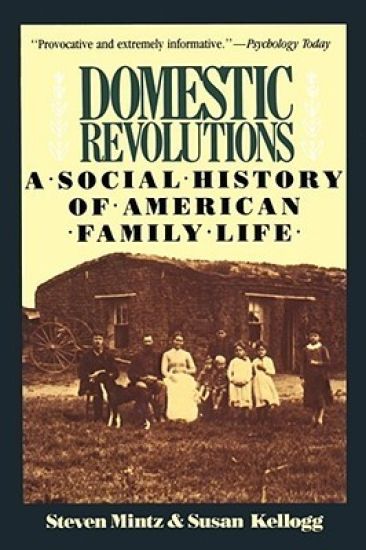
Based on a wide reading of letters, diaries and other contemporary documents, Mintz, an historian, and Kellogg, an anthropologist, examine the changing definition of “family” in the United States over the course of the last three centuries, beginning with the modified European model of the earliest settlers. From there they survey the changes in the families of whites (working class, immigrants, and middle class) and blacks (slave and free) since the Colonial years, and identify four deep changes in family structure and ideology: the democratic family, the companionate family, the family of the 1950s, and lastly, the family of the '80s, vulnerable to societal changes but still holding together.