Kirjojen hintavertailu – 12 903 724 kirjaa ja 27 kauppaa

Kirjailija

Susan Lawrence

Kirjat ja teokset yhdessä paikassa: 6 kirjaa, julkaisuja vuosilta 2010–2023, suosituimpiin kuuluu Re/Writing the Center. Vertaile teosten hintoja ja tarkista saatavuus suomalaisista kirjakaupoista.

6 kirjaa

Kirjojen julkaisuvuodet: 2010–2023.

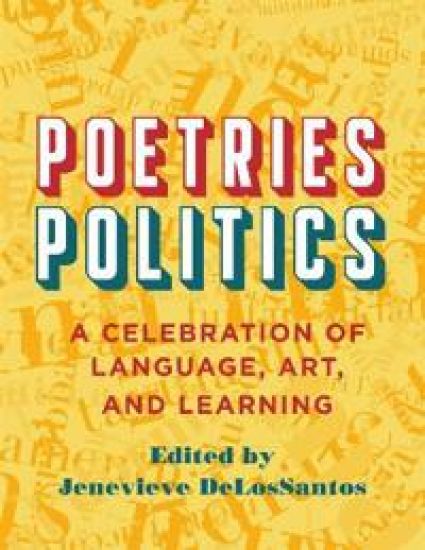
Poetries - Politics

Poetries - Politics

Susan Lawrence

RUTGERS UNIVERSITY PRESS
2023
sidottu
Poetries – Politics: A Celebration of Language, Art, and Learning celebrates the best of innovative humanities pedagogy and creative graphic design. Designed and implemented during a time of political divisiveness, the Poetries – Politics project created a space of inviting, multilingual walls on the Rutgers campus, celebrating diversity, community, and cross-cultural exchange. This book, like the original project, provides a platform for the incredible generative power of student-led work. Essays feature the perspectives of three students and professors originally involved in the project, reflecting on their learning and exploring the works they selected for the original exhibition. The essays lead to a beautifully illustrated catalogue of the original student designs. Reproduced in full color and with the accompanying poems in both their original language and a translation, this catalogue commemorates the incredible creative spirit of the project and provides a new way of contemplating these great poetic works.
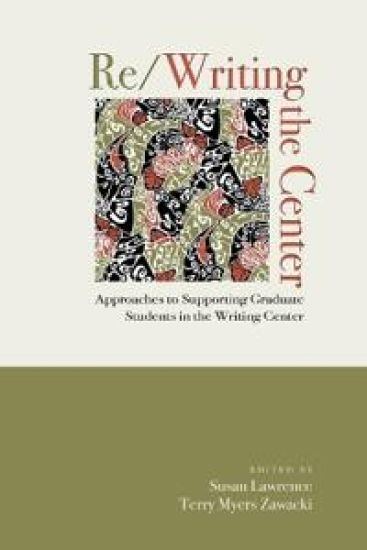
Re/Writing the Center

Re/Writing the Center

Susan Lawrence; Terry Myers Zawacki

University Press of Colorado
2019
nidottu
Re/Writing the Center illuminates how core writing center pedagogies and institutional arrangements are complicated by the need to create intentional, targeted support for advanced graduate writers. Most writing center tutors are undergraduates, whose lack of familiarity with the genres, preparatory knowledge, and research processes integral to graduate-level writing can leave them underprepared to assist graduate students. Complicating the issue is that many of the graduate students who take advantage of writing center support are also international students. The essays in this volume show how to navigate the divide between traditional writing center theory and practices, developed to support undergraduate writers, and the growing demand for writing centers to meet the needs of advanced graduate writers. Contributors address core assumptions of writing center pedagogy, such as the concept of peers and peer tutoring, the emphasis on one-to-one tutorials, the positioning of tutors as generalists rather than specialists, and even the notion of the writing center as the primary location or center of the tutoring process. Re/Writing the Center offers an imaginative perspective on the benefits writing centers can offer to graduate students and on the new possibilities for inquiry and practice graduate students can inspire in the writing center. Contributors Laura Brady, Michelle Cox, Thomas Deans, Paula Gillespie​, Mary Glavan, Marilyn Gray​, James Holsinger​, Elena Kallestinova, Tika Lamsal​, Patrick S. Lawrence, Elizabeth Lenaghan, Michael A. Pemberton​, Sherry Wynn Perdue​, Doug Phillips, Juliann Reineke​, Adam Robinson​, Steve Simpson, Nathalie Singh-Corcoran​, Ashly Bender Smith, Sarah Summers​, Molly Tetreault​, Joan Turner, Bronwyn T. Williams, Joanna Wolfe
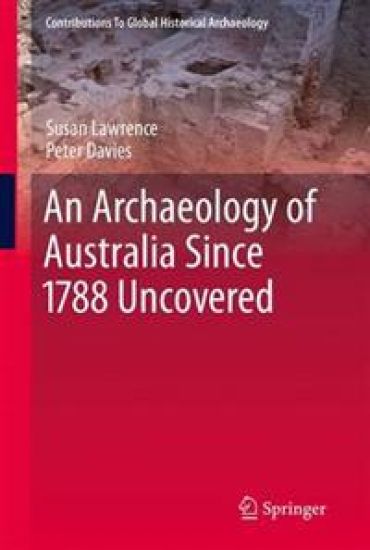
An Archaeology of Australia Since 1788

An Archaeology of Australia Since 1788

Susan Lawrence; Peter Davies

Springer-Verlag New York Inc.
2012
nidottu
This volume provides an important new synthesis of archaeological work carried out in Australia on the post-contact period. It draws on dozens of case studies from a wide geographical and temporal span to explore the daily life of Australians in settings such as convict stations, goldfields, whalers' camps, farms, pastoral estates and urban neighbourhoods. The different conditions experienced by various groups of people are described in detail, including rich and poor, convicts and their superiors, Aboriginal people, women, children, and migrant groups. The social themes of gender, class, ethnicity, status and identity inform every chapter, demonstrating that these are vital parts of human experience, and cannot be separated from archaeologies of industry, urbanization and culture contact. The book engages with a wide range of contemporary discussions and debates within Australian history and the international discipline of historical archaeology. The colonization of Australia was part of the international expansion of European hegemony in the eighteenth and nineteenth century. The material discussed here is thus fundamentally part of the global processes of colonization and the creation of settler societies, the industrial revolution, the development of mass consumer culture, and the emergence of national identities. Drawing out these themes and integrating them with the analysis of archaeological materials highlights the vital relevance of archaeology in modern society.
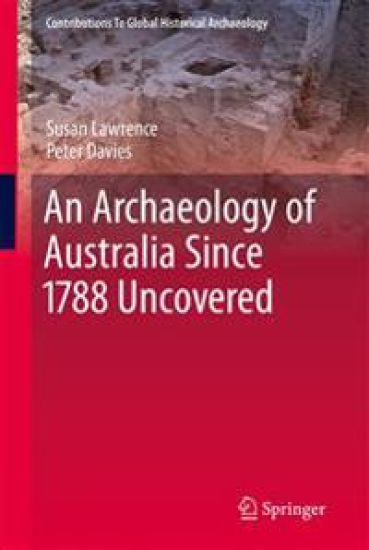
An Archaeology of Australia Since 1788

An Archaeology of Australia Since 1788

Susan Lawrence; Peter Davies

Springer-Verlag New York Inc.
2010
sidottu
This volume provides an important new synthesis of archaeological work carried out in Australia on the post-contact period. It draws on dozens of case studies from a wide geographical and temporal span to explore the daily life of Australians in settings such as convict stations, goldfields, whalers' camps, farms, pastoral estates and urban neighbourhoods. The different conditions experienced by various groups of people are described in detail, including rich and poor, convicts and their superiors, Aboriginal people, women, children, and migrant groups. The social themes of gender, class, ethnicity, status and identity inform every chapter, demonstrating that these are vital parts of human experience, and cannot be separated from archaeologies of industry, urbanization and culture contact. The book engages with a wide range of contemporary discussions and debates within Australian history and the international discipline of historical archaeology. The colonization of Australia was part of the international expansion of European hegemony in the eighteenth and nineteenth century. The material discussed here is thus fundamentally part of the global processes of colonization and the creation of settler societies, the industrial revolution, the development of mass consumer culture, and the emergence of national identities. Drawing out these themes and integrating them with the analysis of archaeological materials highlights the vital relevance of archaeology in modern society.