Kirjojen hintavertailu – 12 859 818 kirjaa ja 27 kauppaa
Kirjailija
Susan Merrill Squier
Kirjat ja teokset yhdessä paikassa: 7 kirjaa, julkaisuja vuosilta 2004–2025, suosituimpiin kuuluu Graphic Reproduction. Vertaile teosten hintoja ja tarkista saatavuus suomalaisista kirjakaupoista.
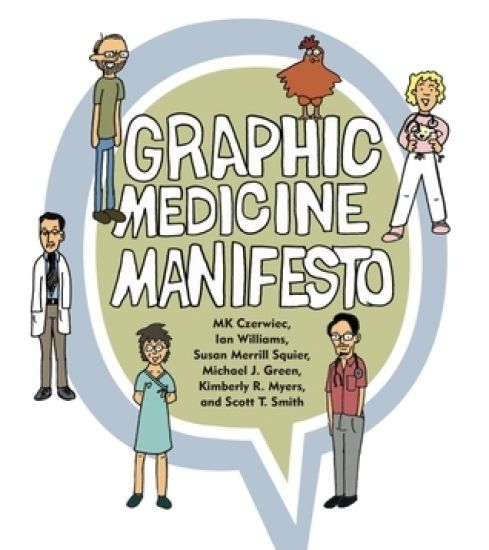
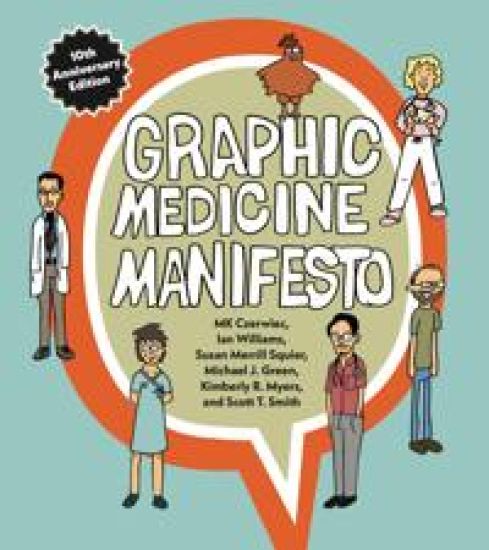
A decade ago, Graphic Medicine Manifesto established a bold new framework for understanding the intersection of comics and healthcare. It was a call to action—an invitation to rethink the ways we engage with medicine, illness, disability, and caregiving through the power of visual storytelling. Now, ten years later, this landmark volume returns in a special anniversary edition that expands and reimagines its mission for a new era. With a new critical preface, this tenth-anniversary edition reflects on Graphic Medicine Manifesto’s legacy and its impact on healthcare, scholarship, and comics. It reaffirms the power of comics to challenge disciplines, amplify marginalized voices, and transform teaching in a range of health fields. Organized into six sections, the introduction explores the manifesto’s origins and ongoing relevance, its role as a radical tool in comics, the power of storytelling in health education, the expanding influence of graphic medicine on disability studies and the humanities, the importance of community and collaboration in breaking disciplinary silos, and the future of the field. Featuring these newly contextualized insights alongside the original essays and visual narratives by Ian Williams, MK Czerwiec, and other leading practitioners, this new edition reaffirms Graphic Medicine Manifesto as an essential text for scholars, healthcare professionals, creators, and anyone engaging with medicine, illness, and caregiving through the power of comics.

This comics anthology delves deeply into the messy and often taboo subject of human reproduction. Featuring work by luminaries such as Carol Tyler, Alison Bechdel, and Joyce Farmer, Graphic Reproduction is an illustrated challenge to dominant cultural narratives about conception, pregnancy, and childbirth. The comics here expose the contradictions, complexities, and confluences around diverse individual experiences of the entire reproductive process, from trying to conceive to child loss and childbirth. Jenell Johnson’s introduction situates comics about reproduction within the growing field of graphic medicine and reveals how they provide a discursive forum in which concepts can be explored and presented as uncertainties rather than as part of a prescribed or expected narrative. Through comics such as Lyn Chevley’s groundbreaking “Abortion Eve,” Bethany Doane’s “Pushing Back: A Home Birth Story,” Leah Hayes’s “Not Funny Ha-Ha,” and “Losing Thomas & Ella: A Father’s Story,” by Marcus B. Weaver-Hightower, the collection explores a myriad of reproductive experiences and perspectives. The result is a provocative, multifaceted portrait of one of the most basic and complicated of all human experiences, one that can be hilarious and heartbreaking. Featuring work by well-known comics artists as well as exciting new voices, this incisive collection is an important and timely resource for understanding how reproduction intersects with sociocultural issues. The afterword and a section of discussion exercises and questions make it a perfect teaching tool.
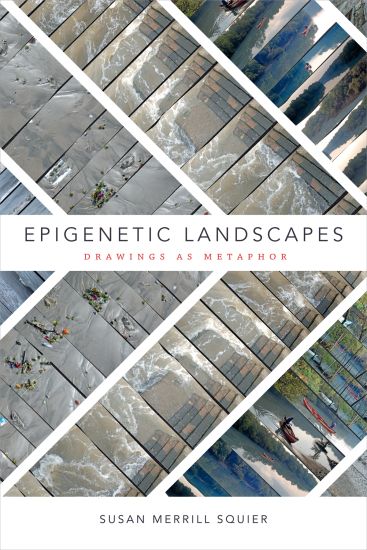
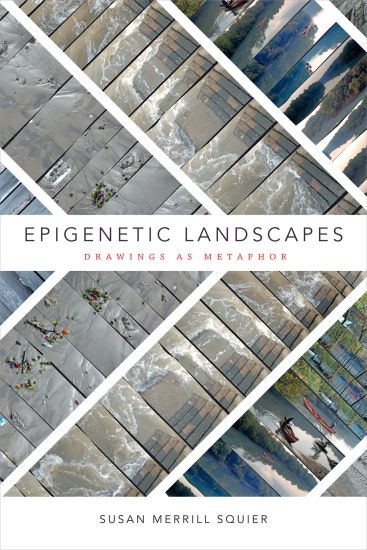
Devised in the 1940s by the biologist C. H. Waddington, the epigenetic landscape is a metaphor for how gene regulation modulates cellular development. As a scientific model, it fell out of use in the late 1960s but returned at the beginning of the twenty-first century with the advent of big-data genomic research because of its utility among scientists across the life sciences to think more creatively about and to discuss genetics. In Epigenetic Landscapes Susan Merrill Squier follows the model’s cultural trail, from its first visualization by the artist John Piper to its use beyond science. Squier examines three cases in which the metaphor has been imaginatively deployed to illustrate complex systems that link scientific and cultural practices: graphic medicine, landscape architecture, and bioArt. Challenging reductive understandings of epigenetics, Squier boldly reclaims the broader significance of the epigenetic landscape as a figure at the nexus of art, design, and science.
This inaugural volume in the Graphic Medicine series establishes the principles of graphic medicine and begins to map the field. The volume combines scholarly essays by members of the editorial team with previously unpublished visual narratives by Ian Williams and MK Czerwiec, and it includes arresting visual work from a wide range of graphic medicine practitioners. The book’s first section, featuring essays by Scott Smith and Susan Squier, argues that as a new area of scholarship, research on graphic medicine has the potential to challenge the conventional boundaries of academic disciplines, raise questions about their foundations, and reinvigorate literary scholarship—and the notion of the literary text—for a broader audience. The second section, incorporating essays by Michael Green and Kimberly Myers, demonstrates that graphic medicine narratives can engage members of the health professions with literary and visual representations and symbolic practices that offer patients, family members, physicians, and other caregivers new ways to experience and work with the complex challenges of the medical experience. The final section, by Ian Williams and MK Czerwiec, focuses on the practice of creating graphic narratives, iconography, drawing as a social practice, and the nature of comics as visual rhetoric. A conclusion (in comics form) testifies to the diverse and growing graphic medicine community. Two valuable bibliographies guide readers to comics and scholarly works relevant to the field.
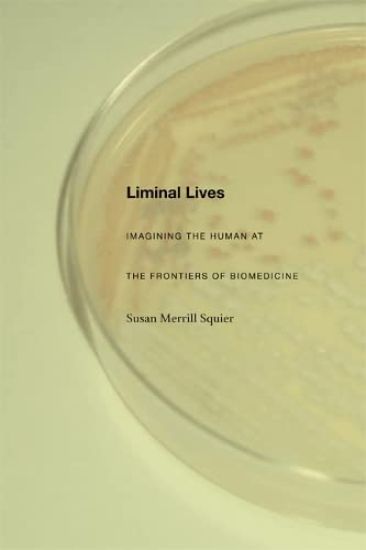
Embryo adoptions, stem cells capable of transforming into any cell in the human body, intra- and inter-species organ transplantation-these and other biomedical advances have unsettled ideas of what it means to be human, of when life begins and ends. In the first study to consider the cultural impact of the medical transformation of the entire human life span, Susan Merrill Squier argues that fiction-particularly science fiction-serves as a space where worries about ethically and socially charged scientific procedures are worked through. Indeed, she demonstrates that in many instances fiction has anticipated and paved the way for far-reaching biomedical changes. Squier uses the anthropological concept of liminality-the state of being on the threshold of change, no longer one thing yet not quite another-to explore how, from the early twentieth century forward, fiction and science together have altered not only the concept of the human being but the contours of human life. Drawing on archival materials of twentieth-century biology; little-known works of fiction and science fiction; and twentieth- and twenty-first century U. S. and U. K. government reports by the National Institutes of Health, the Parliamentary Advisory Group on the Ethics of Xenotransplantation, and the President’s Council on Bioethics, she examines a number of biomedical changes as each was portrayed by scientists, social scientists, and authors of fiction and poetry. Among the scientific developments she considers are the cultured cell, the hybrid embryo, the engineered intrauterine fetus, the child treated with human growth hormone, the process of organ transplantation, and the elderly person rejuvenated by hormone replacement therapy or other artificial means. Squier shows that in the midst of new phenomena such as these, literature helps us imagine new ways of living. It allows us to reflect on the possibilities and perils of our liminal lives.