Kirjojen hintavertailu – 12 903 725 kirjaa ja 27 kauppaa

Kirjailija

Susan Rowland

Kirjat ja teokset yhdessä paikassa: 26 kirjaa, julkaisuja vuosilta 2001–2025, suosituimpiin kuuluu The Swan Lake Murders. Vertaile teosten hintoja ja tarkista saatavuus suomalaisista kirjakaupoista.

26 kirjaa

Kirjojen julkaisuvuodet: 2001–2025.

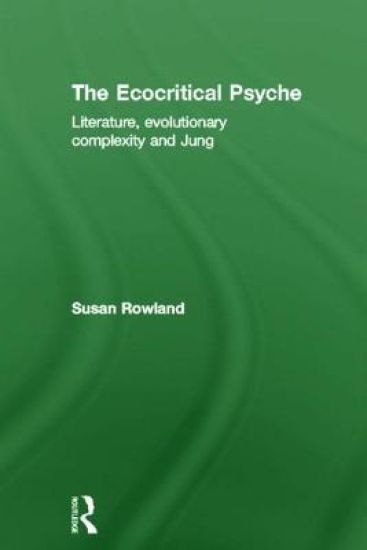
The Ecocritical Psyche

The Ecocritical Psyche

Susan Rowland

Routledge
2011
sidottu
The Ecocritical Psyche unites literary studies, ecocriticism, Jungian ideas, mythology and complexity evolution theory for the first time, developing the aesthetic aspect of psychology and science as deeply as it explores evolution in Shakespeare and Jane Austen. In this book, Susan Rowland scrutinizes literature to understand how we came to treat 'nature' as separate from ourselves and encourages us to re-think what we call 'human.' By digging into symbolic, mythological and evolutionary fertility in texts such as The Secret Garden, The Tempest, Wuthering Heights and The Lion, the Witch and the Wardrobe, the book argues that literature is where the imagination, estranged from nature in modernity, is rooted in the non-human other. The Ecocritical Psyche is unique in its interdisciplinary expansion of literature, psyche, science and myth. It develops Jungian aesthetics to show how Jung's symbols correlate with natural signifying, providing analytical psychology with a natural home in ecocritical literary theory. The book is therefore essential reading for seasoned analysts and those in training as well as academics involved in literary studies and Jungian psychology.
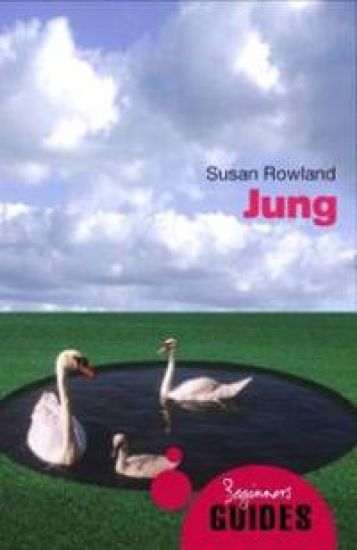
Jung

Jung

Susan Rowland

Oneworld Publications
2009
nidottu
Renowned as one of the architects of psychoanalytic theory, Carl Gustav Jung devoted his career to exploring the unknown depths of the human subconscious, and in doing so left a legacy to the literature, science and sociology of the modern era. In addition to explaining his key ideas - synchronicity, archetypes, the collective subconscious, and introversion/extroversion - this lively introduction examines Jung's cultural criticism of the modern world, his political intuitions, and his later fascination with spiritualism.
Jung as a Writer

Jung as a Writer

Susan Rowland

Routledge
2005
sidottu
Jung as a Writer traces a relationship between Jung and literature by analysing his texts using the methodology of literary theory. This investigation serves to illuminate the literary nature of Jung’s writing in order to shed new light on his psychology and its relationship with literature as a cultural practice. Jung employed literary devices throughout his writing, including direct and indirect argument, anecdote, fantasy, myth, epic, textual analysis and metaphor. Susan Rowland examines Jung’s use of literary techniques in several of his works, including Anima and Animus, On the Nature of the Psyche, Psychology and Alchemy and Synchronicity and describes Jung’s need for literature in order to capture in writing his ideas about the unconscious. Jung as a Writer succeeds in demonstrating Jung’s contribution to literary and cultural theory in autobiography, gender studies, postmodernism, feminism, deconstruction and hermeneutics and concludes by giving a new culturally-orientated Jungian criticism. The application of literary theory to Jung’s works provides a new perspective on Jungian Psychology that will be of interest to anyone involved in the study of Jung, Psychoanalysis, literary theory and cultural studies.
Jung as a Writer

Jung as a Writer

Susan Rowland

Routledge
2005
nidottu
Jung as a Writer traces a relationship between Jung and literature by analysing his texts using the methodology of literary theory. This investigation serves to illuminate the literary nature of Jung’s writing in order to shed new light on his psychology and its relationship with literature as a cultural practice. Jung employed literary devices throughout his writing, including direct and indirect argument, anecdote, fantasy, myth, epic, textual analysis and metaphor. Susan Rowland examines Jung’s use of literary techniques in several of his works, including Anima and Animus, On the Nature of the Psyche, Psychology and Alchemy and Synchronicity and describes Jung’s need for literature in order to capture in writing his ideas about the unconscious. Jung as a Writer succeeds in demonstrating Jung’s contribution to literary and cultural theory in autobiography, gender studies, postmodernism, feminism, deconstruction and hermeneutics and concludes by giving a new culturally-orientated Jungian criticism. The application of literary theory to Jung’s works provides a new perspective on Jungian Psychology that will be of interest to anyone involved in the study of Jung, Psychoanalysis, literary theory and cultural studies.
Jung

Jung

Susan Rowland

Polity Press
2001
sidottu
Jung: A Feminist Revision explores the relationship between feminist theory and Jungian studies. It combines an original student-friendly introduction to Jung, his life and work, his treatment of gender and the range of post-Jungian gender theory, with new research linking Jung to deconstruction, post-Freudian feminism, postmodernism, the sublime, and the postmodern body. Feminism has neglected Jung to its own detriment. While evaluating the reasons for this neglect, Jung: A Feminist Revision uses the diversity of feminist critical tools from historical analysis to poststructuralism. In a fresh and illuminating study, this book provides both a critique of Jung and demonstrates his positive potential for future feminisms. New theories are explored which develop relationships between the work of Jung and Jacques Lacan, Luce Irigaray, Hélène Cixous, Julia Kristeva and Judith Butler. Particular attention is paid to the growth of post-Jungian studies of gender. This includes a cogent study of the tradition of Jungian feminism that looks to ‘the feminine principle' and narratives of goddesses. Jungian 'goddess' feminism's enduring appeal is re-examined in the context of postmodern re-thinking of subjectivity and gender. The book proposes a re-orientation of Jungian studies in its relationship to feminism. The result is an accessible text that introduces Jung and sets out his relevance to contemporary feminisms. This book will be essential reading for undergraduates and postgraduates studying feminist theory, psychoanalytical theory, literature and psychology.
Jung

Jung

Susan Rowland

Polity Press
2001
nidottu
This work combines an introduction to Jung, his life and work, his treatment of gender and the range of post-Jungian gender theory, with contemporary research linking Jung to deconstruction, post-Freudian feminism, postmodernism, the sublime and the postmodern body.