Kirjojen hintavertailu – 12 903 725 kirjaa ja 27 kauppaa

Kirjailija

Susan Schroeder

Kirjat ja teokset yhdessä paikassa: 5 kirjaa, julkaisuja vuosilta 1999–2023, suosituimpiin kuuluu Idea of a New General History of North America. Vertaile teosten hintoja ja tarkista saatavuus suomalaisista kirjakaupoista.

5 kirjaa

Kirjojen julkaisuvuodet: 1999–2023.

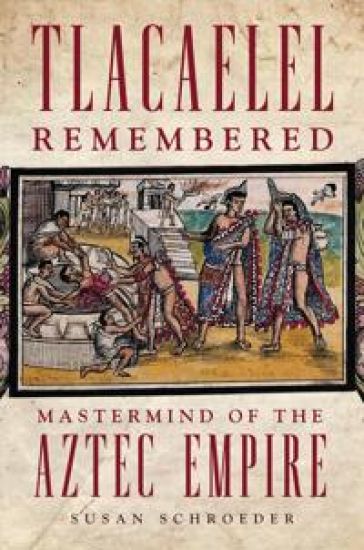
Tlacaelel Remembered

Tlacaelel Remembered

Susan Schroeder

UNIVERSITY OF OKLAHOMA PRESS
2023
nidottu
The enigmatic and powerful Tlacaelel (1398–1487), wrote annalist Chimalpahin, was “the beginning and origin” of the Mexica monarchy in fifteenth-century Mesoamerica. Brother of the first Moteuczoma, Tlacaelel would become “the most powerful, feared, and esteemed man of all that the world had seen up to that time.” But this outsize figure of Aztec history has also long been shrouded in mystery. In Tlacaelel Remembered, the first biography of the Mexica nobleman, Susan Schroeder searches out the truth about his life and legacy. A century after Tlacaelel’s death, in the wake of the conquistadors, Spaniards and natives recorded the customs, histories, and language of the Nahua, or Aztec, people. Three of these chroniclers—fray Diego DurÁn, don Hernando Alvarado Tezozomoc, and especially don Domingo de San AntÓn MuÑÓn Chimalpahin Quauhtlehuanitzin—wrote of Tlacaelel. But the inaccessibility of Chimalpahin’s annals has meant that for centuries of Aztec history, Tlacaelel has appeared, if at all, as a myth. Working from Chimalpahin’s newly available writings and exploring connections and variances in other source materials, Schroeder draws the clearest possible portrait of Tlacaelel, revealing him as the architect of the Aztec empire’s political power and its military might—a politician on par with Machiavelli. As the advisor to five Mexica rulers, Tlacaelel shaped the organization of the Mexica state and broadened the reach of its empire—feats typically accomplished with the spread of warfare, human sacrifice, and cannibalism. In the annals, he is considered the “second king” to the rulers who built the empire, and is given the title “Cihuacoatl,” used for the office of president and judge. As Schroeder traces Tlacaelel through the annals, she also examines how his story was transmitted and transformed in later histories. The resulting work is the most complete and comprehensive account ever given of this significant figure in Mesoamerican history.
Tlacaelel Remembered

Tlacaelel Remembered

Susan Schroeder

University of Oklahoma Press
2016
sidottu
The enigmatic and powerful Tlacaelel (1398-1487), wrote annalist Chimalpahin, was ""the beginning and origin"" of the Mexica monarchy in fifteenth-century Mesoamerica. Brother of the first Moteuczoma, Tlacaelel would become ""the most powerful, feared, and esteemed man of all that the world had seen up to that time."" But this outsize figure of Aztec history has also long been shrouded in mystery. In Tlacaelel Remembered, the first biography of the Mexica nobleman, Susan Schroeder searches out the truth about his life and legacy. A century after Tlacaelel's death, in the wake of the conquistadors, Spaniards and natives recorded the customs, histories, and language of the Nahua, or Aztec, people. Three of these chroniclers - fray Diego Durán, don Hernando Alvarado Tezozomoc, and especially don Domingo de San Antón Muñón Chimalpahin Quauhtlehuanitzin - wrote of Tlacaelel. But the inaccessibility of Chimalpahin's annals has meant that for centuries of Aztec history, Tlacaelel has appeared, if at all, as a myth. Working from Chimalpahin's newly available writings and exploring connections and variances in other source materials, Schroeder draws the clearest possible portrait of Tlacaelel, revealing him as the architect of the Aztec empire's political power and its military might - a politician on par with Machiavelli. As the advisor to five Mexica rulers, Tlacaelel shaped the organization of the Mexica state and broadened the reach of its empire - feats typically accomplished with the spread of warfare, human sacrifice, and cannibalism. In the annals, he is considered the ""second king"" to the rulers who built the empire, and is given the title ""Cihuacoatl,"" used for the office of president and judge. As Schroeder traces Tlacaelel through the annals, she also examines how his story was transmitted and transformed in later histories. The resulting work is the most complete and comprehensive account ever given of this significant figure in Mesoamerican history.
Idea of a New General History of North America

Idea of a New General History of North America

Lorenzo Boturini Benaduci; Susan Schroeder

University of Oklahoma Press
2015
sidottu
A Spaniard originally from Italy, the polymath Lorenzo Boturini Benaduci (1702-1753), known as Boturini, traveled to New Spain in 1736. Becoming fascinated by the Mesoamerican cultures of the New World, he collected and copied native writings - and learned Nahuatl, the language in which most of these documents were written. Boturini's incomparable collection - confiscated, neglected, and dispersed after the Spanish crown condemned his intellectual pursuits - became the basis of his Idea of a New General History of North America. The volume, completed in 1746 and written almost entirely from memory, is presented here in English for the first time, along with the Catálogo, Boturini's annotated enumeration of the works he had gathered in New Spain. Stafford Poole's lucid and nuanced translation of the Idea and Catálogo allows Anglophone readers to fully appreciate Boturini's unique accomplishment and his unparalleled and sympathetic knowledge of the native peoples of eighteenth-century Mexico. Poole's introduction puts Boturini's feat of memory and scholarship into historical context: Boturini was documenting the knowledge and skills of native Americans whom most Europeans were doing their utmost to denigrate. Through extensive, thoughtful annotations, Poole clarifies Boturini's references to Greco-Roman mythology, authors from classical antiquity, humanist works, ecclesiastical and legal sources, and terms in Nahuatl, Spanish, Latin, and Italian. In his notes to the Catálogo, he points readers to transcriptions and translations of the original materials in Boturini's archive that exist today. Invaluable for the new light they shed on Mesoamerican language, knowledge, culture, and religious practices, the Idea of a New General History of North America and the Catálogo also offer a rare perspective on the intellectual practices and prejudices of the Bourbon era - and on one of the most curious and singular minds of the time.
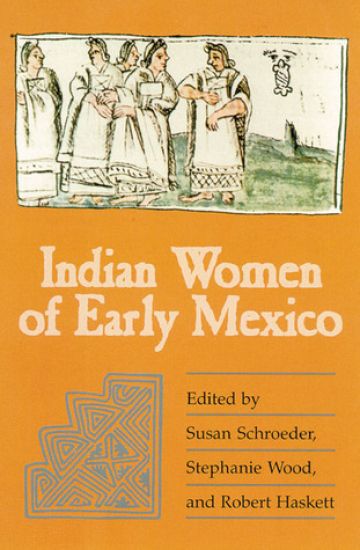
Indian Women of Early Mexico

Indian Women of Early Mexico

Susan Schroeder; Stephanie Wood; Robert Haskett

University of Oklahoma Press
1999
nidottu
This volume counters the stereotype that Indian women are without history. Neither silent nor invisible, women of early Mexico were active participants in society and critically influenced the direction history would take. This collection of essays by leading scholars in Mexican ethnohistory, edited by Susan Schroeder, Stephanie Wood, and Robert Haskett, examines the life experiences of Indian women in preconquest and colonial Mexico.