Kirjojen hintavertailu – 12 875 098 kirjaa ja 26 kauppaa

Kirjailija

Susan Sontag

Kirjat ja teokset yhdessä paikassa: 76 kirjaa, julkaisuja vuosilta 1979–2026, suosituimpiin kuuluu To Tell a Story. Vertaile teosten hintoja ja tarkista saatavuus suomalaisista kirjakaupoista.

76 kirjaa

Kirjojen julkaisuvuodet: 1979–2026.

Death Kit

Death Kit

Susan Sontag

Picador USA
2002
nidottu
First published in 1967, "Death Kit"--Susan Sontag's second novel--is a classic of modern fiction. Blending realism and dream, it offers a passionate exploration of the recesses of the American conscience.
The Benefactor

The Benefactor

Susan Sontag

St. Martins Press-3pl
2002
nidottu
"The Benefactor," Susan Sontag's first book and first novel, originally published in 1963, introduced a unique writer to the world. In the form of a memoir by a latter-day Candide named Hippolyte, "The Benefactor" leads us on a kind of psychic Grand Tour, in which Hippolyte's violently imaginative dream life becomes indistinguishable from his surprising experiences in the 'real world.' Sontag's novel supplies a fascinating, knowing, acerbic portrait of a certain bohemian demimonde that flourished in France until quite recently. More important, "The Benefactor "is a novel about ideas-especially religious ideas-unlike any other: funny, acrobatic, disturbing, profound.
Styles of Radical Will

Styles of Radical Will

Susan Sontag

St Martin's Press
2002
pokkari

Halvin toimitettuna 24,20 €

"Styles of Radical Will," Susan Sontag's second collection of essays, extends the investigations she undertook in "Against Interpretation" with essays on film, literature, politics, and a groundbreaking study of pornography.
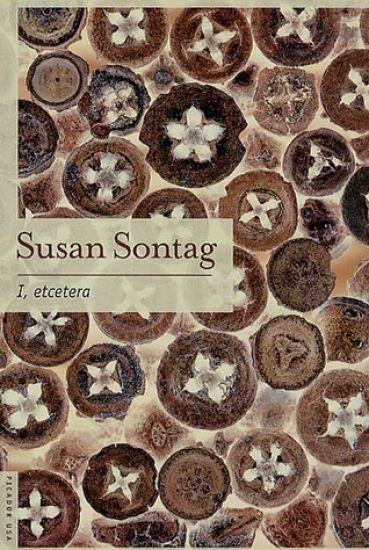
I, Etcetera

I, Etcetera

Susan Sontag

Picador USA
2002
nidottu
In eight stories, this singular collection of short fiction written over the course of ten years explores the terrain of modern urban life. In reflective, telegraphic prose, Susan Sontag confronts the reader with exposed workings of an impassioned intellect in narratives seamed with many of the themes of her essays the nature of knowing, our relationship with the past, and the future in an alienated present."
On Photography

On Photography

Susan Sontag

Picador USA
2001
nidottu
Winner of the National Book Critics' Circle Award for Criticism. One of the most highly regarded books of its kind, Susan Sontag's On Photography first appeared in 1977 and is described by its author as "a progress of essays about the meaning and career of photographs." It begins with the famous "In Plato's Cave"essay, then offers five other prose meditations on this topic, and concludes with a fascinating and far-reaching "Brief Anthology of Quotations."
Against Interpretation: And Other Essays
Includes the essay "Notes on Camp," the inspiration for the 2019 exhibition Notes on Fashion: Camp at the Costume Institute of the Metropolitan Museum of Art Against Interpretation was Susan Sontag's first collection of essays and is a modern classic. Originally published in 1966, it has never gone out of print and has influenced generations of readers all over the world. It includes the groundbreaking essays "Notes on Camp" and "Against Interpretation," as well as her impassioned discussions of Sartre, Camus, Simone Weil, Godard, Beckett, Levi-Strauss, science-fiction movies, psychoanalysis, and contemporary religious thought. This edition has a new afterword, "Thirty Years Later," in which Sontag restates the terms of her battle against philistinism and against ethical shallowness and indifference.
Illness as Metaphor and AIDS and Its Metaphors

Illness as Metaphor and AIDS and Its Metaphors

Susan Sontag

Picador USA
2001
nidottu

Halvin toimitettuna 21,10 €

Susan Sontag's celebrated essays on cancer and AIDS now available in one volume. In 1978, Sontag wrote Illness as Metaphor, a classic work described by Newsweek as "one of the most liberating books of its time." A cancer patient herself when she was writing the book, Sontag shows how the metaphors and myths surrounding certain illnesses, especially cancer, add greatly to the suffering of patients and often inhibit them from seeking proper treatment. By demystifying the fantasies surrounding cancer, Sontag shows cancer for what it is--just a disease. Cancer, she argues, is not a curse, not a punishment, certainly not an embarrassment; and it is highly curable, if good treatment is followed. Almost a decade later, with the outbreak of a new, stigmatized disease replete with mystifications and punitive metaphors, Sontag wrote a sequel to Illness as Metaphor, extending the argument of the earlier book to the AIDS pandemic. These two essays now published together, Illness as Metaphor and AIDS and Its Metaphors, have been translated into many languages and continue to have an enormous influence on the thinking of medical professionals and, above all, on the lives of many thousands of patients and caregivers.
In America

In America

Susan Sontag

St. Martins Press-3pl
2001
nidottu
In America is a kaleidoscopic portrait of America on the cusp of modernity. As she did in her enormously popular novel The Volcano Lover, Susan Sontag casts a story located in the past in a fresh, provocative light to create a fictional world full of contemporary resonance. In 1876 a group of Poles led by Maryna Zalezowska, Poland's greatest actress, emigrate to the United States and travel to California to found a "utopian commune." When the commune fails, Maryna stays, learns English, and--as Marina Zalenska--forges a new, even more triumphant career on the American stage, becoming a diva on par with Sara Bernhardt. In America is about many things: a woman's search for self-transformation; the fate of idealism; a life in the theater; the many varieties of love; and, not least of all, stories and storytelling itself. Operatic in the scope and intensity of the emotions it depicts, richly detailed and visionary in its account of America, and peopled with unforgettable characters. In America is the winner of the 2000 National Book Award for Fiction.
Der Liebhaber des Vulkans

Der Liebhaber des Vulkans

Susan Sontag

S. Fischer Verlag
1996
pokkari
Europa im ausgehenden 18. Jahrhundert, eine Zeit der revolutionären Umbrüche, der neuen Orientierungen und der restaurativen Tendenzen - diese dramatische Epoche bildet den historischen Hintergrund für Susan Sontags "ambitionierten erzählerischen Versuch, eine der bekanntesten und wahrschein-lich aufs genaueste dokumentierten Dreiecksbeziehungen der Weltgeschichte" (Johannes Willms) darzustellen: die zwischen Sir William Hamilton, dem britischen Gesandten in Neapel, seiner um 51 Jahre jüngeren Frau Emma und Lord Nelson, dem Seehelden Englands. Sir William Hamilton - Altertumsforscher, leidenschaftlicher Sammler und Diplomat - ist der "Vulcano Lover", der bei den Ausgrabungen von Herculaneum und Pompeji zugegen war und oftmals den Vesuv bestieg. Fasziniert von der unberechenbaren Naturgewalt des Vulkans und gleichermaßen gefesselt von der Kunst der schönen Dinge, die er sammelt, verkörpert Sir Hamilton in idealer Weise den für seine Zeit typischen, durch Besitz und Bildung ausgezeichneten, interessierten Dilettanten. Den Gipfel aller Natur- und Kunstfreude aber glaubt er in der wegen ihrer außerordentlichen Schönheit gerühmten Emma gefunden zu haben, die wiederum dem Held der Seeschlacht am Nil ihre Gunst schenkt. Um dieses Dreigestirn bewegen sich die anderen Personen des Romans: der fette und politisch inkompetente König von Neapel und seine Königin Maria Karolina, eine enge Freundin Emmas, der dekadente Dandy William Beckford, die adelige Revolutionärin und Dichterin Eleonora Fonseca de Pimentel und als Zaungast - Goethe auf seiner italienischen Reise. Beherrscht aber wird die Szenerie vom Vesuv, der sich über der Stadt erhebt und ihrem lebensgierigen, leichtsinnigen Treiben eine bedrohliche Atmosphäre verleiht. Susan Sontag hat am Fuß des feuerspeienden Vesuvs Menschen zusammengeführt, die das Drama des Umbruchs in Europa exemplarisch aufführen.
Kunst und Antikunst

Kunst und Antikunst

Susan Sontag

S. Fischer Verlag
1982
pokkari
:Against Interpretation9 - so der Originaltitel - begründete den Ruhm Susan Sontags. Die Autorin nannte ihre Essays einmal :Fallstudien zu einer Ästhetik9 - einer Ästhetik der Moderne. Ob diese Essays von Themen der Literatur, des Films oder der Philosophie ausgehen, sie bleiben nie bei Wertungen einzelner Werke oder Autoren stehen. Sie wollen vielmehr die theoretischen Voraussetzungen, die bestimmten Urteilen und Entwicklungen zugrunde liegen, bewußt machen und klären und zugleich die Rolle des Kritikers in diesem Prozeß reflektieren. Weltweiten Ruhm errang Susan Sontag mit den stimulierenden Ideen, die sie in die Diskussion neuer kultureller Phänomene eingebracht hat: ihre intelligenten Analysen von Happening, Science-fiction, Undergroundfilm und Pornographie. Die Leidenschaftlichkeit und zuweilen die Parteilichkeit ihrer Argumente lassen Susan Sontags Arbeiten schon heute als einen wesentlichen Beitrag in der Entwicklung der Moderne erscheinen.
A Susan Sontag Reader

A Susan Sontag Reader

Susan Sontag

Farrar, Straus and Giroux
1982
nidottu
Susan Sontag occupies a special place in Modern American letters. She has become our most important critic, while her brilliant novels and short fiction are, at long last, getting the recognition they deserve. Sontag is above all a writer, which is only to say that, though the form may differ, there is an essential unity in all her work. The truth of this is perhaps more evident in A Susan Sontag Reader than in any of Sontag's individual books. The writer selected a sampling of her work, meaning the choice both to reflect accurately a career and also to guide the reader toward those qualities and concerns which she prizes in her own writing. A Susan Sontag Reader is arranged chronologically and draws on most of Sontag's books. There are selections from her two novels, The Benefactor and Death Kit, and from her collections of short stories, I, etcetera. The famous essays from the 1960s--"Against Interpretation," "Notes on Camp," and "On Style"--which established Sontag's reputation and can be fairly said to have shaped the cultural views of a generation are included, as are selctions from her two subsequent volumes of essays, Styles of Radical Will and Under the Sign of Satury. A part of Sontag's best-selling On Photography is also included. It is astonishing to read these works when they are detached from the books they appeared in and offered instead in the order in which Sontag wrote them. The connections between various literary forms, the progression of themes, are revealed in often startling ways. Moreover, Sontag has included a long interview in which she moves mroe informally over the whole range of her concerns and of her work. The volume ends with "Writing Itself," a previously uncollected essay on Roland Barthes which, in the eyes of many, is one of Sontag's finest achievements. This collection is, in a sense, both a self-potrait and a key for a reader to understand the work of one of the most imporant writers of our time.

Über Fotografie

Über Fotografie

Susan Sontag

S. Fischer Verlag
1980
pokkari
Der Ruhm der Essays von Susan Sontag beruht auf der außerordentlichen Sensibilität, mit der sie Zeitströmungen und Veränderungen in unserem Bewußtsein wahrnimmt, auf der Intelligenz, mit der sie Phänomene in einen neuen Kontext zu stellen und zu deuten weiß. auf dem moralischen Impuls, von dem ihr Denken ausgeht, und schließlich auf der Lebendigkeit und dem Assoziationsreichtum ihrer Sprache. In diesem Band erörtert sie die Beziehung der Fotografie zur Kunst, zum allgemeinen Bewußtsein, zur Realität und diskutiert die Arbeiten der berühmten und entscheidenden Fotografen von der Anfangszeit bis in die unmittelbare Gegenwart. Es entstand eine Ästhetik der Fotografie, wie es sie bisher noch nicht gab. Ausgangspunkt für die Auseinandersetzung mit dem Medium Fotografie ist eine persönliche Erfahrung der Autorin. Als Zwölfjährige sah sie Aufnahmen aus den Konzentrationslagern von Bergen-Belsen und Dachau. "Mein Leben war verändert worden, in diesem einen Augenblick ... Als ich diese Fotos betrachtete, zerbrach etwas in mir." Und so prägt, wie Peter Sager schreibt, diese "frühe Betroffenheit ihre tiefgreifende Skepsis gegenüber diesem allgegenwärtigen Medium. Über Fotografie nachzudenken. ist für Susan Sontag eine eminent politische Sache ... Die Fotografie, schreibt sie. habe in den letzten Jahrzehnten ebensoviel dazu beigetragen. :unser Gewissen abzutöten, wie dazu. es aufzurütteln9. Nicht nur, daß wir uns an das fotografierte Grauen gewöhnen. Schlimmer noch: Wir genießen die gelungen Fotos des Grauens als :Bilder9... Diese :ästhetische Doppclmoral9 ist der zentrale Vorwurf, den Susan Sontag der Fotografie und uns als ihren bildsüchtigen Konsu- menten macht" ( Deutsches Allgemeines Sonntagsblatt ).
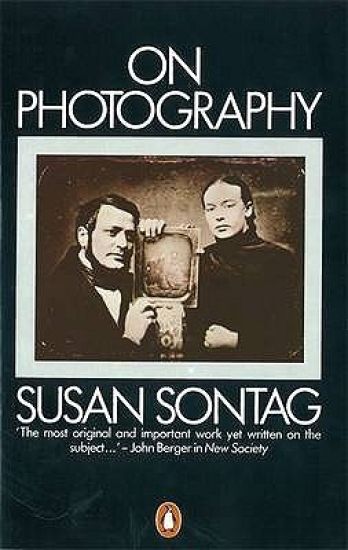
On Photography

On Photography

Susan Sontag

Penguin Books Ltd
1979
pokkari

Halvin toimitettuna 17,00 €

'The most original and illuminating study of the subject' New YorkerPhotographs are everywhere. From high art to family albums to legal evidence, they capture and document the world around us. And whether we use them to expose, reveal or remember, they hold an enduring power. In this essential and revelatory volume, Susan Sontag confronts important questions surrounding the power dynamics between photographer and subject, the blurred boundary between lived events and recreated images, and the desires that lead us to record our lives.'Complex and contradictory... one of America's greatest public intellectuals' Observer'Susan Sontag offers enough food for thought to satisfy the most intellectual of appetites' The Times'A brilliant analysis of the profound changes photographic images have had in our way of looking at the world, and at ourselves, over the years' Washington Post