Kirjojen hintavertailu – 12 903 725 kirjaa ja 27 kauppaa
Kirjailija
Susan Welch
Kirjat ja teokset yhdessä paikassa: 10 kirjaa, julkaisuja vuosilta 1990–2026, suosituimpiin kuuluu The Hunted. Vertaile teosten hintoja ja tarkista saatavuus suomalaisista kirjakaupoista.
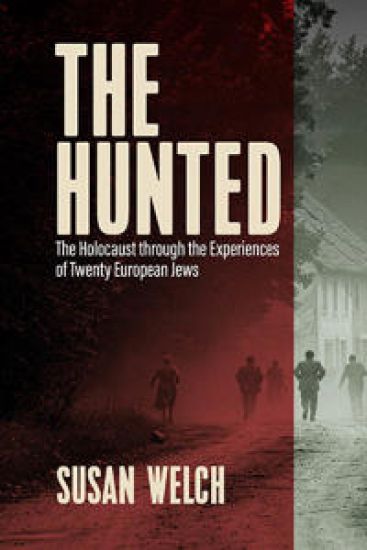
Told through the voices of twenty European Jews who survived the Holocaust, The Hunted presents a micro historical account of persecution and survival under Nazi rule. Drawing on diaries and memoirs, it reconstructs a multiplicity of experiences across national, social, and religious contexts, examining how individual decisions were shaped by family networks, local conditions, and shifting policies. Each chapter traces a single year in the lives of the protagonists, situating their choices within the evolving administrative and legal framework of Nazi persecution. Author-drawn maps place individuals in their evolving landscapes—showing the escape routes they attempted, the barriers they met, and the ghettos, camps, and killing sites they endured. By weaving together meticulously researched historical context and personal testimony, The Hunted offers a vivid human portrait of survival amid one of history’s darkest chapters.
St. Paul, MN, 1946: As little girls, the Malone sisters relied on each other for companionship and affection as their mother remained distant, beating back the demons of her own mysterious childhood. Now, as young women ready to embrace promising futures, Eliza imagines a life of adventure and achievement, while far simpler hopes for family and happiness occupy Shannon. Instead, the closely-knit sisters endure two life-changing tragedies, and their powerful bonds of love and loyalty threaten to break under the weight of trauma and loss, secrets and misunderstandings. One sister leaves, possibly forever. Heartbroken and scarred from a battle with tuberculosis, the other vows to never let go of the invisible thread that runs between them- and in the course of her journey, she discovers the true meaning of family.
St. Paul, MN, 1946: As little girls, the Malone sisters relied on each other for companionship and affection as their mother remained distant, beating back the demons of her own mysterious childhood. Now, as young women ready to embrace promising futures, Eliza imagines a life of adventure and achievement, while far simpler hopes for family and happiness occupy Shannon. Instead, the closely-knit sisters endure two life-changing tragedies, and their powerful bonds of love and loyalty threaten to break under the weight of trauma and loss, secrets and misunderstandings. One sister leaves, possibly forever. Heartbroken and scarred from a battle with tuberculosis, the other vows to never let go of the invisible thread that runs between them- and in the course of her journey, she discovers the true meaning of family.
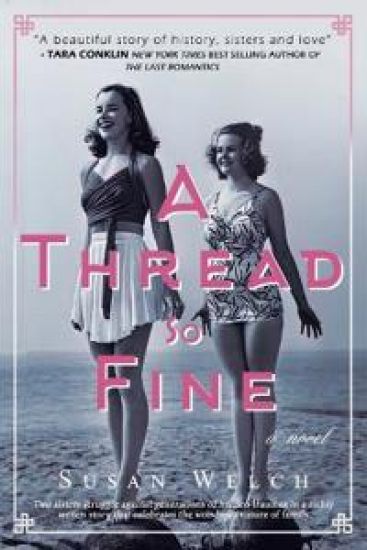
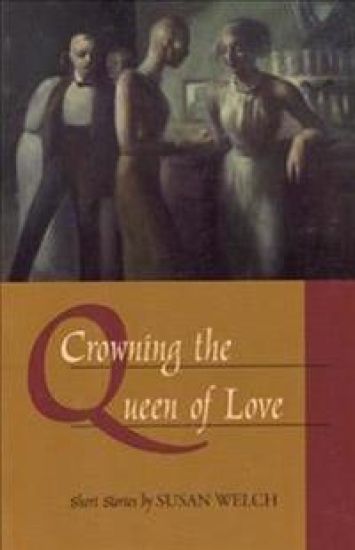
St. Paul, Minnesota, 1946: As little girls, the Malone sisters relied on each other for companionship and affection as their mother remained distant, beating back the demons of her own mysterious childhood. Now, as young women ready to embrace promising futures, Eliza plans for a life of intellectual fulfillment beginning with college at nearby St. Catherine's, while far simpler hopes for family and happiness occupy Shannon. Instead, the closely-knit sisters endure two life-changing tragedies and their powerful bonds of love and loyalty threaten to break under the weight of trauma and loss, secrets and misunderstandings. One sister leaves, possibly forever. Heartbroken and scarred from a battle with tuberculosis, the other vows to never let go of the invisible thread that runs between them--and in the course of her journey, discovers the true meaning of family.
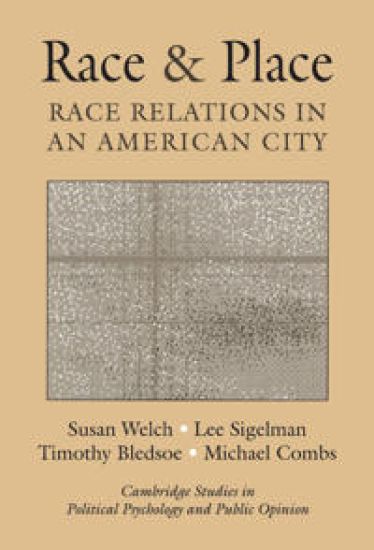
A striking but little recognized change in race relations during the past two decades has seen the declining levels of racial segregation in most of America’s major metropolitan areas. More American cities are beginning to have black and white residents. An integral component of this decline in residential segregation has been the large-scale movement of blacks to the suburbs. This book focuses on the attitudes and behavior of African Americans and whites. Will whites’ attitudes about blacks and blacks’ attitudes toward whites change if they are living in integrated neighborhoods rather than apart from one another? Are black suburbanites more likely to share the views of their fellow white suburbanites or of their fellow African Americans in the central city? Will residential integration and new patterns of race in the suburbs break down divisions between blacks and whites in their views of local public services?
A striking but little recognized change in race relations during the past two decades has seen the declining levels of racial segregation in most of America’s major metropolitan areas. More American cities are beginning to have black and white residents. An integral component of this decline in residential segregation has been the large-scale movement of blacks to the suburbs. This book focuses on the attitudes and behavior of African Americans and whites. Will whites’ attitudes about blacks and blacks’ attitudes toward whites change if they are living in integrated neighborhoods rather than apart from one another? Are black suburbanites more likely to share the views of their fellow white suburbanites or of their fellow African Americans in the central city? Will residential integration and new patterns of race in the suburbs break down divisions between blacks and whites in their views of local public services?
Affirmative action is one of the central issues of American politics today, and admission to colleges and universities has been at the center of the debate. While this issue has been discussed for years, there is very little real data on the impact of affirmative action programs on admissions to institutions of higher learning. Susan Welch and John Gruhl in this groundbreaking study look at the impact on admissions of policies developed in the wake of the United States Supreme Court's landmark 1978 Bakke decision. In Bakke, the Court legitimized the use of race as one of several factors that could be considered in admissions decisions, while forbidding the use of quotas. Opponents of affirmative action claim that because of the Bakke decision thousands of less-qualified minorities have been granted admission in preference to more qualified white students; proponents claim that without the affirmative action policies articulated in Bakke, minorities would not have made the gains they have made in higher education. Based on a survey of admissions officers for law and medical schools and national enrollment data, the authors give us the first analysis of the real impact of the Bakke decision and affirmative action programs on enrollments in medical and law schools. Admission to medical schools and law schools is much sought after and is highly competitive. In examining admissions patterns to these schools the authors are able to identify the effects of affirmative action programs and the Bakke decision in what may be the most challenging case. This book will appeal to scholars of race and gender in political science, sociology and education as well as those interested in the study of affirmative action policies. Susan Welch is Dean of the College of Liberal Arts and Professor of Political Science, Pennsylvania State University. John Gruhl is Professor of Political Science, University of Nebraska-Lincoln.
Although the opinions of whites on issues of race and inequality have been examined in depth, the perceptions of blacks about these issues have been largely ignored. This book is a path-breaking analysis of black opinions about the sources of their inequality in American society and the appropriate means for redressing this imbalance. Using the results of a variety of national surveys of blacks conducted during the past decade, Sigelman and Welch describe the range of opinion within the black population and account for different views by identifying key influences on opinion formation. They examine correlations among various personal characteristics, such as gender, age, socio-economic status, and educational attainment, and different explanations of inequality, focusing either on conditions within the black community or on exogenous factors, such as discrimination.
Throughout this century, reformers have fought to eliminate party control of city politics. As a result, the majority of American cities today elect council members in at-large and nonpartisan elections. This result of the turn-of-the-century Progressive movement, which worked for election rules that eliminated the power of the urban machine and the working class on which it was based, is today still a subject of lively debate. For example, in the mid-1980s, regular Democrats in Chicago sought to institute a nonpartisan mayoral election. Supporters thought that reform would make the electoral process more democratic, while opponents charged that it was meant to dilute the voting powers of blacks. Clearly, the effect of urban reform remains an important issue for scholars and politicians alike. Susan Welch and Timothy Bledsoe clarify a portion of the debate by investigating how election structures affect candidates and the nature of representation. They examine the different effects of district versus at-large elections and of partisan versus nonpartisan elections. Who gets elected? Are representatives' socioeconomic status and party affiliation related to election form? Are election structures related to how those who are elected approach their jobs? Do they see themselves as representatives concerned with the good of the city as a whole? Urban Reform and Its Consequences reports an unprecedented wealth of data drawn from a sample of nearly 1,000 council members and communities with populations between 50,000 and 1 million across 42 states. The sample includes communities that use a variety of election procedures. This study is therefore the most comprehensive and accurate to date. Welch and Bledsoe conclude that nonpartisan and at-large elections do give city councils a more middle- and upper-middle-class character and have changed the way representatives view their jobs. Reform measures have not, however, produced councils that are significantly more conservative or more prone to conflict. Overall, the authors conclude that partisan and district elections are more likely to represent the whole community and to make the council more accountable to the electorate.