Kirjojen hintavertailu – 12 903 725 kirjaa ja 27 kauppaa

Kirjailija

Susan Wise Bauer

Kirjat ja teokset yhdessä paikassa: 93 kirjaa, julkaisuja vuosilta 2004–2026, suosituimpiin kuuluu Writing with Ease Level 2, Revised Bundle. Vertaile teosten hintoja ja tarkista saatavuus suomalaisista kirjakaupoista.

93 kirjaa

Kirjojen julkaisuvuodet: 2004–2026.

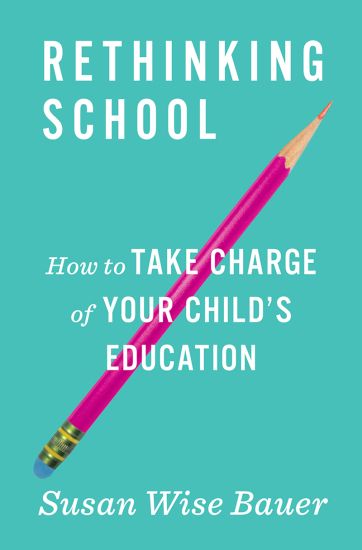
Rethinking School

Rethinking School

Susan Wise Bauer

WW Norton Co
2019
nidottu
With boldness, experience and humour, Susan Wise Bauer turns conventional wisdom on its head: When a serious problem arises at school, the fault is more likely to lie with the school, or the educational system itself, than with the child. In five illuminating sections, Bauer closely analyses the traditional school structure, gives trenchant criticisms of its weaknesses and offers a wealth of advice for parents of children whose difficulties may stem from struggling with learning differences, maturity differences, toxic classroom environments and even from giftedness. As the author of the classic book on home-schooling, The Well-Trained Mind, Bauer knows how children learn and how schools work. Her advice here is comprehensive and anecdotal, including material drawn from experience with her own four children and more than twenty years of educational consulting and university teaching.
Key to Red Workbook

Key to Red Workbook

Susan Wise Bauer

The Well-Trained Mind Press
2018
nidottu
The Key, along with the accompanying Red Workbook and the Core Instructor Text, make up Grammar for the Well-Trained Mind: a complete course that takes students from basic definitions (“A noun is the name of a person, place, thing, or idea”) through advanced sentence structure and analysis—all the grammar skills needed to write and speak with eloquence and confidence. This innovative program combines the three essential elements of language learning: understanding and memorizing rules (prescriptive teaching), repeated exposure to examples of how those rules are used (descriptive instruction), and practice using those rules in exercises and in writing (practical experience). Each year, parents and teachers go through the dialogue, rules, and examples in the Core Instructor Text; students follow along in the Workbook. This repetition solidifies the concepts, definitions, and examples in the student’s mind. There are four Student Workbooks, one for each year. Each Student Workbook contains the same rules and examples—but four completely different sets of exercises and assignments, allowing students to develop a wide-ranging knowledge of how the rules and examples are put to use in writing. Each Key to the Workbooks provides not only answers, but also explanations for the parent/instructor, and guidance as to when the answers might be ambiguous (as, in English, they often are). All of the rules covered, along with the repeated examples for each, are assembled for ongoing reference in the Comprehensive Handbook of Rules. This will become the student’s indispensable guide to writing through high school, into college and beyond. Step-by-step instruction takes students from the most basic concepts through advanced grammatical concepts such as modal and hortative verbs and multiple functions of noun clauses. Extensive diagramming exercises reinforce the rules and help technical and visual learners to understand and use the English language effectively. Each step of the diagramming process is illustrated and thoroughly explained to the student. Text for examples and exercises are drawn from great works of literature, as well as from well-written nonfiction texts in science, mathematics, and the social sciences. Regular review is built into each year of work. The Key accompanies the second of four non-sequential workbooks, each containing new exercises that allow students to practice and apply the grammar principles under study.
Red Workbook

Red Workbook

Susan Wise Bauer

The Well-Trained Mind Press
2018
nidottu
Grammar for the Well-Trained Mind: Red Workbook, along with the accompanying Key and the Core Instructor Text, make up a full year of Grammar for the Well-Trained Mind: a complete course that takes students from basic definitions (“A noun is the name of a person, place, thing, or idea”) through advanced sentence structure and analysis—all the grammar skills needed to write and speak with eloquence and confidence. This innovative program combines the three essential elements of language learning: understanding and memorizing rules (prescriptive teaching), repeated exposure to examples of how those rules are used (descriptive instruction), and practice using those rules in exercises and in writing (practical experience). Each year, parents and teachers go through the dialogue, rules, and examples in the Core Instructor Text; students follow along in the Workbook. This repetition solidifies the concepts, definitions, and examples in the student’s mind. There are four non-sequential Workbooks. Students can pick up any of the Workbooks and follow along. Each Workbook contains the same rules and examples—but four completely different sets of exercises and assignments, allowing students to develop a wide-ranging knowledge of how the rules and examples are put to use in writing. The Red Workbook comes with its own Key, providing not only answers, but also explanations for the parent/instructor, and guidance as to when the answers might be ambiguous (as, in English, they often are). All of the rules covered, along with the repeated examples for each, are assembled for ongoing reference in the Comprehensive Handbook of Rules. This will become the student’s indispensable guide to writing through high school, into college and beyond. Step-by-step instruction takes students from the most basic concepts through advanced grammatical concepts such as modal and hortative verbs and multiple functions of noun clauses. Extensive diagramming exercises reinforce the rules and help technical and visual learners to understand and use the English language effectively. Each step of the diagramming process is illustrated and thoroughly explained to the student. Text for examples and exercises are drawn from great works of literature, as well as from well-written nonfiction texts in science, mathematics, and the social sciences. Regular review is built into each year of work. The first of four non-sequential workbooks, each containing new exercises that allow students to practice and apply the grammar principles under study.
Rethinking School

Rethinking School

Susan Wise Bauer

WW Norton Co
2018
sidottu
Our K–12 school system is an artificial product of market forces. It isn’t a good fit for all—or even most—students. It prioritizes a single way of understanding the world over all others, pushes children into a rigid set of grades with little regard for individual maturity, and slaps “disability” labels over differences in learning style. Caught in this system, far too many young learners end up discouraged, disconnected, and unhappy. And when they struggle, school pressures parents, with overwhelming force, into “fixing” their children rather than questioning the system. With boldness, experience, and humor, Susan Wise Bauer turns conventional wisdom on its head: When a serious problem arises at school, the fault is more likely to lie with the school, or the educational system itself, than with the child. In five illuminating sections, Bauer teaches parents how to flex the K–12 system, rather than the child. She closely analyzes the traditional school structure, gives trenchant criticisms of its weaknesses, and offers a wealth of advice for parents of children whose difficulties may stem from struggling with learning differences, maturity differences, toxic classroom environments, and even from giftedness (not as much of a “gift” as you might think!). As the author of the classic book on home-schooling, The Well-Trained Mind, Bauer knows how children learn and how schools work. Her advice here is comprehensive and anecdotal, including material drawn from experience with her own four children and more than twenty years of educational consulting and university teaching. Rethinking School is a guide to one aspect of sane, humane parenting: negotiating the twelve-grade school system in a way that nurtures and protects your child’s mind, emotions, and spirit.
Key to Purple Workbook

Key to Purple Workbook

Susan Wise Bauer; Audrey Anderson

The Well-Trained Mind Press
2017
nidottu
The Key, along with the accompanying Purple Workbook and the Core Instructor Text, make up Grammar for the Well-Trained Mind: a complete course that takes students from basic definitions (“A noun is the name of a person, place, thing, or idea”) through advanced sentence structure and analysis—all the grammar skills needed to write and speak with eloquence and confidence. This innovative program combines the three essential elements of language learning: understanding and memorizing rules (prescriptive teaching), repeated exposure to examples of how those rules are used (descriptive instruction), and practice using those rules in exercises and in writing (practical experience). Each year, parents and teachers go through the dialogue, rules, and examples in the Core Instructor Text; students follow along in the Workbook. This repetition solidifies the concepts, definitions, and examples in the student’s mind. There are four Workbooks, one for each year. Each Workbook contains the same rules and examples—but four completely different sets of exercises and assignments, allowing students to develop a wide-ranging knowledge of how the rules and examples are put to use in writing. Each Key to the Workbooks provides not only answers, but also explanations for the parent/instructor, and guidance as to when the answers might be ambiguous (as, in English, they often are). All of the rules covered, along with the repeated examples for each, are assembled for ongoing reference in the Comprehensive Handbook of Rules. This will become the student’s indispensable guide to writing through high school, into college and beyond. Step-by-step instruction takes students from the most basic concepts through advanced grammatical concepts such as modal and hortative verbs and multiple functions of noun clauses. Extensive diagramming exercises reinforce the rules and help technical and visual learners to understand and use the English language effectively. Each step of the diagramming process is illustrated and thoroughly explained to the student. Text for examples and exercises are drawn from great works of literature, as well as from well-written nonfiction texts in science, mathematics, and the social sciences. Regular review is built into each year of work. The Key accompanies the first of four non-sequential workbooks, each containing new exercises that allow students to practice and apply the grammar principles under study.
Purple Workbook

Purple Workbook

Susan Wise Bauer; Audrey Anderson

The Well-Trained Mind Press
2017
nidottu
Purple Workbook, along with the accompanying Key and the Core Instructor Text, make up a full year of Grammar for the Well-Trained Mind: a complete course that takes students from basic definitions (“A noun is the name of a person, place, thing, or idea”) through advanced sentence structure and analysis—all the grammar skills needed to write and speak with eloquence and confidence. This innovative program combines the three essential elements of language learning: understanding and memorizing rules (prescriptive teaching), repeated exposure to examples of how those rules are used (descriptive instruction), and practice using those rules in exercises and in writing (practical experience). Each year, parents and teachers go through the dialogue, rules, and examples in the Core Instructor Text; students follow along in the Workbook. This repetition solidifies the concepts, definitions, and examples in the student’s mind. There are four Workbooks. Each Workbook contains the same rules and examples—but four completely different sets of exercises and assignments, allowing students to develop a wide-ranging knowledge of how the rules and examples are put to use in writing. The Workbook comes with its own Key, providing not only answers, but also explanations for the parent/instructor, and guidance as to when the answers might be ambiguous (as, in English, they often are). All of the rules covered, along with the repeated examples for each, are assembled for ongoing reference in the Comprehensive Handbook of Rules. This will become the student’s indispensable guide to writing through high school, into college and beyond. Step-by-step instruction takes students from the most basic concepts through advanced grammatical concepts such as modal and hortative verbs and multiple functions of noun clauses. Extensive diagramming exercises reinforce the rules and help technical and visual learners to understand and use the English language effectively. Each step of the diagramming process is illustrated and thoroughly explained to the student. Text for examples and exercises are drawn from great works of literature, as well as from well-written nonfiction texts in science, mathematics, and the social sciences. Regular review is built into each year of work. The first of four non-sequential workbooks, each containing new exercises that allow students to practice and apply the grammar principles under study.
Grammar for the Well-Trained Mind Core Instructor Text

Grammar for the Well-Trained Mind Core Instructor Text

Susan Wise Bauer; Audrey Anderson

The Well-Trained Mind Press
2017
nidottu
Grammar for the Well-Trained Mind takes students from basic definitions (“A noun is the name of a person, place, thing, or idea”) through advanced sentence structure and analysis—all the grammar skills needed to write and speak with eloquence and confidence. This innovative program combines the three essential elements of language learning: understanding and memorizing rules (prescriptive teaching), repeated exposure to examples of how those rules are used (descriptive instruction), and practice using those rules in exercises and in writing (practical experience). Each year, parents and teachers go through the dialogue, rules, and examples in the Core Instructor Text; students follow along in a Workbook. This repetition solidifies the concepts, definitions, and examples in the student’s mind. There are four Workbooks, one for each year. Each Workbook contains the same rules and examples—but four completely different sets of exercises and assignments, allowing students to develop a wide-ranging knowledge of how the rules and examples are put to use in writing. Each Workbook comes with its own Key, providing not only answers, but also explanations for the parent/instructor, and guidance as to when the answers might be ambiguous (as, in English, they often are). All of the rules covered, along with the repeated examples for each, are assembled for ongoing reference in the Comprehensive Handbook of Rules. This will become the student’s indispensable guide to writing through high school, into college and beyond. The Core Instructor Text provides not only rules and examples, but scripted dialogue that makes it possible for any parent or teacher to use the program effectively, along with instructor notes that thoroughly explain ambiguities and difficulties. Scripted lessons make it possible for any parent or teacher to use the program effectively. Step-by-step instruction takes students from the most basic concepts through advanced grammatical concepts such as modal and hortative verbs and multiple functions of noun clauses. Extensive diagramming exercises reinforce the rules and help technical and visual learners to understand and use the English language effectively. All diagrams are thoroughly explained to the instructor/parent. Text for examples and exercises are drawn from great works of literature, as well as from well-written nonfiction texts in science, mathematics, and the social sciences. Regular review is built into each year of work. Core Instructor Text is designed to be used effectively with students from fifth grade through high school, regardless of background. The program is easily customizable to each student’s strengths and weaknesses.
The Well-Trained Mind

The Well-Trained Mind

Susan Wise Bauer; Jessie Wise

WW Norton Co
2016
sidottu
This now-classic guide to taking charge of your child’s education is the number-one resource for parents and students who home-school or want to supplement. This revised edition gives access to a new supplemental website with additional resources, answers questions about home education and provides advice on practical matters.
The Art of the Public Grovel

The Art of the Public Grovel

Susan Wise Bauer

Princeton University Press
2016
pokkari
Whether you are a politician caught carrying on with an intern or a minister photographed with a prostitute, discovery does not necessarily spell the end of your public career. Admit your sins carefully, using the essential elements of an evangelical confession identified by Susan Wise Bauer in The Art of the Public Grovel, and you, like Bill Clinton, just might survive. In this fascinating and important history of public confession in modern America, Bauer explains why and how a type of confession that first arose among nineteenth-century evangelicals has today become the required form for any successful public admission of wrongdoing--even when the wrongdoer has no connection with evangelicalism and the context is thoroughly secular. She shows how Protestant revivalism, group psychotherapy, and the advent of talk TV combined to turn evangelical-style confession into a mainstream secular rite. Those who master the form--Bill Clinton, Jimmy Swaggart, David Vitter, and Ted Haggard--have a chance of surviving and even thriving, while those who don't--Ted Kennedy, Jim Bakker, Cardinal Bernard Law, Mark Foley, and Eliot Spitzer--will never really recover. Revealing the rhetoric, theology, and history that lie behind every successful public plea for forgiveness, The Art of the Public Grovel will interest anyone who has ever wondered why Clinton is still popular while Bakker fell out of public view, Ted Kennedy never got to be president, and Law moved to Rome.
The Well-Educated Mind

The Well-Educated Mind

Susan Wise Bauer

WW Norton Co
2016
sidottu
Including standout works from the twenty-first century as well as essential readings in science, The Well-Educated Mind offers brief, entertaining histories of six literary genres—fiction, autobiography, history, drama, poetry and science—accompanied by instructions on how to read each type. The annotated lists at the end of each chapter preview recommended reading and encourage readers to make connections between ancient traditions and contemporary writing. In her best-selling work, The Well-Trained Mind, Susan Wise Bauer provided a parents’ guide to classical education for home-schooling children. In The Well-Educated Mind, she takes the same elements and techniques and adapts them to the use of adult readers. Followed carefully, her advice will restore and expand the pleasure of the written word.
The Story of Western Science

The Story of Western Science

Susan Wise Bauer

WW Norton Co
2015
sidottu
The Story of Science guides us to the original texts that have changed the way we think about our world, our cosmos and ourselves. Whether referenced individually or read together as the narrative of Western scientific development, the book’s twenty-eight succinct chapters lead readers from the first science texts by Hippocrates, Plato and Aristotle through twentieth-century classics in biology, physics and cosmology, including works by Einstein, Schrödinger and Dawkins. Each chapter recommends one or more classic books and provides an entertaining account of the discovery, a vivid sketch of the scientist-writer and a clear explanation of any technical issues. The Story of Science reveals science to be a human pursuit—an essential, often deeply personal, sometimes flawed, frequently brilliant way of understanding the world.
Writing with Ease: Strong Fundamentals

Writing with Ease: Strong Fundamentals

Susan Wise Bauer

The Well-Trained Mind Press
2015
sidottu
Susan Wise Bauer lays out a plan for teaching writing that combines the best elements of old-fashioned writing instruction with innovative new educational methods. Writing With Ease outlines a complete three- or four-year program for elementary-grade students, giving parents and teachers the tools to personalize instruction for any skill level.
Writing With Skill, Level 3: Instructor Text

Writing With Skill, Level 3: Instructor Text

Susan Wise Bauer

The Well-Trained Mind Press
2015
nidottu
Building on the first two levels of Writing With Skill, Level 3 reinforces skills in original composition and introduces new skills in researching, organizing, and writing expository essays. This third level is marked by a focus on writing about cause and effect, as well as more advanced instruction in literary criticism, science writing, descriptions, and paragraph construction. Time-tested classical techniques--the imitation and analysis of great writers--combine with original composition exercises in history, science, biography, and literature. Along with the Student Workbook, this Level Three Instructor Text provides a complete year of advanced middle-grade writing instruction.
Writing With Skill, Level 3: Student Workbook

Writing With Skill, Level 3: Student Workbook

Susan Wise Bauer

The Well-Trained Mind Press
2014
nidottu
Building on the first two levels of Writing With Skill, Level 3 reinforces skills in original composition and introduces new skills in researching, organizing, and writing expository essays. Models from great writers provide inspiration; assignments in history, science, biography and literature expand the student’s horizons. This third level is marked by a focus on writing about cause and effect, as well as more advanced instruction in literary criticism, science writing, descriptions, and paragraph construction. Time-tested classical techniques--the imitation and analysis of great writers--combine with original essay assignments. Along with the accompanying Instructor Guide, this Level Three Student Workbook provides a complete year of advanced middle-grade writing instruction.
Writing With Skill, Level 2: Instructor Text

Writing With Skill, Level 2: Instructor Text

Susan Wise Bauer

The Well-Trained Mind Press
2013
nidottu
The Student Workbook encourages independent composition, while the Instructor Text contains easy-to-use supporting information for the teacher, rubrics for grading, sample compositions, and dialogue to use while teaching. Together, the Student Workbook and Instructor Text provide a full year of middle-grade writing instruction, preparing students to enter high-level rhetoric. Reviews Level One skills in narration, biographical sketches, descriptions, and sequences Teaches new skills in writing comparisons, drawing contrasts, and tracing cause and effect Improves sentence style through prose exercises drawn from Erasmus, Aristotle, and other classical rhetoricians Covers three-level outlining, composition planning and structure Guides the student through critical essay writing in both fiction and poetry Provides practice in research and documentation skills
Writing With Skill, Level 2: Student Workbook

Writing With Skill, Level 2: Student Workbook

Susan Wise Bauer

The Well-Trained Mind Press
2013
nidottu
The Student Workbook encourages independent composition, while the Instructor Text contains easy-to-use supporting information for the teacher, rubrics for grading, sample compositions, and dialogue to use while teaching. Together, the Student Workbook and Instructor Text provide a full year of middle-grade writing instruction, preparing students to enter high-level rhetoric. Skills Taught: One- and two-level outlining Writing chronological narratives, biographical sketches, descriptions, and sequences across the curriculum Constructing basic literary essays on fiction and poetry Researching and documenting source material First volume of four that will prepare students for high-level rhetoric and composition Features of the program: Writing assignments are modeled on examples from great literature and classic nonfiction All source material for assignments is provided—no other books are needed This Student Workbook encourages independence by directing all assignments to the student Instructor Text (sold separately) provides scripted dialogue to use when the student has difficulty, plus detailed guidance on how to evaluate the student’s work Second volume of four that will prepare students for high-level rhetoric and composition
The History of the Renaissance World

The History of the Renaissance World

Susan Wise Bauer

WW Norton Co
2013
sidottu

Halvin toimitettuna 37,20 €

Beginning in the heady days just after the First Crusade, this volume—the third in the series that began with The History of the Ancient World and The History of the Medieval World—chronicles the contradictions of a world in transition. Popes continue to preach crusade, but the hope of a Christian empire comes to a bloody end at the walls of Constantinople. Aristotelian logic and Greek rationality blossom while the Inquisition gathers strength. As kings and emperors continue to insist on their divine rights, ordinary people all over the world seize power: the lingayats of India, the Jacquerie of France, the Red Turbans of China, and the peasants of England. New threats appear, as the Ottomans emerge from a tiny Turkish village and the Mongols ride out of the East to set the world on fire. New currencies are forged, new weapons invented, and world-changing catastrophes alter the landscape: the Little Ice Age and the Great Famine kill millions; the Black Death, millions more. In the chaos of these epoch-making events, our own world begins to take shape. Impressively researched and brilliantly told, The History of the Renaissance World offers not just the names, dates, and facts but the memorable characters who illuminate the years between 1100 and 1453—years that marked a sea change in mankind’s perception of the world.
Writing With Skill, Level 1: Student Workbook

Writing With Skill, Level 1: Student Workbook

Susan Wise Bauer

The Well-Trained Mind Press
2012
nidottu
This groundbreaking new writing series combines time-tested classical techniques—the imitation and analysis of great writers—with original composition exercises in history, science, biography, and literature. Skills Taught: • One- and two-level outlining • Writing chronological narratives, biographical sketches, descriptions, and sequences across the curriculum • Constructing basic literary essays on fiction and poetry • Researching and documenting source material • First volume of four that will prepare students for high-level rhetoric and composition Features of the program: • Writing assignments are modeled on examples from great literature and classic nonfiction • All source material for assignments is provided—no other books are needed • This Student Workbook encourages independence by directing all assignments to the student • Instructor Text (sold separately) provides scripted dialogue to use when the student has difficulty, plus detailed guidance on how to evaluate the student’s work • First volume of four that will prepare students for high-level rhetoric and composition
Writing With Skill, Level 1: Instructor Text

Writing With Skill, Level 1: Instructor Text

Susan Wise Bauer

The Well-Trained Mind Press
2012
nidottu
This groundbreaking new writing series combines time-tested classical techniques—the imitation and analysis of great writers—with original composition exercises in history, science, biography, and literature. Skills Taught: • One- and two-level outlining • Writing chronological narratives, biographical sketches, descriptions, and sequences across the curriculum • Constructing basic literary essays on fiction and poetry • Researching and documenting source material • First volume of four that will prepare students for high-level rhetoric and composition Features of the program: • Writing assignments are modeled on examples from great literature and classic nonfiction • All source material for assignments is provided—no other books are needed • This Instructor Text provides scripted dialogue to use when the student has difficulty, plus detailed guidance on how to evaluate the student’s work • Student Workbook (sold separately) encourages independence by directing all assignments to the student • First volume of four that will prepare students for high-level rhetoric and composition
The History of the Medieval World

The History of the Medieval World

Susan Wise Bauer

WW Norton Co
2010
sidottu

Halvin toimitettuna 32,60 €

In her earlier work, The History of the Ancient World, Susan Wise Bauer wrote of the rise of kingship based on might. But in the years between the fourth and twelfth centuries, rulers had to find new justification for their power, and they turned to divine truth or grace to justify political and military action. Right began to replace might as the engine of empire. Not just Christianity and Islam but also the religions of the Persians, the Germans, and the Mayas were pressed into the service of the state. Even Buddhism and Confucianism became tools for nation building. This phenomenon—stretching from the Americas all the way to Japan—changed religion, but it also changed the state. The History of the Medieval World is a true world history, linking the great conflicts of Europe to the titanic struggles for power in India and Asia. In its pages, El Cid and Guanggaeto, Julian the Apostate and the Brilliant Emperor, Charles the Hammer and Krum the Bulgarian stand side by side. From the schism between Rome and Constantinople to the rise of the Song Dynasty, from the mission of Muhammad to the crowning of Charlemagne, from the sacred wars of India to the establishment of the Knights Templar, this erudite book tells the fascinating, often violent story of kings, generals, and the peoples they ruled.