Kirjojen hintavertailu – 12 859 818 kirjaa ja 27 kauppaa

Kirjailija

Susan Zimmermann

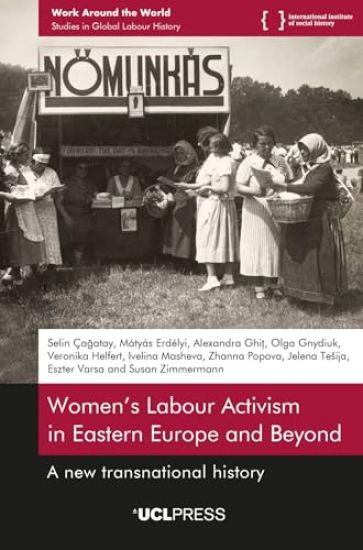
Kirjat ja teokset yhdessä paikassa: 9 kirjaa, julkaisuja vuosilta 1998–2025, suosituimpiin kuuluu Women’s Labour Activism in Eastern Europe and Beyond. Vertaile teosten hintoja ja tarkista saatavuus suomalaisista kirjakaupoista.

9 kirjaa

Kirjojen julkaisuvuodet: 1998–2025.

Women, Work, and Activism

Women, Work, and Activism

Susan Zimmermann; Eloisa Betti

CENTRAL EUROPEAN UNIVERSITY PRESS
2022
sidottu
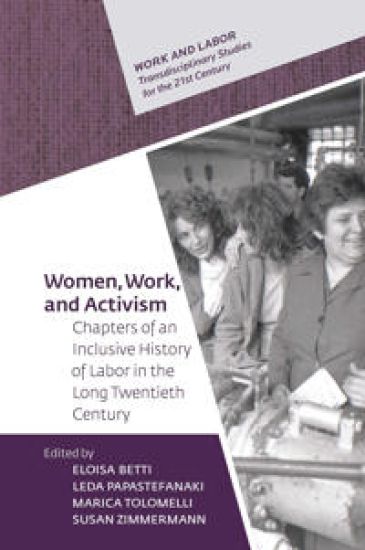
The thirteen critical and well-documented chapters of Women, Work and Activism examine women’s labor struggle from late nineteenth-century Portuguese mutual societies to Yugoslav peasant women’s work in the 1930s, and from the Catalan labor movement under the Franco dictatorship to workplace democracy in the United States. The authors portray women's labor activism in a wide variety of contexts. This includes spontaneous resistance to masculinist trade unionism, the feminist engagement of women workers, the activism of communist wives of workers, and female long-distance migration, among others. The chapters address the gendered involvement of working people in multiple and often precarious and unstable labor relations and in unpaid labor, as well as the role of the state and other institutions in shaping the history of women’s labor. The book is an innovative contribution to both the new labor history and feminist history. It fully integrates the conceptual advances made by gender historians in the study of labor activism, driving home critiques of Eurocentric historiographies of labor to Europe while simultaneously contributing to an inclusive history of women’s labor-related activism wherever to be found. Examining women’s activism in male-dominated movements and institutions, and in women’s networks and organizations, the authors make a case for a new direction in gender history.
Immer Mittendrin

Immer Mittendrin

Susan Zimmermann

de Gruyter Oldenbourg
2020
pokkari
Gewerkschaftlich engagierte Frauen, die sich der Arbeiterbewegung und den Frauenrechten verpflichtet f hlten, sa en historisch zwischen vielen St hlen, und verk rpern geradezu paradigmatisch die, 'alte' Arbeiterbewegung. Dieser Beitrag der Buchreihe "re: work. Arbeit Global - Historische Rundg nge" schreibt die Geschichte der Fraueninternationale des Internationalen Gewerkschaftsbundes (Amsterdam International) in die neue Globalgeschichte der Arbeit ein.
Divide, Provide and Rule

Divide, Provide and Rule

Susan Zimmermann

Central European University Press
2011
sidottu
A concise and comprehensive account of the transformation of social policy from traditional poor relief towards social insurance systems in a European state before World War One. Brings together the analysis of older, mostly local welfare policies with the history of social policy developed by the state and operated at a national level. Explores also the interaction of various layers of and actors in welfare policy, i.e. of poor relief, social reform policies and the unfolding welfare state over time, including often neglected elements of these policies such as e.g. protective policies at the work place, housing policy, child protection, and prostitution policies.
Keeping Katherine: A Mother's Journey to Acceptance
Katherine was a beautiful, perfect baby for the first year of her life. Then, without warning, she changed forever. She started crossing her eyes. She cried at night for hours at a time and could not be soothed. She stopped saying words, stopped crawling, and began what would become a lifelong habit of wringing her hands. Hospital visits and consultations with doctors offered no answers to the mystery. Soon Katherine slipped away to a place her mother and father could never reach. In Keeping Katherine, Susan Zimmermann tells the story of her life with her daughter Katherine, who has Rett syndrome, a devastating neurological disorder. Writing with honesty and candor, Zimmermann chronicles her personal journey to accept the changed dynamic of her family; the strain of caring for a special needs child and the pressure it placed on her marriage, career, and relationship with her parents; the dilemma of whether Kat would be better cared for in a group home; and most important, the altered reality of her daughter's future. A story of personal transformation that reminds us that it isn't what happens to us that shapes our humanity, but how we react, Keeping Katherine shows the unconditional love that exists in families and the gifts the profoundly disabled can offer to those who try to understand them.
Writing to Heal the Soul

Writing to Heal the Soul

Susan Zimmermann

Crown Publications
2002
pokkari

Halvin toimitettuna 22,50 €

Susan Zimmermann experienced a devastating loss when her first child, Katherine, developed a neurological disorder that left her unable to walk or talk. Faced with her daughter’s disability, Susan struggled with fear, denial, guilt, bitterness, and despair. She began to heal only through writing. Working through conflicting emotions with paper and pen enabled her to transform her sadness into acceptance and even joy. Writing to Heal the Soul is Susan’s gift to others—everyone, not just writers—who are suffering any kind of grief or loss, whether the injury, disability, or death of a loved one, the loss of a job, or the end of a relationship. Lyrically illustrated with true stories from the author and others, the book offers simple yet inspiring writing exercises to help you resolve your pain as you transform your grief into words of hope and healing.
Silicone Survivors

Silicone Survivors

Susan Zimmermann

Temple University Press,U.S.
1998
pokkari
Susan Zimmermann talked with forty women about perhaps one of the most sensitive issues of body image and health - their breasts, the chief attribute of femininity. In the aftermath of the early 1990s controversy over the use of silicone breast implants, how do women decide to undergo surgery o enhance or reconstruct their bodies? How does surgery alter a woman's self-image? How did they face the possibility of debilitating autoimmune disease from rupturing or leaking implants? Some opted for breast implants after mastectomies, others for cosmetic reasons. Some felt empowered by the surgery: \u0022Being a woman, I just like breasts and felt like I got ripped off... I did it for myself.\u0022 Others were pressured by their husbands: \u0022He used to make fun of parts of my body... And, he made me believe that if I was ever to leave him, no one would have anything to do with me because I was this deformed type of person.\u0022 After surgery, some women were ecstatic, while others had a sense of inner conflict about what they had done to themselves: were they \u0022faking it\u0022? And a few were angry: \u0022I was really angry inside that I had had to put plastic bags filled with chemicals in my body in order for me to feel like I could do the Hoochie Koo on Saturday nights... I didn't wear tight clothes; I didn't want my children to find out.\u0022 Now, having faced years of medical and personal uncertainty, many have coped by reassessing their lives and their relationships, by sharing information and support with other women with implants, outreach that became a means for self-empowerment.