
Kirjojen hintavertailu – 12 903 725 kirjaa ja 27 kauppaa

Kirjailija

Susana C. Santos

Kirjat ja teokset yhdessä paikassa: 2 kirjaa, julkaisuja vuosilta 2018–2024, suosituimpiin kuuluu Poverty and Entrepreneurship in Developed Economies. Vertaile teosten hintoja ja tarkista saatavuus suomalaisista kirjakaupoista.

2 kirjaa

Kirjojen julkaisuvuodet: 2018–2024.

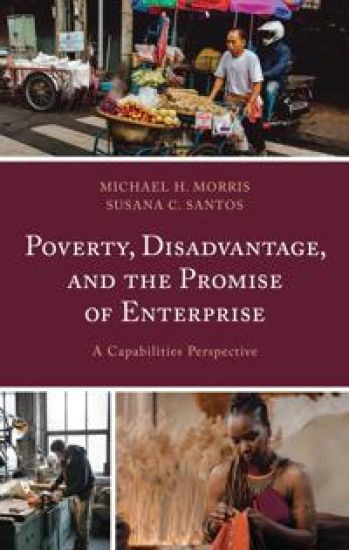
Poverty, Disadvantage, and the Promise of Enterprise

Poverty, Disadvantage, and the Promise of Enterprise

Michael H. Morris; Susana C. Santos

BLOOMSBURY PUBLISHING PLC
2024
sidottu
Can entrepreneurship serve as a pathway out of poverty? Are the poor able to create ventures that can improve their economic circumstances and enhance their lives? Poverty, Disadvantage and the Promise of Enterprise: A Capabilities Perspective argue that “it depends”. To understand the poverty and entrepreneurship interface, we must first understand poverty. Using a lens of disadvantage theory and the capabilities framework, the book explores the implications of poverty’s complex, multi-dimensional nature when one is trying to start and grow a business. Four key liabilities directly impact the opportunities these individuals are able to recognize, the types of ventures they create, how the businesses perform, and the impacts on the well-being of the entrepreneur. Because of these liabilities, these ventures tend to fall into what the authors call the commodity trap, where they struggle with low sales volumes and marginal profits. However, the trap is avoidable, and, with the right kinds of support, the performance of these ventures can be meaningfully improved. Key design elements of a successful intervention approach, together with an alternative perspective on the roles of community-based entrepreneurial ecosystems and public policy, are introduced. Emphasis is also placed on the critical roles of faith, hustle, and the fears of both failure and success.

Poverty and Entrepreneurship in Developed Economies

Poverty and Entrepreneurship in Developed Economies

Michael H. Morris; Susana C. Santos; Xaver Neumeyer

Edward Elgar Publishing Ltd
2018
sidottu
'These authors take an in-depth look at poverty in developed countries and offer the unique solution of entrepreneurship's empowering and transformative venture creation impact to the problem. They introduce a framework as a holistic approach for understanding what is required for the low-income individual to successfully pursue the entrepreneurial path. For anyone concerned about the alleviation of poverty, this is a must read!'- Donald F. Kuratko, Indiana University, Bloomington, US'Poor people are more frequently business owners than any other economic group, but, because of resource constraints, they rarely break out of the informal economy so their entrepreneurship co-exists with poverty rather than replacing it. Could we reduce the resource constraints and simultaneously educate poor people about business management and strategy, more poor people could break into the formal sector, creating jobs and building wealth exactly where jobs and wealth are most needed. The social benefit would be huge. In their pragmatic, informed, and readable manual, Morris, Santos, and Neumeyer bring together the inter-disciplinary information that a public/private partnership requires to launch a successful effort to reduce poverty by enabling the entrepreneurship of the poor. In a nutshell, the public sector provides the infrastructure; the private sector and NGOs provide the business education. Everyone who has a practical or theoretical interest in poverty, entrepreneurship, or social policy should read this book.'- Ivan Light, University of California, Los Angeles, US While extensively explored as a solution to poverty at the base of the pyramid, this is the first in-depth examination of entrepreneurship and the poor within advanced economies. Entrepreneurship is presented as a source of empowerment that represents an alternative pathway out of poverty. The book explores the underlying nature of poverty and draws implications for new venture creation. This book fosters a richer dialog among academics, government officials, policy makers, economic development professionals, bankers and the financial community, leaders of non-profit organizations, and others committed to moving beyond status quo solutions - committed to finding ways to help people create their own entrepreneurial pathways out of poverty.