
Kirjojen hintavertailu – 12 903 725 kirjaa ja 27 kauppaa

Kirjailija

Susanna McFadden

Kirjat ja teokset yhdessä paikassa: 2 kirjaa, julkaisuja vuosilta 2015–2016, suosituimpiin kuuluu Art of Empire. Vertaile teosten hintoja ja tarkista saatavuus suomalaisista kirjakaupoista.

2 kirjaa

Kirjojen julkaisuvuodet: 2015–2016.

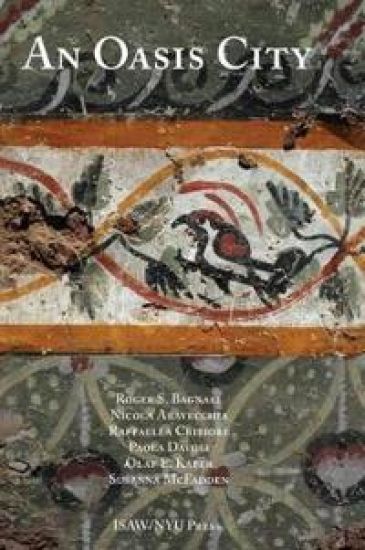
An Oasis City

An Oasis City

Roger S. Bagnall; Nicola Aravecchia; Raffaella Cribiore; Paola Davoli; Olaf E. Kaper; Susanna McFadden

New York University Press
2016
sidottu
Scattered through the vast expanse of stone and sand that makes up Egypt's Western Desert are several oases. These islands of green in the midst of the Sahara owe their existence to springs and wells drawing on ancient aquifers. In antiquity, as today, they supported agricultural communities, going back to Neolithic times but expanding greatly in the millennium from the Saite pharaohs to the Roman emperors. New technologies of irrigation and transportation made the oases integral parts of an imperial economy. Amheida, ancient Trimithis, was one of those oasis communities. Located in the western part of the Dakhla Oasis, it was an important regional center, reaching a peak in the Roman period before being abandoned. Over the past decade, excavations at this well-preserved site have revealed its urban layout and brought to light houses, streets, a bath, a school, and a church. The only standing brick pyramid of the Roman period in Egypt has been restored. Wall-paintings, temple reliefs, pottery, and texts all contribute to give a lively sense of its political, religious, economic, and cultural life. This book presents these aspects of the city's existence and its close ties to the Nile valley, by way of long desert roads, in an accessible and richly illustrated fashion.
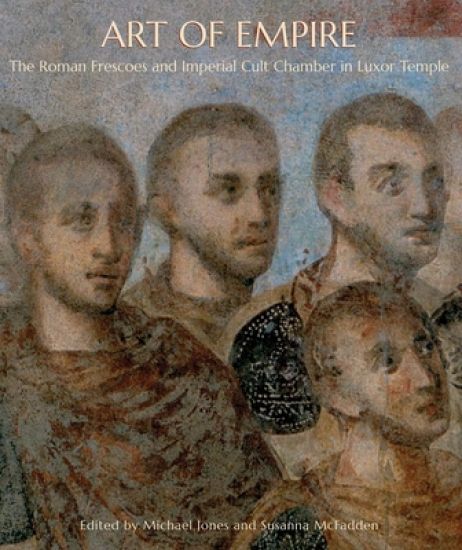
Art of Empire

Art of Empire

Michael Jones; Susanna McFadden

Yale University Press
2015
sidottu
The Luxor Temple of Amun-Re, built to commemorate the divine power of the pharaohs, is one of the iconic monuments of New Kingdom Egypt. In the 4th century C. E., the Roman Imperial government, capitalizing on the site’s earlier significance, converted the temple into a military camp and constructed a lavishly painted cult chamber dedicated to the four emperors of the Tetrarchy. These frescoes provide fascinating insight into the political landscape of the late Roman Empire and, as the only surviving wall paintings from the tetrarchic period, into the history of Roman art. The culmination of a groundbreaking conservation project, this volume brings together scholars across disciplines for a comprehensive look at the frescoes and their architectural, archaeological, and historical contexts. More than 150 stunning illustrations present the paintings for the first time in their newly conserved state, along with a selection of 19th-century documentary watercolors. This remarkable publication illustrates how physical context, iconography, and style were used to convey ideology throughout Rome’s provinces. Published in association with the American Research Center in Egypt, Inc.