Kirjailija
Susanna Paasonen
Kirjat ja teokset yhdessä paikassa: 15 kirjaa, julkaisuja vuosilta 1998–2026, suosituimpiin kuuluu Figures of Fantasy. Vertaile teosten hintoja ja tarkista saatavuus suomalaisista kirjakaupoista.
15 kirjaa
Kirjojen julkaisuvuodet: 1998–2026.
A rethinking of "the social" in social media which includes the sexual. What can we learn from including sexual platforms in definitions of social media and, by extension, from including sex in definitions of "the social" itself? Hot Connections explores three locally operating sexual platforms: the Swedish Darkside, used by kink and BDSM practitioners; the Estonian Libertine Center, used mainly by non-monogamous people; and the Finnish Alastonsuomi, used for a wide variety of nude and sexual self-expression. What avenues do these platforms open for understanding the role that sexuality plays in people's networked routines, social bonds, and forms of relating? Sexual social media affords freedom of worldmaking, belonging, and a right to sexually exist. While providing vital spaces for sexual self-expression--and indeed, hot connections--platform connectivity also involves friction as expectations, wishes, and desires clash and collide. Intervening in debates on the value of sexual social media, Hot Connections discusses what it means to research sexuality when sexual data is understood as sensitive by default; what platform governance may look like if viewed from the margins; and how sex and intimacy are not the same thing in networked sexuality.

Yul Brynner's star image was built on cosmopolitan flair, shifting tales of origin, baldness, as well as film roles as foreign rulers, freedom fighters, army officials, gunslingers and secret agents of ever-shifting ethnicities. Whether Cossacks, marauding pirate captains or cross-dressing torch singers, Brynner's characters were invariably stand-outs. This book explores his exotic and masculine star image and its transformations from lavish Orientalist Hollywood spectacles of the 1950s to 1960s European co-productions, 1970s action films and scifi. Extensively researched, it covers the actor's entire film catalogue, his rumoured yet unrealised projects, television work and stage appearances, as well as their international media reception. Thematically organised, the book inquires after racial casting politics, the construction of sex symbols, Brynner's humanitarian work and the recurring poses and gestures that characterised his performance style.
Explores the cinematic appeal and star persona of Yul Brynner Examines Brynner's star image and performance style over his whole career through rich archival sources Explores the racial casting policies of Hollywood in transition Analyses the role of physical presence and bodily gesture in film performance Yul Brynner's star image was built on cosmopolitan flair, shifting tales of origin, baldness, as well as film roles as foreign rulers, freedom fighters, army officials, gunslingers and secret agents of ever-shifting ethnicities. Whether Cossacks, marauding pirate captains or cross-dressing torch singers, Brynner's characters were invariably stand-outs. This book explores his exotic and masculine star image and its transformations from lavish Orientalist Hollywood spectacles of the 1950s to 1960s European co-productions, 1970s action films and scifi. Extensively researched, it covers the actor's entire film catalogue, his rumoured yet unrealised projects, television work and stage appearances, as well as their international media reception. Thematically organised, the book inquires after racial casting politics, the construction of sex symbols, Brynner's humanitarian work and the recurring poses and gestures that characterised his performance style.
Technopharmacology
Joshua Neves; Aleena Chia; Susanna Paasonen; Ravi Sundaram
UNIVERSITY OF MINNESOTA PRESS
2022
nidottu
Exploring networked technologies and bioeconomy and their links to biotechnologies, pharmacology, and pharmaceuticals Being on social media, having pornography or an internet addiction, consciousness hacking, and mundane smartness initiatives are practices embodied in a similar manner to the swallowing of a pill. Such close relations of media technologies to pharmaceuticals and pharmacology is the focus of this book. Technopharmacology is a modest call to expand media theoretical inquiry by attending to the biological, neurological, and pharmacological dimensions of media and centers on emergent affinities between big data and big pharma.
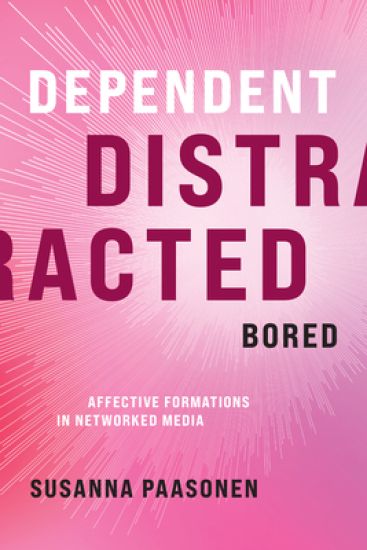
A new approach to understanding the culture of ubiquitous connectivity, arguing that our dependence on networked infrastructure does not equal addiction. In this book, Susanna Paasonen takes on a dominant narrative repeated in journalistic and academic accounts for more than a decade: that we are addicted to devices, apps, and sites designed to distract us, that drive us to boredom, with detrimental effect on our capacities to focus, relate, remember, and be. Paasonen argues instead that network connectivity is a matter of infrastructure and necessary for the operations of the everyday. Dependencies on it do not equal addiction but speak to the networks within which our agency can take shape.
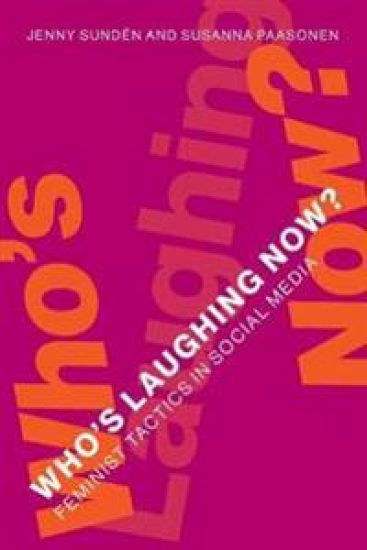
Online sexism, hate, and harassment aim to silence women through shaming and fear. In Who's Laughing Now? Jenny Sunden and Susanna Paasonen examine a somewhat counterintuitive form of resistance- humor. Sunden and Paasonen argue that feminist social media tactics that use humor, laughter, and a sense of the absurd to answer name-calling, offensive language, and unsolicited dick pics can rewire the affective circuits of sexual shame and acts of shaming. Using laughter as both a theme and a methodological tool, Sunden and Paasonen explore examples of the subversive deployment of humor that range from @assholesonline to the Tumblr "Congrats, you have an all-male panel!" They consider the distribution and redistribution of shame, discuss Hannah Gadsby's Nanette, and describe tactical retweeting and commenting (as practiced by Stormy Daniels, among others). They explore the appropriation of terms meant to hurt and insult-for example, self-proclaimed Finnish "tolerance whores"-and what effect this rerouting of labels may have. They are interested not in lulz (amusement at another's expense)-not in what laughter pins down, limits, or suppresses but rather in what grows with and in it. The contagiousness of laughter drives the emergence of networked forms of feminism, bringing people together (although it may also create rifts). Sunden and Paasonen break new ground in exploring the intersection of networked feminism, humor, and affect, arguing for the political necessity of inappropriate laughter.
Objectification
Susanna Paasonen; Feona Attwood; Alan McKee; John Mercer; Clarissa Smith
Routledge
2020
nidottu
This is a concise and accessible introduction into the concept of objectification, one of the most frequently recurring terms in both academic and media debates on the gendered politics of contemporary culture, and core to critiquing the social positions of sex and sexism. Objectification is an issue of media representation and everyday experiences alike. Central to theories of film spectatorship, beauty fashion and sex, objectification is connected to the harassment and discrimination of women, to the sexualization of culture and the pressing presence of body norms within media. This concise guidebook traces the history of the term’s emergence and its use in a variety of contexts such as debates about sexualization and the male gaze, and its mobilization in connection with the body, selfies and pornography, as well as in feminist activism. It will be an essential introduction for undergraduate and postgraduate students in Gender Studies, Media Studies, Sociology, Cultural Studies or Visual Arts.
Objectification
Susanna Paasonen; Feona Attwood; Alan McKee; John Mercer; Clarissa Smith
Routledge
2020
sidottu
This is a concise and accessible introduction into the concept of objectification, one of the most frequently recurring terms in both academic and media debates on the gendered politics of contemporary culture, and core to critiquing the social positions of sex and sexism. Objectification is an issue of media representation and everyday experiences alike. Central to theories of film spectatorship, beauty fashion and sex, objectification is connected to the harassment and discrimination of women, to the sexualization of culture and the pressing presence of body norms within media. This concise guidebook traces the history of the term’s emergence and its use in a variety of contexts such as debates about sexualization and the male gaze, and its mobilization in connection with the body, selfies and pornography, as well as in feminist activism. It will be an essential introduction for undergraduate and postgraduate students in Gender Studies, Media Studies, Sociology, Cultural Studies or Visual Arts.
An exploration of how and why social media content is tagged as "not safe for work" and an argument against conflating sexual content with risk. The hashtag #NSFW (not safe for work) acts as both a warning and an invitation. NSFW tells users, "We dare you to click on this link! And by the way, don't do it until after work!" Unlike the specificity of movie and television advisories ("suggestive dialogue," "sexual content"), NSFW signals, nonspecifically, sexually explicit content that ranges from nude selfies to pornography. NSFW looks at how and why social media content is tagged "not safe" and shows how this serves to conflate sexual content and risk. The authors argue that the notion of "unsafety" extends beyond the risk of losing one's job or being embarrassed at work to an unspecified sense of risk attached to sexually explicit media content and sexual communication in general. The authors examine NSFW practices of tagging and flagging on a range of social media platforms; online pornography and its dependence on technology; user-generated NSFW content-in particular, the dick pic and associated issues of consent, desire, agency, and social power; the deployment of risque humor in the workplace; and sexist and misogynist online harassment that functions as an enforcer of inequalities. They argue against the categorical effacement of sexual content by means of an all-purpose hashtag and urge us to shift considerations of safety from pictorial properties to issues of context and consent.
Exploring sex-bodily capacities, appetites, orientations, and connections-in terms of play and playfulness. We all know that sex involves a quest for pleasure, that sexual palates vary across people's lifespans, and that playful experimentations play a key role in how people discover their diverse sexual turn-ons and turn-offs. Yet little attention has been paid to thinking through the interconnections of sex and play, sexuality and playfulness. In Many Splendored Things from Goldsmiths Press, Susanna Paasonen considers these interconnections. Paasonen examines the notions of playfulness and play as they shed light on the urgency of sexual pleasures, the engrossing appeal of sex, and the elasticity of sexual desires, and considers their connection to categories of identity. Drawing on a broad range of scholarship on sexuality, play, and the media, Paasonen moves from the conceptual to the concrete, examining advice literature on sexual play, the vernacular aesthetics of the Fifty Shades series, girls' experiences of online sexual role-playing, popular media coverage of age-play, and Jan Soldat's documentary films on BDSM culture. Paasonen argues that play in the realm of sexuality involves experimentation with what bodies can feel and do and what people may imagine themselves as doing, liking, and preferring. Play involves the exploration of different bodily capacities, appetites, orientations, and connections. Occasionally strained, dark, and even hurtful in the forms that it takes and the sensory intensities that it engenders, sex presses against previously perceived and imagined horizons of embodied potentiality. Play pushes sexual identifications into motion.
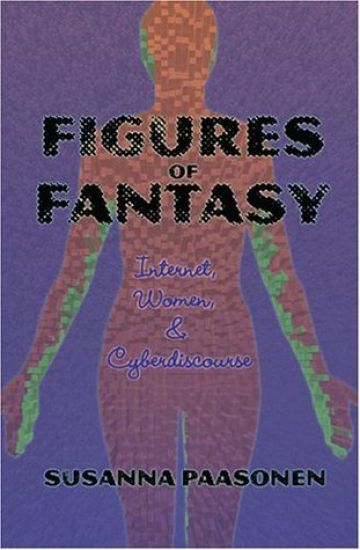
Figures of Fantasy explores the popularization of the idea of the Internet as a cyberspace and considers the implications this has for discussions of gender and identity. The book analyzes the standard figures used to conceptualize and explain technology and gender, and traces the ways in which these concepts have served to create the figure of the Internet as a cyberspace - a manner of thinking that has come to dominate Internet research internationally, making visible its historicity, limitations, and implications. Figures of Fantasy offers an innovative theoretical approach to Internet research, and provides a highly original, systematic critique of the canonical works in the field.