Kirjojen hintavertailu – 12 859 819 kirjaa ja 27 kauppaa

Kirjailija

Susannah Heschel

Kirjat ja teokset yhdessä paikassa: 17 kirjaa, julkaisuja vuosilta 1998–2025, suosituimpiin kuuluu The New Diaspora and the Global Prophetic. Vertaile teosten hintoja ja tarkista saatavuus suomalaisista kirjakaupoista.

17 kirjaa

Kirjojen julkaisuvuodet: 1998–2025.

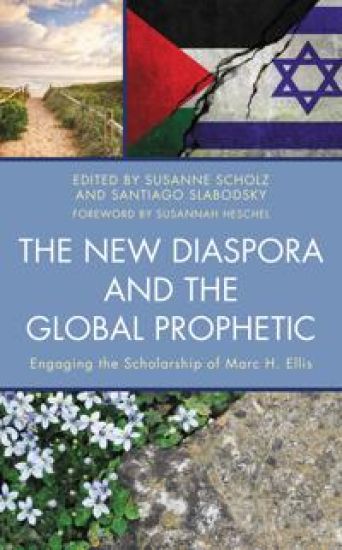
The New Diaspora and the Global Prophetic

The New Diaspora and the Global Prophetic

Susannah Heschel

Lexington Books/Fortress Academic
2021
sidottu
For four decades now, Marc H. Ellis has sought to rethink Jewish tradition in light of the prophetic imperative, especially with regard to the need for geopolitical justice in the context of Israel/Palestine. Here, twenty-two contributors offer intellectual, theological, political, and journalistic insight intoEllis’s work, connecting his theological scholarship to the particularities of their own contexts. Some contributors reflect specifically on Israel/Palestine while others transfer Ellis’s theopolitical discussions to other geopolitical, cultural, or religious concerns. Yet all of them rely on Ellis’s work to understand the connections of prophetic discourses, religious demands, social movements, and projects of social justice. Paying particular attention to global racism, sexism, ethnocentrism, white supremacy, and current neocolonial practices, the contributors also address minoritized liberation theologies, the role of memory, exile and forgiveness, biblical hermeneutics, and political thought. In diverse and powerful ways, the contributors ground their scholarship with the activist drive to deepen, enrich, and strengthen intellectual work in meaningful ways.
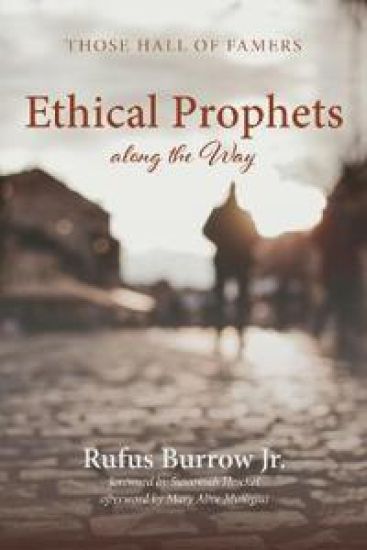
Ethical Prophets Along the Way

Ethical Prophets Along the Way

Rufus Burrow; Susannah Heschel; Mary Alice Mulligan

Cascade Books
2019
pokkari
The Hebrew prophets of ancient Israel strove to convey God's point of view to the people and the powers at a time when injustice, deceit, malfeasance, and crushing the poor and the oppressed was prominent--much like today The prophets spoke courageously and emphatically about God's profound and unrelenting concern and compassion for human beings. Much influenced by the theology of prophecy developed by Rabbi Abraham Joshua Heschel, this book discusses the nature, meaning, and relevance of ethical prophecy at a time when democracy--in the United States of America and elsewhere--is under vicious assault from the religious and secular right and authoritarian politicians who openly flirt with and support murderous dictators, sexism, homophobia, racial bigotry, anti-Semitism, and hatred of Muslims both in word and practice. An examination of the contributions of eight powerful personalities from the period of American slavery through the post-civil rights era--Angelina Grimke, Ida B. Wells, Abraham J. Heschel, James Baldwin, Malcolm X, Martin Luther King Jr., Oscar Romero, and Alice Walker--offers a recipe for addressing this state of affairs.
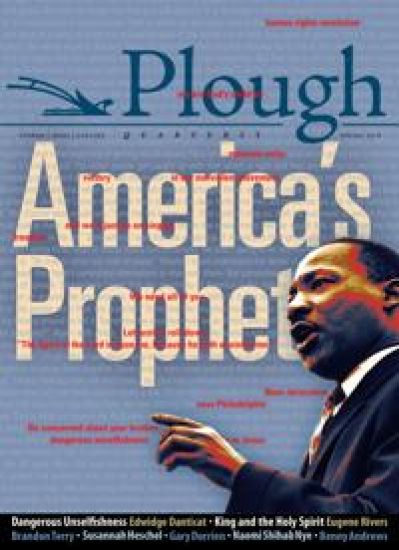
Plough Quarterly No. 16 - America's Prophet

Plough Quarterly No. 16 - America's Prophet

Edwidge Danticat; Susannah Heschel; Eugene F. Rivers III; Brandon M. Terry; Gary Dorrien; D. L. Mayfield; Chris Gibson; Oscar Romero; Oddny Gumaer; Nathaniel Peters; Philip Britts

Plough Publishing House
2018
pokkari
What if Martin Luther King Jr., this name-branded, oft-sanitized preacher from Atlanta, is a prophet whose message America has yet to fully reckon with? Ten days before Martin Luther King Jr.’s assassination, Rabbi Abraham Joshua Heschel said, “Where in America today do we hear a voice like the voice of the prophets of Israel? Martin Luther King is a sign that God has not forsaken the United States of America. God has sent him to us.” What if Heschel’s words about King are true? What if this name-branded, oft-sanitized, Super-Bowl-ad-commercialized, National-Mall-memorialized preacher from Atlanta . . . is a prophet whose message America has yet to fully reckon with? This issue of Plough Quarterly looks at King’s unfinished struggle against the three evils of racism, materialism, and militarism. Perspectives from Edwidge Danticat, Gary Dorrien, Brandon M. Terry, D. L. Mayfield, Eugene Rivers, and Susannah Heschel explore the ways King’s message of nonviolence, justice, and love of neighbor still matters today: to refugees and immigrants, soldiers and veterans, preachers and prisoners, black lives matter activists and the white working class. Also in this issue: original poetry by Naomi Shihab Nye; reviews of new books by James Forman Jr., Steve Krivák, Jim Forest, and Christopher de Hamel; and art by Yvan Lamothe, Roberson Joseph, Barry Moser, Benny Andrews, Zoe Cromwell, Julian Peters, Asuka Hishiki, Mark Smith, Mary Kang, Marc Chagall, John Partipilo, Yuri Kozyrev, Vinicius Barajas, Iain Stewart, Giovanni Bellini. Plough Quarterly features stories, ideas, and culture for people eager to put their faith into action. Each issue brings you in-depth articles, interviews, poetry, book reviews, and art to help you put Jesus’ message into practice and find common cause with others.
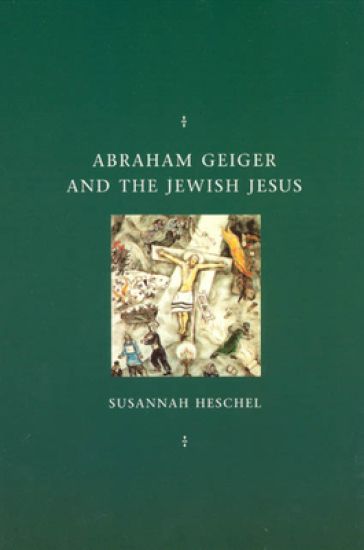
Abraham Geiger and the Jewish Jesus

Abraham Geiger and the Jewish Jesus

Susannah Heschel

University of Chicago Press
1998
sidottu
Was Jesus the founder of Christianity of a teacher of Judaism? When he argued the latter based on the New Testament, Abraham Geiger ignited an intense debate that began in 19th-century Germany but continues in the late-20th century. Geiger was a pioneer of Reform Judaism and a founder of Jewish studies and developed a Jewish version of Christian origins. He contended that Jesus was a member of the pharisees, a progressive and liberalizing group within 1st-century Judaism, and that he taught nothing new or original. This argumant enraged German Protestant theologians, some of whom produced a tragic counterargument based upon racial theory. In this study, Susannah Heschel traces the genesis of Geiger's argument and examines the reaction to it within Christian theology. She concludes that Geiger initiated an intellectual revolt by the colonized against the colonizer, an attempt not to assimilate into Christianity by adopting Jesus as a Jew, but to overthrow Christian intellectual hegemony by claiming that Christianity - and all of Western civilization - was the product of Judaism.
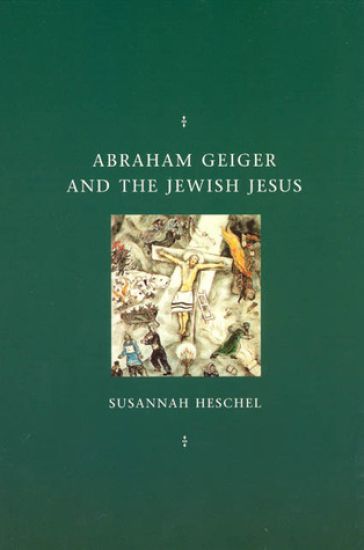
Abraham Geiger and the Jewish Jesus

Abraham Geiger and the Jewish Jesus

Susannah Heschel

University of Chicago Press
1998
nidottu
Was Jesus the founder of Christianity of a teacher of Judaism? When he argued the latter based on the New Testament, Abraham Geiger ignited an intense debate that began in 19th-century Germany but continues in the late-20th century. Geiger was a pioneer of Reform Judaism and a founder of Jewish studies and developed a Jewish version of Christian origins. He contended that Jesus was a member of the pharisees, a progressive and liberalizing group within 1st-century Judaism, and that he taught nothing new or original. This argumant enraged German Protestant theologians, some of whom produced a tragic counterargument based upon racial theory. In this study Susannah Heschel traces the genesis of Geiger's argument and examines the reaction to it within Christian theology. She concludes that Geiger initiated an intellectual revolt by the colonized against the colonizer, an attempt not to assimilate into Christianity by adopting Jesus as a Jew, but to overthrow Christian intellectual hegemony by claiming that Christianity - and all of Western civilization - was the product of Judaism.
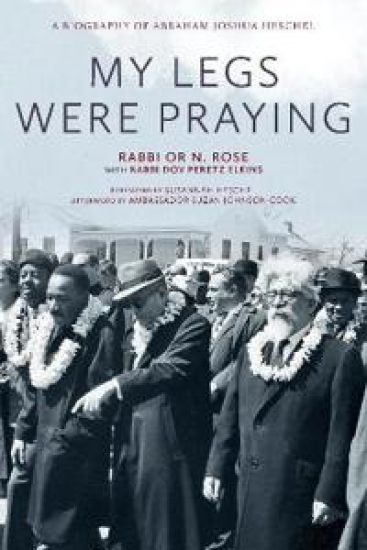
My Legs Were Praying

My Legs Were Praying

Or N. Rose; Susannah Heschel

Monkfish Book Publishing Company
2025
nidottu
Succinct, inspiring biography of a bridge-building Jewish leader, supplemented by 25 black-and-white photographsOn March 21, 1965, Martin Luther King, Jr. and other civil rights organizers led 8,000 protesters on a 54-mile march from Selma to Montgomery. They invited a distinguished group of national religious figures to join them in the front lines. One of these was Abraham Joshua Heschel--a gifted Jewish scholar, teacher, and speaker, whose recent book, The Prophets (1962)--a detailed study of the ancient biblical champions of justice and mercy--was a source of great inspiration to Dr. King and others. As Heschel walked arm-in-arm with his colleagues, he was easy to spot in the crowd: He was a short, stocky man with flowing white hair, a bushy beard, who wore a dark yarmulke (Jewish head covering). Like the prophets of old, Heschel believed that standing up for others--particularly the most vulnerable members of society--is a sacred obligation. He later wrote, the religious person must seek to hold God and humankind "in one thought at one time," suffering "harm done to others," making "compassion" one's "greatest passion." Heschel first learned these essential values as a child in Eastern Europe. This little book is his story.
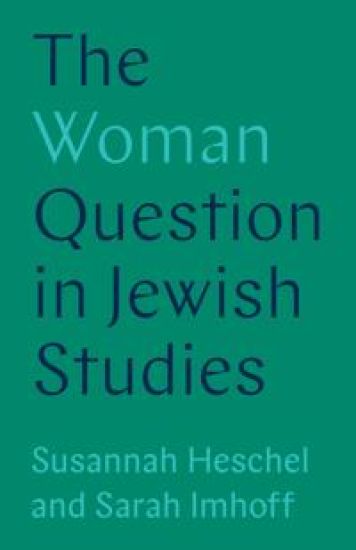
The Woman Question in Jewish Studies

The Woman Question in Jewish Studies

Susannah Heschel; Sarah Imhoff

PRINCETON UNIVERSITY PRESS
2025
sidottu
A critical look at the difficulties women face in the field of Jewish studies, drawing on quantitative data, personal stories, and the gendered history of the fieldThe field of Jewish studies has expanded significantly in recent years, with increasing numbers of women entering the field. These scholars have brought new perspectives from studies of women, gender, and sexuality. Yet they have also faced institutional and individual obstacles. In this book, Susannah Heschel and Sarah Imhoff examine the place of women and nonbinary people in Jewish studies, arguing that, for both intellectual and ethical reasons, the culture of the field must change. Heschel and Imhoff explore quantitative data regarding women as editors of and contributors to academic journals and anthologies, examine data regarding citations of women’s scholarship, and scrutinize women’s presence on panels at academic conferences. They analyze the wider context of the contemporary academy, discussing what is distinctive about Jewish studies. They trace the history of the field, its connections to traditional religious studies, and its growth in US institutions, interspersing this with stories of scholars in the field who have experienced harassment and gender discrimination. Finally, they offer suggestions for a reparative path forward.
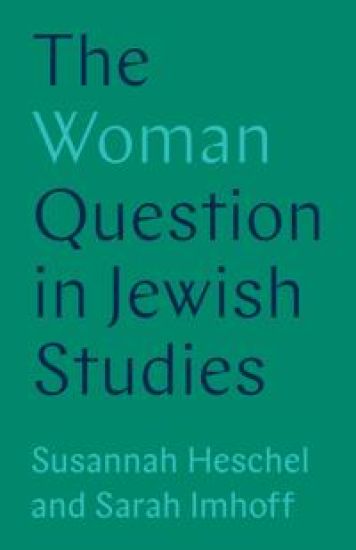
The Woman Question in Jewish Studies

The Woman Question in Jewish Studies

Susannah Heschel; Sarah Imhoff

PRINCETON UNIVERSITY PRESS
2025
pokkari
A critical look at the difficulties women face in the field of Jewish studies, drawing on quantitative data, personal stories, and the gendered history of the fieldThe field of Jewish studies has expanded significantly in recent years, with increasing numbers of women entering the field. These scholars have brought new perspectives from studies of women, gender, and sexuality. Yet they have also faced institutional and individual obstacles. In this book, Susannah Heschel and Sarah Imhoff examine the place of women and nonbinary people in Jewish studies, arguing that, for both intellectual and ethical reasons, the culture of the field must change. Heschel and Imhoff explore quantitative data regarding women as editors of and contributors to academic journals and anthologies, examine data regarding citations of women’s scholarship, and scrutinize women’s presence on panels at academic conferences. They analyze the wider context of the contemporary academy, discussing what is distinctive about Jewish studies. They trace the history of the field, its connections to traditional religious studies, and its growth in US institutions, interspersing this with stories of scholars in the field who have experienced harassment and gender discrimination. Finally, they offer suggestions for a reparative path forward.
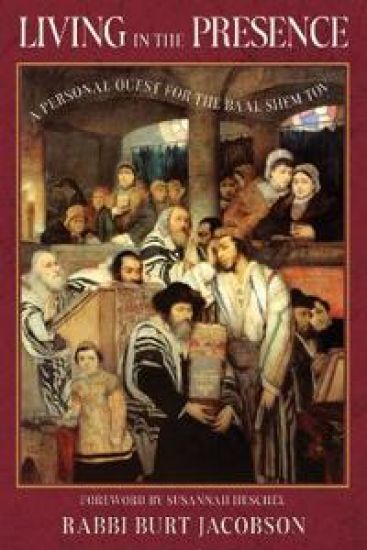
Living in the Presence

Living in the Presence

Burt Jacobson; Susannah Heschel

Monkfish Book Publishing Company
2025
pokkari
A rabbi's lifelong journey to discover the source and inspiration of Hasidism. As a student of Abraham Joshua Heschel's at Jewish Theological Seminary sixty years ago, Burt Jacobson was moved to devote his life to the study of Israel Baal Shem Tov--the founder of Hasidism. Heschel considered the Baal Shem the greatest Jewish teacher and communal leader of the last 1,000 years. Living in the Presence: A Personal Quest for the Baal Shem Tov is a wide-ranging portrait, revealing numerous facets of the Baal Shem Tov's biography and revolutionary thought previously unknown. Through his knowledge of the world's wisdom traditions, and personal journey, Rabbi Jacobson is able to place the Baal Shem in the company of the great world spiritual teachers including Jesus and the Buddha. Jacobson reveals the Baal Shem's vision as an ecstatic mystical encounter that opened to the transcendent unity of existence. It was this that inspired his love and compassion for all creation, especially for the people he met. His disciples testified that their experience of these truths transformed how they understood their own identities as manifestations of the Divine, altered how they lived as spiritual leaders of their communities, and laid the foundations for Hasidism as a movement. Throughout his book Jacobson presents and evaluates insights of historians and scholars, but it is also filled with personal stories about Jacobson's own struggle with his Jewish identity and his encounter with the Baal Shem as his spiritual teacher. Both a tour de force and a labor of love, this book will quickly become the most essential work on the subject ever published in English.
Ethical Prophets Along the Way

Ethical Prophets Along the Way

Rufus Burrow; Susannah Heschel; Mary Alice Mulligan

Cascade Books
2019
sidottu
The Hebrew prophets of ancient Israel strove to convey God's point of view to the people and the powers at a time when injustice, deceit, malfeasance, and crushing the poor and the oppressed was prominent--much like today The prophets spoke courageously and emphatically about God's profound and unrelenting concern and compassion for human beings. Much influenced by the theology of prophecy developed by Rabbi Abraham Joshua Heschel, this book discusses the nature, meaning, and relevance of ethical prophecy at a time when democracy--in the United States of America and elsewhere--is under vicious assault from the religious and secular right and authoritarian politicians who openly flirt with and support murderous dictators, sexism, homophobia, racial bigotry, anti-Semitism, and hatred of Muslims both in word and practice. An examination of the contributions of eight powerful personalities from the period of American slavery through the post-civil rights era--Angelina Grimke, Ida B. Wells, Abraham J. Heschel, James Baldwin, Malcolm X, Martin Luther King Jr., Oscar Romero, and Alice Walker--offers a recipe for addressing this state of affairs.
In This Hour

In This Hour

Abraham Joshua Heschel; Susannah Heschel

Jewish Publication Society
2019
sidottu
In This Hour offers the first English translations of selected German writings by Abraham Joshua Heschel from his tumultuous years in Nazi-ruled Germany and months in London exile, before he found refuge in the United States. Moreover, several of the works have never been published in any language. Composed during a time of intense crisis for European Jewry, these writings both argue for and exemplify a powerful vision of spiritually rich Jewish learning and its redemptive role in the past and the future of the Jewish people. The collection opens with the text of a speech in which Heschel laid out with passion his vision for Jewish education. Then it goes on to present his teachings: a set of essays about the rabbis of the Mishnaic period, whose struggles paralleled those of his own time; the biography of the medieval Jewish scholar and leader Don Yitzhak Abravanel; reflections on the power and meaning of repentance, written for the High Holidays in 1936; and a short story on Jewish exile, written for Hanukkah 1937. The collection closes with a set of four recently discovered meditations-on suffering, prayer, spirituality, and God-in which Heschel grapples with the horrors unfolding around him. Taken together, these essays and story fill a significant void in Heschel’s bibliography: his Nazi Germany and London exile years. These translations convey the spare elegance of Heschel’s prose, and the introduction and detailed notes make the volume accessible to readers of all knowledge levels. As Heschel teaches history, his voice is more than that of a historian: the old becomes new, and the struggles of one era shed light on another. Even as Heschel quotes ancient sources, his words address the issues of his own time and speak urgently to ours.
Abraham Heschel

Abraham Heschel

Susannah Heschel

Orbis Books (USA)
2011
nidottu
Abraham Heschel (1907-1972) was one of the great religious teachers and moral prophets of our time. Born in Warsaw to a long line of Hasidic rabbis, he chose instead to study philosophy in Germany. Expelled back to Warsaw, he escaped just weeks before the Nazi invasion and settled in the United States. Through a series of books he contributed greatly to the spiritual renewal of Judaism. But he exerted an equal influence on Christians, so much that he was called another "apostle to the gentiles." A passionate champion of interfaith dialogue, he served as an official observer at Vatican II and was influential in challenging the Catholic church to overcome the legacy of anti-Semitism. He raised a prophetic challenge to the social issues of his day, marching with Martin Luther King and protesting the Vietnam war. His writings here on prayer, God, prophecy, the human condition, and the spiritual life vividly communicate his instinct for the "holy dimension of all existence."
The Aryan Jesus

The Aryan Jesus

Susannah Heschel

Princeton University Press
2010
pokkari
Was Jesus a Nazi? During the Third Reich, German Protestant theologians, motivated by racism and tapping into traditional Christian anti-Semitism, redefined Jesus as an Aryan and Christianity as a religion at war with Judaism. In 1939, these theologians established the Institute for the Study and Eradication of Jewish Influence on German Religious Life. In The Aryan Jesus, Susannah Heschel shows that during the Third Reich, the Institute became the most important propaganda organ of German Protestantism, exerting a widespread influence and producing a nazified Christianity that placed anti-Semitism at its theological center. Based on years of archival research, The Aryan Jesus examines the membership and activities of this controversial theological organization. With headquarters in Eisenach, the Institute sponsored propaganda conferences throughout the Nazi Reich and published books defaming Judaism, including a dejudaized version of the New Testament and a catechism proclaiming Jesus as the savior of the Aryans. Institute members--professors of theology, bishops, and pastors--viewed their efforts as a vital support for Hitler's war against the Jews. Heschel looks in particular at Walter Grundmann, the Institute's director and a professor of the New Testament at the University of Jena. Grundmann and his colleagues formed a community of like-minded Nazi Christians who remained active and continued to support each other in Germany's postwar years. The Aryan Jesus raises vital questions about Christianity's recent past and the ambivalent place of Judaism in Christian thought.
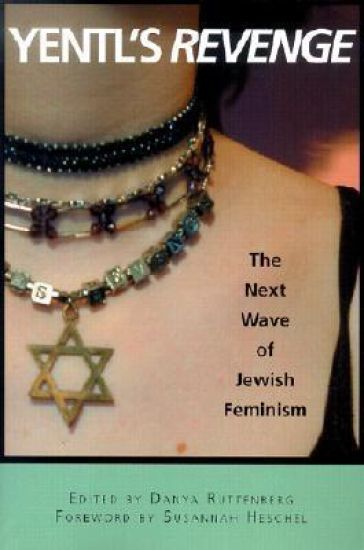
Yentl's Revenge

Yentl's Revenge

Danya Ruttenberg; Susannah Heschel

Seal Press
2001
pokkari
Thanks in large part to the struggles of their activist foremothers, today's young Jewish women have a dizzying array of spiritual options. Yentl's Revenge chronicles a range of experiences lived by an entire generation of women, from Judeo-pagan witches to young Orthodox mothers, from rabbis to sex educators. Contributors ponder Jewish transgenderdom, Jewish body image, Jewish punk, the stereotype of the Jewish American Princess, intermarriage, circumcision, faith, and intolerance. Essays include Bubbe Got Back: Tales of a Jewish Caboose" by Ophira Edut, and On Being a Jewish Feminist Valley Girl" by Tobin Belzer.