Kirjojen hintavertailu – 12 903 725 kirjaa ja 27 kauppaa
Kirjailija
Susanne Alleyn
Kirjat ja teokset yhdessä paikassa: 18 kirjaa, julkaisuja vuosilta 2010–2017, suosituimpiin kuuluu The Grist Mill Secret. Vertaile teosten hintoja ja tarkista saatavuus suomalaisista kirjakaupoista.
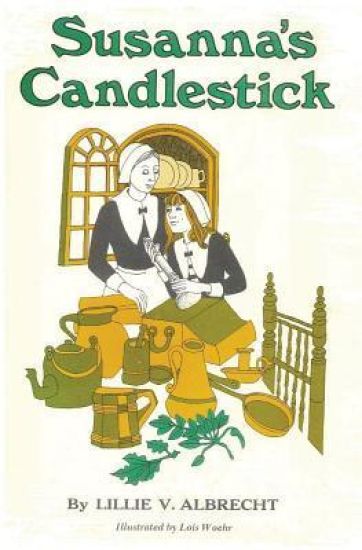
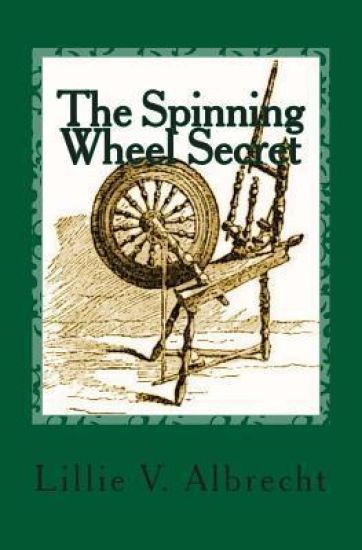
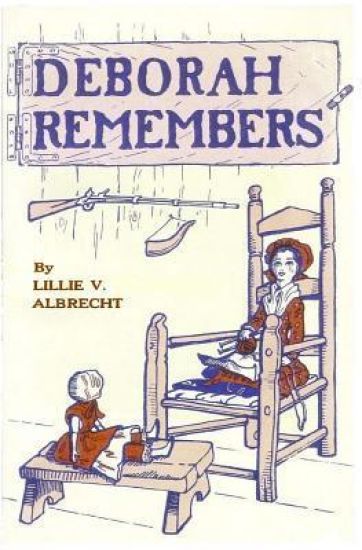
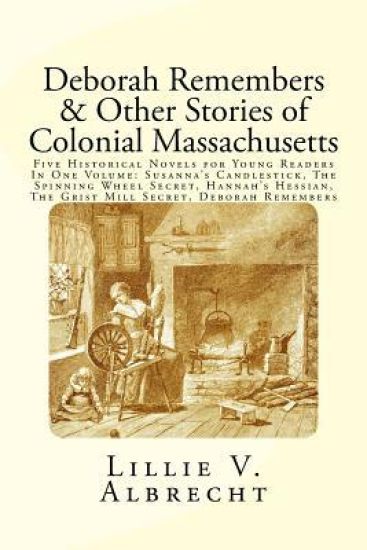
Children's historical fiction, ages 9-12. Save on this all-in-one volume of all five historical children's books about colonial and revolutionary Massachusetts, by acclaimed author Lillie V. Albrecht: Susanna's Candlestick Susanna's strict Puritan father is determined to settle in the New World, where his family can worship God as they please. She has only one keepsake to bring to the remote, untamed New England of 1663: her silver candlestick. But when a gypsy foretells, "The light will show you the way," her candlestick seems very special indeed. Susanna carries it through a hard journey in a strange, wild land, until at last she finds in the gypsy's words an unexpected meaning. The Spinning Wheel Secret Joan's brothers didn't want a baby sister. So they called her Jo and never admitted that she was a girl. A properly-brought-up young Puritan girl in 1705 would never know all the useful skills, like fishing and swimming, that Jo learns from Dan and Sam, though when it comes to doing ordinary household tasks, she's hopeless. But when Indians attack and carry off Jo's mother, Jo will find her own resources and courage sorely tested. Hannah's Hessian Little Hannah has plenty to worry about in the spring of 1775-war, smallpox, storing enough food and firewood to last through the New England winters-and also school. But worst of all are the terrifying Hessians, soldiers hired to fight the American patriot army. And when Hessian prisoners pass through their own village, Hannah's greatest fear seems to be coming true... The Grist Mill Secret In 1775, in a hidden cellar below the lonely mill where Tabby lives, is a gunshop where Father makes muskets for the Minute Men. But when an English family, suspected by all to be loyalist spies, builds a country house nearby, Tabby is trapped between patriotism and friendship with the new neighbors. Can she remain friends with Alice and Jack and still keep the vital secret of the grist mill? Deborah Remembers Deborah, a very special doll, was created 300 years ago in New England: She can remember a terrible Indian massacre, the old Puritan settlements, the Revolutionary War, and the Underground Railroad. Deborah Remembers was based on many real local events and personalities from the history of Westfield, Massachusetts. Her long, rich, often poignant story will captivate you and touch your heart.

Welcome to the weirder (and darker) side of the City of Light. You've probably visited-or plan to visit-the Paris Catacombs. But for history buffs, travelers trying to escape the overcrowded "must-sees," and fans of the bizarre, macabre, or morbid, there's a lot more than the Catacombs to explore in the offbeat, often creepy side of the city that most tourists never see. Forget all the clich s about romance-the most romantic sight you're likely to find in this oddball, grim, or gory Paris will be a tombstone. In these pages you'll discover the city's stranger secrets and grislier history, from the sites where the guillotine did its bloody work, to the graves of its victims; from the Louvre's forgotten medieval basement to a M tro station that celebrates potatoes; to statues of Death, a stroll through the sewers, and an irreverent look at some of the oddest (and ugliest) tombs in the famous cemeteries. With background and practical information for over a hundred bizarre and sometimes gruesome sights, weird artworks, wacky museums, and out-of-the-way historical locations, many free to visit, The Weirder Side Of Paris is an indispensable guide to the city that you never knew existed.
In April, 1793, the Revolutionary Tribunal of Paris condemned a handful of prisoners to death for crimes against the French Republic-and judges, jury, and spectators wept as sentence was passed. In July, 1794, the Tribunal sent thirty to fifty people a day to the guillotine. What, in fifteen months, turned the Tribunal into an instrument of mass murder? What collective madness or terror seized its personnel, some of them callous psychopaths, others decent men trapped in nightmarish circumstances? How could they casually condemn hundreds to death, from peasants to duchesses, from teenagers to senile octogenarians? And how, in the end, could they justify themselves by declaring, in all sincerity, that they had merely done their patriotic duty? In this book, first published in 1909 and now re-published with additional notes for the 21st-century reader, acclaimed historian G. Len tre examines the Revolutionary Tribunal, its beginnings, its personnel, its premises, its most famous trials of revolutionaries and royalty, and finally its downfall as the Terror careened to its bloody conclusion. His extensive archival research strips away layers of myth and presents a factual and fascinating history of a dark and often misunderstood era.
In the icy winter of 1786, in the final years before the French Revolution, hunger, cold, and seething frustration with the iron grip of France's absolute monarchy drive poor and rich alike to outright defiance. Slums, fashionable caf s, and even aristocratic mansions echo with discontent and the first warning signals of the approaching turmoil of 1789. Paris's cemeteries are foul and disease-ridden, but no one, including penniless writer Aristide Ravel, expects to find a man with his throat cut lying dead in a churchyard, surrounded by strange Masonic symbols. Already suspected of subversive activities, Ravel must now clear his name of murder. His search for answers amid the city's literary and intellectual demimonde-with the aid of friends who may not be all that they seem-leads him into a tangle of conspiracy, secret societies, royal scandal, and imminent revolution, which grows only more complex when the corpse disappears...
Paris, 1796. Aristide Ravel, freelance undercover police agent and investigator, is confronted with a double murder in a fashionable apartment. The victims are C lie Montereau, the daughter of a wealthy and influential family, and the man who was blackmailing her. Information steers Ravel toward a young man with a violent past who was in love with C lie, but further inquiry reveals that-according to an eyewitness-he cannot have been her murderer. And recent, notorious miscarriages of justice lead Ravel, beset with fears of sending an innocent person to the guillotine, to doubt his instincts. From the gritty back alleys of Paris to its glittering salons and caf s, through the heart of the feverish, decadent society of postrevolutionary France, his investigation leads him into a puzzle involving hidden secrets, crimes of passion, and long-nurtured hatreds.
Charles-Henri Sanson has good looks, a fine education, and plenty of money: everything that a stylish young Parisian could ask for. He also has an infamous family name-and he's trapped in a hideous job that no one wants. The last thing Charles ever wanted to be was a hangman. But he's the eldest son of Paris's most dreaded public official, and in the 1750s, after centuries of superstition, people like him are outcasts. He knows that the executioner's son must become an executioner himself or starve, for society's fears and prejudices will never let him be anything else. And when disaster strikes, in this true story of destiny and conflicting loyalties in decadent, treacherous pre-revolutionary France, family duty demands that Charles take his father's place much sooner than he had ever imagined. "Alleyn's exhaustive research pays off handsomely in well-drawn characters and colorful historical context. In particular, her female characters are refreshing in their range and willingness to defy stereotypes. A sequel would be welcome to this deftly imagined tale of the years before the French Revolution. A well-researched, robust tale featuring an endearing executioner." --Kirkus Reviews (Starred Review) "Charles's personal crisis and clashing loyalties evoke Greek tragedy, and speak to the issues that will resonate with readers." --Publishers Weekly
Children's historical fiction, ages 9-12. When Hannah Atwater's father goes marching off with the Minute Men in the spring of 1775, his last words to her are, "Remember, little daughter, when I come home, you're going to read the Bible to me." As if poor Hannah doesn't have enough to worry about, including war, the danger of smallpox, and storing enough food and firewood to last the Atwater family through the harsh New England winters, there's also school. She just can't manage to learn to read under the severe gaze of Master Hawkes, who whips naughty pupils at the least provocation. But worst of all are the rumors that soon arise about the terrifying Hessians, soldiers hired by the king of England to fight the American patriot army. The Hessians, the older children tell her, are eight feet tall, have two sets of teeth, eat boys and girls for dinner, and are coming to find her. And when a procession of Hessian prisoners passes through their own village, Hannah's greatest fear seems to be coming true--or does it? "Little Hannah in this story will appeal to modern nine and ten-year-olds as much as a little girl of today, although she was young when the Minute Men were called to fight the Redcoats and George Washington was struggling to hold his own against the British. . . . Well told, pleasantly illustrated and easy to read, this gives a genuine picture of life in the hard years, 1775-1777, a fine approach to history." --The New York Herald-Tribune (1958)
Joan Tower's two big brothers didn't want a baby sister. So they called her Jo and never admitted that she was a girl. Even though the neighbors disapprove, Jo is happier doing boys' jobs. A properly-brought-up young girl in a New England Puritan village of 1705 would never know all the useful skills, like fishing and swimming, that Jo learns from Dan and Sam. When it comes to doing ordinary household tasks, though, she believes she is hopeless. She's not much good at cooking or knitting, and spinning thread is simply beyond her--a fact which her disapproving, fault-finding aunt and cousin never fail to point out. But when Indians attack their little village of Hatfield and carry off many captives, including Jo's mother, Jo and her brothers must make their way alone to Westfield to find shelter with their grandfather. In Westfield, however, more bad news awaits them, and Jo will find her own resources and courage sorely tested. "A plot that remains reasonable as well as exciting. For younger girls in this age group, a treat instead of the usual treatment." --Kirkus Reviews (1965)
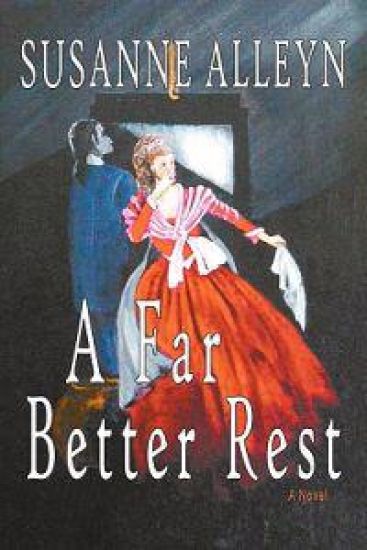
The French Revolution is vividly brought to life in a brilliant retelling of the classic story that has captured the imagination of readers since the 1850s. In Charles Dickens' A Tale of Two Cities, Sydney Carton is an almost ancillary character. Dickens' novel tells us the stories of Charles Darnay, Lucie Manette, and Alexandre Manette. Carton disappears from the novel for eleven chapters and several years, reappearing without warning to bring the novel to its chilling and heartbreaking end. Yet Dickens is silent about the circumstances that transformed Carton from a promising youth to an embittered alcoholic and finally to the man who makes the ultimate sacrifice for love. A Far Better Rest imagines his missing personal history and makes him the center of this tragic tale. Born in England of a wealthy, unloving father and a French mother, Sydney is sent to study in Paris, where he meets Charles Darnay and the other students--Robespierre and Camille Desmoulins among them--who will have enormous influence on his life and alter the course of French history. Years later, when Sydney, disinherited, is living a lonely and purposeless existence in London, Charles reenters his life. The beauty and kindness of Charles's wife, Lucie Manette, affects Sydney so deeply that he secretly devotes his life to her happiness. At last abandoning London for Paris, Sydney becomes a witness to the formation of the French Republic at the end of the eighteenth century and also to one of the most turbulent periods in history. A Far Better Rest is a novel of passion, identity, and history that stands fully in its own right.