Kirjojen hintavertailu – 12 859 818 kirjaa ja 27 kauppaa

Kirjailija

Susmita Dasgupta

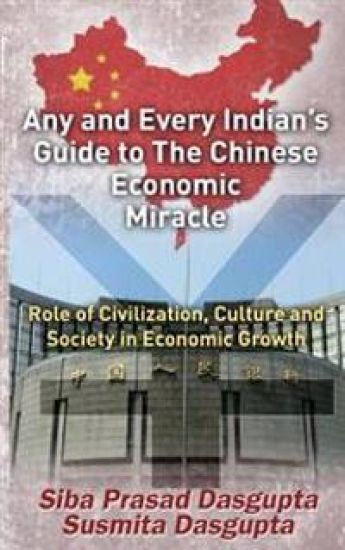
Kirjat ja teokset yhdessä paikassa: 5 kirjaa, julkaisuja vuosilta 2014–2021, suosituimpiin kuuluu Any and Every Indian's Guide to The Chinese Economic Miracle: Role of Civilization, Culture and Society in Economic Growth. Vertaile teosten hintoja ja tarkista saatavuus suomalaisista kirjakaupoista.

5 kirjaa

Kirjojen julkaisuvuodet: 2014–2021.

Coping with Climate Change in the Sundarbans

Coping with Climate Change in the Sundarbans

Susmita Dasgupta; David Wheeler; Istiak Sobhan; Sunando Bandyopadhyay; Ainun Nishat; Tapas Paul

World Bank Publications
2021
nidottu
This monograph synthesizes multiyear, multidisciplinary studies that assess the vulnerability of of the Sundarbans and the neighboring communities whose livelihoods depend on its natural resources, and it recommends resilient-smart adaptation measures.
Economics of the Indian Steel Industry

Economics of the Indian Steel Industry

Susmita Dasgupta

Routledge
2019
nidottu
Steel is the foundational material of modern civilization and constitutes the core of industry, and yet, it is overproduced across the world. This supply glut is reducing margins and turning steel into a sunset industry. Steel consumes as much as four times the amount of raw materials as its produced volume, and the sheer bulk of the steel makes it costly to transport. Because of this, countries prefer to make their own rather than to source it across land and sea. The Indian steel industry has grown from being the tenth largest steel producer in the world in 1991 to emerging as the second largest, after China. This book aims to reveal, through data and the use of simple economic concepts, the mistakes that abound in the discourses surrounding the steel industry. Its main objective is to dispel the many myths that are perpetuated by policy makers and the industry in order to benefit a small coterie of large firms, and discusses how through such favours the Indian steel industry is set to lose out in terms of margins, products and growth in technology. It covers the unique role of the Indian state in the development of the broad base of steel production, and observes the change in the direction in policy, which reverses the economic equality of the past and promotes collusion among oligopolies leading to overexpansion in capacities. Economics of the Indian Steel Industry will be of interest to students of industrial economics and corporate strategy, as well as financial managers and policy makers.
Economics of the Indian Steel Industry

Economics of the Indian Steel Industry

Susmita Dasgupta

Routledge
2017
sidottu
Steel is the foundational material of modern civilization and constitutes the core of industry, and yet, it is overproduced across the world. This supply glut is reducing margins and turning steel into a sunset industry. Steel consumes as much as four times the amount of raw materials as its produced volume, and the sheer bulk of the steel makes it costly to transport. Because of this, countries prefer to make their own rather than to source it across land and sea. The Indian steel industry has grown from being the tenth largest steel producer in the world in 1991 to emerging as the second largest, after China. This book aims to reveal, through data and the use of simple economic concepts, the mistakes that abound in the discourses surrounding the steel industry. Its main objective is to dispel the many myths that are perpetuated by policy makers and the industry in order to benefit a small coterie of large firms, and discusses how through such favours the Indian steel industry is set to lose out in terms of margins, products and growth in technology. It covers the unique role of the Indian state in the development of the broad base of steel production, and observes the change in the direction in policy, which reverses the economic equality of the past and promotes collusion among oligopolies leading to overexpansion in capacities. Economics of the Indian Steel Industry will be of interest to students of industrial economics and corporate strategy, as well as financial managers and policy makers.
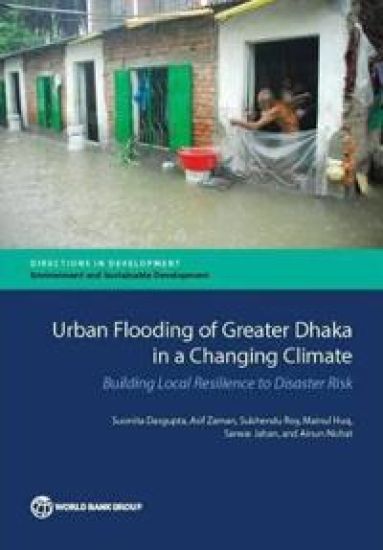
Urban flooding of Greater Dhaka in a changing climate

Urban flooding of Greater Dhaka in a changing climate

Susmita Dasgupta

World Bank Publications
2015
nidottu
Intense rainfall floods Dhaka, Bangladesh, one of the world's fastest-growing megacities, year in and year out, and those in the city's slums and shanties are usually the most affected. Low-lying flood plains, rivers, and canals that once drained water are gradually filling up as a result of indiscriminate urbanization and now magnify rather than help solve the problem. The climate outlook for South Asia in the 21st century is heavier and more erratic rainfall during the monsoon season, according to the Fifth Assessment Report of the Intergovernmental Panel on Climate Change and the World Meteorological Organization. Thus, climate change may further aggravate Dhaka's flood vulnerability. As such, Dhaka needs to better manage its flood drainage infrastructure and strengthen the city's climate disaster resilience and adaptive capacity. But climate-smart policies require local planners to better understand the likely damage from current flooding, potential damage from climate-related risks, and measures that can be taken to cope with current and future flooding and adaptation costs. Urban Flooding of Greater Dhaka in a Changing Climate: Building Local Resilience to Disaster Risk assesses Dhaka's preparedness for urban flood emergencies, estimates probable damage from extreme rainfall events by 2050 with or without climate change, develops structural adaptation measures to cope with current and future flooding, evaluates the reduction in economic damage resulting from implementing these measures, and estimates their cost. The analysis in this book will help Bangladesh's policy makers take targeted steps to mitigate urban flooding in Dhaka and improve the city's resilience in the face of climate change and variability. Equipped with a host of investment options designed to address current flooding and further climate-proof urban infrastructure, local decision makers will be able to develop realistic, yet effective, strategies that prioritize interventions and sequence activities.