Kirjojen hintavertailu – 12 903 725 kirjaa ja 27 kauppaa

Kirjailija

Suvi Salmenniemi

Kirjat ja teokset yhdessä paikassa: 5 kirjaa, julkaisuja vuosilta 2008–2026, suosituimpiin kuuluu Arkipäivän utopiat. Vertaile teosten hintoja ja tarkista saatavuus suomalaisista kirjakaupoista.

5 kirjaa

Kirjojen julkaisuvuodet: 2008–2026.

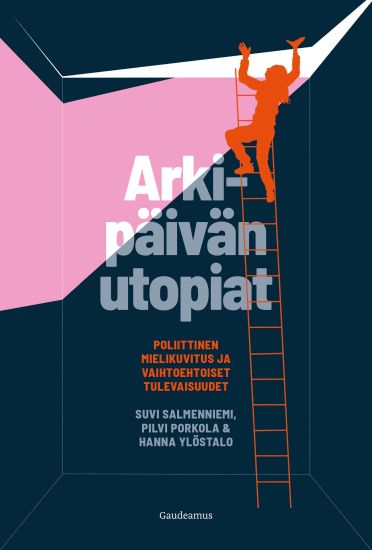
Arkipäivän utopiat

Arkipäivän utopiat

Suvi Salmenniemi; Pilvi Porkola; Hanna Ylöstalo

Gaudeamus
2026
nidottu

Halvin toimitettuna 33,90 €

Mitä jos töissä ei uuvuttaisi kiireen alle? Mitä jos yhteiskunta tarjoaisi turvaa ja hoivaa eikä epävarmuutta? Mitä jos tulevaisuus olisikin valoisa? Utopiat voivat tuntua kaukaisilta, mutta myös hyvinvointivaltion rakentaminen sotienjälkeisessä Suomessa oli oman aikansa utopia, kuten samaa sukupuolta olevien avioliitto tai naisten äänioikeus. Politiikassa tulevaisuus hahmottuu synkkänä korpitaipaleena kohti tuntematonta ja kehitysehdotukset rajoittuvat nykyisen järjestelmän hienosäätämiseen. Vaikeat kysymykset etenevästä ekokriisistä ja kasvavasta yhteiskunnallisesta eriarvoisuudesta sotiin ja ääriliikkeiden globaaliin nousuun eivät ruoki optimismia. Tarvitaan kokonaan uudenlaista ajattelua. Arkipäivän utopiat esittää toisenlaisten maailmojen kuvittelukyvyn yhteiskunnallisen muutoksen voimana. Teos antaa työkaluja ja tukea dystooppisen poliittisen keskustelun taltuttamiseen ja toivon luomiseen. Kyse ei ole pilvilinnoista, vaan vaihtoehtoisia työn, talouden ja ajan järjestyksiä eletään todeksi monin tavoin jo nyt. Millaisia utopioita toteutetaan taiteessa, pedagogiikassa ja erilaisissa yhteisöissä?

Affect, Alienation, and Politics in Therapeutic Culture

Affect, Alienation, and Politics in Therapeutic Culture

Suvi Salmenniemi

Springer International Publishing AG
2023
nidottu

Halvin toimitettuna 174,40 €

This book contributes to research on therapeutic culture by drawing on longstanding ethnographic work and by offering a new theoretical reading of therapeutic culture in today's society. It suggests that the therapeutic field serves as a key site in which a number of contradictions of capitalism are confronted and lived out. It shows that therapeutic engagements are inherently ambivalent and contradictory, as they can be articulated and engaged with in many different ways and harnessed for diverse, and often contradictory, political projects. The book takes issue with the interpretation of therapeutic culture as merely individualising, depoliticizing and working in congruence with neoliberalism, and shows that therapeutic engagements may also open up a space for contestation and critique of neoliberal capitalism, animate collective action for social change and articulate alternative forms of life and subjectivities. The book will speak to a wide variety of audiences in the social sciences and will be of particular interest to those working in the fields of sociology, anthropology, critical psychology, cultural studies, gender studies, and critical social theory.
Affect, Alienation, and Politics in Therapeutic Culture

Affect, Alienation, and Politics in Therapeutic Culture

Suvi Salmenniemi

Springer International Publishing AG
2022
sidottu
This book contributes to research on therapeutic culture by drawing on longstanding ethnographic work and by offering a new theoretical reading of therapeutic culture in today's society. It suggests that the therapeutic field serves as a key site in which a number of contradictions of capitalism are confronted and lived out. It shows that therapeutic engagements are inherently ambivalent and contradictory, as they can be articulated and engaged with in many different ways and harnessed for diverse, and often contradictory, political projects. The book takes issue with the interpretation of therapeutic culture as merely individualising, depoliticizing and working in congruence with neoliberalism, and shows that therapeutic engagements may also open up a space for contestation and critique of neoliberal capitalism, animate collective action for social change and articulate alternative forms of life and subjectivities. The book will speak to a wide variety of audiences in the social sciences and will be of particular interest to those working in the fields of sociology, anthropology, critical psychology, cultural studies, gender studies, and critical social theory.
Democratization and Gender in Contemporary Russia
This book examines civic activism, democratization and gender in contemporary Russian society. It describes the character and central organizing principles of Russian democratic civic life, considering how it has developed since the Soviet period, and analyzing the goals and identities of important civic groups - including trade unions - and the meanings they have acquired in the context of wider Russian society. In particular, Suvi Salmenniemi investigates the gender dimensions, both masculine and feminine, of socio-political participation in Russia, considering what kinds of gendered meanings are given to civic organizations and formal politics, and how femininity and masculinity are represented in this context. Exploring the role of state institutions in the development of democratic civic life, the volume shows how, under the increasingly authoritarian Putin regime and its policy of ‘managed democracy’, independent civic activism is both thriving yet at the same constrained. Based on extensive fieldwork research, it provides much needed information on how Russians themselves view these developments, both from the perspective of civic activists and the local authorities.
Democratization and Gender in Contemporary Russia
This book examines civic activism, democratization and gender in contemporary Russian society. It describes the character and central organizing principles of Russian democratic civic life, considering how it has developed since the Soviet period, and analyzing the goals and identities of important civic groups - including trade unions - and the meanings they have acquired in the context of wider Russian society. In particular, Suvi Salmenniemi investigates the gender dimensions, both masculine and feminine, of socio-political participation in Russia, considering what kinds of gendered meanings are given to civic organizations and formal politics, and how femininity and masculinity are represented in this context. Exploring the role of state institutions in the development of democratic civic life, the volume shows how, under the increasingly authoritarian Putin regime and its policy of ‘managed democracy’, independent civic activism is both thriving yet at the same constrained. Based on extensive fieldwork research, it provides much needed information on how Russians themselves view these developments, both from the perspective of civic activists and the local authorities.