Kirjojen hintavertailu – 12 859 828 kirjaa ja 27 kauppaa

Kirjailija

Sven Beckert

Kirjat ja teokset yhdessä paikassa: 9 kirjaa, julkaisuja vuosilta 2001–2025, suosituimpiin kuuluu Plantation Kingdom. Vertaile teosten hintoja ja tarkista saatavuus suomalaisista kirjakaupoista.

9 kirjaa

Kirjojen julkaisuvuodet: 2001–2025.

Plantation Kingdom

Plantation Kingdom

Richard Follett; Sven Beckert; Peter Coclanis; Barbara M. Hahn

Johns Hopkins University Press
2016
pokkari
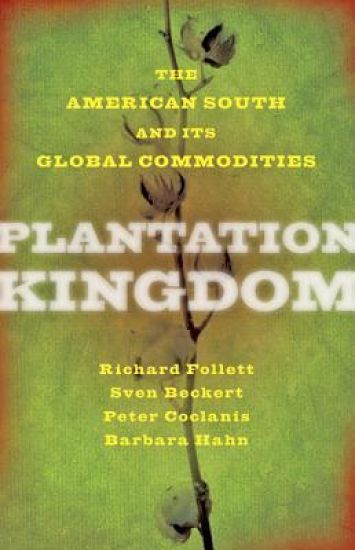
In 1850, America's plantation economy reigned supreme. U. S. cotton dominated world markets, and American rice, sugarcane, and tobacco grew throughout a vast farming empire that stretched from Maryland to Texas. Four million enslaved African Americans toiled the fields, producing global commodities that enriched the most powerful class of slaveholders the world had ever known. But fifty years later-after emancipation demolished the plantation-labor system, Asian competition flooded world markets with cheap raw materials, and free trade eliminated protected markets-America's plantations lay in ruins. Plantation Kingdom traces the rise and fall of America's plantation economy. Written by four renowned historians, the book demonstrates how an international capitalist system rose out of slave labor, indentured servitude, and the mass production of agricultural commodities for world markets. Vast estates continued to exist after emancipation, but tenancy and sharecropping replaced slavery's work gangs across most of the plantation world. Poverty and forced labor haunted the region well into the twentieth century. The book explores the importance of slavery to the Old South, the astounding profitability of plantation agriculture, and the legacy of emancipation. It also examines the place of American producers in world markets and considers the impact of globalization and international competition 150 years ago. Written for scholars and students alike, Plantation Kingdom is an accessible and fascinating study.
Plantation Kingdom

Plantation Kingdom

Richard Follett; Sven Beckert; Peter Coclanis; Barbara M. Hahn

Johns Hopkins University Press
2016
sidottu
In 1850, America's plantation economy reigned supreme. U. S. cotton dominated world markets, and American rice, sugarcane, and tobacco grew throughout a vast farming empire that stretched from Maryland to Texas. Four million enslaved African Americans toiled the fields, producing global commodities that enriched the most powerful class of slaveholders the world had ever known. But fifty years later-after emancipation demolished the plantation-labor system, Asian competition flooded world markets with cheap raw materials, and free trade eliminated protected markets-America's plantations lay in ruins. Plantation Kingdom traces the rise and fall of America's plantation economy. Written by four renowned historians, the book demonstrates how an international capitalist system rose out of slave labor, indentured servitude, and the mass production of agricultural commodities for world markets. Vast estates continued to exist after emancipation, but tenancy and sharecropping replaced slavery's work gangs across most of the plantation world. Poverty and forced labor haunted the region well into the twentieth century. The book explores the importance of slavery to the Old South, the astounding profitability of plantation agriculture, and the legacy of emancipation. It also examines the place of American producers in world markets and considers the impact of globalization and international competition 150 years ago. Written for scholars and students alike, Plantation Kingdom is an accessible and fascinating study.
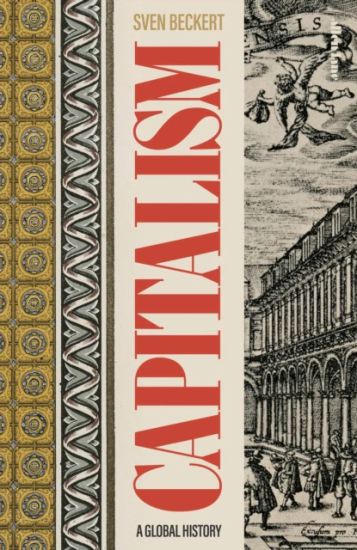
Capitalism: A Global History

Capitalism: A Global History

Sven Beckert

PENGUIN PRESS
2025
sidottu

Halvin toimitettuna 36,90 €

A landmark event years in the making, a brilliant global narrative that unravels the defining story of the past thousand years of human history No other phenomenon has shaped human history as decisively as capitalism. It structures how we live and work, how we think about ourselves and others, how we organize our politics. Sven Beckert, author of the Bancroft Prize-winning Empire of Cotton, places the story of capitalism within the largest conceivable geographical and historical framework, tracing its history during the past millennium and across the world. An epic achievement, his book takes us into merchant businesses in Aden and car factories in Turin, onto the terrifyingly violent sugar plantations in Barbados, and within the world of women workers in textile factories in today's Cambodia. Capitalism, argues Beckert, was born global. Emerging from trading communities across Asia, Africa, and Europe, capitalism's radical recasting of economic life rooted itself only gradually. But then it burst onto the world scene, as a powerful alliance between European states and merchants propelled them, and their economic logic, across the oceans. This, Beckert shows, was modern capitalism's big bang, and one of its epicenters was the slave labor camps of the Caribbean. This system, with its hierarchies that haunt us still, provided the liftoff for the radical transformations of the Industrial Revolution. Fueled by vast productivity increases along with coal and oil, capitalism pulled down old ways of life to crown itself the defining force of the modern world. This epic drama, shaped by state-backed institutions and imperial expansion, corresponded at no point to an idealized dream of free markets. Drawing on archives on six continents, Capitalism locates important modes of agency, resistance, innovation, and ruthless coercion everywhere in the world, opening the aperture from heads of state to rural cultivators. Beckert shows that despite the dependence on expansion, there always have been, and are still, areas of human life that the capitalist revolution has yet to reach. By chronicling capitalism's global history, Beckert exposes the reality of the system that now seems simply "natural." It is said that people can more easily imagine the end of the world than the end of capitalism. If there is one ultimate lesson in this extraordinary book, it's how to leave that behind. Though cloaked in a false timelessness and universality, capitalism is, in reality, a recent human invention. Sven Beckert doesn't merely tote up capitalism's debits and credits. He shows us how to look through and beyond it to imagine a different and larger world.
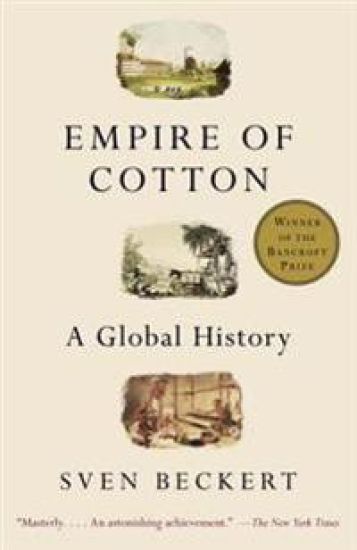
Empire of Cotton: A Global History
WINNER OF THE BANCROFT PRIZE - A Pulitzer Prize finalist that's as unsettling as it is enlightening: a book that brilliantly weaves together the story of cotton with how the present global world came to exist." Masterly ... An astonishing achievement." --The New York Times The empire of cotton was, from the beginning, a fulcrum of constant global struggle between slaves and planters, merchants and statesmen, workers and factory owners. Sven Beckert makes clear how these forces ushered in the world of modern capitalism, including the vast wealth and disturbing inequalities that are with us today. In a remarkably brief period, European entrepreneurs and powerful politicians recast the world's most significant manufacturing industry, combining imperial expansion and slave labor with new machines and wage workers to make and remake global capitalism.
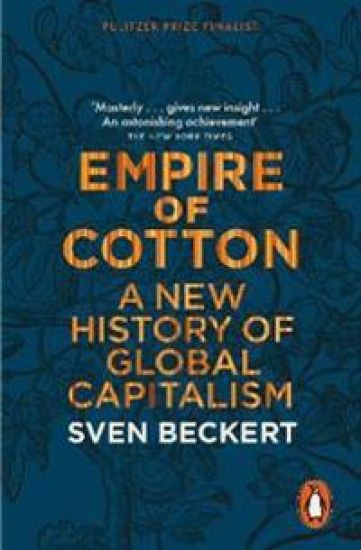
Empire of Cotton

Empire of Cotton

Sven Beckert

Penguin Books Ltd
2015
pokkari

Halvin toimitettuna 20,30 €

WINNER OF THE 2015 BANCROFT PRIZE WINNER OF THE 2015 PHILIP TAFT PRIZEFINALIST FOR THE 2015 PULITZER PRIZE FOR HISTORYSHORTLISTED FOR THE 2015 CUNDHILL PRIZE IN HISTORICAL LITERATUREEconomist BOOKS OF THE YEAR 2015'Knowledgeable and stunning' Orhan Pamuk 'A masterpiece of the historian's craft' The NationFor about 900 years, from 1000 to 1900, cotton was the world's most important manufacturing industry. It remains a vast business - if all the cotton bales produced in 2013 had been stacked on top of each other they would have made a somewhat unstable tower 40,000 miles high. Sven Beckert's superb new book is a history of the overwhelming role played by cotton in dictating the shape of our world. It is both a gripping narrative and a brilliant case history of how the world works.
The Monied Metropolis

The Monied Metropolis

Sven Beckert

Cambridge University Press
2003
pokkari
This is the first comprehensive history of the most powerful group in the nineteenth-century United States: New York City’s economic elite. This small and diverse group of Americans accumulated unprecedented economic, social, and political power, and decisively put their mark on the age. Professor Beckert explores how capital-owning New Yorkers overcame their distinct antebellum identities to forge dense social networks, create powerful social institutions, and articulate an increasingly coherent view of the world and their place within it. Actively engaging in a rapidly changing economic, social, and political environment, these merchants, industrialists, bankers, and professionals metamorphosed into a social class. In the process, these upper-class New Yorkers put their stamp on the major political conflicts of the day - ranging from the Civil War to municipal elections. Employing the methods of social history, The Monied Metropolis explores the big issues of nineteenth-century social change.
The Monied Metropolis

The Monied Metropolis

Sven Beckert

Cambridge University Press
2001
sidottu
This book, first published in 2001, is a comprehensive history of the most powerful group in the nineteenth-century United States: New York City's economic elite. This small and diverse group of Americans accumulated unprecedented economic, social, and political power, and decisively put their mark on the age. Professor Beckert explores how capital-owning New Yorkers overcame their distinct antebellum identities to forge dense social networks, create powerful social institutions, and articulate an increasingly coherent view of the world and their place within it. Actively engaging in a rapidly changing economic, social, and political environment, these merchants, industrialists, bankers, and professionals metamorphosed into a social class. In the process, these upper-class New Yorkers put their stamp on the major political conflicts of the day - ranging from the Civil War to municipal elections. Employing the methods of social history, The Monied Metropolis explores the big issues of nineteenth-century social change.