Kirjojen hintavertailu – 12 859 818 kirjaa ja 27 kauppaa

Kirjailija

Svend-Erik Skaaning

Kirjat ja teokset yhdessä paikassa: 17 kirjaa, julkaisuja vuosilta 2011–2026, suosituimpiin kuuluu Seven Myths about Democracy. Vertaile teosten hintoja ja tarkista saatavuus suomalaisista kirjakaupoista.

17 kirjaa

Kirjojen julkaisuvuodet: 2011–2026.

Seven Myths about Democracy

Seven Myths about Democracy

Jørgen Møller; Svend-Erik Skaaning

TAYLOR FRANCIS LTD
2026
sidottu
This timely book challenges seven widespread misconceptions about democracy that continue to shape public and academic debates about its past, present, and future. Drawing on historical evidence, comparative research, and case illustrations, it demonstrates that commonly repeated claims—such as that democracy cannot be defined, that it was born in ancient Athens, that it is only for Western countries, that it is ineffective, or that it is in terminal decline—rest on shaky foundations. In a clear, accessible, and research-based style, the authors show how these myths distort our understanding of democracy and exaggerate its vulnerabilities – challenging doomsday accounts of democracy to offer a more balanced, historically informed perspective. While not ignoring real challenges such as populism, polarization, and authoritarian pushback, the book emphasizes that democracy’s core promise—the peaceful transfer of power through elections—remains unmatched as a tool to secure peace, freedom, and progress. It is thus both a myth-buster and a treatise in defence of democracy. This book is of key interest to scholars and students of democracy, and more broadly, to readers interested in international relations, comparative politics, and history.
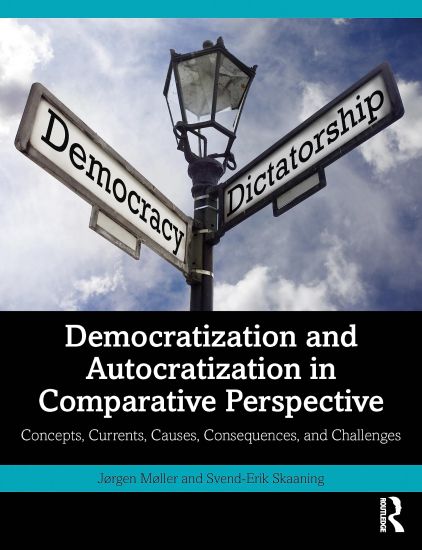
Democratization and Autocratization in Comparative Perspective

Democratization and Autocratization in Comparative Perspective

Jørgen Møller; Svend-Erik Skaaning

TAYLOR FRANCIS LTD
2023
sidottu
This book provides balanced, critical, and comprehensive coverage of the theories and realities of autocratization and democratization. It sketches developments in the conceptions of democracy, discusses how to distinguish between different forms of political rule, and maps the development of democracy and autocracy across space and time. The book reviews the major debates and findings about domestic and international causes and consequences of democratization and autocratization. It synthesizes theoretical models and empirical relationships based on an explicit comparative perspective which focuses on similarities and differences across countries and historical periods. Key features: • Offers a coherent framework, which students and scholars can use to grasp the literature on democratization and autocratization as a whole. • Includes tables and figures as well as plentiful, illustrative in-text features, including chapter summaries, text boxes, concluding bullet points, and discussion questions.• Fully updated to account for the recent developments within the relevant academic literature as well as global and regional patterns of democratization and autocratization. • A section on democracy and autocracy today, highlighting important political challenges for democracy, such as populism and polarization, and providing an overview of the level of democratic crisis in developed democracies. Democratization and Autocratization in Comparative Perspective will be essential reading for students and scholars of political science, democracy and democratization, comparative politics, political theory, and international relations.
Democratization and Autocratization in Comparative Perspective

Democratization and Autocratization in Comparative Perspective

Jørgen Møller; Svend-Erik Skaaning

TAYLOR FRANCIS LTD
2023
nidottu

Halvin toimitettuna 72,50 €

This book provides balanced, critical, and comprehensive coverage of the theories and realities of autocratization and democratization. It sketches developments in the conceptions of democracy, discusses how to distinguish between different forms of political rule, and maps the development of democracy and autocracy across space and time. The book reviews the major debates and findings about domestic and international causes and consequences of democratization and autocratization. It synthesizes theoretical models and empirical relationships based on an explicit comparative perspective which focuses on similarities and differences across countries and historical periods. Key features: • Offers a coherent framework, which students and scholars can use to grasp the literature on democratization and autocratization as a whole. • Includes tables and figures as well as plentiful, illustrative in-text features, including chapter summaries, text boxes, concluding bullet points, and discussion questions.• Fully updated to account for the recent developments within the relevant academic literature as well as global and regional patterns of democratization and autocratization. • A section on democracy and autocracy today, highlighting important political challenges for democracy, such as populism and polarization, and providing an overview of the level of democratic crisis in developed democracies. Democratization and Autocratization in Comparative Perspective will be essential reading for students and scholars of political science, democracy and democratization, comparative politics, political theory, and international relations.
Democracy

Democracy

Svend-Erik Skaaning

Johns Hopkins University Press
2022
pokkari
A short but engaging look at democracy: what it is, how it compares to other forms of rule, and why it makes a difference. What is democracy? And even if it can be defined, can true democracy ever be achieved? Without a definition, dictators can pose as democrats and the oppressed can see despotism as the answer to their prayers. But true democracy, author Svend-Erik Skaaning argues, will not automatically solve the world's problems. It is contentious and unfair, even as it keeps tyrants at bay. In Democracy, Skaaning defines democracy, charts its rise, revival, and resurgence across history and nations, and discusses when democracy has made a difference—and when and why it has failed. ReflectionsIn Reflections, a series copublished with Denmark's Aarhus University Press, scholars deliver 60-page reflections on a key concept that encapsulates their years of study and research. These books present unique insights on a wide range of topics and concepts—everything from love, trust, and play to corruption, welfare, and sleep—that entertain and enlighten readers with exciting discoveries and new perspectives.
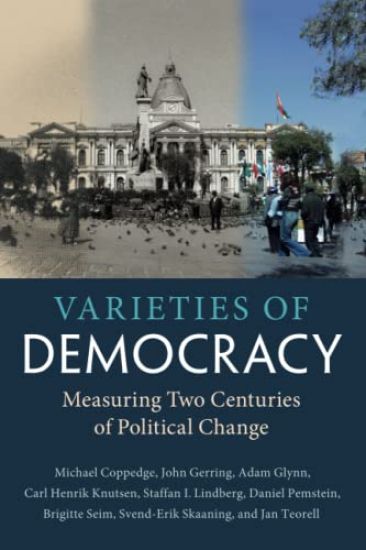
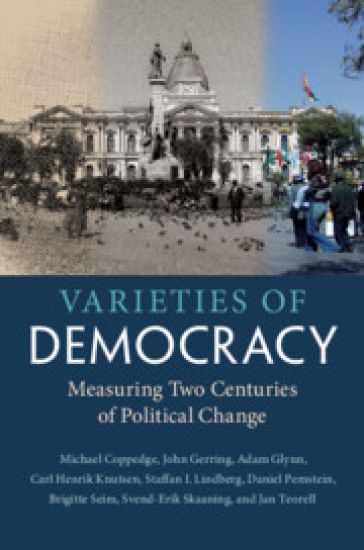
Varieties of Democracy

Varieties of Democracy

Michael Coppedge; John Gerring; Adam Glynn; Carl Henrik Knutsen; Staffan I. Lindberg; Daniel Pemstein; Brigitte Seim; Svend-Erik Skaaning; Jan Teorell

Cambridge University Press
2022
pokkari
Varieties of Democracy is the essential user's guide to The Varieties of Democracy project (V-Dem), one of the most ambitious data collection efforts in comparative politics. This global research collaboration sparked a dramatic change in how we study the nature, causes, and consequences of democracy. This book is ambitious in scope: more than a reference guide, it raises standards for causal inferences in democratization research and introduces new, measurable, concepts of democracy and many political institutions. Varieties of Democracy enables anyone interested in democracy - teachers, students, journalists, activists, researchers and others - to analyze V-Dem data in new and exciting ways. This book creates opportunities for V-Dem data to be used in education, research, news analysis, advocacy, policy work, and elsewhere. V-Dem is rapidly becoming the preferred source for democracy data.
Democracy

Democracy

Svend-Erik Skaaning

Aarhus Universitetsforlag
2021
nidottu
We love democracy, but few of us can explain this affection. That is probably why dictators can pose as true democrats, and why the subdued can see despotism as the answer to their prayers. But a government of, by and for the people does not always make prudent decisions. It is contentious and unfair, and it cannot magically solve all the world’s problems – although it does keep tyrants at bay. Luckily, Svend-Erik Skaaning, democracy scholar at Aarhus University, is not afraid to speak up: We love democracy because it is less flawed than all other forms of rule.
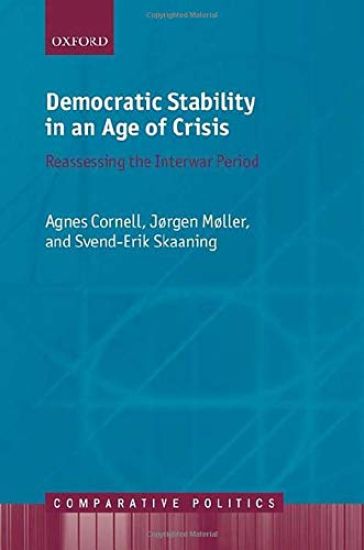
Democratic Stability in an Age of Crisis

Democratic Stability in an Age of Crisis

Agnes Cornell; Jørgen Møller; Svend-Erik Skaaning

Oxford University Press
2020
sidottu
The interwar period has left a deep impression on later generations. This was an age of crises where representative democracy, itself a relatively recent political invention, seemed unable to cope with the challenges that confronted it. Against the backdrop of the economic crisis that began in 2008 and the rise of populist parties, a new body of scholarship - frequently invoked by the media - has used interwar political developments to warn that even long-established Western democracies are fragile. Democratic Stability in an Age of Crisis challenges this 'interwar analogy' based on the fact that a relatively large number of interwar democracies were able to survive the recurrent crises of the 1920s and 1930s. The main aim of this book is to understand the striking resilience of these democracies, and how they differed from the many democracies that broke down in the same period. The authors advance an explanation that emphasizes the importance of democratic legacies and the strength of the associational landscape (i.e., organized civil society and institutionalized political parties). Moreover, they underline that these factors were themselves associated with a set of deeper structural conditions, which on the eve of the interwar period had brought about different political pathways. The authors' empirical strategy consists of a combination of comparative analyses of all interwar democratic spells and illustrative case studies. The book's main takeaway point is that the interwar period shows how resilient democracy is once it has had time to consolidate. On this basis, recent warnings about the fragility of contemporary democracies in Western Europe and North America seem exaggerated - or, at least, that they cannot be sustained by interwar evidence. Comparative Politics is a series for researchers, teachers, and students of political science that deals with contemporary government and politics. Global in scope, books in the series are characterized by a stress on comparative analysis and strong methodological rigour. The series is published in association with the European Consortium for Political Research. For more information visit: www.ecprnet.eu The series is edited by Susan Scarrow, Chair of the Department of Political Science, University of Houston, and Jonathan Slapin, Professor, Department of Political Science, University of Zurich.
Varieties of Democracy

Varieties of Democracy

Michael Coppedge; John Gerring; Adam Glynn; Carl Henrik Knutsen; Staffan I. Lindberg; Daniel Pemstein; Brigitte Seim; Svend-Erik Skaaning; Jan Teorell

Cambridge University Press
2020
sidottu
Varieties of Democracy is the essential user's guide to The Varieties of Democracy project (V-Dem), one of the most ambitious data collection efforts in comparative politics. This global research collaboration sparked a dramatic change in how we study the nature, causes, and consequences of democracy. This book is ambitious in scope: more than a reference guide, it raises standards for causal inferences in democratization research and introduces new, measurable, concepts of democracy and many political institutions. Varieties of Democracy enables anyone interested in democracy - teachers, students, journalists, activists, researchers and others - to analyze V-Dem data in new and exciting ways. This book creates opportunities for V-Dem data to be used in education, research, news analysis, advocacy, policy work, and elsewhere. V-Dem is rapidly becoming the preferred source for democracy data.
Demokrati i en krisetid

Demokrati i en krisetid

Jørgen Møller; Svend-Erik Skaaning

Gyldendal Trade 140
2018
nidottu
Mellemkrigstiden bliver brugt som skræmmebilledet på en mørk tid. Det er den periode, vi refererer til, når vi er bange for, om nutidens demokratier er på vej til at bryde sammen pga. økonomiske kriser, udemokratiske stormagter, antidemokratiske strømninger og populisme. Forfatterne opruller historien om mellemkrigstidens kriser, og hvilke faktorer der havde betydning for, om demokratierne brød sammen. De viser, at mellemkrigstiden også er historien om en stribe demokratier, der var overraskende stabile i lyset af, hvilke udfordringer de stod over for. Bogens epilog er en diskussion af, hvad denne historie fortæller os om vor tids demokratier og deres evne til at modstå kriser – og hvorfor historien ikke ukritisk kan bruges som et spejlbillede.
Requisites of Democracy

Requisites of Democracy

Jørgen Møller; Svend-Erik Skaaning

Routledge
2018
nidottu
This book brings together the conceptual and theoretical writings of Joseph Schumpeter, Robert A. Dahl, Guillermo O’Donnell, and T. H. Marshall. It demonstrates that most of the different conceptions of democracy in the democratization literature can be ordered in one systematic regime typology that distinguishes between ‘thinner’ and ‘thicker’ definitions of democracy. The authors argue that the empirical pattern revealed by this typology is explained by the combination of internal structural constraints and international factors facilitating democracy. The result of such contending forces is that most of the democratizations in recent decades have only produced competitive elections, rather than ‘more demanding’ attributes of democracy such as political liberties, the rule of law, and social rights. Examining theoretical and empirical approaches to measuring, defining and understanding democracy, the book will be of interest to scholars of political theory and comparative politics in general and democratization studies in particular.
Introduktion til komparativ politik

Introduktion til komparativ politik

Thomas Olesen; Jørgen Elklit; Jørgen Møller; Svend-Erik Skaaning; Lasse Lindekilde; Asbjørn Skjæveland; Flemming Juul Christiansen; Lars Johannsen; Carsten Jensen; Lasse Lykke Rørbæk; Julie Hassing Nielsen; Jakob Tolstrup; Michael Aagaard Seeberg; Jacob Gerner Hariri; Merete Bech Seeberg; Martin Vinæs Larsen

Gyldendal
2017
nidottu
Komparativ politik eller sammenlignende statskundskab er en disciplin, der sammenligner politiske systemer i forskellige lande, dels for at kortlægge de mange forskellige måder at indrette politiske systemer på, dels for at identificere de særlige kendetegn ved enkelte landes systemer, som kan fremstå mere klart i kontrast til forholdene andre steder. Introduktion til komparativ politik er en bred indføring i faget og når omkring de vigtigste dele af det politiske system, bl.a. statsformer og statsdannelse, regimetyper, politiske institutioner såsom valgsystemer, parlamenter og politiske partier, politisk adfærd i både formel og uformel forstand, andre politiske institutioner som medier og interesseorganisationer samt demokratiseringsprocesser og autokratier. De forskellige temaer konkretiseres igennem en række cases fra forskellige lande. Bogen er redigeret af Julie Hassing Nielsen (KU), Michael Seeberg (SDU) og Jakob Tolstrup (AU) og har bidrag fra en række forskere på tværs af de danske statskundskabsmiljøer.
Demokrati

Demokrati

Svend-Erik Skaaning

AARHUS UNIVERSITY PRESS
2017
nidottu
Vi elsker demokrati, men ingen af os kan rigtig sAette ord pa kAerligheden. Det er nok derfor, diktatorer kan udrabe sig selv som sande demokrater. Og derfor deres undersatter bilder sig ind, at det er svaret pa deres bonner. Men et folkestyre forer ikke altid til fornuftige beslutninger; det er bade omstridt og uretfAerdigt og loser ikke verdens problemer pa magisk vis - undtagen det med tyranni. Heldigvis er Svend-Erik Skaaning, demokratiforsker ved Aarhus Universitet, ikke bange for at hAeve stemmen: Vi er vilde med demokrati, fordi det er den mindst darlige styreform.
Alexis de Tocqueville

Alexis de Tocqueville

Svend-Erik Skaaning

Jurist- og økonom-
2016
nidottu
ALEXIS DE TOCQUEVILLE (1805-1859) er en af de helt centrale tænkere for enhver, der ønsker at forstå det moderne demokratis dilemmaer, demokratiseringsprocesser og civilsamfundets betydning. Hans bøger om Demokrati i Amerika og Det gamle regime ogrevolutionen vakte stor opsigt i midten af 1800-tallet, og ved sin død var han en berømthed i USA og i det meste af Europa. Herefter dalede interessen, men i perioden efter Anden Verdenskrig – og i særdeleshed siden 1990’erne – har Tocqueville atter påkaldt sig opmærksomhed blandt politologer, sociologer, historikere og filosoffer. Særligt Demokrati i Amerika står i dag som et af statskundskabens hovedværker. Tocqueville havde en imponerende evne til at få originale idéer og formulere nye indsigter, og han var en foregangsmand inden for brugen af samfundsvidenskabelige metoder såsom systematiske landesammenligninger. Dette er den første bog på dansk, der leverer en samlet, kritisk præsentation af Tocquevilles fascinerende forfatterskab og kortlægger den indflydelse, hans tanker har haft. Bogen indeholder desuden uddrag fra Tocquevilles bøger, herunder dele af Detgamle regime og revolutionen, der ikke tidligere har været oversat til dansk. IndholdsoversigtRedaktionelt forordKapitel 1. BiografiKapitel 2. Tocqueville som samfundsforskerKapitel 3. Påvirkning af andre teoretikereKapitel 4. AktualitetKapitel 5. Centrale oversatte teksterBegrebslisteBibliografi
Demokrati

Demokrati

Jørgen Møller; Svend-Erik Skaaning

Gyldendal
2014
nidottu
Vi lever i demokratiets tidsalder. Ikke alene afholdes der demokratiske valg i flertallet af verdens lande i dag. Der er også udbredt enighed om, at demokratiet er den bedste styreform. Men hvad er demokrati egentlig? Hvordan har antallet af demokratier udviklet sig på verdensplan, og hvorledes adskiller demokratier sig fra hinanden? Hvorfor bliver nogle lande demokratiske, mens andre har vanskeligt ved det? Hvilke konsekvenser har demokrati for velstand og velfærd? Demokrati – opfattelser, udviklinger, årsager og virkninger besvarer disse og en mængde andre spørgsmål om demokrati og demokratisering. Bogen præsenterer de vigtigste teorier om demokratisering og virkninger af demokrati og kortlægger demokratiets udbredelse i de seneste århundreder med særligt vægt på de seneste fire årtier. Gennemgangen viser, at konklusioner om udviklinger, årsager og virkninger afhænger af, om vi blot opfatter demokrati som et spørgsmål om frie valg af de politiske beslutningstagere, eller om vi også stiller krav om omfattende respekt for borgerrettigheder og tilstedeværelsen af en velfungerende retsstat. Bogen er skrevet til studerende og forskere i samfundsvidenskab og andre med en interesse i demokratiudviklingens mange facetter. Jørgen Møller og Svend-Erik Skaaning er professorer ved Institut for Statskundskab, Aarhus Universitet.
Democracy and Democratization in Comparative Perspective

Democracy and Democratization in Comparative Perspective

Jørgen Møller; Svend-Erik Skaaning

Routledge
2013
nidottu
This book provides an introduction to democratic theory and empirical research on democracy and democratization. The book first examines conceptions of democracy from the origins in ancient Greece to the present day, then tracks when and where modern democracy has developed. On this basis, the book reviews the major debates and schools of thought dealing with domestic and international causes and consequences of democratization. Based on a systematic distinction between minimalist and maximalist definitions of democracy, the book provides a comprehensive and critical assessment of existing theories. Furthermore, using a comparative, historical perspective, it not only sketches the development in the conceptions of democracy and the corresponding empirical reality but also discusses whether causal relationships differ across periods. Finally, the book documents the way in which all of this has been reflected by the development within the literature. In doing so, the book offers a coherent framework, which students and scholars can use to grasp the literature on democracy and democratization as a whole. Democracy and Democratization in Comparative Perspective will be of interest to students of political science, democracy and democratization, comparative politics, political theory, and international relations.
Democracy and Democratization in Comparative Perspective

Democracy and Democratization in Comparative Perspective

Jørgen Møller; Svend-Erik Skaaning

Routledge
2012
sidottu
This book provides an introduction to democratic theory and empirical research on democracy and democratization. The book first examines conceptions of democracy from the origins in ancient Greece to the present day, then tracks when and where modern democracy has developed. On this basis, the book reviews the major debates and schools of thought dealing with domestic and international causes and consequences of democratization. Based on a systematic distinction between minimalist and maximalist definitions of democracy, the book provides a comprehensive and critical assessment of existing theories. Furthermore, using a comparative, historical perspective, it not only sketches the development in the conceptions of democracy and the corresponding empirical reality but also discusses whether causal relationships differ across periods. Finally, the book documents the way in which all of this has been reflected by the development within the literature. In doing so, the book offers a coherent framework, which students and scholars can use to grasp the literature on democracy and democratization as a whole. Democracy and Democratization in Comparative Perspective will be of interest to students of political science, democracy and democratization, comparative politics, political theory, and international relations.
Requisites of Democracy

Requisites of Democracy

Jørgen Møller; Svend-Erik Skaaning

Routledge
2011
sidottu
This book brings together the conceptual and theoretical writings of Joseph Schumpeter, Robert A. Dahl, Guillermo O’Donnell, and T. H. Marshall. It demonstrates that most of the different conceptions of democracy in the democratization literature can be ordered in one systematic regime typology that distinguishes between ‘thinner’ and ‘thicker’ definitions of democracy. The authors argue that the empirical pattern revealed by this typology is explained by the combination of internal structural constraints and international factors facilitating democracy. The result of such contending forces is that most of the democratizations in recent decades have only produced competitive elections, rather than ‘more demanding’ attributes of democracy such as political liberties, the rule of law, and social rights. Examining theoretical and empirical approaches to measuring, defining and understanding democracy, the book will be of interest to scholars of political theory and comparative politics in general and democratization studies in particular.