Kirjojen hintavertailu – 12 859 829 kirjaa ja 27 kauppaa
Kirjailija
Swapna Liddle
Kirjat ja teokset yhdessä paikassa: 9 kirjaa, julkaisuja vuosilta 2017–2026, suosituimpiin kuuluu 14 Historic Walks Of Delhi. Vertaile teosten hintoja ja tarkista saatavuus suomalaisista kirjakaupoista.
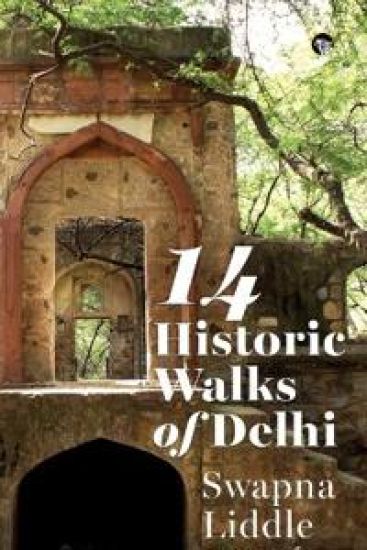
Over at least two millennia, Delhi has witnessed several kingdoms andempires come and go, and has been enriched by each one of them. Theirimprint survives to this day in the modern metropolis-most visibly, in itshistoric buildings, gardens and settlements. In 14 Historic Walks of Delhi, Swapna Liddle, acclaimed historian andpassionate narrator of the city's heritage, takes us to iconic monuments andneighbourhoods-World Heritage Sites like Qutub Minar, Humayun's Tomband Red Fort; the sprawling Lodi Gardens; the bustling galis of ChandniChowk and Nizamuddin; the Central Vista of New Delhi; as well as lesserknownareas like the Satpula dam and the Mehrauli and Khirki villages. In crisp and breezy prose, Liddle gives us the historical and architecturalsignificance of these sites, sprinkling her narrative with entertaininganecdotes. Some other highlights of the book are: - Detailed maps accompanying every route, with information about tickets, the nearest bus stop and metro station, parking availability, and adviceabout appropriate walking gear.- Architectural features described in ways that make appreciation ofstructural and decorative elements easy for a lay person as well.- Photographs taken specifically to accompany the text. First published in 2011, this bestseller-extensively revised and updated in2023-is the finest, most useful guide to one of the world's great cities forthe tourist and the local resident, the flaneur and the serious history enthusiastalike.
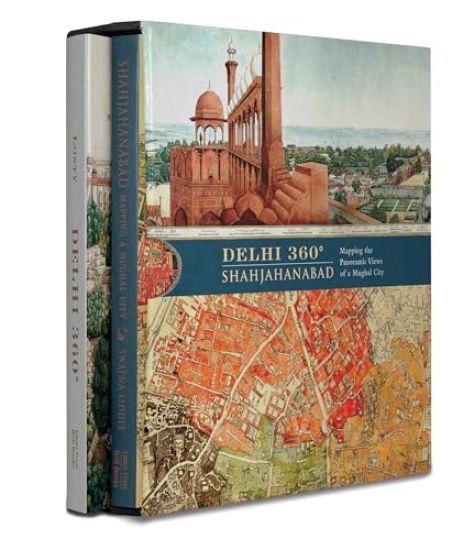
‘I asked my soul: What is Delhi? She replied: The world is the body and Delhi its life.’ So said Mirza Ghalib, poet in the court of the last Mughal emperor, Bahadur Shah Zafar. This special two-book slipcase set on Delhi’s Shahjahanabad, famous for its imperial aura and history, as well as spiritual ambience, is a journey through the majestic Red Fort and the lanes of the living, planned and walled Mughal city on the banks of River Yamuna. Delhi 360°: A Unique Panorama in The British Library Collection. Made in 1846, the painting commonly known as ‘The Delhi Panorama’ by the famous topographical artist Mazhar Ali Khan is the finest artistic rendering of Shahjahanabad ever made. It also affords a unique glimpse into the heart of the imperial palace in the Red Fort before much of it was destroyed after the 1857 Uprising. The 360º view of Delhi along with its extraordinary detailing of the cityscape makes the panorama not just an important historical document but also the masterpiece of its artist. The 5-metre long panorama, in the collection of the British Library since 1981, along with all the Persian and Urdu inscriptions has never before been published complete. Its publication here is accompanied by essays that put the panorama in its historical and artistic context with a commentary on the inscriptions that brings it to life. Shahjahanabad Delhi’s Shahjahanabad was first founded as an empire’s capital at the glorious height of the Mughal dynasty; from this vantage point, it was also witness to the empire’s decline and eventual extinction. The city would transform profoundly in the aftermath of the Revolt of 1857, with many of its neighbourhoods and buildings obliterated, and many of its inhabitants, including the last Mughal emperor, Bahadur Shah Zafar, having left, never to return. Fortunately, a mapmaker, working in 1846, painstakingly depicted important buildings, streets, and landmarks, providing a wealth of information about the city as it had evolved up to that time.
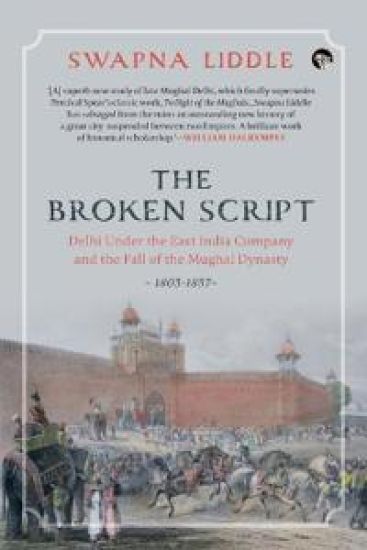
Combining immaculate scholarship with extraordinary storytelling, Swapna Liddle has produced an outstanding book of narrative history-on a great city in transition, and on early modern India-that will be read and discussed for decades.
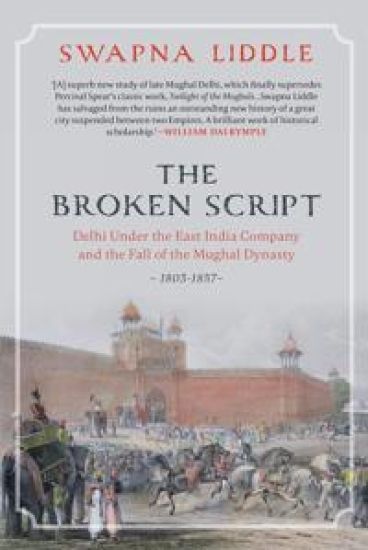
DeScriPtionAt the start of the nineteenth century, there was a Mughal emperor on thethrone in Delhi, but the Mughal empire, in decline for almost a century, waspractically gone. A new power had emerged-the British East India Company, which captured the Mughal capital in September 1803, becoming its de factoruler. Swapna Liddle's book is an unprecedented study of the 'hybrid halfcentury' that followed-when the two regimes overlapped and Delhi was atthe cusp of modernity, changing in profound ways. With a ground-level view of the workings of early British rule in India, TheBroken Script describes in rich detail the complex tussle between the last twoMughal emperors and the East India Company, one wielding considerablesymbolic authority, and the other a fast-growing military and political power. It is, above all, the story of the people of Delhi in this period, some alreadywell known, such as the poet Ghalib, and others, like the mathematician RamChander, who are largely forgotten: the cultural and intellectual elite, businessmagnates, the old landed nobility and the exotic new ruling class-theBritish. Through them, it looks at the economic, social and cultural climatethat evolved over six decades. It examines the great flowering of poetry inUrdu, even as attempts to use the language for scientific education faltered;the fascinating history of the Delhi College, and how it represented a radicallynew model for higher education in India; the rise of modern journalism inUrdu, and various printing presses and publications, exemplified by papers
Written in the 1820s, Sair-ul-Manazil, as far as we know, is the first attempt to systematically list the monuments of the city of Delhi. Apart from public buildings like mosques, temples, shrines, and tombs, it lists wells, gardens, houses, shops, and stray graves. This was in itself a formidable task, and one that might easily have resulted in a very dry and tedious document. The author, however, considerably enlivens it by a description of the various localities of the city, of the people who lived and worked there in his time, social activities and fairs, and historical anecdotes connected with places and people. The original was written in Persian by a person variously known as Sangin and Sangin Beg, and the volume is translated from an Urdu translation by the late Nausheen Jaffery, with an introduction by Swapna Liddle. It also includes maps and sketches which will both illustrate the narrative and bring a visual life to it.