Kirjojen hintavertailu – 12 859 824 kirjaa ja 27 kauppaa

Kirjailija

Syaza Shukri

Kirjat ja teokset yhdessä paikassa: 6 kirjaa, julkaisuja vuosilta 2024–2026, suosituimpiin kuuluu Elite Populism and Malay Political Leaders in Malaysia. Vertaile teosten hintoja ja tarkista saatavuus suomalaisista kirjakaupoista.

6 kirjaa

Kirjojen julkaisuvuodet: 2024–2026.

Youth and Civic Engagement in Southeast Asia

Youth and Civic Engagement in Southeast Asia

Norshahril Saat; Lim Halimatusa’diyah; Panarat Anamwathana; Syaza Shukri; Veronica L. Gregorio

ISEAS
2026
nidottu
Youths in Southeast Asia have been active in making their voices heard in politics and in society, both online and offline. However, comparative studies on their civic engagement across the region remain wanting. The survey drew responses from 3,081 participants, attaining a generally balanced representation of female and male respondents, and of students from STEM (Science, Technology, Engineering and Mathematics) and non-STEM majors. Respondents were evenly spread across the ages of 18 and 24.
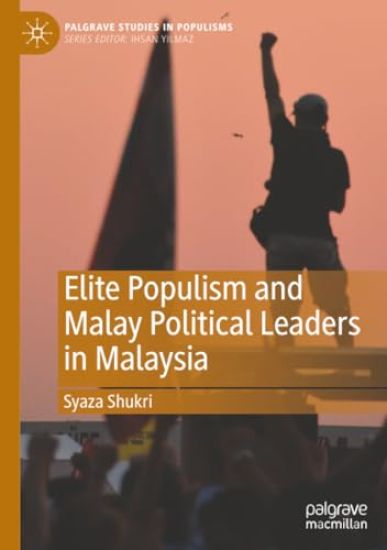
Elite Populism and Malay Political Leaders in Malaysia

Elite Populism and Malay Political Leaders in Malaysia

Syaza Shukri

SPRINGER VERLAG, SINGAPORE
2024
sidottu
This book focuses on the many kinds of populist politicians in Malaysia who capitalise on the mindset of the Malay majority population by appealing to their need for a protector. In order to demonstrate that populism is pervasive and can even be found in this developing nation in Southeast Asia, the book presents the background, policies, and rhetoric of seven prominent Malay politicians in Malaysia who utilise populism as a strategy. It does so by comparing various populist leaders in Malaysia to demonstrate that populism is merely a method for these politicians to garner support. Since most of these leaders come from the establishment, the rhetoric against the elites is merely performative rather than a true belief of these Malay leaders. The book takes a case-study approach to understanding the rise of populism in Malaysia, and Asia more generally. It offers a framework that is grounded in the sociopolitical context of the Malay community, which helps to elucidate the phenomenon of elite populism in the country.
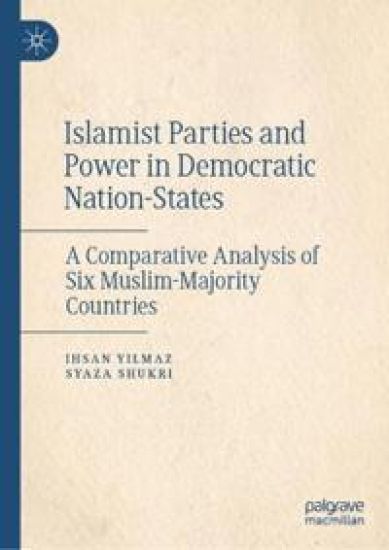
Islamist Parties and Power in Democratic Nation-States

Islamist Parties and Power in Democratic Nation-States

Ihsan Yilmaz; Syaza Shukri

SPRINGER VERLAG, SINGAPORE
2024
sidottu
By exploring the trajectories of Islamist parties in six diverse countries (Turkey, Morocco, Tunisia, Pakistan, Indonesia, and Malaysia), this book provides a comparative analysis of the strategies employed by Islamist groups to confront established political structures through electoral processes and their subsequent governance practices if and when they assume power. The latter aspect is less explored than the predominant focus on Islamist opposition movements. The book analyses how these Islamist political parties navigate and negotiate with oppositional forces and establishments, concisely discussing the complex dynamics at play within each country. The book also bridges the gap between North Africa, South Asia, Southeast Asia, and Asia Minor, providing a comparative analysis across regions. Primarily serving as an introductory text to the subject of Islamist parties, the book functions as a comprehensive reader and handbook. Each chapter covers a range of key issues and themes relevant to the governance and political activities of the Islamist party of the country studied in the chapter, offering a general overview of Islamist party experiences across various themes and different historical periods.
Why Young Malay Voters in Malaysia Are “Turning Green”
There is an increasing trend among young Malay voters in Malaysia to support the Perikatan Nasional coalition, with a particular emphasis on the Islamist party PAS. Despite recognition of the weak economy as a significant national concern, young Malay voters continue to place a higher emphasis on Muslim leaders who assert their commitment to safeguarding the rights of Islam in Malaysia. Consistent with theories on political socialization, the influence of family members significantly affects young Malay voters in Malaysia, particularly due to their limited political awareness of alternative channels like formal schooling. Young Malay voters acknowledge the significant impact of social media and TikTok, particularly in how these shape the voting patterns of their peers. They nevertheless maintain a perception of their own impartiality in this regard. Interestingly, the influence of Islamic institutions, with their own educational philosophy, on the political behaviour of Malay youth is minimal, as their political ideas are already shaped by their early experiences.