Kirjojen hintavertailu – 12 903 725 kirjaa ja 27 kauppaa

Kirjailija

Syed Othman Alhabshi

Kirjat ja teokset yhdessä paikassa: 3 kirjaa, julkaisuja vuosilta 2016–2021, suosituimpiin kuuluu Shariah Investment Agreement. Vertaile teosten hintoja ja tarkista saatavuus suomalaisista kirjakaupoista.

3 kirjaa

Kirjojen julkaisuvuodet: 2016–2021.

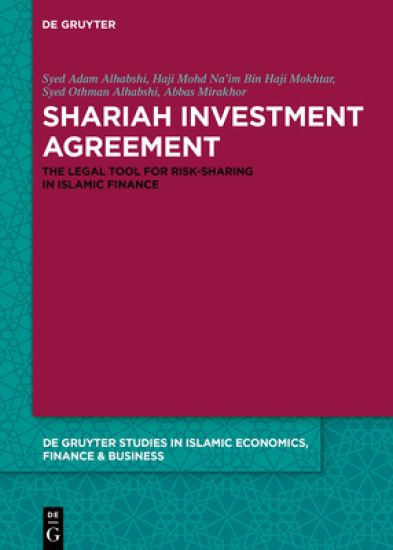
Shariah Investment Agreement

Shariah Investment Agreement

Syed Adam Alhabshi; Abbas Mirakhor; Haji Mohd. Na’im Haji Mokhtar; Syed Othman Alhabshi

De Gruyter Oldenbourg
2021
sidottu
Risk-sharing investment is currently the buzz word in Islamic finance. However, there is an incongruence in applying multilayered and opaque Tijarah contracts for investment purposes. This has contributed to the divergence between Shariah and Common Law and caused tremendous problems and systemic legal risks to Islamic finance. The authors of Shariah Investment Agreement introduce a legal tool in the form of a Shariah Investment Agreement carefully drafted to ensure that it is Shariah-compliant and can be applied in Common Law jurisdictions as well, so as to allow for the execution of risk-sharing investment in Islamic finance. It details the building blocks and key considerations that must be noted when drafting such agreements so the investor and investee will know what to expect when entering into such a contract. Proper implementation of the Shariah Investment Agreement will pave a clear route to a harmonious convergence between Shariah and Common Law and lead to Islamic finance developing further to become a stronger, unstoppable force in the finance industry.
Macroeconomic Policy and Islamic Finance in Malaysia

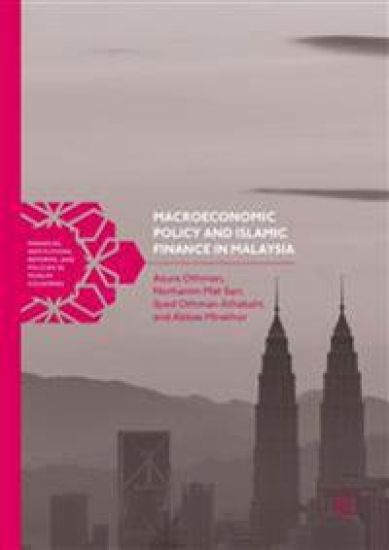
Macroeconomic Policy and Islamic Finance in Malaysia

Azura Othman; Norhanim Mat Sari; Syed Othman Alhabshi; Abbas Mirakhor

Palgrave Macmillan
2017
sidottu
This book offers an alternative framework for macroeconomic policy in Malaysia, derived from the universal principles of social justice espoused in the objectives of the Shariah. It attempts to holistically analyze issues related to public finance, which has been criticized for lack of transparency and justice in wealth distribution. This book explores these criticisms and discusses the principles of Islamic finance that may be applied to macroeconomic policymaking to create a better economy overall. It presents a case for a flat tax system, to make the economy more resilient to shocks, and financing methods that limit interest-rate-based debt contracts and allow greater risk sharing among the market participants on a broad scale. Using both qualitative and quantitative methods, this book models the Malaysian economy based on policies that apply the fundamental Islamic finance principle of risk sharing to demonstrate its benefits in spurring growth, promoting distributive justice, rendering the economy more stable, strengthening the potency of monetary policy, enhancing fiscal governance, and improving financial inclusion. The book will be of interest to students, policymakers, financial institutions, researchers, ministries of finance, central banks, securities commissions, and anyone interested in alternative economic paradigms.
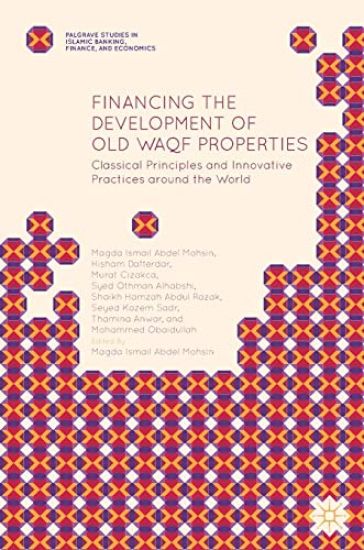
Financing the Development of Old Waqf Properties

Financing the Development of Old Waqf Properties

Magda Ismail Abdel Mohsin; Hisham Dafterdar; Murat Cizakca; Syed Othman Alhabshi; Shaikh Hamzah Abdul Razak; Seyed Kazem Sadr; Thamina Anwar; Mohammed Obaidullah

Palgrave Macmillan
2016
sidottu
This book presents successful case studies in Muslim and Muslim minority countries that have revolutionized the redevelopment of idle waqf properties into productive land trusts. The revival of this institution over the last two decades shows the growing optimism in galvanizing the socioeconomic role of waqf by adopting its flexible shariah measures. Innovative ways of financing redevelopment allow Muslims to extend these roles to include new beneficiaries. New uses for these properties include providing services to the community, opening jobs for the majority of people, funding small entrepreneurs, educating the masses, providing health care, and sheltering the poor and needy. Countries under study include Sudan, Turkey, Malaysia, Indonesia, Singapore, New Zealand, Kuwait, Oman, Qatar, and Iran. Additionally, the book examines the International Development Bank's role in financing the development old waqf properties in different countries.