Kirjojen hintavertailu – 12 859 829 kirjaa ja 27 kauppaa

Kirjailija

Sylvia Ann Hewlett

Kirjat ja teokset yhdessä paikassa: 16 kirjaa, julkaisuja vuosilta 2007–2023, suosituimpiin kuuluu HBR's 10 Must Reads on Diversity (with bonus article "Making Differences Matter: A New Paradigm for Managing Diversity" By David A. Thomas and Robin J. Ely). Vertaile teosten hintoja ja tarkista saatavuus suomalaisista kirjakaupoista.

16 kirjaa

Kirjojen julkaisuvuodet: 2007–2023.

HBR's 10 Must Reads on Diversity (with bonus article "Making Differences Matter: A New Paradigm for Managing Diversity" By David A. Thomas and Robin J. Ely)

HBR's 10 Must Reads on Diversity (with bonus article "Making Differences Matter: A New Paradigm for Managing Diversity" By David A. Thomas and Robin J. Ely)

Harvard Business Review; David A. Thomas; Robin J. Ely; Sylvia Ann Hewlett; Joan C. Williams

Harvard Business Review Press
2019
pokkari
Reap the benefits of a diverse workforce. If you read nothing else on promoting diversity and realizing its benefits, read these 10 articles. We've combed through hundreds of Harvard Business Review articles and selected the most important ones to help you create a culture that seeks and celebrates difference. This book will inspire you to:Identify and address biasShort-circuit discrimination instead of unintentionally feeding itAttract, retain, and engage talented people who represent myriad identitiesEnsure that everyone has equal access to growth opportunitiesTrade outdated policies for practices that are proven to foster inclusionHarness employees' unique skills and perspectives to transform how your company operatesThis collection of articles includes "Making Differences Matter: A New Paradigm for Managing Diversity," by David A. Thomas and Robin J. Ely; "Why Diversity Programs Fail," by Frank Dobbin and Alexandra Kalev; "'Numbers Take Us Only So Far,'" by Maxine Williams; "Race Matters: The Truth About Mentoring Minorities," by David A. Thomas; "Leadership in Your Midst: Tapping the Hidden Strengths of Minority Executives," by Sylvia Ann Hewlett, Carolyn Buck Luce, and Cornel West; "What Most People Get Wrong About Men and Women," by Catherine H. Tinsley and Robin J. Ely; "Hacking Tech's Diversity Problems," by Joan C. Williams; "Why Men Still Get More Promotions Than Women," by Herminia Ibarra, Nancy M. Carter, and Christine Silva; "When No One Retires," by Paul Irving; "Neurodiversity as a Competitive Advantage," by Robert D. Austin and Gary P. Pisano; "Managing Multicultural Teams," by Jeanne Brett, Kristin Behfar, and Mary C. Kern; and "7 Myths About Coming Out at Work," by Raymond Trau, Jane O'Leary, and Cathy Brown.
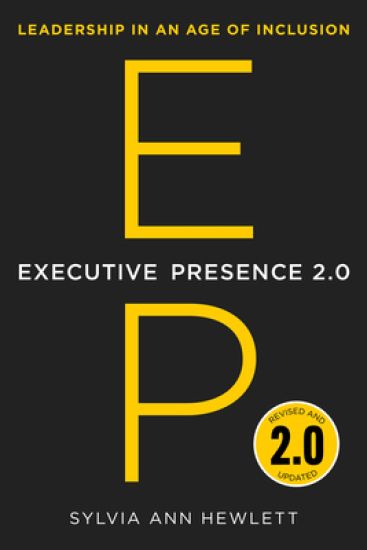
Executive Presence 2.0

Executive Presence 2.0

Sylvia Ann Hewlett

HARPERCOLLINS PUBLISHERS INC
2023
sidottu
In this updated and expanded edition of her celebrated book Executive Presence: The Missing Link Between Merit and Success, one of the world’s most influential business thinkers reveals the qualities essential to leadership in our fast-changing, post-pandemic world. Some are timeless (confidence, decisiveness), some are brand new (the ability to command Zoom), and all are game-changers. Nearly a decade ago, economist Sylvia Ann Hewlett cracked the code of executive presence (EP). Drawing on complex data and in-depth interviews with senior executives from sectors as different as finance and fashion, she demonstrated that EP is a potent mix of gravitas, communication, and appearance. Executive Presence became a classic. Translated into seven languages, it’s helped tens of thousands of ambitious, accomplished professionals to fast-track their careers. Chuck Robbins (CEO of Cisco), and Thasunda Brown Duckett (CEO, TIAA), are among the leaders who recommend this book for any up-and-comer seeking to rise through the ranks and do something extraordinary with their lives. But EP has evolved. Black Lives Matter, the #MeToo movement, and a global pandemic have changed the leadership equation. But how? To answer that question, in 2022, Hewlett embarked on a second round of quantitative and qualitative research, targeting seasoned leaders and thirty-something-year-old executives at the cutting edge of the new economy (fin-tech, gaming, media). Her findings are timely as new executives find their feet in a post-pandemic world. Hewlett demonstrates that in 2023 leaders worldwide seek to promote high-performing men and women who exude confidence but also project authenticity and inclusivity. They’re also intent on advancing those who excel at leading remote teams and demonstrate a command of social media. It’s no coincidence that Eddie Glaude, Amanda Gorman, and Gustavo Dudamel are stars of this new edition of Executive Presence and the usual suspects. Hewlett’s most potent message, ten years ago and now, is that EP is eminently learnable. You don’t need to have the voice of James Earl Jones, the communication skills of Steve Jobs, or the athleticism of Michelle Obama to ace EP. You merely have to arm yourself with the tools and tactics contained in these pages.
#MeToo in the Corporate World

#MeToo in the Corporate World

Sylvia Ann Hewlett

HarperCollins Publishers
2020
sidottu
Economist and award-winning author Sylvia Ann Hewlett blends vivid stories with powerful new data in assessing the impact of the #MeToo movement in corporate America and provides concrete action to help executives and companies create more inclusive and safe work environments for women, people of color, and LGBTQ employees. While the #MeToo movement has exposed the enormous harm done by sexual misconduct in the workplace, the movement’s full promise has not been fulfilled, Sylvia Ann Hewlett argues. Showcasing new data on the incidence of sexual harassment and assault at work, she reveals how the movement has focused almost exclusively on white women and failed to support other vulnerable groups who are also targets of abuse. Black men, gay men and women, and Latinas experience particularly high rates of sexual harassment and assault. In addition to exploring the movement’s limitations, Hewlett examines the collateral damage inflicted by #MeToo. She looks at hits to the bottom line (lawsuits and settlements, tarnished brands, and stock devaluations) and hits to the talent pipeline. In particular she shows how male leaders, fearful of gossip and legal action, are increasingly skittish about sponsoring young women, no matter how high performing they are. This makes it much more likely that women will stall out mid-career and will deprive companies of diversity in the C-Suite and “gender smarts” around decision-making tables. Digging deep into examples that range from Fox News, Nike, and Google to CBS, Michigan State University, and the Catholic Church, Hewlett lays bare the financial losses associated with sexual misconduct scandals. No wonder corporate chief risk officers newly have #MeToo in their line of sight! A third of this book is devoted to solutions and Hewlett offers a three-pronged strategy, combining legal remedies with individual and corporate action steps that can be used to protect employees and businesses they work for. Drawing from companies as different as IBM and IPG she discusses “experiments at the edge” as well as more evolved initiatives that can help any corporation create a more equitable and safer environment.
#MeToo in the Corporate World: Power, Privilege, and the Path Forward
Economist and award-winning author Sylvia Ann Hewlett blends vivid stories with powerful new data in assessing the impact of the #MeToo movement in corporate America and provides concrete action to help executives and companies create more inclusive and safe work environments for women, people of color, and LGBTQ employees. While the #MeToo movement has exposed the enormous harm done by sexual misconduct in the workplace, the movement's full promise has not been fulfilled, Sylvia Ann Hewlett argues. Showcasing new data on the incidence of sexual harassment and assault at work, she reveals how the movement has focused almost exclusively on white women and failed to support other vulnerable groups who are also targets of abuse. Black men, gay men and women, and Latinas experience particularly high rates of sexual harassment and assault. In addition to exploring the movement's limitations, Hewlett examines the collateral damage inflicted by #MeToo. She looks at hits to the bottom line (lawsuits and settlements, tarnished brands, and stock devaluations) and hits to the talent pipeline. In particular she shows how male leaders, fearful of gossip and legal action, are increasingly skittish about sponsoring young women, no matter how high performing they are. This makes it much more likely that women will stall out mid-career and will deprive companies of diversity in the C-Suite and "gender smarts" around decision-making tables. Digging deep into examples that range from Fox News, Nike, and Google to CBS, Michigan State University, and the Catholic Church, Hewlett lays bare the financial losses associated with sexual misconduct scandals. No wonder corporate chief risk officers newly have #MeToo in their line of sight A third of this book is devoted to solutions and Hewlett offers a three-pronged strategy, combining legal remedies with individual and corporate action steps that can be used to protect employees and businesses they work for. Drawing from companies as different as IBM and IPG she discusses "experiments at the edge" as well as more evolved initiatives that can help any corporation create a more equitable and safer environment.
The Sponsor Effect

The Sponsor Effect

Sylvia Ann Hewlett

Harvard Business Review Press
2019
sidottu
Are you investing in the right people? Many people know the benefit of finding a sponsor--someone who goes beyond traditional mentorship to partner with a junior-level employee to help build their skills, advocate for them when opportunities arise, and open doors. But few realize that being a sponsor is just as important to career growth as finding one. According to new research from economist and thought leader Sylvia Ann Hewlett, senior executives who sponsor rising talent are 53 percent more likely to be promoted than those who don't. Similarly, middle-level managers who have proteges are 167 percent more likely to be given stretch assignments. Well-chosen proteges contribute stellar performance, steadfast loyalty, and capabilities that you, the sponsor, may lack, thus increasing how fast and how far you can go. But how do you find standout proteges, let alone develop them so that they're able to come through for you and your organization? This book has the answers you need. Combining powerful new data and rich examples drawn from in-depth interviews with leaders from companies such as Unilever, Aetna, Blizzard Entertainment, and EY, The Sponsor Effect provides a seven-step playbook for how you can become a successful sponsor. You'll learn to:Identify the right mix of protegesInclude those with differing perspectivesInspire your proteges and ignite their ambitionInstruct them to develop key skill setsInspect your picks for performance and loyaltyInstigate a deal, detailing the terms of a relationshipInvest three ways and reap the rewardsAlong the way, you'll discover the enormous benefits of investing in these valuable relationships.
HBR's 10 Must Reads on Diversity (with bonus article "Making Differences Matter: A New Paradigm for Managing Diversity" By David A. Thomas and Robin J. Ely)

HBR's 10 Must Reads on Diversity (with bonus article "Making Differences Matter: A New Paradigm for Managing Diversity" By David A. Thomas and Robin J. Ely)

Harvard Business Review; David A. Thomas; Robin J. Ely; Sylvia Ann Hewlett; Joan C. Williams

Harvard Business Review Press
2019
sidottu
Reap the benefits of a diverse workforce. If you read nothing else on promoting diversity and realizing its benefits, read these 10 articles. We've combed through hundreds of Harvard Business Review articles and selected the most important ones to help you create a culture that seeks and celebrates difference. This book will inspire you to:Identify and address biasShort-circuit discrimination instead of unintentionally feeding itAttract, retain, and engage talented people who represent myriad identitiesEnsure that everyone has equal access to growth opportunitiesTrade outdated policies for practices that are proven to foster inclusionHarness employees' unique skills and perspectives to transform how your company operatesThis collection of articles includes "Making Differences Matter: A New Paradigm for Managing Diversity," by David A. Thomas and Robin J. Ely; "Why Diversity Programs Fail," by Frank Dobbin and Alexandra Kalev; "'Numbers Take Us Only So Far,'" by Maxine Williams; "Race Matters: The Truth About Mentoring Minorities," by David A. Thomas; "Leadership in Your Midst: Tapping the Hidden Strengths of Minority Executives," by Sylvia Ann Hewlett, Carolyn Buck Luce, and Cornel West; "What Most People Get Wrong About Men and Women," by Catherine H. Tinsley and Robin J. Ely; "Hacking Tech's Diversity Problems," by Joan C. Williams; "Why Men Still Get More Promotions Than Women," by Herminia Ibarra, Nancy M. Carter, and Christine Silva; "When No One Retires," by Paul Irving; "Neurodiversity as a Competitive Advantage," by Robert D. Austin and Gary P. Pisano; "Managing Multicultural Teams," by Jeanne Brett, Kristin Behfar, and Mary C. Kern; and "7 Myths About Coming Out at Work," by Raymond Trau, Jane O'Leary, and Cathy Brown.

HBR's 10 Must Reads on Women and Leadership (with bonus article "Sheryl Sandberg: The HBR Interview")

HBR's 10 Must Reads on Women and Leadership (with bonus article "Sheryl Sandberg: The HBR Interview")

Harvard Business Review; Herminia Ibarra; Deborah Tannen; Joan C. Williams; Sylvia Ann Hewlett

Harvard Business Review Press
2018
sidottu
What will it take to create a more gender-balanced workplace? If you read nothing else on leadership and gender at work, read these 10 articles by experts in the field. We've combed through hundreds of articles in the Harvard Business Review archive and selected the most important ones to help you understand where gender equality is today--and how far we still have to go. This book will inspire you to:Better understand the path women must take to leadershipLearn the root causes of the barriers that exist for women in the workplaceCheck your own gender biases and distinguish between confidence and competence in your colleaguesManage a more effective gender-diversity programRecognize the issues women face when speaking up about bias or harassmentHelp women reenter the workforce after taking time off--and create opportunities for them to reach their ambitions. This collection of articles includes "Women and the Labyrinth of Leadership," by Alice H. Eagly and Linda L. Carli; "Do Women Lack Ambition?" by Anna Fels; "Women Rising: The Unseen Barriers," by Herminia Ibarra, Robin Ely, and Deborah Kolb; "Women and the Vision Thing," by Herminia Ibarra and Otilia Obodaru; "The Power of Talk: Who Gets Heard and Why," by Deborah Tannen; "The Memo Every Woman Keeps in Her Desk," by Kathleen Reardon; "Why Diversity Programs Fail," by Frank Dobbin and Alexandra Kalev; "Now What?" by Joan C. Williams and Suzanne Lebsock; "The Battle for Female Talent in Emerging Markets," by Sylvia Ann Hewlett and Ripa Rashid; "Off-Ramps and On-Ramps: Keeping Talented Women on the Road to Success," by Sylvia Ann Hewlett and Carolyn Buck Luce; and "Sheryl Sandberg: The HBR Interview," by Sheryl Sandberg and Adi Ignatius.
HBR's 10 Must Reads on Women and Leadership (with bonus article "Sheryl Sandberg: The HBR Interview")

HBR's 10 Must Reads on Women and Leadership (with bonus article "Sheryl Sandberg: The HBR Interview")

Harvard Business Review; Herminia Ibarra; Deborah Tannen; Joan C. Williams; Sylvia Ann Hewlett

Harvard Business Review Press
2018
pokkari
What will it take to create a more gender-balanced workplace? If you read nothing else on leadership and gender at work, read these 10 articles by experts in the field. We've combed through hundreds of articles in the Harvard Business Review archive and selected the most important ones to help you understand where gender equality is today--and how far we still have to go. This book will inspire you to:Better understand the path women must take to leadershipLearn the root causes of the barriers that exist for women in the workplaceCheck your own gender biases and distinguish between confidence and competence in your colleaguesManage a more effective gender-diversity programRecognize the issues women face when speaking up about bias or harassmentHelp women reenter the workforce after taking time off--and create opportunities for them to reach their ambitions. This collection of articles includes "Women and the Labyrinth of Leadership," by Alice H. Eagly and Linda L. Carli; "Do Women Lack Ambition?" by Anna Fels; "Women Rising: The Unseen Barriers," by Herminia Ibarra, Robin Ely, and Deborah Kolb; "Women and the Vision Thing," by Herminia Ibarra and Otilia Obodaru; "The Power of Talk: Who Gets Heard and Why," by Deborah Tannen; "The Memo Every Woman Keeps in Her Desk," by Kathleen Reardon; "Why Diversity Programs Fail," by Frank Dobbin and Alexandra Kalev; "Now What?" by Joan C. Williams and Suzanne Lebsock; "The Battle for Female Talent in Emerging Markets," by Sylvia Ann Hewlett and Ripa Rashid; "Off-Ramps and On-Ramps: Keeping Talented Women on the Road to Success," by Sylvia Ann Hewlett and Carolyn Buck Luce; and "Sheryl Sandberg: The HBR Interview," by Sheryl Sandberg and Adi Ignatius.
Harness the Power of the Purse: Winning Women Investors

Harness the Power of the Purse: Winning Women Investors

Andrea Turner Moffitt; Sylvia Ann Hewlett

Rare Bird Books
2015
pokkari
What's driving the market failure for women investors? Andrea Turner Moffitt, a leading thinker on women and investing, cracks the code on how to fully harness the power of the purse, offering a roadmap full of tactics for winning with the biggest growth market: women. Using a wealth of hard data--including findings from nationwide surveys and dozens of focus groups and interviews with female investors from New York to London to Hong Kong--Harness the Power of the Purse reveals compelling insights on the female investor market. The book also draws on in-depth interviews with top advisors and forward-thinking leaders to reveal how they are spearheading innovative solutions. Whether you're a women investor looking to flex your financial muscle or an industry advisor or leader committed to building gender smarts, Harness the Power of the Purse is a vital resource for turbo-charging growth and closing the gap for women investors.
Executive Presence

Executive Presence

Sylvia Ann Hewlett

HarperBusiness
2014
sidottu

Halvin toimitettuna 27,50 €

Are you "leadership material?" More importantly, do others perceive you to be? Sylvia Ann Hewlett, a noted expert on workplace power and influence, shows you how to identify and embody the Executive Presence (EP) that you need to succeed. You can have the experience and qualifications of a leader, but without executive presence, you won't advance. EP is an amalgam of qualities that true leaders exude, a presence that telegraphs you're in charge or deserve to be. Articulating those qualities isn't easy, however. Based on a nationwide survey of college graduates working across a range of sectors and occupations, Sylvia Hewlett and the Center for Talent Innovation discovered that EP is a dynamic, cohesive mix of appearance, communication, and gravitas. While these elements are not equal, to have true EP, you must know how to use all of them to your advantage. Filled with eye-opening insights, analysis, and practical advice for both men and women, mixed with illustrative examples from executives learning to use the EP, Executive Presence will help you make the leap from working like an executive to feeling like an executive.
Brainpower

Brainpower

Sylvia Ann Hewlett

Lisa Weinert Books
2014
pokkari
A compendium of four critical selections, including: Off-Ramps and On-Ramps Revisited, Vaulting the Color Bar, The X-Factor, and The Power of "Out," as well as a new introduction and new forewords by Joanna Coles, Cornel West, Mellody Hobson, and Kenji Yoshino. The Center for Talent Innovation, a non-profit think tank, has a long history of focusing on challenges and issues pertaining to the workplace. The mission is two-fold: to drive groundbreaking research that leverages talent across the divides of gender, generation, geography, and culture; and to create a community of senior executives united by an understanding that full utilization of the global talent pool is at the heart of competitive success. The flagship project of CTI is the Task Force for Talent Innovation and was founded in 2004. To date, the Task Force has spearheaded 200-plus new best practices, many of which are "second-generational" and go beyond access and opportunity to retention and acceleration. This action on the ground has garnered significant attention (ten Harvard Business Review studies and numerous articles in the Wall Street Journal, Financial Times, Strategy & Business, The Huffington Post, and others) which brands Task Force members as "thought leaders" in global talent management.
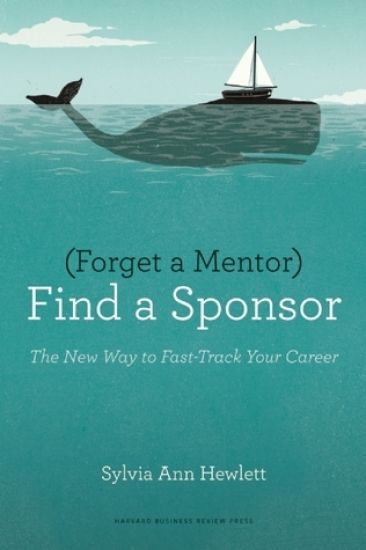
Forget a Mentor, Find a Sponsor

Forget a Mentor, Find a Sponsor

Sylvia Ann Hewlett

Harvard Business Review Press
2013
pokkari
Who's pulling for you? Who's got your back? Who's putting your hat in the ring? Odds are this person is not a mentor but a sponsor. Mentors can build your self-esteem and provide a sounding board--but they're not your ticket to the top. If you're interested in fast-tracking your career, what you need is a sponsor--a senior-level champion who believes in your potential and is willing to advocate for you as you pursue that next raise or promotion. In this powerful yet practical book, economist and thought leader Sylvia Ann Hewlett--author of ten critically acclaimed books, including the groundbreaking Off-Ramps and On-Ramps--shows why sponsors are your proven link to success. Mixing solid data with vivid real-life narratives, Hewlett reveals the "two-way street" that makes sponsorship such a strong and mutually beneficial alliance. The seven-step map at the heart of this book allows you to chart your course toward your greatest goals. Whether you're looking to lead a company or drive a community campaign, Forget a Mentor, Find a Sponsor will help you forge the relationships that truly have the power to deliver you to your destination.
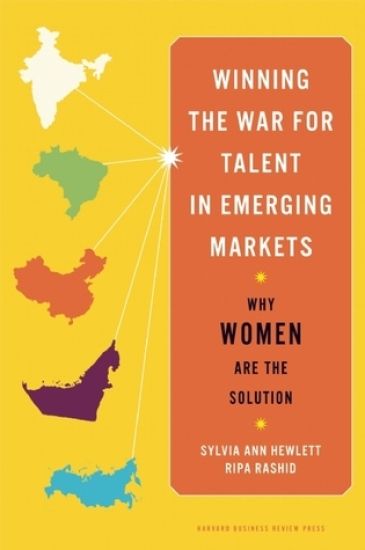
Winning the War for Talent in Emerging Markets

Winning the War for Talent in Emerging Markets

Sylvia Ann Hewlett; Ripa Rashid

Harvard Business Review Press
2011
sidottu
The war for talent is heating up in emerging markets. Without enough "brain power," multinationals can't succeed in these markets. Yet they're approaching the war in the wrong way--bringing in expats and engaging in bidding wars for hotshot local "male" managers. The solution is hiding in plain sight: the millions of highly educated women surging into the labor markets of Brazil, Russia, India, China, and the United Arab Emirates. Increasingly, these women boast better credentials, higher ambitions, and greater loyalty than their male peers. But there's a catch: Attracting and retaining talented women in emerging economies requires different strategies than those used in mature markets. Complex cultural forces -- family-related "pulls," such as daughterly duties to parents and in-laws, and work-related "pushes," such as extreme hours and dangerous commutes -- force women to settle for dead-end jobs, switch to the public sector, or leave the workforce entirely. In Winning the War for Talent in Emerging Markets, Sylvia Ann Hewlett and Ripa Rashid analyze these forces and present strategies for countering them, including: * Sustaining ambition through stretch opportunities and international assignments * Combating cultural bias by building an infrastructure for female leadership (networks, mentors, sponsors) * Introducing flexible work arrangements to accommodate family obligations * Providing safe transportation, such as employer-subsidized taxi services Drawing on groundbreaking research, amplified with on-the-ground examples from companies as diverse as Google, Infosys, Goldman Sachs, and Siemens, this book is required reading for all companies seeking to strengthen their talent pipeline in these rich and expanding markets.
Top Talent

Top Talent

Sylvia Ann Hewlett

Harvard Business Review Press
2009
sidottu
During tough economic times it's more vital than ever to hold on to and leverage your top performers: They've got the outsize smarts and dedication your firm needs to survive recession and emerge stronger. Yet in 2009 many employers are failing to support and sustain their best people. Loyalty and trust are out the window. Engagement is through the floor. Flight risk is at an all time high. In Top Talent, a volume in the Memo to the CEO series, Sylvia Ann Hewlett presents new data detailing what has happened to top talent in this brutal down cycle. She then explains how companies can re-engage and re-energize their stars. Drawing from virtual strategy sessions conducted within fourteen corporate giants--including GE, Merrill Lynch, and Time Warner--Hewlett presents eight cutting-edge interventions that have emerged as "top picks" for managers looking to motivate top talent in tough times, including: -Show that top leadership cares -Create a "no-spin" zone characterized by candid, frequent communication -Strengthen camaraderie and model stress-busting behaviors -Provide powerful nonmonetary rewards Concise and practical, this guide is essential for employers seeking to turbo charge their star performers.
Off-Ramps and On-Ramps

Off-Ramps and On-Ramps

Sylvia Ann Hewlett

Harvard Business Review Press
2007
sidottu
With talent shortages looming over the next decade, what can companies do to attract and retain the large number of professional women who are forced off the career highway? By documenting the successful efforts of a group of cutting-edge global companies to retain talented women and reintegrate them if they've already left, Off-Ramps and On-Ramps answers this critical question. Working closely with companies such as Ernst & Young, Goldman Sachs, Time Warner, General Electric and others, author Sylvia Ann Hewlett identifies what works and why. Based on firsthand experience with these companies, along with extensive data that provides the most comprehensive and nuanced portrait of women's career paths, this book documents the actions forward-thinking companies must take to reverse the female brain drain and ensure their access to talent over the long term.