Kirjojen hintavertailu – 12 903 724 kirjaa ja 27 kauppaa

Kirjailija

Sylvia Chant

Kirjat ja teokset yhdessä paikassa: 9 kirjaa, julkaisuja vuosilta 1989–2015, suosituimpiin kuuluu Gender, Generation and Poverty. Vertaile teosten hintoja ja tarkista saatavuus suomalaisista kirjakaupoista.

9 kirjaa

Kirjojen julkaisuvuodet: 1989–2015.

Cities, Slums and Gender in the Global South

Cities, Slums and Gender in the Global South

Sylvia Chant; Cathy McIlwaine

Routledge
2015
sidottu
Developing regions are set to account for the vast majority of future urban growth, and women and girls will become the majority inhabitants of these locations in the Global South. This is one of the first books to detail the challenges facing poorer segments of the female population who commonly reside in ‘slums’. It explores the variegated disadvantages of urban poverty and slum-dwelling from a gender perspective. This book revolves around conceptualisation of the ‘gender-urban-slum interface’ which explains key elements to understanding women’s experiences in slum environments. It has a specific focus on the ways in which gender inequalities are can be entrenched but also alleviated. Included is a review of the demographic factors which are increasingly making cities everywhere ‘feminised spaces’, such as increased rural-urban migration among women, demographic ageing, and rising proportions of female-headed households in urban areas. Discussions focus in particular on education, paid and unpaid work, access to land, property and urban services, violence, intra-urban mobility, and political participation and representation. This book will be of use to researchers and professionals concerned with gender and development, urbanisation and rural-urban migration.
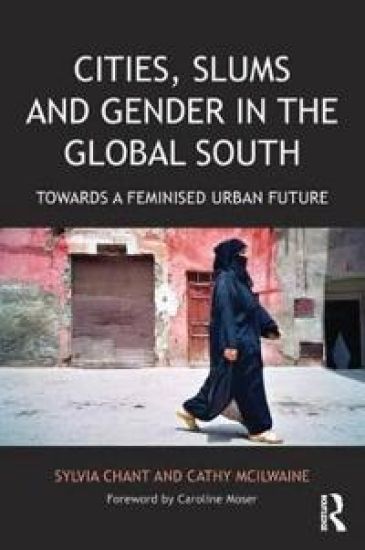
Cities, Slums and Gender in the Global South

Cities, Slums and Gender in the Global South

Sylvia Chant; Cathy McIlwaine

Routledge
2015
nidottu
Developing regions are set to account for the vast majority of future urban growth, and women and girls will become the majority inhabitants of these locations in the Global South. This is one of the first books to detail the challenges facing poorer segments of the female population who commonly reside in ‘slums’. It explores the variegated disadvantages of urban poverty and slum-dwelling from a gender perspective. This book revolves around conceptualisation of the ‘gender-urban-slum interface’ which explains key elements to understanding women’s experiences in slum environments. It has a specific focus on the ways in which gender inequalities are can be entrenched but also alleviated. Included is a review of the demographic factors which are increasingly making cities everywhere ‘feminised spaces’, such as increased rural-urban migration among women, demographic ageing, and rising proportions of female-headed households in urban areas. Discussions focus in particular on education, paid and unpaid work, access to land, property and urban services, violence, intra-urban mobility, and political participation and representation. This book will be of use to researchers and professionals concerned with gender and development, urbanisation and rural-urban migration.
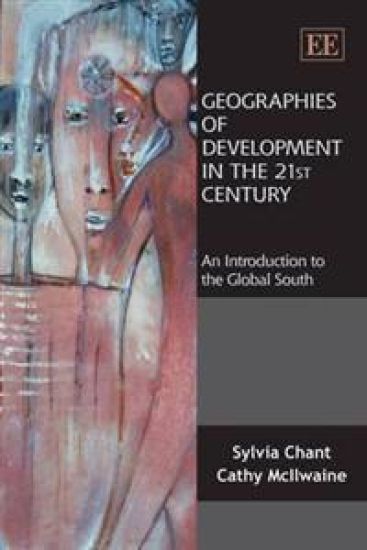
Geographies of Development in the 21st Century

Geographies of Development in the 21st Century

Sylvia Chant; Cathy Mcllwaine

Edward Elgar Publishing Ltd
2008
nidottu
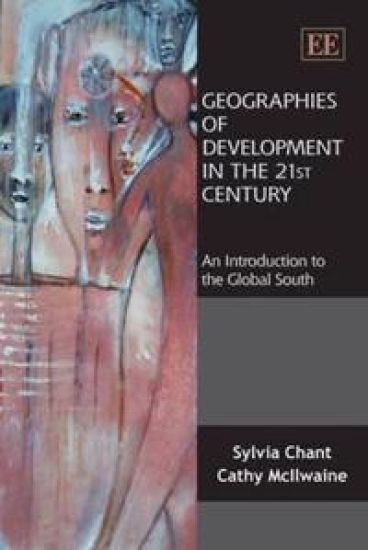
Written by two widely published academics with many years' experience in university teaching, research and consultancy, Geographies of Development in the 21st Century provides a concise yet informative introduction to development in the contemporary Global South. Incorporating field research from Mexico, Costa Rica, Guatemala, Colombia, El Salvador, the Philippines, Botswana and The Gambia, Sylvia Chant and Cathy McIlwaine bring alive a body of fascinating subject matter extending across gender, family, poverty, employment, household livelihoods, the informal economy, housing, migration, civil society, conflict and violence. Reflecting both authors' enduring interests in the academic-policy interface, the book is also informed by assignments they have undertaken for various international organisations such as the World Bank, Inter-American Development Bank, UNDP, UNICEF, ILO and the Commonwealth Secretariat. This timely and engaging volume will be an essential companion for undergraduate students taking introductory courses in development and globalisation as well as a useful reference and repository of teaching and learning ideas for those lecturing on the subject. Students will not only find this resource refreshingly accessible and user-friendly, but will be able to further their knowledge guided by annotated readings, key internet sources and a range of learning activities.
Geographies of Development in the 21st Century

Geographies of Development in the 21st Century

Sylvia Chant; Cathy Mcllwaine

Edward Elgar Publishing Ltd
2008
sidottu
Written by two widely published academics with many years' experience in university teaching, research and consultancy, Geographies of Development in the 21st Century provides a concise yet informative introduction to development in the contemporary Global South. Incorporating field research from Mexico, Costa Rica, Guatemala, Colombia, El Salvador, the Philippines, Botswana and The Gambia, Sylvia Chant and Cathy McIlwaine bring alive a body of fascinating subject matter extending across gender, family, poverty, employment, household livelihoods, the informal economy, housing, migration, civil society, conflict and violence. Reflecting both authors' enduring interests in the academic-policy interface, the book is also informed by assignments they have undertaken for various international organisations such as the World Bank, Inter-American Development Bank, UNDP, UNICEF, ILO and the Commonwealth Secretariat. This timely and engaging volume will be an essential companion for undergraduate students taking introductory courses in development and globalisation as well as a useful reference and repository of teaching and learning ideas for those lecturing on the subject. Students will not only find this resource refreshingly accessible and user-friendly, but will be able to further their knowledge guided by annotated readings, key internet sources and a range of learning activities.
Gender, Generation and Poverty

Gender, Generation and Poverty

Sylvia Chant

Edward Elgar Publishing Ltd
2007
nidottu
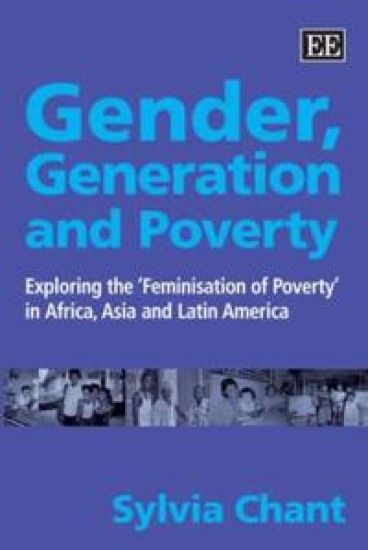
The 'feminisation of poverty' is widely viewed as a global trend, and of particular concern in developing regions. Yet although popularisation of the term may have raised women's visibility in development discourses and gone some way to 'en-gender' policies for poverty reduction, the construct is only weakly substantiated. Its over-emphasis on income and on female household headship also conveys little of the contemporary complexities of gendered disadvantage. In Gender, Generation and Poverty Sylvia Chant challenges the 'feminisation of poverty' on the basis of recent fieldwork in The Gambia, Philippines and Costa Rica. Interviews with over 220 women and men of different ages at the grassroots, as well as with 40 professionals in international agencies, government departments and NGOs, highlight the difficulties of establishing any general tendency towards a widening of gender disparities in income poverty, or for female household heads to be the 'poorest of the poor'. While not denying a 'female bias' in material privation, a more important and consistent pattern is that women are bearing an ever-greater burden of responsibility for household survival, and under especially exploitative conditions in male-headed units. These findings lead Chant to propose a more elaborate and nuanced construction of the 'feminisation of poverty' which incorporates inputs as well as incomes and takes greater account of gender relations within the home. This not only stands to enrich gendered poverty analysis, but to provide a more appropriate basis for policy interventions. This volume will not only be an important resource for scholars of development, gender and area studies in Africa, Asia and Latin America, but also for professionals and activists working towards the elimination of poverty and gender inequality at national and international levels.
Gender, Generation and Poverty

Gender, Generation and Poverty

Sylvia Chant

Edward Elgar Publishing Ltd
2007
sidottu
The 'feminisation of poverty' is widely viewed as a global trend, and of particular concern in developing regions. Yet although popularisation of the term may have raised women's visibility in development discourses and gone some way to 'en-gender' policies for poverty reduction, the construct is only weakly substantiated. Its over-emphasis on income and on female household headship also conveys little of the contemporary complexities of gendered disadvantage. In Gender, Generation and Poverty Sylvia Chant challenges the 'feminisation of poverty' on the basis of recent fieldwork in The Gambia, Philippines and Costa Rica. Interviews with over 220 women and men of different ages at the grassroots, as well as with 40 professionals in international agencies, government departments and NGOs, highlight the difficulties of establishing any general tendency towards a widening of gender disparities in income poverty, or for female household heads to be the 'poorest of the poor'. While not denying a 'female bias' in material privation, a more important and consistent pattern is that women are bearing an ever-greater burden of responsibility for household survival, and under especially exploitative conditions in male-headed units. These findings lead Chant to propose a more elaborate and nuanced construction of the 'feminisation of poverty' which incorporates inputs as well as incomes and takes greater account of gender relations within the home. This not only stands to enrich gendered poverty analysis, but to provide a more appropriate basis for policy interventions. This volume will not only be an important resource for scholars of development, gender and area studies in Africa, Asia and Latin America, but also for professionals and activists working towards the elimination of poverty and gender inequality at national and international levels.
Gender in Latin America

Gender in Latin America

Sylvia Chant; Nikki Craske

Latin America Bureau
2002
nidottu
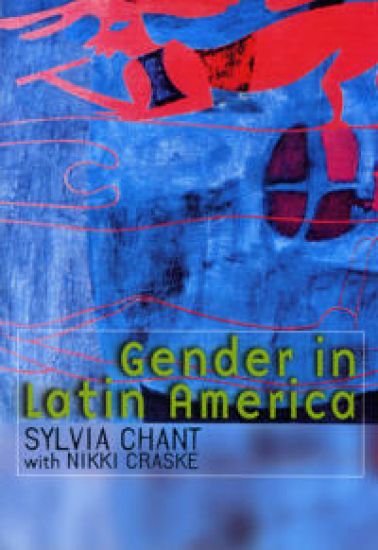
Gender impacts on every major social issue from rights to social policy, from ethnicity to poverty, this work is a comprehensive overview of the subject, examining trends in gender over history until the present. The authors draw on a wide range on theoretial analyses as well as their own field of work to illuminate the importance of diversity in gender in Latin America, as well as more traditionally held concepts of class, ethnicity, the urban-rural divide and age and peer groups. Debunking traditional universalizing stereotypes, this text charts contemporary changes gender roles, relations between the genders, and gender- and sexuality-based identities. Chapters are arranged around broad themes, including gender and poverty, gender and health, gender and sexuality and gender and employment. Each chapter begins with an introduction to the core issues the debates and theoretical work in the relevant field, and case studies. The authors also make reference to the continually expanding literature on the subject, including work on men and masculinity, fatherhood and sexuality.
Mainstreaming Men into Gender and Development
Based on research commissioned by the World Bank, this books primary focus is on incorporating men in gender and development interventions at the grass roots level. It draws attention to some of the key problems that have arisen from male exclusion; as well as to the potential benefits of - and obstacles to - men's inclusion. The book then moves on to explore how far men in development; has been a feature in the practices of development organizations. The book concludes with suggestions on the ways in which gender and developoment policy might realistically move towards a more gender-based, male-inclusive approach.
Women in the Third World

Women in the Third World

Lynne Brydon; Sylvia Chant

Rutgers University Press
1989
nidottu
Women in the Third World provides an up-to-date general account and review of research on the roles and status of women in contemporary Third World societies. The book focuses on four major themes of underdevelopment which have particular relevance for gender roles and relations: the household, production, reproduction and policy. These issues are illustrated with material from rural and urban areas in all parts of the Third World. The book summarizes significant ideas and findings. Lynne Brydon and Sylvia Chang have avoided a narrow focus on particular regions and countries to provide a synoptic overview. In addition to being a valuable source of reference for scholars interested in gender and development in the Third World, the book also attempts to pinpoint fundamental aspects of gender inequality which apply to women everywhere. The overriding conclusion of the book is that women’s experiences of development are generally negative and that intervention is urgently required to prevent their positions relative to men’s deteriorating still further.