Kirjojen hintavertailu – 12 903 724 kirjaa ja 27 kauppaa
Kirjailija
T. A. Heppenheimer
Kirjat ja teokset yhdessä paikassa: 12 kirjaa, julkaisuja vuosilta 1987–2018, suosituimpiin kuuluu A Positron Named Priscilla. Vertaile teosten hintoja ja tarkista saatavuus suomalaisista kirjakaupoista.
Nimi esiintyy myös muodoissa: T.A. Heppenheimer, T A Heppenheimer
National Academy of Sciences; Anne Simon Moffat; Elizabeth J. Maggio; David Holzman; Michelle Hoffman; T.A. Heppenheimer; Addison Greenwood; Andrew Chaikin; Barbara Burke; Marcia F. Bartusiak
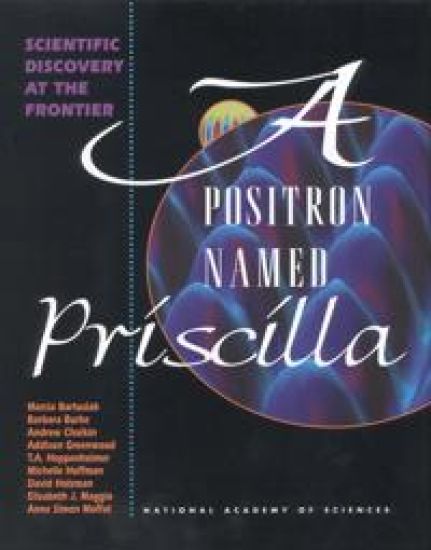
A Positron Named Priscilla is a book of wonder, offering a fascinating, readable overview of cutting-edge investigations by many of today's leading young scientists. Written for anyone who loves science, this volume reports on some of the most exciting recent discoveries and advances in fields from astronomy to molecular biology. This new book is from one of the world's most prestigious scientific institutions, the National Academy of Sciences. The Academy provides an annual forum for the brightest young investigators to exchange ideas across disciplines—an exchange that was the spark for A Positron Named Priscilla. Each chapter is authored by a popular science writer who offers helpful historical perspectives, clear and well-illustrated explanations of current scientific thinking, and previews of future developments. The scope of topics and breadth of discussion ensure interest at all levels. Topics include: Planetary science and the compelling glimpse through the clouded atmosphere of Venus afforded by the spacecraft Magellan. Astrophysics and the emergence of helioseismology, a new field that allows researchers to probe the interior workings of the sun. Biology and what we have learned about DNA in the 40 years since its discovery; our current understanding of protein molecules, the "building blocks" of living systems; and the high-tech search for answers to the AIDS epidemic. Physics and our new-found ability to move and manipulate individual atoms on a surface. The book also tells the remarkable story of "buckyballs," or buckminsterfullerenes, a form of carbon discovered only a few years ago, that have the potential to be used in a variety of important applications, from superconductivity to nanotechnology. Mathematics and the rise of "wavelet" theory, and how mathematicians are applying it in sometimes startling ways, from assisting the FBI with fingerprint storage to coaxing the secrets from a battered recording of Brahms playing the piano. Geosciences and the search for "clocks in the earth" to make life-saving earthquake predictions. A Positron Named Priscilla is a "must" read for anyone who wants to keep up with a broad range of scientific endeavor. Table of Contents Front Matter A Positron Named Priscilla 1 Shake, Rattle, and Shine: New Methods of Probing the Sun 2 A Positron Named Priscilla: Trapping and Manipulating Atoms 3 AIDS: Solving the Molecular Puzzle 4 Doubling Up: How the Genetic Code Replicates Itself 5 Magellan 6 Clocks in the Earth? The Science of Earthquake Prediction 7 The Mathematical Microscope: Waves, Wavelets, and Beyond 8 A Family Affair: The Top Quark and the Higgs Particle 9 Bouncing Balls of Carbon: The Discovery and Promise of Fullerences 10 Fold, Spindle, and Regulate: How Proteins Work Appendix A: Abstracts of Additional Sessions of the Frontiers of Science of Science Symposia Appendix B: Symposia Programs Appendix C: About the Authors Index

This volume from The NASA History Series presents an overview of the science of hypersonics, the study of flight at speeds at which the physics of flows is dominated by aerodynamic heating. The survey begins during the years immediately following World War II, with the first steps in hypersonic research: the development of missile nose cones and the X-15; the earliest concepts of hypersonic propulsion; and the origin of the scramjet engine. Next, it addresses the re-entry problem, which came to the forefront during the mid-1950s, showing how work in this area supported the manned space program and contributed to the development of the orbital shuttle. Subsequent chapters explore the fading of scramjet studies and the rise of the National Aerospace Plane (NASP) program of 1985-95, which sought to lay groundwork for single-stage vehicles. The program's ultimate shortcomings--in terms of aerodynamics, propulsion, and materials--are discussed, and the book concludes with a look at hypersonics in the post-NASP era, including the development of the X-33 and X-34 launch vehicles, further uses for scramjets, and advances in fluid mechanics. Clearly, ongoing research in hypersonics has yet to reach its full potential, and readers with an interest in aeronautics and astronautics will find this book a fascinating exploration of the field's history and future.
The prospectus of humans living, working, and establishing communities in space can no longer be dismissed as the romantic notions of science fiction writers and space buffs. With the launch of the space shuttle human kind will enter a new era in space exploration, one giant step closer to the goal of human colonization. Our understanding of man’s role in space is maturing, and the myths of life in space as a slick Buck Rogers episode or a scene from Star Wars must give way to a realistic plan for human life in other part of the solar system. We are ready now for a factual assessment of the challenges ahead: in Toward Distant Suns, the prospects of space exploration and space colonization have come of age. Here, for the first time, is a realistic look at what humankind must accomplish in order to colonize near space. Based on the most up-to-date research available, Toward Distant Suns tackles the problems of technology and lifestyle that will face those men and women whose mission is to settle space. Here is realistic, in-depth coverage of: space shuttle’s role in near space construction, development of new, more versatile rocket fuels and motors, building the large communications platforms, power satellites the “Space Spider,” and space colonies, the space workers—how they will be chosen, trained, and transported; life in zero-g—space tourism and space war; “suburbanizing” space earth dwellers; the real future of interstellar colonization. Toward Distant Suns also takes a new look at the tantalizing question: What is our place in the galaxy? It reviews the Search for Extraterrestrial Intelligence experiments, the latest work on interstellar flight and colonization, and the current scientific information on planetary formation and humanoid development, to reach the startling conclusion: Mankind may be unique and along.
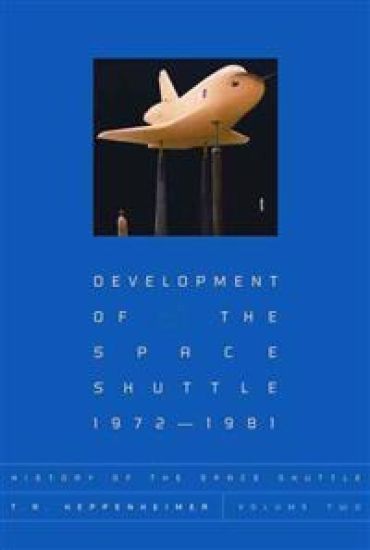
Basing his work on virtually untapped NASA archives, T. A. Heppenheimer has produced the second volume of his definitive history of the space shuttle. Volume Two traces the development of the shuttle through a decade of engineering setbacks and breakthroughs, program-management challenges, and political strategizing, culminating in the first launch in April 1981. The focus is on the engineering challenges propulsion, thermal protection, electronics, onboard systems and the author covers in depth the alternative vehicles developed by the U. S. Air Force and European countries. The first launch entailed a monumental amount of planning and preparation that Heppenheimer explains in detail."
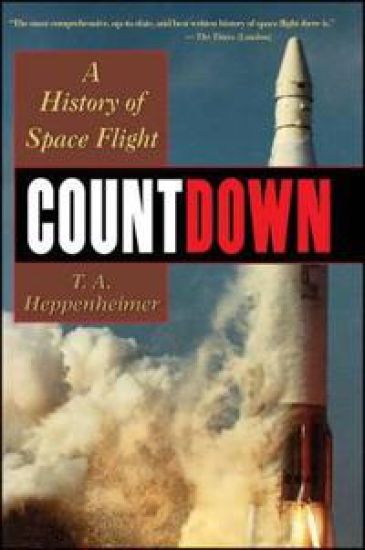
T. A. Heppenheimer's acclaimed chronicle of rockets, politics, and the pioneers who dared to reach beyond humanity's limits. "The most comprehensive, up-to-date, and best written history of space flight there is."—The Times (London) "A lively account of the development of space activities in the U. S. and the Soviet Union . . . as good a one-volume overview of space as exists."—Scientific American "Countdown is by far the best history of space flight I have ever read. It is detailed, lucidly written for the layman, and full of fascinating stories."—Adrian Berry, Daily Telegraph "Science writer Heppenheimer's readable account provides a timely historical overview of the early visionaries, the engineers, and the geopolitical forces that placed men on the moon and created today's aerospace industry. . . . A thoughtful analysis that is highly recommended."—Library Journal "By far the most significant and technically insightful account of the ventures into the space environment I have seen. . . . [Heppenheimer] concentrates unerringly on key elements, both technical and managerial, in this account of man's initial space ventures."—Lee Atwood, Former president and chairman, North American Aviation Corporation "Like a skilled artisan, Heppenheimer weaves social, political, scientific, technological, military, and economic threads of the history of space flight into a tapestry that reveals fascinating patterns and themes."—Publishers Weekly
'We are going forward with research on a new Orient Express that could, by the end of the next decade, take off from Dulles Airport and accelerate up to 25 times the speed of sound, attaining low-earth orbit or flying to Tokyo within two hours.'