Kirjojen hintavertailu – 12 903 724 kirjaa ja 27 kauppaa

Kirjailija

T. Corey Brennan

Kirjat ja teokset yhdessä paikassa: 11 kirjaa, julkaisuja vuosilta 2001–2025, suosituimpiin kuuluu Sabina Augusta. Vertaile teosten hintoja ja tarkista saatavuus suomalaisista kirjakaupoista.

11 kirjaa

Kirjojen julkaisuvuodet: 2001–2025.

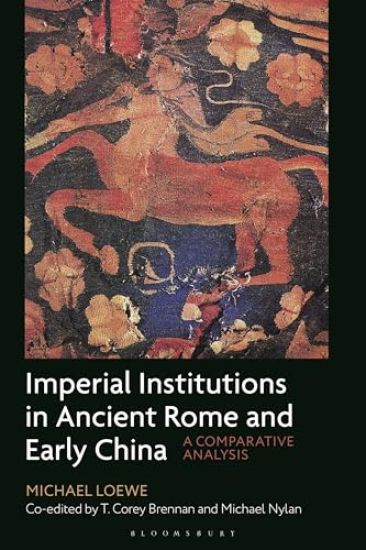
Imperial Institutions in Ancient Rome and Early China

Imperial Institutions in Ancient Rome and Early China

Michael Loewe; Michael Nylan; T. Corey Brennan

BLOOMSBURY PUBLISHING PLC
2025
sidottu
Written by the eminent sinologist Michael Loewe, and edited for publication by T. Corey Brennan and Michael Nylan, this book gives an overview of the considerations and practices of two major world empires that together ruled half of the earth's population in the first centuries BCE: ancient Rome and Han China. Approaching the historical material with a comparative perspective, Loewe examines the strengths and weaknesses, and the successes and failures, which can be seen in the organisation and government of these two political systems. Though each empire was largely ignorant of the other, the problems they faced were similar, given the rudimentary transportation and communication facilities of the time, the high mortality rates and the low levels of literacy. Yet each empire ruled its people in distinctly different ways, with the Roman empire governed largely by military officials, in contrast to the Chinese empire, whose administration was well stocked with roughly 130,000 highly trained professionals. The ten chapters of this book set out to compare the ways that these two contemporary regimes, similar in size and population, sought to control human activities and impose a set of regulated discipline over those who were ruled. Each chapter concerns the degrees and methods of forming a united people; the assumptions that lay behind such attempts; the reliance that imperial authority placed on religious practices; legal impositions and the structure of institutions; and the bases of social cohesion and economic co-operation. The result is an engaging study of two remarkable empires, whose rise and fall are contrasted in a way that deepens our understanding of empire and civilisation.
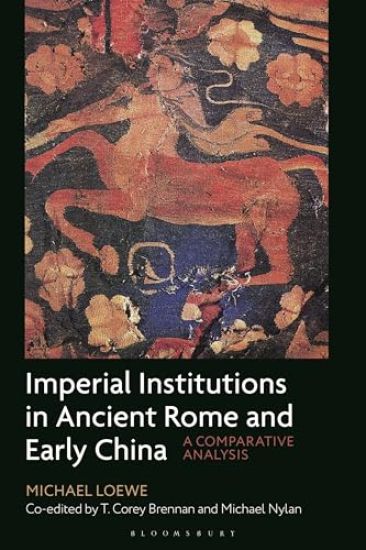
Imperial Institutions in Ancient Rome and Early China

Imperial Institutions in Ancient Rome and Early China

Michael Loewe; Michael Nylan; T. Corey Brennan

BLOOMSBURY PUBLISHING PLC
2025
nidottu

Halvin toimitettuna 34,40 €

Written by the eminent sinologist Michael Loewe, and edited for publication by T. Corey Brennan and Michael Nylan, this book gives an overview of the considerations and practices of two major world empires that together ruled half of the earth's population in the first centuries BCE: ancient Rome and Han China. Approaching the historical material with a comparative perspective, Loewe examines the strengths and weaknesses, and the successes and failures, which can be seen in the organisation and government of these two political systems. Though each empire was largely ignorant of the other, the problems they faced were similar, given the rudimentary transportation and communication facilities of the time, the high mortality rates and the low levels of literacy. Yet each empire ruled its people in distinctly different ways, with the Roman empire governed largely by military officials, in contrast to the Chinese empire, whose administration was well stocked with roughly 130,000 highly trained professionals. The ten chapters of this book set out to compare the ways that these two contemporary regimes, similar in size and population, sought to control human activities and impose a set of regulated discipline over those who were ruled. Each chapter concerns the degrees and methods of forming a united people; the assumptions that lay behind such attempts; the reliance that imperial authority placed on religious practices; legal impositions and the structure of institutions; and the bases of social cohesion and economic co-operation. The result is an engaging study of two remarkable empires, whose rise and fall are contrasted in a way that deepens our understanding of empire and civilisation.

The Twilight of Rome's Papal Nobility

The Twilight of Rome's Papal Nobility

Ugo Boncompagni Ludovisi (1856–1935); T. Corey Brennan; Rita Boncompagni Ludovisi

RUTGERS UNIVERSITY PRESS
2025
sidottu
Today, the Ludovisi district is one of Rome’s most luxurious neighborhoods, home to famous restaurants and some of the most expensive shops in the city. But it was once private property, part of an eighty-six-acre villa owned by the Boncompagni Ludovisis, an ancient noble family with close ties to the papacy. The story of how the palazzo fell out of the family's hands reveals the tremendous social upheavals that Italy underwent following its mid-nineteenth-century unification. First privately published in 1921, The Twilight of Rome's Papal Nobility provides an intimate look at a family who grew up accustomed to almost unimaginable wealth, power, and glamour. A descendant of two popes, Ugo Boncompagni Ludovisi recounts the life story of his mother Agnese, who was raised in a palace full of priceless artwork, including pieces by Caravaggio and Michelangelo. We get a window into Agnese's private life-her girlhood, marriage, and raising of several children-as her public life becomes increasingly tumultuous amid the family’s struggles to retain its property. A tender elegy to a bygone era, Boncompagni Ludovisi's story provides a unique perspective on Italian history and Rome’s urban redevelopment.
The Twilight of Rome's Papal Nobility

The Twilight of Rome's Papal Nobility

Ugo Boncompagni Ludovisi (1856–1935); T. Corey Brennan; Rita Boncompagni Ludovisi

RUTGERS UNIVERSITY PRESS
2025
nidottu
Today, the Ludovisi district is one of Rome’s most luxurious neighborhoods, home to famous restaurants and some of the most expensive shops in the city. But it was once private property, part of an eighty-six-acre villa owned by the Boncompagni Ludovisis, an ancient noble family with close ties to the papacy. The story of how the palazzo fell out of the family's hands reveals the tremendous social upheavals that Italy underwent following its mid-nineteenth-century unification. First privately published in 1921, The Twilight of Rome's Papal Nobility provides an intimate look at a family who grew up accustomed to almost unimaginable wealth, power, and glamour. A descendant of two popes, Ugo Boncompagni Ludovisi recounts the life story of his mother Agnese, who was raised in a palace full of priceless artwork, including pieces by Caravaggio and Michelangelo. We get a window into Agnese's private life-her girlhood, marriage, and raising of several children-as her public life becomes increasingly tumultuous amid the family’s struggles to retain its property. A tender elegy to a bygone era, Boncompagni Ludovisi's story provides a unique perspective on Italian history and Rome’s urban redevelopment.
The Fasces

The Fasces

T. Corey Brennan

OXFORD UNIVERSITY PRESS INC
2022
sidottu
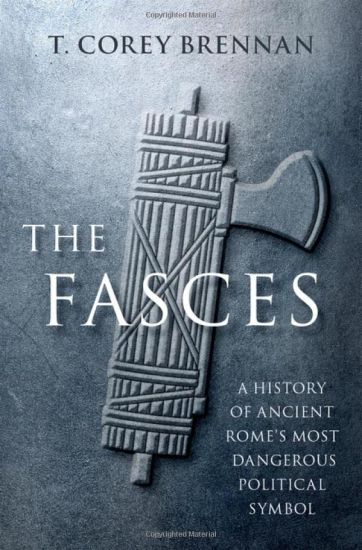
"Fascism" is a word ubiquitous in our contemporary political discourse, but few know about its roots in the ancient past or its long, strange evolution to the present. In ancient Rome, the fasces were a bundle of wooden rods bound with a leather cord, in which an axe was placed--in essence, a mobile kit for corporal or capital punishment. Attendants typically carried fasces before Rome's higher officials, to induce feelings of respect and fear for the relevant authority. This highly performative Roman institution had a lifespan of almost two millennia, and made a deep impression on subsequent eras, from the Byzantine period to the present. Starting in the Renaissance, we find revivals and reinterpretations of the ancient fasces, accelerating especially after 1789, the first year of the United States' Constitution and the opening volley of the French Revolution. But it was Benito Mussolini, who, beginning in 1919, propagated the fasces on an unprecedented scale. Oddly, today the emblem has grown largely unfamiliar, which in turn has offered an opening to contemporary extremist groups. In The Fasces, T. Corey Brennan offers the first global history of the nature, development, and competing meanings of this stark symbol, from antiquity to the twenty-first century. The word "fascism" has universal awareness in contemporary political discourse, which thus makes this, the first book to trace the full arc of the fasces' almost 3,000-year history, essential reading for all who wish to understand how the past informs the present.
Sabina Augusta

Sabina Augusta

T. Corey Brennan

Oxford University Press Inc
2020
nidottu
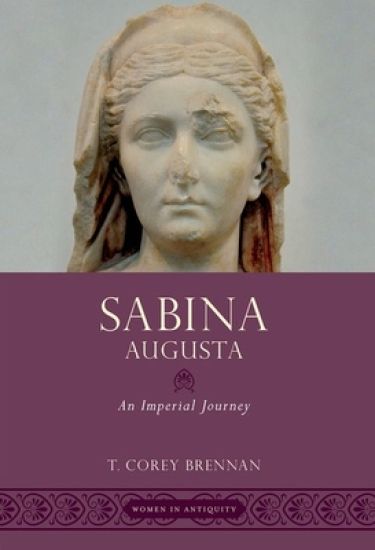
Sabina Augusta (ca. 85-ca. 137), wife of the emperor Hadrian (reigned 117-38), accumulated more public honors in Rome and the provinces than any imperial woman had enjoyed since the first empress, Augustus' wife Livia. Indeed, Sabina is the first woman whose image features on a regular and continuous series of coins minted at Rome. She was the most travelled and visible empress to date. Hadrian also deified his wife upon her death. In synthesizing the textual and massive material evidence for the empress, T. Corey Brennan traces the development of Sabina's partnership with her husband and shows the vital importance of the empress for Hadrian's own aspirations. Furthermore, the book argues that Hadrian meant for Sabina to play a key role in promoting the public character of his rule, and details how the emperor's exaltation of his wife served to enhance his own claims to divinity. Yet the sparse literary sources on Sabina instead put the worst light on the dynamics of her marriage. Brennan fully explores the various, and overwhelmingly negative, notions this empress stirred up in historiography, from antiquity through the modern era; and against the material record proposes a new and nuanced understanding of her formal role. This biographical study sheds new light not just on its subject but also more widely on Hadrian-including the vexed question of that emperor's relationship with his apparent lover Antinoös-and indeed Rome's imperial women as a group.
Sabina Augusta

Sabina Augusta

T. Corey Brennan

Oxford University Press Inc
2018
sidottu
Sabina Augusta (ca. 85-ca. 137), wife of the emperor Hadrian (reigned 117-38), accumulated more public honors in Rome and the provinces than any imperial woman had enjoyed since the first empress, Augustus' wife Livia. Indeed, Sabina is the first woman whose image features on a regular and continuous series of coins minted at Rome. She was the most travelled and visible empress to date. Hadrian also deified his wife upon her death. In synthesizing the textual and massive material evidence for the empress, T. Corey Brennan traces the development of Sabina's partnership with her husband and shows the vital importance of the empress for Hadrian's own aspirations. Furthermore, the book argues that Hadrian meant for Sabina to play a key role in promoting the public character of his rule, and details how the emperor's exaltation of his wife served to enhance his own claims to divinity. Yet the sparse literary sources on Sabina instead put the worst light on the dynamics of her marriage. Brennan fully explores the various, and overwhelmingly negative, notions this empress stirred up in historiography, from antiquity through the modern era; and against the material record proposes a new and nuanced understanding of her formal role. This biographical study sheds new light not just on its subject but also more widely on Hadrian-including the vexed question of that emperor's relationship with his apparent lover Antinoös-and indeed Rome's imperial women as a group.
The Praetorship in the Roman Republic: Volume 1: Origins to 122 BC
Brennan's book surveys the history of the Roman praetorship, which was one of the most enduring Roman political institutions, occupying the practical center of Roman Republican administrative life for over three centuries. The study addresses political, social, military and legal history, as well as Roman religion. Volume I begins with a survey of Roman (and modern) views on the development of legitimate power--from the kings, through the early chief magistrates, and down through the creation and early years of the praetorship. Volume II discusses how the introduction in 122 of C. Gracchus' provincia repetundarum pushed the old city-state system to its functional limits.
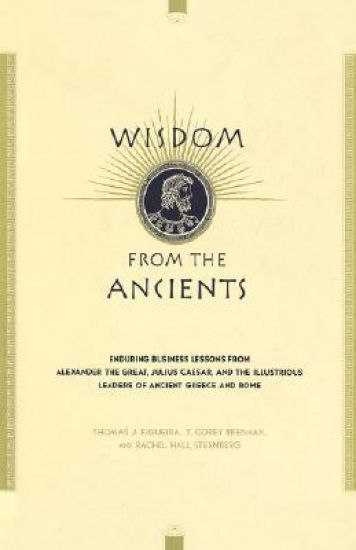
Wisdom From The Ancients

Wisdom From The Ancients

Rachel Sternberg; T. Corey Brennan; Thomas Figueira

Perseus Books
2001
sidottu
Ancient Greece, the culture that brought us democracy, philosophy, comedy and tragedy, and the Olympic Games, and ancient Rome, best known for its military prowess, technological achievements, and imperial administration, are justly renowned for their contributions to Western civilization. Wisdom from the Ancients brings alive for today's managers the timeless insights of such larger-than-life figures as Alexander the Great, Julius Caesar, Trajan, Pericles, and dozens of other colourful and enigmatic leaders. Through direct quotations of ancient texts, engaging commentary, and period art, the authors illuminate the strategies and tactics that have withstood the test of time-from leadership and delegation to managing conflict to effective and persuasive communication.
The Praetorship in the Roman Republic: Volume 2: 122 to 49 BC

The Praetorship in the Roman Republic: Volume 2: 122 to 49 BC

T. Corey Brennan

Oxford University Press Inc
2001
sidottu
Brennan's book surveys the history of the Roman praetorship, which was one of the most enduring Roman political institutions, occupying the practical center of Roman Republican administrative life for over three centuries. The study addresses political, social, military and legal history, as well as Roman religion. Volume I begins with a survey of Roman (and modern) views on the development of legitimate power--from the kings, through the early chief magistrates, and down through the creation and early years of the praetorship. Volume II discusses how the introduction in 122 of C. Gracchus' provincia repetundarum pushed the old city-state system to its functional limits.