Kirjojen hintavertailu – 12 859 828 kirjaa ja 27 kauppaa

Kirjailija

T.G. Fraser

Kirjat ja teokset yhdessä paikassa: 7 kirjaa, julkaisuja vuosilta 1989–2024, suosituimpiin kuuluu Chaim Weizmann: The Zionist Dream. Vertaile teosten hintoja ja tarkista saatavuus suomalaisista kirjakaupoista.

Nimi esiintyy myös muodoissa: T G Fraser, T. G Fraser

7 kirjaa

Kirjojen julkaisuvuodet: 1989–2024.

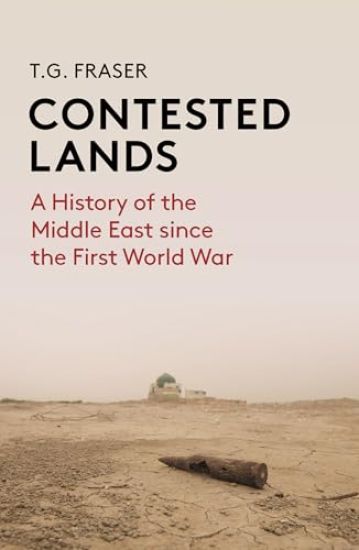
Contested Lands

Contested Lands

T G Fraser

Haus Publishing
2024
pokkari
In an accessible survey of the last century, Contested Lands tells the story of the Middle East since the First World War: what happened, why, and what it all means today. With a focus on the many conflicts in the region over the last one hundred years, T. G. Fraser analyses the fault lines of the tension: the damaging legacies of imperialism; the creation of the State of Israel; the competition between secular, autocratic rulers and emerging democratic and theocratic forces; and the rise - and fall - of Arab Nationalism in the face of fraying regional alliances and the Islamic revival. Against this backdrop comes the twenty-first century, marked first by the tragedy of 9/11, then the 'Arab Spring', the Syria's civil war and now the Israel-Hamas conflict. And amid it all, complex social and economic change have transformed the region. In Contested Lands, T. G. Fraser untangles the threads of history in the Middle East and, in doing so, weaves a detailed and insightful picture of a troubled region and why its heritage remains important today.

Ireland in Conflict 1922-1998

Ireland in Conflict 1922-1998

T.G. Fraser

Routledge
2017
sidottu
Ireland in Conflict, 1922-1998 sets out the main political, economic and social developments in Ireland, north and south of the border, since the 1922 treaty. This book explains the troubles in their context and examines the underlying tensions which led to prolonged violence after a period of relative civil peace and rising prosperity. Ireland in Conflict discusses:* the Civil War, its legacy for Irish politics and the Boundary Commission* the IRA, Orange Order and the Unionist party* the role of the Catholic Church and the Protestant minority* escalation of violence in the 1970s including Bloody Sunday and the hunger strikes* the Anglo-Irish agreement, the cease-fire and the hope for a peaceful solution.
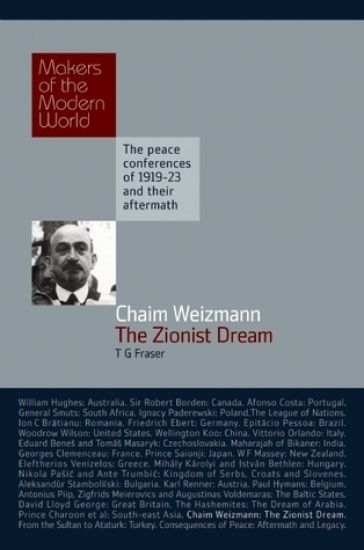
Chaim Weizmann: The Zionist Dream

Chaim Weizmann: The Zionist Dream

T. G Fraser

Haus Publishing
2009
sidottu
The Arab-Israeli conflict has been one of the most defining features of recent world history, flaring up into open war fare yet again in Gaza at the end of 2008 and provoking large-scale demonstrations in the streets of cities across the world. The decision in 1919 by the Paris Peace Conference to award the Mandate for Palestine to Great Britain - which had announced its commitment to the creation of a national home for the Jewish people in the Balfour Declaration two years previously - sowed the seeds of this seemingly intractable problem, yet when the Zionist leader Chaim Weizmann (1874-1952) spoke before the Conference on 27 February 1919, he would have appeared as only one of the many representatives of minor nationalities putting their case to the peacemakers, and, what is more, one whose people had no territory of their own. How a Jewish chemistry professor from an obscure part of Eastern Europe could find himself at the heart of international diplomacy, and later become the first president of the State of Israel, is one of the most fascinating stories of the Paris Peace Conference and its aftermath. Ninety years after the Conference, what Weizmann said and did there is an essential part of our understanding of how this small, but critical, part of the world evolved out of the deliberations.
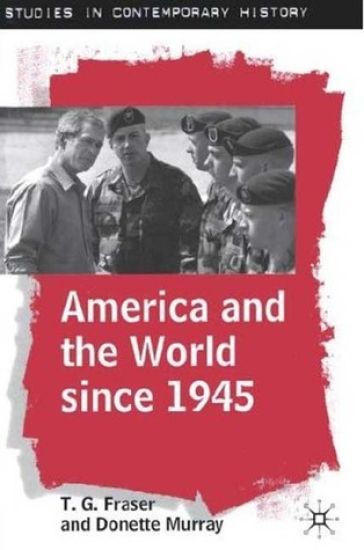
America and the World since 1945

America and the World since 1945

T.G. Fraser; Donette Murray

Red Globe Press
2002
nidottu
American foreign policy is fundamental to any understanding of how the post-war world has been shaped. This insightful and wide-ranging book analyses the policies pursued by each presidency from that of Harry Truman to George W. Bush, and reviews the far-reaching consequences of these actions. Taking into account the most recent research and scholarly interpretations, T. G. Fraser and Donette Murray examine the priorities of each successive administration and how these have had to adapt under the pressure of events on a global scale. America and the World since 1945- focuses on the origins and course of the Cold War- explains major crises and developments, such as the Truman Doctrine, the nature of containment, the Cuban Missile Crisis, Berlin, arms control and detente- features analysis of how America became involved in armed conflict, as in Korea, the Gulf, the Balkans and Vietnam- looks at American action in relation to the Arab-Israeli conflict, as well as interventions in Latin America and Africa- traces the evolution of policy towards China- studies conventional diplomacy alongside the use of intelligence and covert activity- examines the dynamics of the post-Cold War worldClear in its approach, this book is essential reading for anyone with an interest in America's relationship with the rest of the world from the end of the Second World War up to the aftermath of the attacks on the World Trade Center and the Pentagon in September 2001.
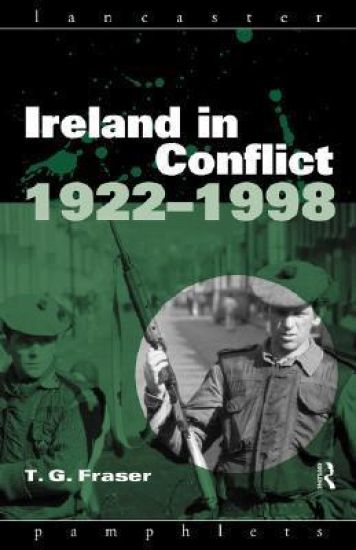
Ireland in Conflict 1922-1998

Ireland in Conflict 1922-1998

T.G. Fraser

Routledge
1999
nidottu
Ireland in Conflict, 1922-1998 sets out the main political, economic and social developments in Ireland, north and south of the border, since the 1922 treaty. This book explains the troubles in their context and examines the underlying tensions which led to prolonged violence after a period of relative civil peace and rising prosperity. Ireland in Conflict discusses:* the Civil War, its legacy for Irish politics and the Boundary Commission* the IRA, Orange Order and the Unionist party* the role of the Catholic Church and the Protestant minority* escalation of violence in the 1970s including Bloody Sunday and the hunger strikes* the Anglo-Irish agreement, the cease-fire and the hope for a peaceful solution.
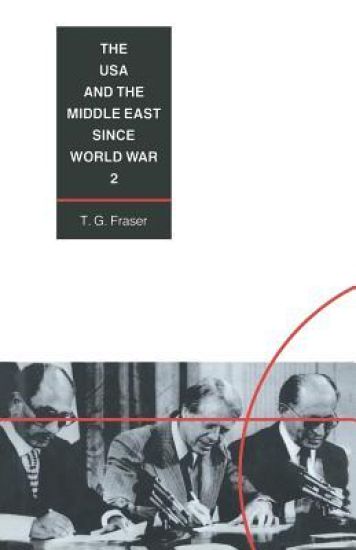
The USA and the Middle East Since World War 2
The Middle East has rarely been absent from the world's media since the end of World War 2. Next to East-West relations, its conflicts have provided the most intractable set of issues in international affairs. Inevitably, the United States became the major outside party. As the Arab-Israeli dispute came to dominate Middle East affairs, the Americans had to reconcile their wide-ranging strategic and economic interests with the domestic pressures to support Israel. This book analyses and illustrates the decisions reached in Washington and examines their impact on the region's quarrels.