Kirjojen hintavertailu – 12 903 724 kirjaa ja 27 kauppaa

Kirjailija

T. H. Breen

Kirjat ja teokset yhdessä paikassa: 12 kirjaa, julkaisuja vuosilta 1982–2021, suosituimpiin kuuluu American Stories. Vertaile teosten hintoja ja tarkista saatavuus suomalaisista kirjakaupoista.

12 kirjaa

Kirjojen julkaisuvuodet: 1982–2021.

The Will of the People

The Will of the People

T. H. Breen

Harvard University Press
2021
nidottu
“Important and lucidly written…The American Revolution involved not simply the wisdom of a few great men but the passions, fears, and religiosity of ordinary people.”—Gordon S. WoodIn this boldly innovative work, T. H. Breen spotlights a crucial missing piece in the stories we tell about the American Revolution. From New Hampshire to Georgia, it was ordinary people who became the face of resistance. Without them the Revolution would have failed. They sustained the commitment to independence when victory seemed in doubt and chose law over vengeance when their communities teetered on the brink of anarchy. The Will of the People offers a vivid account of how, across the thirteen colonies, men and women negotiated the revolutionary experience, accepting huge personal sacrifice, setting up daring experiments in self-government, and going to extraordinary lengths to preserve the rule of law. After the war they avoided the violence and extremism that have compromised so many other revolutions since. A masterful storyteller, Breen recovers the forgotten history of our nation’s true founders.“The American Revolution was made not just on the battlefields or in the minds of intellectuals, Breen argues in this elegant and persuasive work. Communities of ordinary men and women—farmers, workers, and artisans who kept the revolutionary faith until victory was achieved—were essential to the effort.”—Annette Gordon-Reed“Breen traces the many ways in which exercising authority made local committees pragmatic…acting as a brake on the kind of violent excess into which revolutions so easily devolve.”—Wall Street Journal
The Will of the People

The Will of the People

T. H. Breen

The Belknap Press
2019
sidottu
A prize-winning historian provides the missing piece in the story of America’s founding, introducing us to the ordinary men and women who turned a faltering rebellion against colonial rule into an unexpectedly potent and enduring revolution. Over eight years of war, ordinary Americans accomplished something extraordinary. Far from the actions of the Continental Congress and the Continental Army, they took responsibility for the course of the revolution. They policed their neighbors, sent troops and weapons to distant strangers committed to the same cause, and identified friends and traitors. By taking up the reins of power but also setting its limits, they ensured America’s success. Without their participation there would have been no victory over Great Britain, no independence. The colonial rebellion would have ended like so many others—in failure. The driving force behind the creation of a country based on the will of the people, T. H. Breen shows, was in fact the people itself. In villages, towns, and cities from Georgia to New Hampshire, Americans managed local affairs, negotiated shared sacrifice, and participated in a political system in which each believed they were as good as any other. Presenting hundreds of stories, Breen captures the powerful sense of equality and responsibility resulting from this process of self-determination. With striking originality, Breen restores these missing Americans to our founding and shows why doing so is essential for understanding why our revolution ended differently from others that have shaped the modern world. In the midst of revolution’s anger, fear, and passion—the forgotten elements in any effective resistance—these Americans preserved a political culture based on the rule of law. In the experiences of these unsung revolutionaries can be seen the creation of America’s singular political identity.
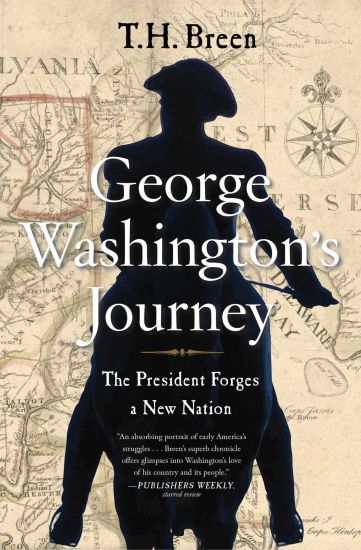
George Washington's Journey: The President Forges a New Nation
An exciting introduction to a George Washington we rarely see, a president who strategically traveled to all thirteen states and transformed American political culture. "Breen's clearly written account of these sojourns give readers a fresh understanding of the president's personality, his public and private lives, and the political and social climate of the time" (Library Journal). During his first term as President, George Washington made arduous journeys to each of the thirteen new states. He understood that Americans did not yet feel part of a nation, and that he alone could bring them to that conviction. For Washington, the stakes were high. In scores of communities, he communicated a powerful and enduring message--that America was now a nation, not a loose collection of states. And the people responded to his invitation in ways that he could never have predicted. In George Washington's Journey, T. H. Breen introduces us to a George Washington we rarely meet. By nature shy and reserved, the brand new president decided that he would visit the new citizens in their own states, that only by showing himself could he make them feel part of a new nation. He displayed himself as victorious general (he wore his regal uniform and rode his white stallion) and as President (grand dinners, military parades, arcs of triumph, and fancy balls). He travelled by open carriage on terrible roads, in awful weather, staying and eating at lousy inns. Breen takes us on Washington's journeys. We see the country through his eyes and listen through his ears. Washington drew on his immense popularity, even hero worship, to send a powerful and lasting message--that America was now a nation, not a collection of states. In George Washington's Journey, we come to understand why the first presisdent is the indispensable Founding Father.
American Insurgents, American Patriots
Before there could be a revolution, there was a rebellion; before patriots, there were insurgents. Challenging and displacing decades of received wisdom, T. H. Breen's strikingly original book explains how ordinary Americans--most of them members of farm families living in small communities--were drawn into a successful insurgency against imperial authority. A few celebrated figures in the Continental Congress do not make for a revolution. It requires tens of thousands of ordinary men and women willing to sacrifice, kill, and be killed. Breen not only gives the history of these ordinary Americans but, drawing upon a wealth of rarely seen documents, restores their primacy to American independence. Mobilizing two years before the Declaration of Independence, American insurgents in all thirteen colonies concluded that resistance to British oppression required organized violence against the state. They channeled popular rage through elected committees of safety and observation, which before 1776 were the heart of American resistance. American Insurgents, American Patriots is the stunning account of the insurgency that led to the nation's founding.
The Marketplace of Revolution

The Marketplace of Revolution

T. H. Breen

Oxford University Press Inc
2005
nidottu
The Marketplace of Revolution offers a boldly innovative interpretation of the mobilization of ordinary Americans on the eve of independence. Breen explores how colonists who came from very different ethnic and religious backgrounds managed to overcome difference and create a common cause capable of galvanizing resistance. In a richly interdisciplinary narrative that weaves insights into a changing material culture with analysis of popular political protests, Breen shows how virtual strangers managed to communicate a sense of trust that effectively united men and women long before they had established a nation of their own. The Marketplace of Revolution argues that the colonists' shared experience as consumers in a new imperial economy afforded them the cultural resources that they needed to develop a radical strategy of political protest--the consumer boycott. Never before had a mass political movement organized itself around disruption of the marketplace. As Breen demonstrates, often through anecdotes about obscure Americans, communal rituals of shared sacrifice provided an effective means to educate and energize a dispersed populace. The boycott movement--the signature of American resistance--invited colonists traditionally excluded from formal political processes to voice their opinions about liberty and rights within a revolutionary marketplace, an open, raucous public forum that defined itself around subscription lists passed door-to-door, voluntary associations, street protests, destruction of imported British goods, and incendiary newspaper exchanges. Within these exchanges was born a new form of politics in which ordinary man and women--precisely the people most often overlooked in traditional accounts of revolution--experienced an exhilarating surge of empowerment. Breen recreates an "empire of goods" that transformed everyday life during the mid-eighteenth century. Imported manufactured items flooded into the homes of colonists from New Hampshire to Georgia. The Marketplace of Revolution explains how at a moment of political crisis Americans gave political meaning to the pursuit of happiness and learned how to make goods speak to power.
Myne Owne Ground

Myne Owne Ground

T. H. Breen; Stephen Innes

Oxford University Press Inc
2004
nidottu
Ever since its publication twenty-five years ago, "Myne Owne Ground" has challenged readers to rethink much of what is taken for granted about American race relations. During the earliest decades of Virginia history, some men and women who arrived in the New World as slaves achieved freedom and formed a stable community on the Eastern shore. Holding their own with white neighbors for much of the 17th century, these free blacks purchased freedom for family members, amassed property, established plantations, and acquired laborers. T. H. Breen and Stephen Innes reconstruct a community in which ownership of property was as significant as skin color in structuring social relations. Why this model of social interaction in race relations did not survive makes this a critical and urgent work of history. In a new foreword, Breen and Innes reflect on the origins of this book, setting it into the context of Atlantic and particularly African history.
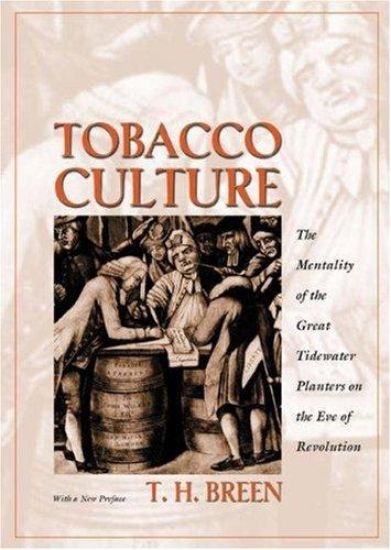
Tobacco Culture

Tobacco Culture

T. H. Breen

Princeton University Press
2001
pokkari
The great Tidewater planters of mid-eighteenth-century Virginia were fathers of the American Revolution. Perhaps first and foremost, they were also anxious tobacco farmers, harried by a demanding planting cycle, trans-Atlantic shipping risks, and their uneasy relations with English agents. George Washington, Thomas Jefferson, and their contemporaries lived in a world that was dominated by questions of debt from across an ocean but also one that stressed personal autonomy. T. H. Breen's study of this tobacco culture focuses on how elite planters gave meaning to existence. He examines the value-laden relationships--found in both the fields and marketplaces--that led from tobacco to politics, from agrarian experience to political protest, and finally to a break with the political and economic system that they believed threatened both personal independence and honor.
Imagining the Past

Imagining the Past

T. H. Breen

University of Georgia Press
1996
pokkari
How we make history—and what we then make of it—is engagingly dramatized in T. H. Breen's portrait of a 350-year-old American community faced with the costs of its “progress.” In the particulars of one town's struggle to check development and save its natural environment, Breen shows how our sense of history reflects our ever-changing self-perceptions and hopes for the future. Breen first went to East Hampton, the celebrated Long Island resort town, to write about the Mulford Farmstead, a picturesque saltbox dating from the 1680s. Through his research, he came across a fascinating cast of local characters, past and present, who contributed to, invented, and reinvented the town's history. Breen's work also drew him into contemporary local affairs: factionalism among residents, zoning disputes, and debates over resource management. Driving these heated issues, Breen found, were some dearly held notions about a harmonious, agrarian past that conflicted with what he had come to know about the divisiveness and opportunism of East Hampton's early days. Imagining the Past is about the interplay between some of the East Hampton histories Breen encountered: the “official” histories of many generations, the myths and oral traditions, and the curious stories that Breen, as an outsider, discerned in the town's rich holdings of artifacts and documents. With a warm yet wry regard for human nature, Breen obliges us to confront our pasts in all the
Puritans and Adventurers

Puritans and Adventurers

T. H. Breen

Oxford University Press Inc
1982
nidottu
This collection of essays is concerned with two main issues: first, the way in which the local origins of English colonists influenced their attitudes and adaptation to North America; and second, the contrast between the settlements of Massachusetts and Virginia.