Kirjojen hintavertailu – 12 859 827 kirjaa ja 27 kauppaa

Kirjailija

T. Thomas Fortune

Kirjat ja teokset yhdessä paikassa: 6 kirjaa, julkaisuja vuosilta 2007–2022, suosituimpiin kuuluu T. Thomas Fortune, the Afro-American Agitator. Vertaile teosten hintoja ja tarkista saatavuus suomalaisista kirjakaupoista.

Nimi esiintyy myös muodoissa: T Thomas Fortune

6 kirjaa

Kirjojen julkaisuvuodet: 2007–2022.

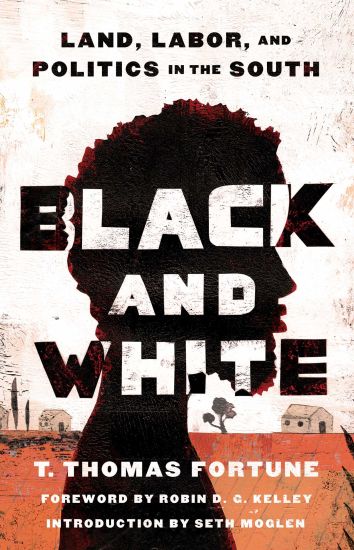
Black and White

Black and White

T. Thomas Fortune; Robin D. G. Kelley

SIMON SCHUSTER
2022
pokkari
Featuring a new foreword by Robin D. G. Kelley, this updated edition of the classic exploration of the economic inequality that fuels systematic racism, from one of the leading Black public intellectuals of the 19th century, is as timely and radical today as it was when it was first published.“The preeminent Black journalist of his age” (Henry Louis Gates, Jr., author of The Black Church) and an early agitator for civil rights, T. Thomas Fortune astutely and compellingly analyzes the relationship between capitalism and racism in the United States. He reveals that the country’s racial hierarchy has been part of our national fabric since the first European set foot here and is rooted in a much larger system of economic exploitation. He argues that in order for the United States to realize its founding ideals and end racial discrimination, this system must be dismantled, reparations made, and labor fairly remunerated. Fortune’s passionate analysis and radical vision of the United States will force you to rethink what America could have been if his arguments had been heeded in the 1880s and what must be done for us to move forward as a unified nation.

T. Thomas Fortune's “After War Times”

T. Thomas Fortune's “After War Times”

T. Thomas Fortune; Tameka Bradley Hobbs

The University of Alabama Press
2014
sidottu
T. Thomas Fortune was a leading African American publisher, editor, and journalist of the late nineteenth and early twentieth centuries, who was born a slave in antebellum Florida lived through emancipation, and rose to become a literary lion of his generation. In T. Thomas Fortune's “After War Times,” Daniel R. Weinfeld brings together a series of twenty-three autobiographical articles Fortune wrote about his formative childhood during Reconstruction and subsequent move to Washington, DC. By 1890 Fortune had founded a predecessor organization to the National Association for the Advancement of Colored People, known as the National Afro-American League, but his voice found its most powerful expression and influence in poetry, prose, and journalism. It was as a journalist that Fortune stirred national controversy by issuing a passionate appeal to African American southerners: “I propose to start a crusade,” he proclaimed in June 1900, “to have the negroes of the South leave that section and to come north or go elsewhere. It is useless to remain in the South and cry Peace! Peace! When there is no peace.” The movement he helped propel became known as “the Great Migration.” By focusing on Thomas’s ruminations about his disillusion with post–Civil War Florida, Weinfeld highlights the sources of Fortune’s deep disenchantment with the South, which intensified when the Reconstruction order gave way to Jim Crow–era racial discrimination and violence. Even decades after he left the South, Fortune’s vivid memories of incidents and personalities in his past informed his political opinions and writings. Scholars and readers interested in Southern history in the aftermath of the Civil War, especially the experiences of African Americans, will find much of interest in this vital collection of primary writings.
T. Thomas Fortune, the Afro-American Agitator

T. Thomas Fortune, the Afro-American Agitator

T. Thomas Fortune

University Press of Florida
2008
sidottu
Born into slavery, T. Thomas Fortune was known as the dean of African American journalism by the time of his death in the early twentieth century. The editorship of three prominent black newspapers - the ""New York Globe"", ""Freeman"", and ""Age"" - provided Fortune with a platform to speak against racism and injustice. For nearly five decades his was one of the most powerful voices in the press. Contemporaries such as Ida B. Wells, W. E. B. Du Bois, and Booker T. Washington considered him an equal, if not a superior, in social and political thought. Today's histories often pass over his writings, in part because they are so voluminous and have rarely been reprinted. Shawn Leigh Alexander's anthology will go a long way towards rectifying that situation, demonstrating the breadth of Fortune's contribution to black political thought at a key period in American history.