Kirjojen hintavertailu – 12 859 819 kirjaa ja 27 kauppaa

Kirjailija

Tad Brennan

Kirjat ja teokset yhdessä paikassa: 5 kirjaa, julkaisuja vuosilta 1999–2014, suosituimpiin kuuluu The Stoic Life. Vertaile teosten hintoja ja tarkista saatavuus suomalaisista kirjakaupoista.

5 kirjaa

Kirjojen julkaisuvuodet: 1999–2014.

Simplicius: On Epictetus Handbook 27-53

Simplicius: On Epictetus Handbook 27-53

Charles Brittain; Tad Brennan

Bloomsbury Academic
2014
nidottu
The Enchiridion or Handbook of the first-century AD Stoic Epictetus was used as an ethical treatise both in Christian monasteries and by the sixth-century pagan Neoplatonist Simplicius. Simplicius chose it for beginners, rather than Aristotle's Ethics, because it presupposed no knowledge of logic. We thus get a fascinating chance to see how a pagan Neoplatonist transformed Stoic ideas. The text was relevant to Simplicius because he too, like Epictetus, was teaching beginners how to take the first steps towards eradicating emotion, although he is unlike Epictetus in thinking that they should give up public life rather than acquiesce, if public office is denied them. Simplicius starts from a Platonic definition of the person as rational soul, not body, ignoring Epictetus' further whittling down of himself to just his will or policy decisions. He selects certain topics for special attention in chapters 1, 8, 27 and 31. Things are up to us, despite Fate. Our sufferings are not evil, but providential attempts to turn us from the body. Evil is found only in the human soul. But evil is parasitic (Proclus' term) on good. The gods exist, are provident, and cannot be bought off. With nearly all of this the Stoics would agree, but for quite different reasons, and their own distinctions and definitions are to a large extent ignored. This translation of the Handbook is published in two volumes. This is the second volume, covering chapters 27-53; the first covers chapters 1-26.
Simplicius: On Epictetus Handbook 1-26

Simplicius: On Epictetus Handbook 1-26

Charles Brittain; Tad Brennan

Bloomsbury Academic
2014
nidottu
'[Simplicius'] moral interpretation of Epictetus is preserved in the library of nations, as a classic book, most excellently adapted to direct the will, to purify the heart, and to confirm the understanding, by a just confidence in the nature both of God and man.'Edward Gibbon'This book, written by a "pagan" philosopher, makes the most Christian impression conceivable. The betrayal of all reality through morality is here present in its fullest splendour - pitiful psychology, the philosopher is reduced to a country parson. And Plato is to blame for all of it! He remains Europe's greatest misfortune!'Fredrich Nietzsche Of these two rival reactions the favourable one was most common. Epictetus' Handbook on ethics was used in Christian monasteries, and Simplicius' commentary on it was widely available up to the nineteenth century. The commentary gives us a fascinating chance to see how a pagan Neoplatonist transformed Stoic ideas, adding Neoplatonist accounts of theology, theodicy, providence, free will and the problem of evil. This translation of the Commentary on the Handbook is published in two volumes. This is the first, covering chapters 1-26; the second covers chapters 27-53.
The Stoic Life

The Stoic Life

Tad Brennan

Clarendon Press
2007
nidottu
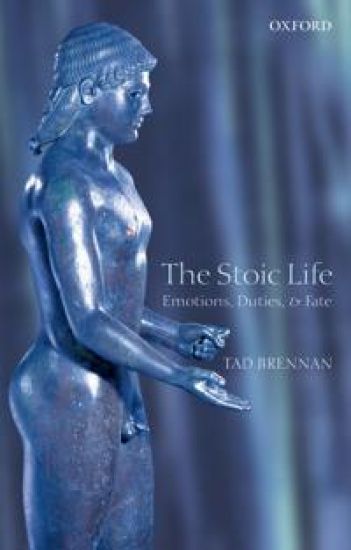
Tad Brennan explains how to live the Stoic life - and why we might want to. Stoicism has been one of the main currents of thought in Western civilization for two thousand years: Brennan offers a fascinating guide through the ethical ideas of the original Stoic philosophers, and shows how valuable these ideas remain today, both intellectually and in practice. He writes in a lively informal style which will bring Stoicism to life for readers who are new to ancient philosophy. The Stoic Life will also be of great interest to philosophers and classicists seeking a full understanding of the intellectual legacy of the Stoics. Brennan starts from scrupulous attention to the evidence (references are provided to all of the standard collections of Stoic texts). He provides translations of the original texts, with extensive annotations that will allow readers to pursue further reading. No knowledge of Greek is required. An introductory section provides context by introducing the reader to the most important figures in the Stoic school, the philosophical climate in which they worked, and a brief summary of the leading tenets of the Stoic system. After this context is established, the book is divided into three sections. The first provides a thorough exploration of the Stoic school's theories of psychology, focusing on their analyses of fear, desire, and other emotions. The second develops the more centrally ethical topics of value, obligation, and right action. The third part explores the Stoic school's views on fate, determinism, and moral responsibility. For anyone interested in the origins of Western ethical thought, who wishes to understand the vast influence that Stoic philosophy has had on philosophy and religion up to our time, this book will be essential reading.
The Stoic Life

The Stoic Life

Tad Brennan

Oxford University Press
2005
sidottu
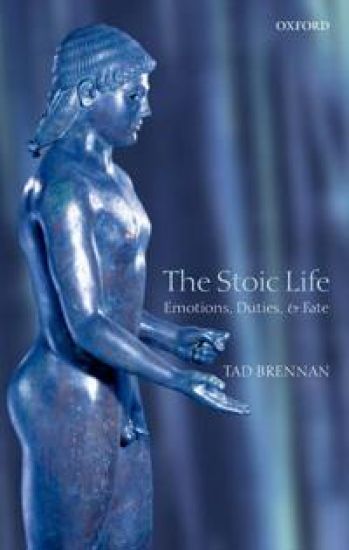
Tad Brennan explains how to live the Stoic life - and why we might want to. Stoicism has been one of the main currents of thought in Western civilization for two thousand years: Brennan offers a fascinating guide through the ethical ideas of the original Stoic philosophers, and shows how valuable these ideas remain today, both intellectually and in practice. He writes in a lively informal style which will bring Stoicism to life for readers who are new to ancient philosophy. The Stoic Life will also be of great interest to philosophers and classicists seeking a full understanding of the intellectual legacy of the Stoics. Brennan starts from scrupulous attention to the evidence (references are provided to all of the standard collections of Stoic texts). He provides translations of the original texts, with extensive annotations that will allow readers to pursue further reading. No knowledge of Greek is required. An introductory section provides context by introducing the reader to the most important figures in the Stoic school, the philosophical climate in which they worked, and a brief summary of the leading tenets of the Stoic system. After this context is established, the book is divided into three sections. The first provides a thorough exploration of the Stoic school's theories of psychology, focusing on their analyses of fear, desire, and other emotions. The second develops the more centrally ethical topics of value, obligation, and right action. The third part explores the Stoic school's views on fate, determinism, and moral responsibility. For anyone interested in the origins of Western ethical thought, who wishes to understand the vast influence that Stoic philosophy has had on philosophy and religion up to our time, this book will be essential reading.