Kirjojen hintavertailu – 12 859 819 kirjaa ja 27 kauppaa

Kirjailija

Tad M. Schmaltz

Kirjat ja teokset yhdessä paikassa: 9 kirjaa, julkaisuja vuosilta 2002–2024, suosituimpiin kuuluu Descartes on Causation. Vertaile teosten hintoja ja tarkista saatavuus suomalaisista kirjakaupoista.

9 kirjaa

Kirjojen julkaisuvuodet: 2002–2024.

Historical Dictionary of Descartes and Cartesian Philosophy

Historical Dictionary of Descartes and Cartesian Philosophy

Roger Ariew; Douglas M. Jesseph; Tad M. Schmaltz; Theo Verbeek

BLOOMSBURY PUBLISHING PLC
2024
sidottu
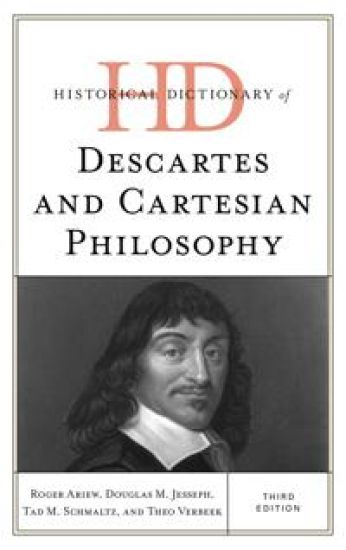
The Historical Dictionary of Descartes and Cartesian Philosophy, Third Edition, centers on Descartes’ philosophy (considered broadly to include his science and mathematics) in the context of 17th-century thought, with attention being paid to its reception. This is done through a chronology, an introduction, and an extensive bibliography. The dictionary section has more than 400 cross-referenced entries on various concepts in Descartes’ philosophy, science, and mathematics, as well as biographical entries about the intellectual setting for Descartes’ philosophy and its reception, both with Cartesians and anti-Cartesians. This book is an excellent resource for students, researchers, and anyone wanting to know more about Descartes philosophy.
The Metaphysics of the Material World

The Metaphysics of the Material World

Tad M. Schmaltz

Oxford University Press Inc
2020
sidottu
In The Metaphysics of the Material World, Tad M. Schmaltz traces a particular development of the metaphysics of the material world in early modern thought. The route Schmaltz follows derives from a critique of Spinoza in the work of Pierre Bayle. Bayle charged in particular that Spinoza's monistic conception of the material world founders on the account of extension and its "modes" and parts that he inherited from Descartes, and that Descartes in turn inherited from late scholasticism, and ultimately from Aristotle. After an initial discussion of Bayle's critique of Spinoza and its relation to Aristotle's distinction between substance and accident, this study starts with the original re-conceptualization of Aristotle's metaphysics of the material world that we find in the work of the early modern scholastic Suárez. What receives particular attention is Suárez's introduction of the "modal distinction" and his distinctive account of the Aristotelian accident of "continuous quantity." This examination of Suárez is followed by a treatment of the connections of his particular version of the scholastic conception of the material world to the very different conception that Descartes offered. Especially important is Descartes's view of the relation of extended substance both to its modes and to the parts that compose it. Finally, there is a consideration of what these developments in Suárez and Descartes have to teach us about Spinoza's monistic conception of the material world. Of special concern here is to draw on this historical narrative to provide a re-assessment of Bayle's critique of Spinoza.
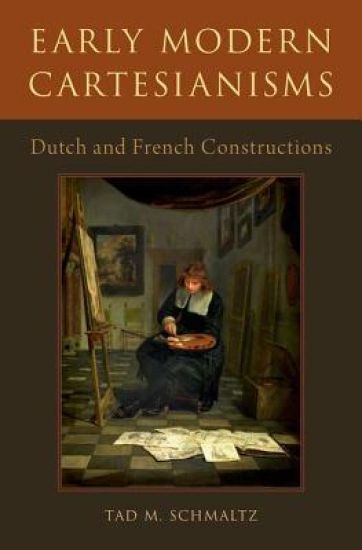
Early Modern Cartesianisms

Early Modern Cartesianisms

Tad M. Schmaltz

Oxford University Press Inc
2016
sidottu
There is a general sense that the philosophy of Descartes was a dominant force in early modern thought. Since the work in the nineteenth century of French historians of Cartesian philosophy, however, there has been no fully contextualized comparative examination of the various receptions of Descartes in different portions of early modern Europe. This study addresses the need for a more current understanding of these receptions by considering the different constructions of Descartes's thought that emerged in the Calvinist United Provinces (Netherlands) and Catholic France, the two main centers for early modern Cartesianism, during the period dating from the last decades of his life to the century or so following his death in 1650. It turns out that we must speak not of a single early modern Cartesianism rigidly defined in terms of Descartes's own authorial intentions, but rather of a loose collection of early modern Cartesianisms that involve a range of different positions on various sets of issues. Though more or less rooted in Descartes's somewhat open-ended views, these Cartesianisms evolved in different ways over time in response to different intellectual and social pressures. Chapters of this study are devoted to: the early modern Catholic and Calvinist condemnations of Descartes and the incompatible Cartesian responses to these; conflicting attitudes among early modern Cartesians toward ancient thought and modernity; competing early modern attempts to combine Descartes's views with those of Augustine; the different occasionalist accounts of causation within early modern Cartesianism; and the impact of various forms of early modern Cartesianism on both Dutch medicine and French physics.
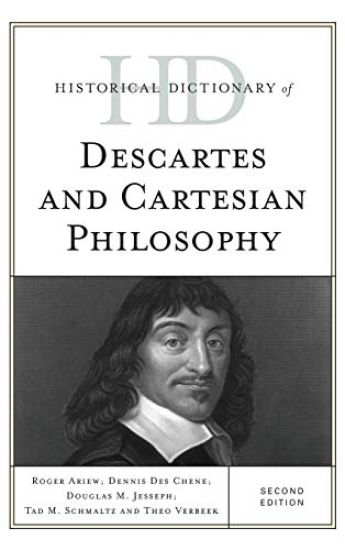
Historical Dictionary of Descartes and Cartesian Philosophy

Historical Dictionary of Descartes and Cartesian Philosophy

Roger Ariew; Dennis Des Chene; Douglas M. Jesseph; Tad M. Schmaltz; Theo Verbeek

Rowman Littlefield
2015
sidottu
Descartes is perhaps most closely associated with the title, “the Father of Modern Philosophy.” Generations of students have been introduced to the study of philosophy through a consideration of his Meditations on First Philosophy. His contributions to natural science is shown by the fact that his physics, as promulgated by the Cartesians, played a central role in the debates after his death over Isaac Newton’s theory of gravitation. Descartes also made major contributions to the field of analytic geometry; we still speak today of “Cartesian coordinates” and the “Cartesian product.” This second edition of Historical Dictionary of Descartes and Cartesian Philosophy covers the history through a chronology, an introductory essay, and an extensive bibliography. The dictionary section has over 300 cross-referenced entries on various concepts in Descartes’ philosophy, science, and mathematics, as well as biographical entries about the intellectual setting for Descartes’ philosophy and its reception, both with Cartesians and anti-Cartesians. This book is an excellent access point for students, researchers, and anyone wanting to know more about Descartes.
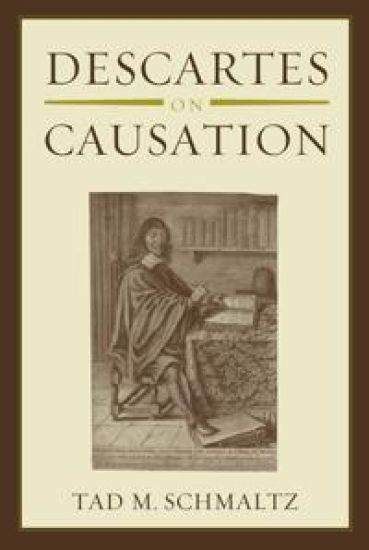
Descartes on Causation

Descartes on Causation

Tad M. Schmaltz

Oxford University Press Inc
2013
nidottu
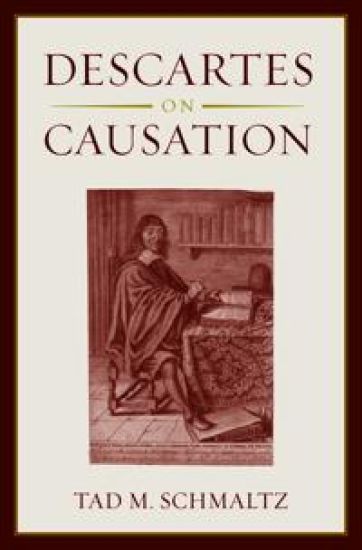
This book is a systematic study of Descartes' theory of causation and its relation to the medieval and early modern scholastic philosophy that provides its proper historical context. The argument presented here is that even though Descartes offered a dualistic ontology that differs radically from what we find in scholasticism, his views on causation were profoundly influenced by scholastic thought on this issue. This influence is evident not only in his affirmation in the Meditations of the abstract scholastic axioms that a cause must contain the reality of its effects and that conservation does not differ in reality from creation, but also in the details of the accounts of body-body interaction in his physics, of mind-body interaction in his psychology, and of the causation that he took to be involved in free human action. In contrast to those who have read Descartes as endorsing the "occasionalist" conclusion that God is the only real cause, a central thesis of this study is that he accepted what in the context of scholastic debates regarding causation is the antipode of occasionalism, namely, the view that creatures rather than God are the causal source of natural change. What emerges from the defense of this interpretation of Descartes is a new understanding of his contribution to modern thought on causation.
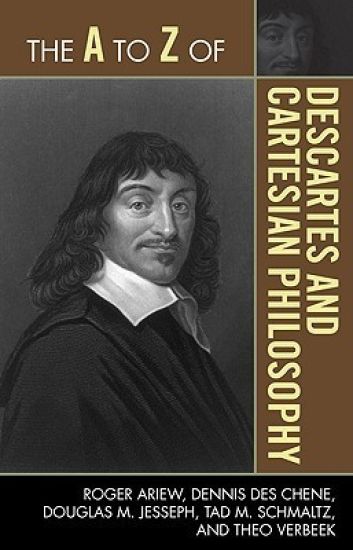
The A to Z of Descartes and Cartesian Philosophy

The A to Z of Descartes and Cartesian Philosophy

Roger Ariew; Dennis Des Chene; Douglas M. Jesseph; Tad M. Schmaltz; Theo Verbeek

Scarecrow Press
2010
nidottu
The A to Z of Descartes and Cartesian Philosophy includes many entries on Descartes's writings, concepts, and findings. Since it is historical, there are other entries on those who supported him, those who criticized him, those who corrected him, and those who together formed one of the major movements in philosophy, Cartesianism. To better understand the period, the authors drew up a brief chronology, and to see how Descartes and Cartesianism fit into the general picture, they have written an introduction and a biography. Since everything cannot be summed up in one volume, a bibliography directs readers to numerous other sources on issues of particular interest.
Descartes on Causation

Descartes on Causation

Tad M. Schmaltz

Oxford University Press Inc
2008
sidottu
This book is a systematic study of Descartes' theory of causation and its relation to the medieval and early modern scholastic philosophy that provides its proper historical context. The argument presented here is that even though Descartes offered a dualistic ontology that differs radically from what we find in scholasticism, his views on causation were profoundly influenced by scholastic thought on this issue. This influence is evident not only in his affirmation in the Meditations of the abstract scholastic axioms that a cause must contain the reality of its effects and that conservation does not differ in reality from creation, but also in the details of the accounts of body-body interaction in his physics, of mind-body interaction in his psychology, and of the causation that he took to be involved in free human action. In contrast to those who have read Descartes as endorsing the "occasionalist" conclusion that God is the only real cause, a central thesis of this study is that he accepted what in the context of scholastic debates regarding causation is the antipode of occasionalism, namely, the view that creatures rather than God are the causal source of natural change. What emerges from the defense of this interpretation of Descartes is a new understanding of his contribution to modern thought on causation.
Radical Cartesianism

Radical Cartesianism

Tad M. Schmaltz

Cambridge University Press
2007
pokkari
This is a book-length study of two of Descartes's most innovative successors, Robert Desgabets and Pierre-Sylvain Regis, and of their highly original contributions to Cartesianism. The focus of the book is an analysis of radical doctrines in the work of these thinkers that derive from arguments in Descartes: on the creation of eternal truths, on the intentionality of ideas, and on the soul-body union. As well as relating their work to that of fellow Cartesians such as Malebranche and Arnauld, the book also establishes the important though neglected role played by Desgabets and Regis in the theologically and politically charged reception of Descartes in early modern France. This is a major contribution to the history of Cartesianism that will be of special interest to historians of early modern philosophy and historians of ideas.
Radical Cartesianism

Radical Cartesianism

Tad M. Schmaltz

Cambridge University Press
2002
sidottu
This is a book-length study of two of Descartes's most innovative successors, Robert Desgabets and Pierre-Sylvain Regis, and of their highly original contributions to Cartesianism. The focus of the book is an analysis of radical doctrines in the work of these thinkers that derive from arguments in Descartes: on the creation of eternal truths, on the intentionality of ideas, and on the soul-body union. As well as relating their work to that of fellow Cartesians such as Malebranche and Arnauld, the book also establishes the important though neglected role played by Desgabets and Regis in the theologically and politically charged reception of Descartes in early modern France. This is a major contribution to the history of Cartesianism that will be of special interest to historians of early modern philosophy and historians of ideas.