Kirjojen hintavertailu – 12 903 735 kirjaa ja 27 kauppaa

Kirjailija

Tai Wei Lim

Kirjat ja teokset yhdessä paikassa: 32 kirjaa, julkaisuja vuosilta 2009–2026, suosituimpiin kuuluu Coal Mining Communities and Gentrification in Japan. Vertaile teosten hintoja ja tarkista saatavuus suomalaisista kirjakaupoista.

32 kirjaa

Kirjojen julkaisuvuodet: 2009–2026.

Cultural Heritage and Peripheral Spaces in Singapore

Cultural Heritage and Peripheral Spaces in Singapore

Tai Wei Lim

Springer Verlag, Singapore
2017
sidottu
This book documents through first-hand experience and academic research the historical, cultural and economic interactions affecting land use in Singapore. Offering a unique study of nostalgia in Singaporean heritage, it discusses the subjective nostalgic meanings and interpretations that users of peripheral, heritage and green spaces in Singapore create and maintain, through a combination of informal observations and interactions combined with research into local history and heritage. It addresses the subjective meaning-making processes of individuals within the larger theoretical frameworks that structure understandings of changing land use and economical changes which impact on contemporary cityscapes, centered around peripheral and de-privileged areas of Singapore’s economic development.
Merlion And Mt. Fuji, The: 50 Years Of Singapore-japan Relations

Merlion And Mt. Fuji, The: 50 Years Of Singapore-japan Relations

Tai Wei Lim

World Scientific Publishing Co Pte Ltd
2017
nidottu
Anime, Manga, Sushi, Teriyaki, J-pop, Harajuku fashion ... these are just some of the cultural exports from Japan that the rest of the world have embraced and Singapore is one of Japan's biggest fans. Singaporeans have benefited not just by being a consumer of the many technological advances from Japan (Mitsubishi, Toyota, Honda, Panasonic, and Sony to name a few) but also shared and learnt through economic, political, and intellectual exchanges over the past 50 years since the start of the bilateral ties between these two nations. In 1868, Japan was the first East Asian country that underwent rapid modernization and its development was shared with Singapore from the 1970s onwards as the Japanese growth model was selectively emulated by the Four Asian Tigers (Hong Kong, Singapore, South Korea, and Taiwan). Currently, as the most advanced economies in Southeast and Northeast Asia respectively, Singapore and Japan will continue to be demonstrative case studies of economic development in the region. There are similarities too between these two countries: an aging population, changing geopolitical realities, mature economies, and environmental challenges. The Merlion and Mt. Fuji is not just a historical account of the bilateral cooperation but also includes honest narratives on what it is like being a Singaporean student on exchange in Japan, an anime and manga fan outside of Japan, and some omotenashi appreciation.
Merlion And Mt. Fuji, The: 50 Years Of Singapore-japan Relations

Merlion And Mt. Fuji, The: 50 Years Of Singapore-japan Relations

Tai Wei Lim

World Scientific Publishing Co Pte Ltd
2017
sidottu
Anime, Manga, Sushi, Teriyaki, J-pop, Harajuku fashion ... these are just some of the cultural exports from Japan that the rest of the world have embraced and Singapore is one of Japan's biggest fans. Singaporeans have benefited not just by being a consumer of the many technological advances from Japan (Mitsubishi, Toyota, Honda, Panasonic, and Sony to name a few) but also shared and learnt through economic, political, and intellectual exchanges over the past 50 years since the start of the bilateral ties between these two nations. In 1868, Japan was the first East Asian country that underwent rapid modernization and its development was shared with Singapore from the 1970s onwards as the Japanese growth model was selectively emulated by the Four Asian Tigers (Hong Kong, Singapore, South Korea, and Taiwan). Currently, as the most advanced economies in Southeast and Northeast Asia respectively, Singapore and Japan will continue to be demonstrative case studies of economic development in the region. There are similarities too between these two countries: an aging population, changing geopolitical realities, mature economies, and environmental challenges. The Merlion and Mt. Fuji is not just a historical account of the bilateral cooperation but also includes honest narratives on what it is like being a Singaporean student on exchange in Japan, an anime and manga fan outside of Japan, and some omotenashi appreciation.
Energy Transitions in Japan and China

Energy Transitions in Japan and China

Tai Wei Lim

Springer Verlag, Singapore
2016
sidottu
This volume focuses on the topic of energy transitions in the coal mining industries of China and Japan by adopting a Sino-Japanese comparative approach in area studies to examine the experiences between the two major East Asian economies. In China, rapid industrialization led to dramatic growth in energy demand and much of this energy demand was fueled by affordable coal energy. With growing social concerns about the environment and an increasingly vocal middle class in contemporary China, the authorities and state-owned enterprises are studying the use of coal fuels for its future development. In Japan, coal was also an affordable main source of energy for Japan’s early post-war heavy industrialization until it was gradually replaced by oil in the 1960s. The oil shocks of the 1970s compelled Japan to look for cleaner and cheaper fuels, including nuclear power. In these energy transitions from coal to oil and then onto non-fossil fuels, the story of coal power in both countries ishighlighted in this publication as a comparative study. This volume is a crucial contribution to the discussion of China's energy reforms, and required reading for scholars of climate change and society.
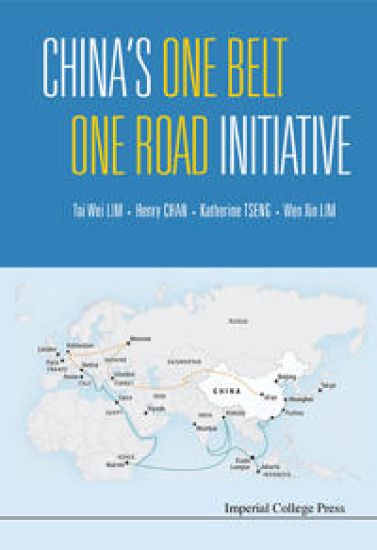
China's One Belt One Road Initiative

China's One Belt One Road Initiative

Tai Wei Lim; Wen Xin Lim; Henry Hing Lee Chan; Katherine Hui-yi Tseng

Imperial College Press
2016
sidottu
Chinese President Xi Jinping launched the Silk Road Economic Belt component of the One Belt One Road (OBOR) initiative at Kazakhstan in 2013. OBOR is a development strategy and framework that focuses on connectivity and cooperation among countries primarily in Eurasia. It consists of two main components, the land-based 'Silk Road Economic Belt' (SREB) and ocean-going 'Maritime Silk Road' (MSR). This book studies the equilibrium or balance between overland and maritime trade routes of OBOR. This book has two major sections. The interpretive section examines contemporary media narratives related to the OBOR initiative and how contemporary commentators appropriate narratives about historical events related to the maritime Silk Road to interpret current policy agendas and legitimize diplomatic or economic exchanges. In terms of institutional studies, the chapters related to Asian Infrastructure Investment Bank (AIIB) will look at the issues facing the Bank in its quest in forming a new world platform for multilateral development financing. The other section, the empirical case study of the publication highlights the fact that Euro-China High Speed Rail (HSR) and Central Asia-China HSR are not viable at the moment as passenger volume is not sufficient to justify the HSR line. This section examines the overland route of the OBOR and looks at recent Chinese HSR history and conventional sub-high speed rail technology development, and identifies technical & economic criteria determining the appropriate technology for a certain line. The chapter in this section will use the developed criteria to analyze the various rail linkage projects currently under study in the OBOR framework, highlight the economic, bureaucratic and geo-political challenges that these projects likely face and lay down conditions that will determine the outcome of these projects.
Tycoons In Hong Kong: Between Occupy Central And Beijing

Tycoons In Hong Kong: Between Occupy Central And Beijing

Tai Wei Lim; Xiaojuan Ping

Imperial College Press
2016
sidottu
This book seeks to survey the role of tycoons in Hong Kong's socio-political and socioeconomic developments. Summoned to Beijing just before the onset of the territory's longest social movement, it highlights the tycoons' symbolic intermediary role between Beijing's elite and the people of Hong Kong. Also investigated is the unwritten social contract between Beijing's elite and Hong Kong society — that the tycoons will be rewarded economically or left alone to conduct their business activities if they remain compatible with Beijing's policy directions (or at least remain neutral in contentious issues) and facilitate policy implementation if necessary. Tycoons in Hong Kong has three research objectives: first, in understanding the roles that tycoons play in Hong Kong, it is necessary to understand Beijing's crafted political and social spaces for Hong Kong's economic elites to exert their influence. Second, it examines the integrated roles that the tycoons play as consultative members of the Chinese one-party socio-political structures. Third, it presents the humanized side of the tycoons, highlights the positive contributions that tycoons make to Hong Kong and mainland China and deconstructs the idea of a hegemonic tycoon class by emphasizing their heterogeneity in the biographical entries section of the publication.
Energy, Trade and Finance in Asia

Energy, Trade and Finance in Asia

Justin Dargin; Tai Wei Lim

Routledge
2016
nidottu
This study offers a vital reappraisal of the trade relationship between north-east Asia and the Gulf. Writing from a non-western standpoint, Dargin and Lim make a compelling case for how these regions became economically integrated in the wake of the 1973 oil crisis.
Contextualizing Occupy Central In Contemporary Hong Kong

Contextualizing Occupy Central In Contemporary Hong Kong

Tai Wei Lim; Xiaojuan Ping

Imperial College Press
2015
sidottu
In the past 18 years, after the handover of the former British colony Hong Kong to China, Beijing and the Special Administration Region (SAR) have been trying to work out a mutually beneficial relationship based on pragmatism and a focus on economic prosperity. The Occupy Central with Love and Peace in Hong Kong (September to December 2014) movement represents a significant event in Hong Kong's history of public advocacy for change by pro-democracy residents. It is viewed differently by various groups within Hong Kong, including eliciting counter-reactions from an opposing movement. To contextualize the current discussions, the authors have identified three phases of the movement; and included a historical anatomy of Hong Kong's quest to reach an equilibrium between status quo and changes advocated through its social movements. Though the account does not pretend to be comprehensive, it distils the most significant events in each of the three stages of the movement. Centrist, moderate, and conservative views on Occupy Central, as well as the liberal and progressive positions on the movement are discussed and analyzed in the book.
Fired Clay in Four Porcelain Clusters

Fired Clay in Four Porcelain Clusters

Tai Wei Lim

University Press of America
2014
sidottu
Fired Clay in Four Porcelain Clusters examines how energy use in the ceramics-making industry has evolved as a result of technological advancements and changing social norms and ideas in environmental conservation. Three main research themes are highlighted. First, the book examines how the evolving use of energy fuels has impacted the developmental history of the ceramics-making industry, especially with regard to productive output. The second theme focuses on energy use by networks of specialists and technicians in ceramics-making artistic clusters and how ceramicist communities in the world organize themselves institutionally to maximize resource-sharing. Third, at a cognitive level, the volume studies changes in production and design, environmental thinking, energy use, and aesthetic trends among ceramicists and consumers. The four cities or towns of Arita, Hong Kong, Jingdezhen, and Yingge are the settings for this research.
Energy, Trade and Finance in Asia

Energy, Trade and Finance in Asia

Tai Wei Lim

Pickering Chatto (Publishers) Ltd
2011
sidottu
This study offers a vital reappraisal of the trade relationship between north-east Asia and the Gulf. Writing from a non-western standpoint, Dargin and Lim make a compelling case for how these regions became economically integrated in the wake of the 1973 oil crisis.
Oil And Gas In China: The New Energy Superpower's Relations With Its Region
This book looks at the emergence of China as a major importer and consumer of energy as well as examines contemporary issues within the Chinese oil industry. As China benefits from globalization, what is the impact on China's relations with countries in its neighbouring region when it seeks more oil importation from overseas sources? China's industrial growth in the Pan Pearl River Delta Region is outstripping its oil supply and China is turning to the ASEAN countries connected to its Pearl River tributaries to form a Pan region that acts both as a conduit for oil supply from other sources as well as the supply source itself. Geopolitics in the region represents one of the main obstacles standing in China's way for a regional agreement on maritime resources. Would the pressure on China for more energy translate into tension and conflicts? How will Japan view or compete with China's initiatives in ASEAN given that Japan is still the region's largest investor. After China's landmark energy crisis in 2004, how will China be able to strike a balance between economic growth and energy consumption? With the growing importance of post-industrial debate and environmentalism, what are the implications of post-industrialism for China? For future energy use, how will China utilize the options of alternative energy, energy conservation and reinvigoration of old energy resources to meet its future oil needs?
Oil In China: From Self-reliance To Internationalization

Oil In China: From Self-reliance To Internationalization

Tai Wei Lim

World Scientific Publishing Co Pte Ltd
2009
sidottu
This book examines the political and conceptual metamorphosis of China's oil industry from self-reliance to internationalization. Through the empirical case study of Daqing, the premiere oilfield of the People's Republic of China (PRC) for most of the postwar period and a symbol of industrialization as well as self-reliance, key historical developmental concepts and events are analyzed. Japan's role in stimulating the development of the China's oil industry will also be highlighted as the Japanese government and its business sectors emerged as a supplier of technology and equipment to the Chinese oil industry as well as China's first major oil customer in the early internationalization phase of the PRC's oil industry.