Kirjojen hintavertailu – 12 859 827 kirjaa ja 27 kauppaa

Kirjailija

Takashi Inoguchi

Kirjat ja teokset yhdessä paikassa: 20 kirjaa, julkaisuja vuosilta 2006–2024, suosituimpiin kuuluu Typology of Asian Societies. Vertaile teosten hintoja ja tarkista saatavuus suomalaisista kirjakaupoista.

20 kirjaa

Kirjojen julkaisuvuodet: 2006–2024.

Digitized Statecraft of Four Asian Regionalisms

Digitized Statecraft of Four Asian Regionalisms

Takashi Inoguchi; Lien Thi Quynh Le

SPRINGER VERLAG, SINGAPORE
2024
nidottu
This book attempts to develop a novel way of conceptualizing regionalism under hyper-globalization. Until recently, regionalism has been often framed in terms of economic interdependence and security connectivity in which sovereign states are the key navigators within the liberal world order. Under hyper-globalization in the third millennium, hyper-globalization forces us to capture global politics at two more levels of measurement at the state level and both there below and there above. First, how 29 Asian sovereign states join multilateral treaty participation to develop their global quasi-legislative types and how citizens' satisfaction with quality of life in 29 civil societies shapes their societal types. Second, relating these two features above and below sovereign states, the book attempts to measure the features and speculate on the futures of four Asian regionalisms (Central Asia, South Asia, Southeast Asia and East Asia) and their prospect of the demographically largest continent called Asia in the twenty-first century. Regionalism is measured by the proclivity of 600 multilateral treaty participation in terms of speed (cautious versus agile), angle (global commons versus individual interests) and strategy (aspirational bonding versus mutual binding), whereas quality of life is measured by citizens' satisfaction with 16 domains, aspects and styles of individual daily life in terms of survival (or materialism), social relations (post-materialism) and public policy preponderance. The book opens an innovative vista to better understand tumultuous global politics. This ambitious volume leverages original survey data on citizen satisfaction and country-level data on treaty accessions to characterize the trajectories of countries in four regions of Asia as they adapt -- or fail to adapt -- to the challenges of globalization in the 21st century and beyond. Readers will learn much about politics from the basic level of the individual citizen to the most comprehensive level of the global system - and about the interactions of politics at all levels.-- Andrew J. Nathan, Class of 1919 Professor of Political Science, Columbia University A wonderful attempt to link a country’s domestic development and its adaptation to the global politics. It is truly eye-opening and the findings are likely to significantly shape our understanding of life and global politics.-- Zhengxu Wang, Ph. D. Distinguished Professor, Department of Political Science, Fudan University
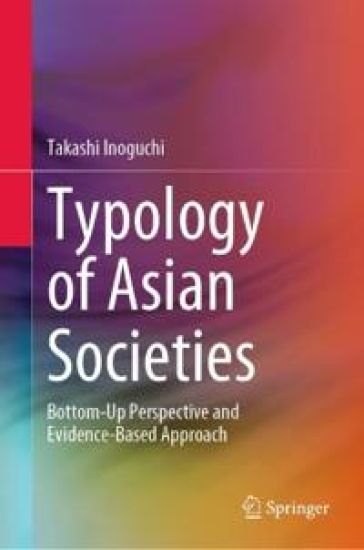
Typology of Asian Societies

Typology of Asian Societies

Takashi Inoguchi

SPRINGER VERLAG, SINGAPORE
2023
nidottu
This book is about generating types of societies by the degree of individuals’ satisfaction with life domains, aspects, and styles via factor analysis. It adopts an evidence-based approach in typologizing and a bottom-up rather than a top-down perspective. Thus, the book’s position is against Hegel (freedom for one person), Marx (the Asiatic mode of production), Weber (Protestant ethics and the spirit of capitalism), Wittfogel (Asiatic autocracy), and Rostow (Western-led modernization). These classical and modern authors tend to see Asian societies with somewhat fixated eyes and categorize Asian societies in a top-down manner. When random-sampled respondents are questioned about their satisfaction with daily life in terms of life domains, aspects, and styles, public policy and institutions as well as survival and social relations are inevitably touched upon—the latter two being the key dimensions common to the World Values Survey and other cultural surveys. This book proposesa new mode of typologizing societies, Asian or non-Asian, not immediately familiar to human geographers, cultural anthropologists, or sociologists, but revealing many complex unknowns with the easy-to-learn typologizing method.
Digitized Statecraft of Four Asian Regionalisms

Digitized Statecraft of Four Asian Regionalisms

Takashi Inoguchi; Lien Thi Quynh Le

SPRINGER VERLAG, SINGAPORE
2023
sidottu
This book attempts to develop a novel way of conceptualizing regionalism under hyper-globalization. Until recently, regionalism has been often framed in terms of economic interdependence and security connectivity in which sovereign states are the key navigators within the liberal world order. Under hyper-globalization in the third millennium, hyper-globalization forces us to capture global politics at two more levels of measurement at the state level and both there below and there above. First, how 29 Asian sovereign states join multilateral treaty participation to develop their global quasi-legislative types and how citizens' satisfaction with quality of life in 29 civil societies shapes their societal types. Second, relating these two features above and below sovereign states, the book attempts to measure the features and speculate on the futures of four Asian regionalisms (Central Asia, South Asia, Southeast Asia and East Asia) and their prospect of the demographically largest continent called Asia in the twenty-first century. Regionalism is measured by the proclivity of 600 multilateral treaty participation in terms of speed (cautious versus agile), angle (global commons versus individual interests) and strategy (aspirational bonding versus mutual binding), whereas quality of life is measured by citizens' satisfaction with 16 domains, aspects and styles of individual daily life in terms of survival (or materialism), social relations (post-materialism) and public policy preponderance. The book opens an innovative vista to better understand tumultuous global politics. This ambitious volume leverages original survey data on citizen satisfaction and country-level data on treaty accessions to characterize the trajectories of countries in four regions of Asia as they adapt -- or fail to adapt -- to the challenges of globalization in the 21st century and beyond. Readers will learn much about politics from the basic level of the individual citizen to the most comprehensive level of the global system - and about the interactions of politics at all levels.-- Andrew J. Nathan, Class of 1919 Professor of Political Science, Columbia University A wonderful attempt to link a country’s domestic development and its adaptation to the global politics. It is truly eye-opening and the findings are likely to significantly shape our understanding of life and global politics.-- Zhengxu Wang, Ph. D. Distinguished Professor, Department of Political Science, Fudan University
Typology of Asian Societies

Typology of Asian Societies

Takashi Inoguchi

SPRINGER VERLAG, SINGAPORE
2022
sidottu
This book is about generating types of societies by the degree of individuals’ satisfaction with life domains, aspects, and styles via factor analysis. It adopts an evidence-based approach in typologizing and a bottom-up rather than a top-down perspective. Thus, the book’s position is against Hegel (freedom for one person), Marx (the Asiatic mode of production), Weber (Protestant ethics and the spirit of capitalism), Wittfogel (Asiatic autocracy), and Rostow (Western-led modernization). These classical and modern authors tend to see Asian societies with somewhat fixated eyes and categorize Asian societies in a top-down manner. When random-sampled respondents are questioned about their satisfaction with daily life in terms of life domains, aspects, and styles, public policy and institutions as well as survival and social relations are inevitably touched upon—the latter two being the key dimensions common to the World Values Survey and other cultural surveys. This book proposesa new mode of typologizing societies, Asian or non-Asian, not immediately familiar to human geographers, cultural anthropologists, or sociologists, but revealing many complex unknowns with the easy-to-learn typologizing method.
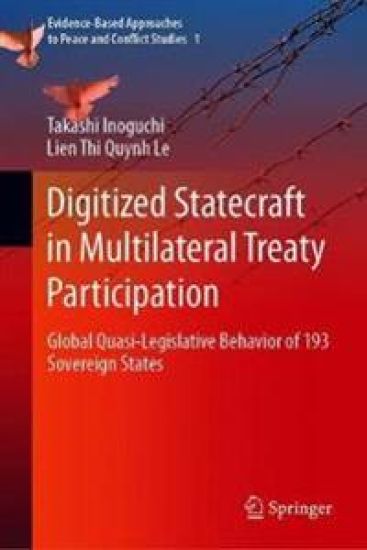
Digitized Statecraft in Multilateral Treaty Participation

Digitized Statecraft in Multilateral Treaty Participation

Takashi Inoguchi; Lien Thi Quynh Le

SPRINGER VERLAG, SINGAPORE
2022
nidottu
This book is a rarity in that it opens a genuinely creative new vista for understanding global politics as distinguished from international politics, enhancing the vision for understanding global subjects such as multilateral treaties and the Covid-19 virus. Six hundred multilateral treaties deposited in the UN are conceptualized as a bundle of quasi-social contracts by sovereign states. A state’s participation in multilateral treaties is envisaged as digitized statecraft. Using a state’s physical actions and treaties’ attributes, 193 profiles of statecraft are analyzed with the implications for the future of global politics. This book demonstrates that multilateral treaties are both a vehicle and an agency in the globalization trend; thus, both state and international actors influence a state’s joining multilateral treaties. The book represents a marriage of international law and applied information science. It provides a framework for empirical modeling based on artificial intelligence and analyzes this framework in terms of international law and international relations. This book thus creates a new understanding of global politics.
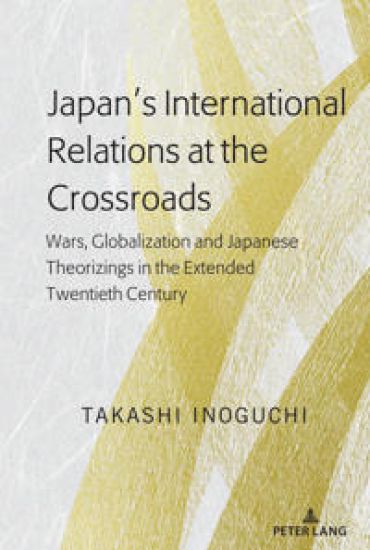
Japan’s International Relations at the Crossroads

Japan’s International Relations at the Crossroads

Takashi Inoguchi

PETER LANG PUBLISHING INC
2021
sidottu
This book discusses Japan’s international relations prior to 1945 with its focus on war and after 1945 during the Cold War era with its focus on globalization and also examines Japan’s international relations as an academic discipline. Part I describes and analyzes (1) how modern Japan coped with the coerced opening of the country, (2) how major powers aspired and alternated their hegemonic positions in East Asia in the extended twentieth century and (3) how global politics has been evolving with the three distinctive paradigms: the Westphalian, Philadelphian and Anti-Utopian. Part II describes and analyzes (1) how Japan foresees the future on the eve of the Cold War: the metamorphosis from Pax Americana Phase II to Pax Consortis, (2) how Japan envisages regionalism in Asia with sub-nationally and functionally articulated ideas for East and Southeast Asia, (3) Japan’s 21st century manifesto of foreign policy is presented as the best mix of classical realism, transformative pragmatism and liberal internationalism and (4) Japan’s manifesto as an Asian state is to deploy manufacturing/technological statecraft on the basis of East Asian peace. Part III focuses on theorizings of international relations from various angles. In light of hyperglobalization, theorizing global politics (as distinguished from international politics) is called for with two latest studies on global quasi-legislative politics and typology of Asian societies given as examples.
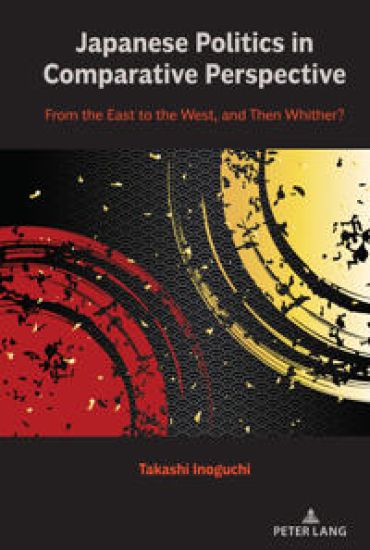
Japanese Politics in Comparative Perspective

Japanese Politics in Comparative Perspective

Takashi Inoguchi

Peter Lang Publishing Inc
2021
sidottu
Japan lives twice. Japan belonged to the East before 1962, when The Economist’s editorialized, "Consider Japan". It gave the world a warning-cum-welcoming signal to Japan about joining the West. Thereafter Japan belonged to the West in science, industry and international law, whereas Japan was regarded psychologically in the West as belonging to the East in sakura, sushi, and snow country. After 1992, the morning after the bubble collapse, Japan belonged to the new West, not bereft of mishaps and mistakes and embedded with stall and stagnation as the rest of the old West. Yet Japan has been going through the "lost three decades" of muddling through recession and deflation, as if Japan had trod the Dengist path to "hide your strength and bide your time" without loud fanfare. By 2022 Japan will come up quietly as the oasis of stability when the world is struggling with climate change and infectious disease diffusion in addition to its decline from the overconfidence of its own capabilities. Japan has emerged, combining its aggregate niches of technology of its own erstwhile dominant manufacturing, further enhanced by technological prowess obtained by massive foreign direct investment due to sluggish domestic market demand. In examining Japanese politics in comparative angle, this book starts by asking: from the East to the West, and then whither?
Digitized Statecraft in Multilateral Treaty Participation

Digitized Statecraft in Multilateral Treaty Participation

Takashi Inoguchi; Lien Thi Quynh Le

Springer Verlag, Singapore
2021
sidottu
This book is a rarity in that it opens a genuinely creative new vista for understanding global politics as distinguished from international politics, enhancing the vision for understanding global subjects such as multilateral treaties and the Covid-19 virus. Six hundred multilateral treaties deposited in the UN are conceptualized as a bundle of quasi-social contracts by sovereign states. A state’s participation in multilateral treaties is envisaged as digitized statecraft. Using a state’s physical actions and treaties’ attributes, 193 profiles of statecraft are analyzed with the implications for the future of global politics. This book demonstrates that multilateral treaties are both a vehicle and an agency in the globalization trend; thus, both state and international actors influence a state’s joining multilateral treaties. The book represents a marriage of international law and applied information science. It provides a framework for empirical modeling based on artificial intelligence and analyzes this framework in terms of international law and international relations. This book thus creates a new understanding of global politics.
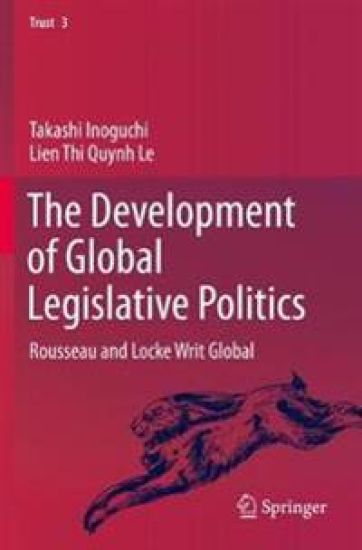
The Development of Global Legislative Politics

The Development of Global Legislative Politics

Takashi Inoguchi; Lien Thi Quynh Le

Springer Verlag, Singapore
2020
nidottu
This book is the first systematic scientific study of global quasi-legislation. Taking public opinion and multilateral agreements as the international equivalent to national election and passing laws on the national scale, and extending nation-state concepts to a global society, it analyzes citizens' preferences and the state's willingness to enter into 120 multilateral treaties. After identifying the links as a first step toward conceptualizing quasi-legislative global politics, the book examines how each of the 193 states manifests quasi-legislative behavior by factor-analyzing six instrumental variables such as treaty participation index and six policy domains of multilateral treaties, including peace and trade. It then discusses global change between 1989 and 2008, and conceptually and empirically examines the three theories of global politics that originated during that period: the theory of power transition, theory of civilizational clash and theory of global legislative politics. Lastly, it proposes a theory of global legislative politics. Shedding fresh light on the transformative nature of multilateral treaties, this book attracts researchers and students in political philosophy, international law and international relations as well as practitioners and journalists. Inoguchi and Le have developed a genuinely original perspective on world politics, one that opens up a new research agenda for thinking about state and global actors simultaneously.-- Anne-Marie Slaughter, Bert G. Kerstetter '66 University Professor Emerita of Politics and International Affairs, Princeton UniversityThis is one of those books that warrant a global readership given its emphasis on the implied trust that we invest in public institutions as viewed from an interdisciplinary perspective. -- Richard J. Estes, Professor of Social Policy & Practice, University of Pennsylvania, Philadelphia,PennsylvaniaThis book is innovative and distinctive in carving out a new way to look at “global legislative politics.” I do not know of anything that compares in this interesting and novel niche of international relations analysis.-- William R. Thompson, Distinguished Professor and Rogers Chair of Political Science Emeritus, Indiana University
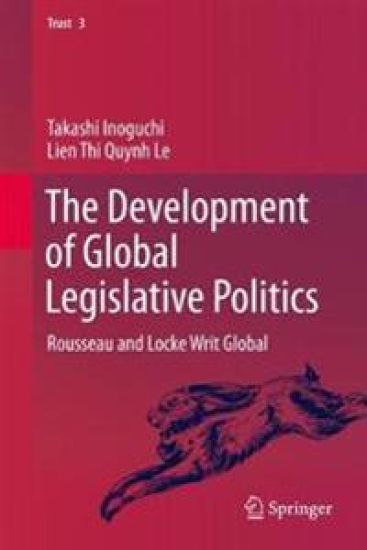
The Development of Global Legislative Politics

The Development of Global Legislative Politics

Takashi Inoguchi; Lien Thi Quynh Le

Springer Verlag, Singapore
2019
sidottu
This book is the first systematic scientific study of global quasi-legislation. Taking public opinion and multilateral agreements as the international equivalent to national election and passing laws on the national scale, and extending nation-state concepts to a global society, it analyzes citizens' preferences and the state's willingness to enter into 120 multilateral treaties. After identifying the links as a first step toward conceptualizing quasi-legislative global politics, the book examines how each of the 193 states manifests quasi-legislative behavior by factor-analyzing six instrumental variables such as treaty participation index and six policy domains of multilateral treaties, including peace and trade. It then discusses global change between 1989 and 2008, and conceptually and empirically examines the three theories of global politics that originated during that period: the theory of power transition, theory of civilizational clash and theory of global legislative politics. Lastly, it proposes a theory of global legislative politics. Shedding fresh light on the transformative nature of multilateral treaties, this book attracts researchers and students in political philosophy, international law and international relations as well as practitioners and journalists. Inoguchi and Le have developed a genuinely original perspective on world politics, one that opens up a new research agenda for thinking about state and global actors simultaneously.-- Anne-Marie Slaughter, Bert G. Kerstetter '66 University Professor Emerita of Politics and International Affairs, Princeton UniversityThis is one of those books that warrant a global readership given its emphasis on the implied trust that we invest in public institutions as viewed from an interdisciplinary perspective. -- Richard J. Estes, Professor of Social Policy & Practice, University of Pennsylvania, Philadelphia,PennsylvaniaThis book is innovative and distinctive in carving out a new way to look at “global legislative politics.” I do not know of anything that compares in this interesting and novel niche of international relations analysis.-- William R. Thompson, Distinguished Professor and Rogers Chair of Political Science Emeritus, Indiana University
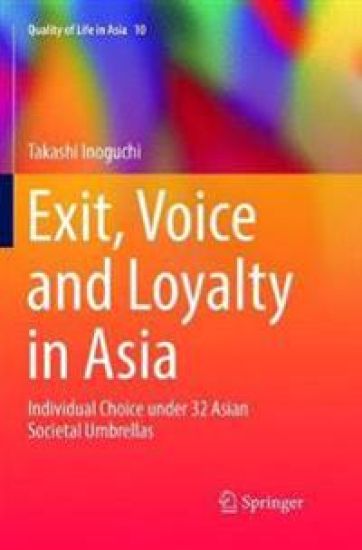
Exit, Voice and Loyalty in Asia

Exit, Voice and Loyalty in Asia

Takashi Inoguchi

Springer Verlag, Singapore
2018
nidottu
This book provides insightful observations and analyses of Asian citizens’ behaviour associated with requests to get a permit in conditions typically characterized by bureaucratic callousness. Using the AsiaBarometer Survey data on quality of life, it studies various types of behaviour using the multi-level regression models for 32 countries. In doing so, the book provides insights into how these societies cope with the state’s bureaucratism using Albert Hirschman’s concepts of Exit, Voice and Loyalty. Arguments are then juxtaposed with issues such as rampant corruption, government regulatory principles and measures, and calls by international organisations and non-governmental groups for business firms to be more strictly bound. Given the generally receding tide of democracy in Asian societies, this book will be of interest to academics, business, mass media and other professionals.
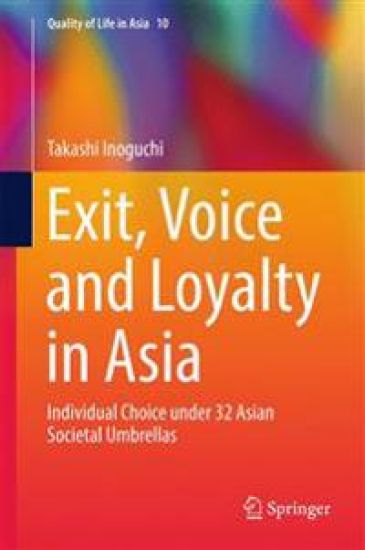
Exit, Voice and Loyalty in Asia

Exit, Voice and Loyalty in Asia

Takashi Inoguchi

Springer Verlag, Singapore
2017
sidottu
This book provides insightful observations and analyses of Asian citizens’ behaviour associated with requests to get a permit in conditions typically characterized by bureaucratic callousness. Using the AsiaBarometer Survey data on quality of life, it studies various types of behaviour using the multi-level regression models for 32 countries. In doing so, the book provides insights into how these societies cope with the state’s bureaucratism using Albert Hirschman’s concepts of Exit, Voice and Loyalty. Arguments are then juxtaposed with issues such as rampant corruption, government regulatory principles and measures, and calls by international organisations and non-governmental groups for business firms to be more strictly bound. Given the generally receding tide of democracy in Asian societies, this book will be of interest to academics, business, mass media and other professionals.
The Quality of Life in Asia

The Quality of Life in Asia

Takashi Inoguchi; Seiji Fujii

Springer
2014
nidottu
This book studies and compares quality of life in 29 countries/societies in Asia: Afghanistan, Bangladesh, Bhutan, Brunei, Cambodia, China, Hong Kong, India, Indonesia, Japan, Kazakhstan, Kyrgyzstan, Korea(South), Laos, Malaysia, Maldives, Mongolia, Myanmar, Nepal, Pakistan, the Philippines, Singapore, Sri Lanka, Taiwan, Tajikistan, Thailand, Turkmenistan, Uzbekistan, and Vietnam. We utilize the AsiaBarometer Surveys conducted annually from 2003 through 2008. We focus on the notion of subjective quality of life and conceptualize it as two levels, global and domain. After we explain about the AsiaBarometer Survey Project, we explore current country profile, demographics, lifestyles, value priorities, specific life domain assessment and overall quality of life. We then estimate the independent effects of demographics, lifestyles, value priorities, life domain assessment on the overall quality of life within each society. As well as comparing the results between nations, we look for key generalized characteristics of life quality for the entire and sub-regions of Asia.
Japan's International Relations

Japan's International Relations

Takashi Inoguchi

Bloomsbury Academic
2012
sidottu
Japan's International Relations focuses on three major issues: firstly, Japan's role in relation to its place in the international structure, its economic dynamism and its historical past. Secondly, how Japan's role is manifested in a number of key areas; economic, security, bilateral and regional. Thirdly, Inoguchi analyses the Japan's role in the light of the continuing US-Soviet détente, an enlarged Europe, continuing Pacific dynamism and global economic difficulties. First published in 1991, this title is part of the Bloomsbury Academic Collections series.
Japan's Foreign Policy in an Era of Global Change

Japan's Foreign Policy in an Era of Global Change

Takashi Inoguchi

Bloomsbury Academic
2012
sidottu
The evolution of Japan's foreign policy at the time of great transformation-cum-transition after World War II is analysed and considered from two angles: a Japan adrift, with an opportunistic, short-term pragmatism, and a Japan determinedly and tenaciously steadfast to its national interests. Inoguchi provides fascinating and balanced accounts of Japan's foreign policy at a time when its premises are seemingly undermined and its domestic and international underpinnings eroding. First published in 1993, this title is part of the Bloomsbury Academic Collections series.
The Quality of Life in Asia

The Quality of Life in Asia

Takashi Inoguchi; Seiji Fujii

Springer
2012
sidottu
This book studies and compares quality of life in 29 countries/societies in Asia: Afghanistan, Bangladesh, Bhutan, Brunei, Cambodia, China, Hong Kong, India, Indonesia, Japan, Kazakhstan, Kyrgyzstan, Korea(South), Laos, Malaysia, Maldives, Mongolia, Myanmar, Nepal, Pakistan, the Philippines, Singapore, Sri Lanka, Taiwan, Tajikistan, Thailand, Turkmenistan, Uzbekistan, and Vietnam. We utilize the AsiaBarometer Surveys conducted annually from 2003 through 2008. We focus on the notion of subjective quality of life and conceptualize it as two levels, global and domain. After we explain about the AsiaBarometer Survey Project, we explore current country profile, demographics, lifestyles, value priorities, specific life domain assessment and overall quality of life. We then estimate the independent effects of demographics, lifestyles, value priorities, life domain assessment on the overall quality of life within each society. As well as comparing the results between nations, we look for key generalized characteristics of life quality for the entire and sub-regions of Asia.
Citizens and the State

Citizens and the State

Takashi Inoguchi; Jean Blondel

Routledge
2010
nidottu
This book is about the relationship between citizens and the state. Their relationship has tended to be argued from a top down perspective without systematically examining empirical data about their association. In contrast, Citizens and the State, analyses the relationship from a primarily bottom up standpoint. Using the 18 country cross-national survey (the Asia-Europe Survey) data it examines how citizens relate themselves to the state. Featuring case studies on France, Germany, Spain, Sweden, Britain, Taiwan, Japan, Indonesia, Greece, Italy, Korea, the Philippines, Portugal, Ireland, Thailand, Malaysia, Singapore, and China, the book systematically examines the relationship by asking three questions: how strongly do citizens identify themselves to the country?how much confidence do citizens place in the state and its institutions?how satisfied are citizens with life and politics? Innovatively, the book attempts to answer these questions by first setting up six types of relationship between citizens and the state via factor analysis of the survey data pertaining identity, confidence and satisfaction then by examining country profiles more closely and beyond the six types. The book will be of interest to students and researcher of political science, political theory, comparative political science, Asian Studies, European Studies and sociology.
Political Cultures in Asia and Europe

Political Cultures in Asia and Europe

Jean Blondel; Takashi Inoguchi

Routledge
2009
nidottu
This book is a study of the attitudes to political and social life among the citizens of eighteen countries in Western Europe, East and Southeast Asia. Drawing on data from the largest cross-national survey on political culture for the last half a century, this book assesses how political culture differs across the two regions and whether this can be drawn back to a profound difference in basic societal values, or ‘Asian values’. Examining geographical, religious and socio-economic factors, the authors discuss whether there genuinely is a common political value in the two regions or a profound difference as these countries move towards modernity. This original and comprehensive study of the values, norms and beliefs held by citizens of the East and West will appeal to students and scholars of political culture and comparative politics, as well as Asian and European politics.
Citizens and the State

Citizens and the State

Takashi Inoguchi; Jean Blondel

Routledge
2007
sidottu
This book is about the relationship between citizens and the state. Their relationship has tended to be argued from a top down perspective without systematically examining empirical data about their association. In contrast, Citizens and the State, analyses the relationship from a primarily bottom up standpoint. Using the 18 country cross-national survey (the Asia-Europe Survey) data it examines how citizens relate themselves to the state. Featuring case studies on France, Germany, Spain, Sweden, Britain, Taiwan, Japan, Indonesia, Greece, Italy, Korea, the Philippines, Portugal, Ireland, Thailand, Malaysia, Singapore, and China, the book systematically examines the relationship by asking three questions: how strongly do citizens identify themselves to the country?how much confidence do citizens place in the state and its institutions?how satisfied are citizens with life and politics? Innovatively, the book attempts to answer these questions by first setting up six types of relationship between citizens and the state via factor analysis of the survey data pertaining identity, confidence and satisfaction then by examining country profiles more closely and beyond the six types. The book will be of interest to students and researcher of political science, political theory, comparative political science, Asian Studies, European Studies and sociology.
Political Cultures in Asia and Europe

Political Cultures in Asia and Europe

Jean Blondel; Takashi Inoguchi

Routledge
2006
sidottu
This book is a study of the attitudes to political and social life among the citizens of eighteen countries in Western Europe, East and Southeast Asia. Drawing on data from the largest cross-national survey on political culture for the last half a century, this book assesses how political culture differs across the two regions and whether this can be drawn back to a profound difference in basic societal values, or ‘Asian values’. Examining geographical, religious and socio-economic factors, the authors discuss whether there genuinely is a common political value in the two regions or a profound difference as these countries move towards modernity. This original and comprehensive study of the values, norms and beliefs held by citizens of the East and West will appeal to students and scholars of political culture and comparative politics, as well as Asian and European politics.