Kirjojen hintavertailu – 12 903 735 kirjaa ja 27 kauppaa

Kirjailija

Takayuki Kanda

Kirjat ja teokset yhdessä paikassa: 4 kirjaa, julkaisuja vuosilta 2012–2024, suosituimpiin kuuluu Human-Robot Interaction in Social Robotics. Vertaile teosten hintoja ja tarkista saatavuus suomalaisista kirjakaupoista.

4 kirjaa

Kirjojen julkaisuvuodet: 2012–2024.

Human-Robot Interaction

Human-Robot Interaction

Christoph Bartneck; Tony Belpaeme; Friederike Eyssel; Takayuki Kanda; Merel Keijsers; Selma Šabanovic

Cambridge University Press
2024
pokkari

Halvin toimitettuna 68,30 €

The role of robots in society keeps expanding and diversifying, bringing with it a host of issues surrounding the relationship between robots and humans. This introduction to human–robot interaction (HRI) by leading researchers in this developing field is the first to provide a broad overview of the multidisciplinary topics central to modern HRI research. Written for students and researchers from robotics, artificial intelligence, psychology, sociology, and design, it presents the basics of how robots work, how to design them, and how to evaluate their performance. Self-contained chapters discuss a wide range of topics, including speech and language, nonverbal communication, and processing emotions, plus an array of applications and the ethical issues surrounding them. This revised and expanded second edition includes a new chapter on how people perceive robots, coverage of recent developments in robotic hardware, software, and artificial intelligence, and exercises for readers to test their knowledge.

Human-Robot Interaction

Human-Robot Interaction

Christoph Bartneck; Tony Belpaeme; Friederike Eyssel; Takayuki Kanda; Merel Keijsers; Selma Šabanovic

Cambridge University Press
2020
pokkari
The role of robots in society keeps expanding and diversifying, bringing with it a host of issues surrounding the relationship between robots and humans. This introduction to human-robot interaction (HRI), written by leading researchers in this developing field, is the first to provide a broad overview of the multidisciplinary topics central to modern HRI research. Students and researchers from robotics, artificial intelligence, psychology, sociology, and design will find it a concise and accessible guide to the current state of the field. Written for students from diverse backgrounds, it presents relevant background concepts, describing how robots work, how to design them, and how to evaluate their performance. Self-contained chapters discuss a wide range of topics, including the different communication modalities such as speech and language, non-verbal communication and the processing of emotions, as well as ethical issues around the application of robots today and in the context of our future society.
Human-Robot Interaction in Social Robotics

Human-Robot Interaction in Social Robotics

Takayuki Kanda; Hiroshi Ishiguro

CRC Press
2017
nidottu
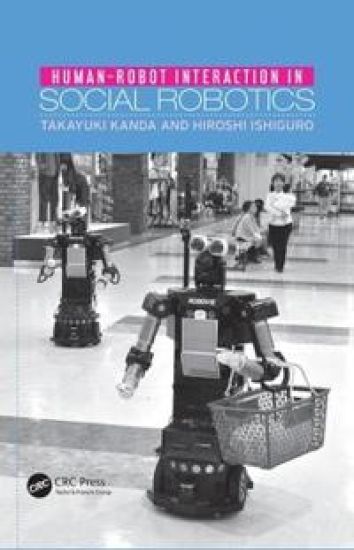
Human–Robot Interaction in Social Robotics explores important issues in designing a robot system that works with people in everyday environments. Edited by leading figures in the field of social robotics, it draws on contributions by researchers working on the Robovie project at the ATR Intelligent Robotics and Communication Laboratories, a world leader in humanoid interactive robotics. The book brings together, in one volume, technical and empirical research that was previously scattered throughout the literature. Taking a networked robot approach, the book examines how robots work in cooperation with ubiquitous sensors and people over telecommunication networks. It considers the use of social robots in daily life, grounding the work in field studies conducted at a school, train station, shopping mall, and science museum. Critical in the development of network robots, these usability studies allow researchers to discover real issues that need to be solved and to understand what kinds of services are possible. The book tackles key areas where development is needed, namely, in sensor networks for tracking humans and robots, humanoids that can work in everyday environments, and functions for interacting with people. It introduces a sensor network developed by the authors and discusses innovations in the Robovie humanoid, including several interactive behaviors and design policies. Exploring how humans interact with robots in daily life settings, this book offers valuable insight into how robots may be used in the future. The combination of engineering, empirical, and field studies provides readers with rich information to guide in developing practical interactive robots.
Human-Robot Interaction in Social Robotics

Human-Robot Interaction in Social Robotics

Takayuki Kanda; Hiroshi Ishiguro

CRC Press Inc
2012
sidottu
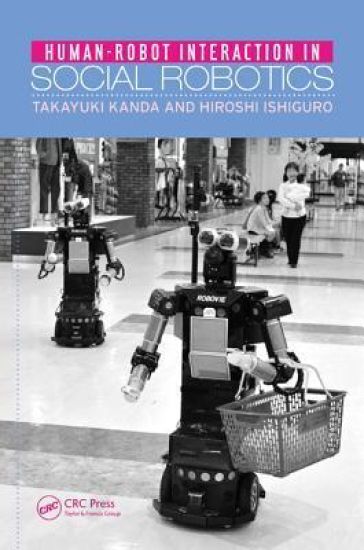
Human–Robot Interaction in Social Robotics explores important issues in designing a robot system that works with people in everyday environments. Edited by leading figures in the field of social robotics, it draws on contributions by researchers working on the Robovie project at the ATR Intelligent Robotics and Communication Laboratories, a world leader in humanoid interactive robotics. The book brings together, in one volume, technical and empirical research that was previously scattered throughout the literature. Taking a networked robot approach, the book examines how robots work in cooperation with ubiquitous sensors and people over telecommunication networks. It considers the use of social robots in daily life, grounding the work in field studies conducted at a school, train station, shopping mall, and science museum. Critical in the development of network robots, these usability studies allow researchers to discover real issues that need to be solved and to understand what kinds of services are possible. The book tackles key areas where development is needed, namely, in sensor networks for tracking humans and robots, humanoids that can work in everyday environments, and functions for interacting with people. It introduces a sensor network developed by the authors and discusses innovations in the Robovie humanoid, including several interactive behaviors and design policies. Exploring how humans interact with robots in daily life settings, this book offers valuable insight into how robots may be used in the future. The combination of engineering, empirical, and field studies provides readers with rich information to guide in developing practical interactive robots.