Kirjojen hintavertailu – 12 859 828 kirjaa ja 27 kauppaa

Kirjailija

Tamara Bibby

Kirjat ja teokset yhdessä paikassa: 5 kirjaa, julkaisuja vuosilta 2010–2017, suosituimpiin kuuluu Education - An 'Impossible Profession'?. Vertaile teosten hintoja ja tarkista saatavuus suomalaisista kirjakaupoista.

5 kirjaa

Kirjojen julkaisuvuodet: 2010–2017.

The Creative Self

The Creative Self

Tamara Bibby

Routledge
2017
sidottu
The Creative Self engages with the work of the psychoanalyst D. W. Winnicott to develop alternative ways of thinking about key issues at the heart of pedagogy; specifically pedagogic relationships, creativity, defiance and compliance. These issues underpin the desires and defences of professionals located in educational institutions, such as the desire to know what is best, to know how to reach all learners, normalised expectations of behaviours and outcomes, and sometimes challenging engagements with students and the curriculum. Each chapter provides both a theoretical focus and illustrative demonstrations of the ways in which Winnicott’s theories may be relocated and used productively as tools for professional and academic reflexivity. By building extensively on Winnicott’s understanding of the ways in which relationships facilitate (or hinder) the development of the self, this book extends his clinical focus on parental and analytical relationships to think about the ways in which the pedagogic relationship can provide an environment in which people may (or may fail to) develop as learners. This approach provides powerful ways of thinking about pedagogy and pedagogic relationships that stand apart from the cognitive and rationalist tradition. This focus can be used constructively to support people working in educational settings to re-establish a sense of personal and professional autonomy in an environment recently typified by compliance. The Creative Self is an engaging and innovative read appealing to postgraduate students, teachers, researchers and academics with a desire for a new analytic lens through which to explore the educational experiences of both learners and teachers in schools, colleges and universities.
The Creative Self

The Creative Self

Tamara Bibby

Routledge
2017
nidottu
The Creative Self engages with the work of the psychoanalyst D. W. Winnicott to develop alternative ways of thinking about key issues at the heart of pedagogy; specifically pedagogic relationships, creativity, defiance and compliance. These issues underpin the desires and defences of professionals located in educational institutions, such as the desire to know what is best, to know how to reach all learners, normalised expectations of behaviours and outcomes, and sometimes challenging engagements with students and the curriculum. Each chapter provides both a theoretical focus and illustrative demonstrations of the ways in which Winnicott’s theories may be relocated and used productively as tools for professional and academic reflexivity. By building extensively on Winnicott’s understanding of the ways in which relationships facilitate (or hinder) the development of the self, this book extends his clinical focus on parental and analytical relationships to think about the ways in which the pedagogic relationship can provide an environment in which people may (or may fail to) develop as learners. This approach provides powerful ways of thinking about pedagogy and pedagogic relationships that stand apart from the cognitive and rationalist tradition. This focus can be used constructively to support people working in educational settings to re-establish a sense of personal and professional autonomy in an environment recently typified by compliance. The Creative Self is an engaging and innovative read appealing to postgraduate students, teachers, researchers and academics with a desire for a new analytic lens through which to explore the educational experiences of both learners and teachers in schools, colleges and universities.
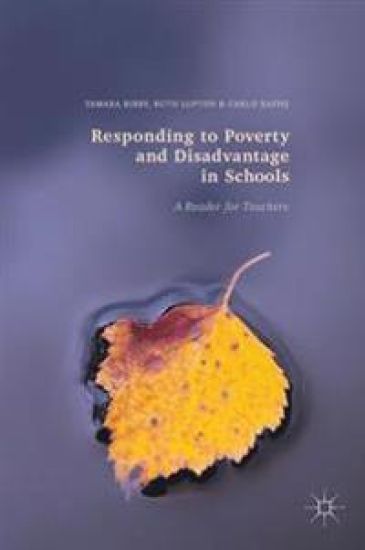
Responding to Poverty and Disadvantage in Schools

Responding to Poverty and Disadvantage in Schools

Tamara Bibby; Ruth Lupton; Carlo Raffo

Palgrave Macmillan
2017
sidottu
This book explores a range of challenges teachers face in dealing with situations of disadvantage, and explores different ways of thinking about these situations. Starting with a variety of incidents written by teachers in schools in disadvantaged settings, the book provides a range of ways of thinking about these - some more psychological, others more sociological - and chapters develop conversations between teachers and academics. These 'conversations' will help teachers reflect more deeply on the contexts in which they work, on what disadvantage means, and how disadvantage manifests in practice. It will also help teachers reflect upon the nature of their work; what it means to be a good and effective teacher; and the particular skills, approaches, relationships and competencies that may need to be developed in differing settings of educational disadvantage. The book explores the tensions between different ways of thinking about education and disadvantage; it will make compelling reading for students and teachers of education, education policy makers, and practising schoolteachers.
Education - An 'Impossible Profession'?
In classrooms and lectures we learn not only about academic topics but also about ourselves, our peers and how people and ideas interact. Education – An Impossible Profession extends the ways in which we might think about these processes by offering a refreshing reconsideration of key educational experiences including those of: being judged and assessed, both formally and informallyadapting to different groups for different purposesstruggling to think under pressurelearning to recognise and adapt to the expectations of others. This book brings psychoanalysis to new audiences, graphically illustrating its importance to understandings of teaching, learning and classrooms. Drawing on the author’s original research, it considers the classroom context, including policy demands and professional pressures, and the complexity of peer and pedagogic relationships and interactions asking how these might be being experienced and what implications such experiences might have for learners and teachers. The discussions will be of interest not only to teachers, leading-learners and teacher-educators, but also to individuals interested in education policy, professional practice and theories of education.