Kirjojen hintavertailu – 12 903 724 kirjaa ja 27 kauppaa

Kirjailija

Tamara S Wagner

Kirjat ja teokset yhdessä paikassa: 11 kirjaa, julkaisuja vuosilta 2011–2024, suosituimpiin kuuluu The Widow and Wedlock Novels of Frances Trollope Vol 3. Vertaile teosten hintoja ja tarkista saatavuus suomalaisista kirjakaupoista.

Nimi esiintyy myös muodoissa: Tamara S. Wagner

11 kirjaa

Kirjojen julkaisuvuodet: 2011–2024.

The Widow and Wedlock Novels of Frances Trollope Vol 3

The Widow and Wedlock Novels of Frances Trollope Vol 3

Brenda Ayres; Ann-Barbara Graff; Abigail Burnham Bloom; Tamara S Wagner; Elsie B Michie

Routledge
2011
sidottu
The writings of Frances Trollope have been subject to increasing academic interest in recent years, and are now widely studied. In this four-volume set her comical, yet subversive, treatment of Victorian marriage provides an interesting contrast to some of the more earnest but conventional fiction of the time.
The Widow and Wedlock Novels of Frances Trollope Vol 2

The Widow and Wedlock Novels of Frances Trollope Vol 2

Brenda Ayres; Ann-Barbara Graff; Abigail Burnham Bloom; Tamara S Wagner; Elsie B Michie

Routledge
2011
sidottu
The writings of Frances Trollope have been subject to increasing academic interest in recent years, and are now widely studied. In this four-volume set her comical, yet subversive, treatment of Victorian marriage provides an interesting contrast to some of the more earnest but conventional fiction of the time.
The Widow and Wedlock Novels of Frances Trollope Vol 1

The Widow and Wedlock Novels of Frances Trollope Vol 1

Brenda Ayres; Ann-Barbara Graff; Abigail Burnham Bloom; Tamara S Wagner; Elsie B Michie

Routledge
2011
sidottu
The writings of Frances Trollope have been subject to increasing academic interest in recent years, and are now widely studied. In this four-volume set her comical, yet subversive, treatment of Victorian marriage provides an interesting contrast to some of the more earnest but conventional fiction of the time.
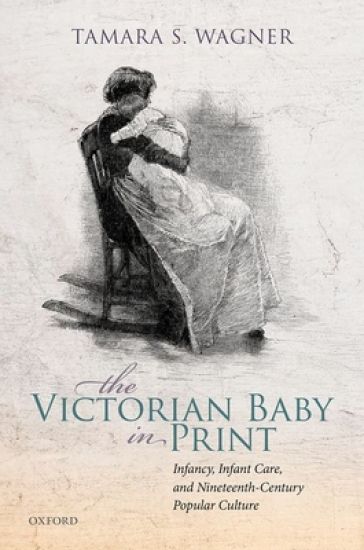
The Victorian Baby in Print

The Victorian Baby in Print

Tamara S. Wagner

Oxford University Press
2020
sidottu
The Victorian Baby in Print: Infancy, Infant Care, and Nineteenth-Century Popular Culture explores the representation of babyhood in Victorian Britain. The first study to focus exclusively on the baby in nineteenth-century literature and culture, this critical analysis discusses the changing roles of an iconic figure. A close look at the wide-ranging portrayal of infants and infant care not only reveals how divergent and often contradictory Victorian attitudes to infancy really were, but also challenges persistent clichés surrounding the literary baby that emerged or were consolidated at the time, and which are largely still with us. Drawing on a variety of texts, including novels by Charles Dickens, Wilkie Collins, Mary Elizabeth Braddon, Mrs Henry Wood, and Charlotte Yonge, as well as parenting magazines of the time, childrearing manuals, and advertisements, this study analyses how their representations of infancy and infant care utilised and shaped an iconography that has become definitional of the Victorian age itself. The familiar clichés surrounding the Victorian baby have had a lasting impact on the way we see both the Victorians and babies, and a critical reconsideration might also prompt a self-critical reconsideration of the still burgeoning market for infant care advice today.
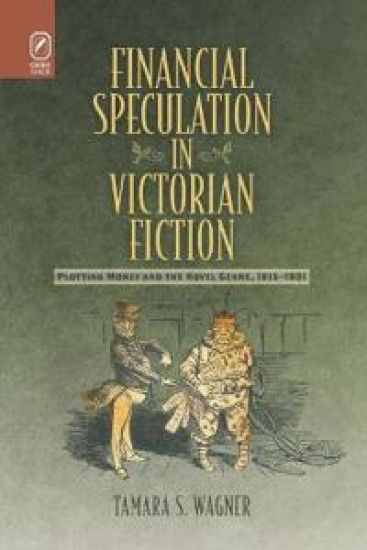
Financial Speculation in Victorian Fiction

Financial Speculation in Victorian Fiction

Tamara S Wagner

Ohio State University Press
2020
pokkari
In Financial Speculation in Victorian Fiction: Plotting Money and the Novel Genre, 1815-1901, Tamara S. Wagner explores the ways in which financial speculation was imagined and turned into narratives in Victorian Britain. Since there clearly was much more to literature's use of the stock market than a mere reflection of contemporary economic crises alone, a much-needed reappraisal of the Victorians' fascination with extended fiscal plots and metaphors also asks for a close reading of the ways in which this fascination remodeled the novel genre. It was not merely that interchanges between literary productions and the credit economy's new instruments became self-consciously worked into fiction. Financial uncertainties functioned as an expression of indeterminacy and inscrutability, of an encompassing sense of instability. Bringing together canonical and still rarely discussed texts, this study analyzes the making and adaptation of specific motifs, of variously adapted tropes, extended metaphors, and recurring figures, including their transformation of a series of crises into narratives. Since these crises were often personal and emotional as well as financial, the new plots of speculation described maps of some of the major themes of nineteenth-century literature. These maps led across overlapping categories of literary culture, generating zones of intersection between otherwise markedly different subgenres that ranged from silver-fork fiction to the surprisingly protean versions of the sensation novel's domestic Gothic. Financial plots fascinatingly operated as the intersecting points in these overlapping developments, compelling a reconsideration of literary form.
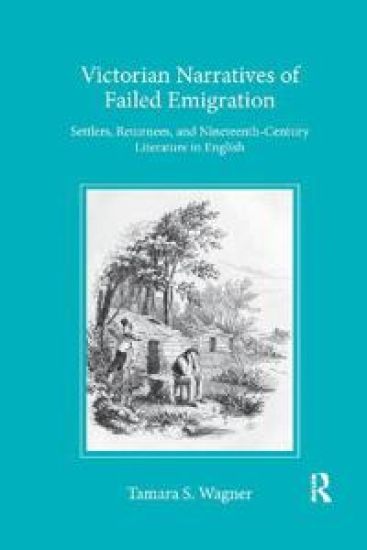
Victorian Narratives of Failed Emigration
In her study of the unsuccessful nineteenth-century emigrant, Tamara S. Wagner argues that failed emigration and return drive nineteenth-century writing in English in unexpected, culturally revealing ways. Wagner highlights the hitherto unexplored subgenre of anti-emigration writing that emerged as an important counter-current to a pervasive emigration propaganda machine that was pressing popular fiction into its service. The exportation of characters at the end of a novel indisputably formed a convenient narrative solution that at once mirrored and exaggerated public policies about so-called 'superfluous' or 'redundant' parts of society. Yet the very convenience of such pat endings was increasingly called into question. New starts overseas might not be so easily realizable; emigration destinations failed to live up to the inflated promises of pro-emigration rhetoric; the 'unwanted' might make a surprising reappearance. Wagner juxtaposes representations of emigration in the works of Charles Dickens, Wilkie Collins, Frances Trollope, and Charlotte Yonge with Australian, New Zealand, and Canadian settler fiction by Elizabeth Murray, Clara Cheeseman, and Susanna Moodie, offering a new literary history not just of nineteenth-century migration, but also of transoceanic exchanges and genre formation.
Victorian Narratives of Failed Emigration
In her study of the unsuccessful nineteenth-century emigrant, Tamara S. Wagner argues that failed emigration and return drive nineteenth-century writing in English in unexpected, culturally revealing ways. Wagner highlights the hitherto unexplored subgenre of anti-emigration writing that emerged as an important counter-current to a pervasive emigration propaganda machine that was pressing popular fiction into its service. The exportation of characters at the end of a novel indisputably formed a convenient narrative solution that at once mirrored and exaggerated public policies about so-called 'superfluous' or 'redundant' parts of society. Yet the very convenience of such pat endings was increasingly called into question. New starts overseas might not be so easily realizable; emigration destinations failed to live up to the inflated promises of pro-emigration rhetoric; the 'unwanted' might make a surprising reappearance. Wagner juxtaposes representations of emigration in the works of Charles Dickens, Wilkie Collins, Frances Trollope, and Charlotte Yonge with Australian, New Zealand, and Canadian settler fiction by Elizabeth Murray, Clara Cheeseman, and Susanna Moodie, offering a new literary history not just of nineteenth-century migration, but also of transoceanic exchanges and genre formation.
Victorian Settler Narratives

Victorian Settler Narratives

Tamara S Wagner

Pickering Chatto (Publishers) Ltd
2011
sidottu
This edited collection from a distinguished group of contributors explores a range of topics including literature as imperialist propaganda, the representation of the colonies in British literature, the emergence of literary culture in the colonies and the creation of new gender roles such as ‘girl Crusoes’ in works of fiction.
The Widow and Wedlock Novels of Frances Trollope Vol 4

The Widow and Wedlock Novels of Frances Trollope Vol 4

Brenda Ayres; Ann-Barbara Graff; Abigail Burnham Bloom; Tamara S Wagner; Elsie B Michie

Routledge
2011
sidottu
The writings of Frances Trollope have been subject to increasing academic interest in recent years, and are now widely studied. In this four-volume set her comical, yet subversive, treatment of Victorian marriage provides an interesting contrast to some of the more earnest but conventional fiction of the time.