
Kirjailija
Tameka Bradley Hobbs
Kirjat ja teokset yhdessä paikassa: 4 kirjaa, julkaisuja vuosilta 2013–2016, suosituimpiin kuuluu T. Thomas Fortune's “After War Times”. Vertaile teosten hintoja ja tarkista saatavuus suomalaisista kirjakaupoista.
4 kirjaa
Kirjojen julkaisuvuodet: 2013–2016.
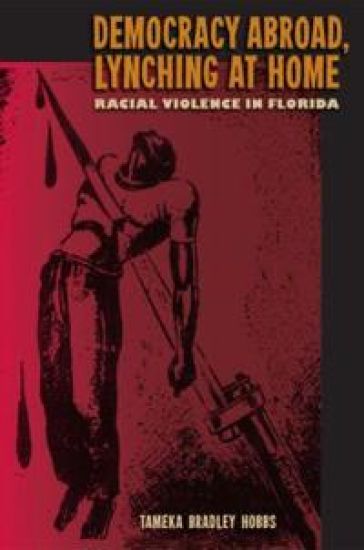
Florida often seems not quite southern - yet it suffered more lynching than any of its Deep South neighbors when examined in proportion to the number of African American residents. Investigating this dark era of the state’s history and focusing on a string of brutal lynchings that took place during the 1940s, Tameka Hobbs explores the reasons why lynchings continued in Florida when they were starting to wane elsewhere. She contextualizes the murders within the era of World War II, contrasting the desire of the United States to broadcast the benefits of its democracy abroad while at home it struggled to provide legal protection to its African American citizens. As involvement in the global war deepened and rhetoric against Axis powers heightened, the nation’s leaders became increasingly aware of the blemish left by extralegal violence on America’s reputation. Ultimately, Hobbs argues, the international implications of these four murders, along with other antiblack violence around the nation, increased pressure not only on public officials in Florida to protect the civil rights of African Americans in the state but also on the federal government to become more active in prosecuting racial violence.
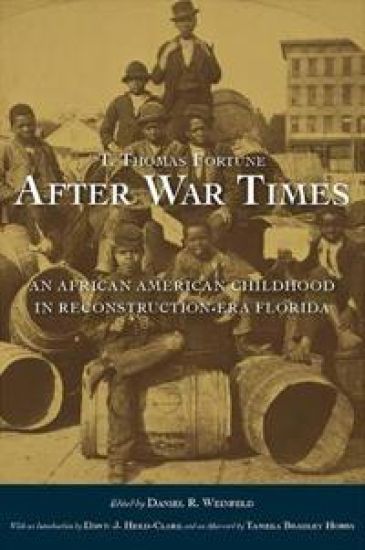
T. Thomas Fortune's “After War Times”
T. Thomas Fortune; Tameka Bradley Hobbs
The University of Alabama Press
2014
sidottu
T. Thomas Fortune was a leading African American publisher, editor, and journalist of the late nineteenth and early twentieth centuries, who was born a slave in antebellum Florida lived through emancipation, and rose to become a literary lion of his generation. In T. Thomas Fortune's “After War Times,” Daniel R. Weinfeld brings together a series of twenty-three autobiographical articles Fortune wrote about his formative childhood during Reconstruction and subsequent move to Washington, DC. By 1890 Fortune had founded a predecessor organization to the National Association for the Advancement of Colored People, known as the National Afro-American League, but his voice found its most powerful expression and influence in poetry, prose, and journalism. It was as a journalist that Fortune stirred national controversy by issuing a passionate appeal to African American southerners: “I propose to start a crusade,” he proclaimed in June 1900, “to have the negroes of the South leave that section and to come north or go elsewhere. It is useless to remain in the South and cry Peace! Peace! When there is no peace.” The movement he helped propel became known as “the Great Migration.” By focusing on Thomas’s ruminations about his disillusion with post–Civil War Florida, Weinfeld highlights the sources of Fortune’s deep disenchantment with the South, which intensified when the Reconstruction order gave way to Jim Crow–era racial discrimination and violence. Even decades after he left the South, Fortune’s vivid memories of incidents and personalities in his past informed his political opinions and writings. Scholars and readers interested in Southern history in the aftermath of the Civil War, especially the experiences of African Americans, will find much of interest in this vital collection of primary writings.

Junebug and the Gumbo Garden
Tameka Bradley Hobbs
Createspace Independent Publishing Platform
2013
nidottu