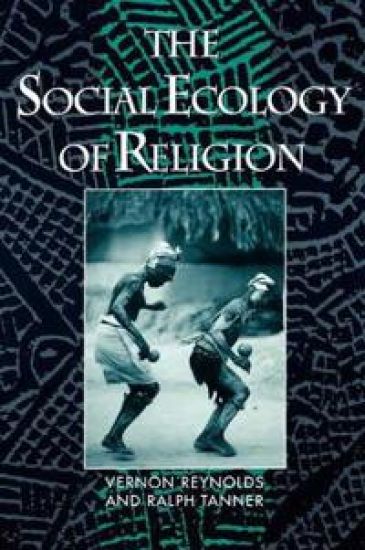
What effect does the Islamic attitude to abortion have upon the family size and growth of Muslim populations? How do the Sukuma people of Tanzania react to the birth of an abnormal child, and why do their reactions differ so radically from those of Roman Catholics in Pennsylvania? Why were one sixth of all brides in English rural parishes between the late sixteenth and early nineteenth centuries pregnant at marriage, and what does this tell us about Christian practices during that period? No society exists in which religion does not play a significant part in the lives of ordinary people. Yet the functions of the world's diverse religions for human beings have never been fully described and analysed, nor has the impact of adherence to those religions on the health and survival of the populations that practice them. A completely updated and revised edition of "The Biology of Religion", published in 1983, this extraordinary text reveals how religions in all parts of the world meet the needs of ordinary people and frequently play an important role in helping them to manage their affairs. Reynolds and Tanner show that religions have down-to-earth functions in the control and management of the main events of the human life-cycle - birth, marriage, death, and the events in between. Surveying the beliefs and practices of Christianity, Judaism, Islam, Hinduism, Buddhism, Shintoism and many others, and how these religions concern themselves with major issues such as abortion, sex in and outside marriage, divorce, and sickness, the authors demonstrate a world wide concern by religions for these important issues. They attribute this concern to the need all human beings have for guidelines to behaviour during the most important times of life. Supported by a wealth of scientific data and examples, and generously illustrated throughout, this unique text makes a vital contribution to courses in anthropology and comparative religion. ABOUT THE AUTHORS: Vernon Reynolds teaches Biological Anthropology at Oxford University and is a Fellow of Magdalen College, Oxford. He is the author of The Biology of Human Action (Second Edition, 1980), Primate Social Behavior (with D. Quiatt, 1993), and Survival and Religion (edited with E. L. Jones, 1995). Ralph Tanner, now retired, for many years taught religious sociology at Makerere University, Uganda, and at London University. He is the author of Transition in African Beliefs (1967), Homicide in Uganda (1970), and Three Studies in East African Criminology (1970).