Kirjojen hintavertailu – 12 859 829 kirjaa ja 27 kauppaa

Kirjailija

Tao Jiang

Kirjat ja teokset yhdessä paikassa: 15 kirjaa, julkaisuja vuosilta 2006–2026, suosituimpiin kuuluu Advances and Innovations in Ferronickel-Making. Vertaile teosten hintoja ja tarkista saatavuus suomalaisista kirjakaupoista.

15 kirjaa

Kirjojen julkaisuvuodet: 2006–2026.

Selective Maintenance Modelling and Optimization

Selective Maintenance Modelling and Optimization

Yu Liu; Hong-Zhong Huang; Tao Jiang

Springer International Publishing AG
2024
nidottu
This book is a detailed introduction to selective maintenance and updates readers on recent advances in this field, emphasizing mathematical formulation and optimization techniques. The book is useful for reliability engineers and managers engaged in the practice of reliability engineering and maintenance management. It also provides references that will lead to further studies at the end of each chapter. This book is a reference for researchers in reliability and maintenance and can be used as an advanced text for students.
Advances and Innovations in Ferronickel-Making

Advances and Innovations in Ferronickel-Making

Guanghui Li; Jun Luo; Mingjun Rao; Zhiwei Peng; Tao Jiang

SPRINGER VERLAG, SINGAPORE
2024
nidottu
This book introduces the most inspiring progress in the production of ferronickel from laterite ores, from both theoretical and technological perspectives. Based on a detailed overview of nickel utilization from laterite ores, it provides the advances of four main methods for laterite ore processing, including the solid-sate reduction-magnetic separation process, the rotary kiln reduction-electric arc furnace smelting process, the Krupp-Renn process, and the sintering-blast furnace smelting process. Moreover, for mediating the adverse impacts of the byproducts in ferronickel and subsequent stainless-steel making, it presents pioneering technologies of utilization of ferronickel slag for producing value-added functional materials and recycling of stainless-steel pickling sludge for ferronickel making. This book is expected to offer the audiences a fascinating new insight into ferronickel making and related by-products valorization.
Selective Maintenance Modelling and Optimization

Selective Maintenance Modelling and Optimization

Yu Liu; Hong-Zhong Huang; Tao Jiang

Springer International Publishing AG
2023
sidottu
This book is a detailed introduction to selective maintenance and updates readers on recent advances in this field, emphasizing mathematical formulation and optimization techniques. The book is useful for reliability engineers and managers engaged in the practice of reliability engineering and maintenance management. It also provides references that will lead to further studies at the end of each chapter. This book is a reference for researchers in reliability and maintenance and can be used as an advanced text for students.
Advances and Innovations in Ferronickel-Making

Advances and Innovations in Ferronickel-Making

Guanghui Li; Jun Luo; Mingjun Rao; Zhiwei Peng; Tao Jiang

SPRINGER VERLAG, SINGAPORE
2023
sidottu
This book introduces the most inspiring progress in the production of ferronickel from laterite ores, from both theoretical and technological perspectives. Based on a detailed overview of nickel utilization from laterite ores, it provides the advances of four main methods for laterite ore processing, including the solid-sate reduction-magnetic separation process, the rotary kiln reduction-electric arc furnace smelting process, the Krupp-Renn process, and the sintering-blast furnace smelting process. Moreover, for mediating the adverse impacts of the byproducts in ferronickel and subsequent stainless-steel making, it presents pioneering technologies of utilization of ferronickel slag for producing value-added functional materials and recycling of stainless-steel pickling sludge for ferronickel making. This book is expected to offer the audiences a fascinating new insight into ferronickel making and related by-products valorization.
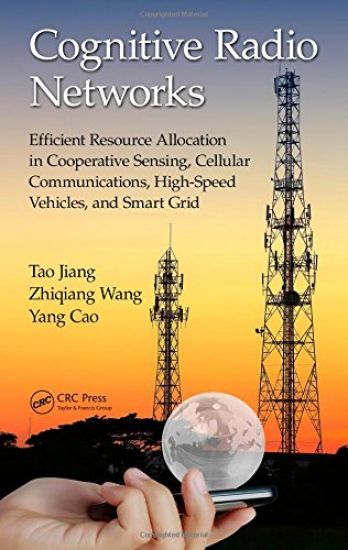
Cognitive Radio Networks

Cognitive Radio Networks

Tao Jiang; Zhiqiang Wang; Yang Cao

CRC Press
2020
nidottu
Resource allocation is an important issue in wireless communication networks. In recent decades, cognitive radio-based networks have garnered increased attention and have been well studied to overcome the problem of spectrum scarcity in future wireless communications systems. Many new challenges in resource allocation appear in cognitive radio-based networks. This book focuses on effective resource allocation solutions in several important cognitive radio-based networks, including opportunistic spectrum access networks, cooperative sensing networks, cellular networks, high-speed vehicle networks, and smart grids. Cognitive radio networks are composed of cognitive, spectrum-agile devices capable of changing their configuration on the fly based on the spectral environment. This capability makes it possible to design flexible and dynamic spectrum access strategies with the purpose of opportunistically reusing portions of the spectrum temporarily vacated by licensed primary users. Different cognitive radio-based networks focus on different network resources, such as transmission slots, sensing nodes, transmission power, white space, and sensing channels. This book introduces several innovative resource allocation schemes for different cognitive radio-based networks according to their network characteristics: Opportunistic spectrum access networks – Introduces a probabilistic slot allocation scheme to effectively allocate the transmission slots to secondary users to maximize throughput Cooperative sensing networks – Introduces a new adaptive collaboration sensing scheme in which the resources of secondary users are effectively utilized to sense the channels for efficient acquisition of spectrum opportunitiesCellular networks – Introduces a framework of cognitive radio-assisted cooperation for downlink transmissions to allocate transmission modes, relay stations, and transmission power/sub-channels to secondary users to maximize throughputHigh-speed vehicle networks – Introduces schemes to maximize the utilized TV white space through effective allocation of white space resources to secondary usersSmart grids – Introduces effective sensing channel allocation strategies for acquiring enough available spectrum channels for communications between utility and electricity consumers
Cognitive Radio Networks

Cognitive Radio Networks

Tao Jiang; Zhiqiang Wang; Yang Cao

Productivity Press
2015
sidottu
Resource allocation is an important issue in wireless communication networks. In recent decades, cognitive radio-based networks have garnered increased attention and have been well studied to overcome the problem of spectrum scarcity in future wireless communications systems. Many new challenges in resource allocation appear in cognitive radio-based networks. This book focuses on effective resource allocation solutions in several important cognitive radio-based networks, including opportunistic spectrum access networks, cooperative sensing networks, cellular networks, high-speed vehicle networks, and smart grids. Cognitive radio networks are composed of cognitive, spectrum-agile devices capable of changing their configuration on the fly based on the spectral environment. This capability makes it possible to design flexible and dynamic spectrum access strategies with the purpose of opportunistically reusing portions of the spectrum temporarily vacated by licensed primary users. Different cognitive radio-based networks focus on different network resources, such as transmission slots, sensing nodes, transmission power, white space, and sensing channels. This book introduces several innovative resource allocation schemes for different cognitive radio-based networks according to their network characteristics: Opportunistic spectrum access networks – Introduces a probabilistic slot allocation scheme to effectively allocate the transmission slots to secondary users to maximize throughput Cooperative sensing networks – Introduces a new adaptive collaboration sensing scheme in which the resources of secondary users are effectively utilized to sense the channels for efficient acquisition of spectrum opportunities Cellular networks – Introduces a framework of cognitive radio-assisted cooperation for downlink transmissions to allocate transmission modes, relay stations, and transmission power/sub-channels to secondary users to maximize throughput High-speed vehicle networks – Introduces schemes to maximize the utilized TV white space through effective allocation of white space resources to secondary users Smart grids – Introduces effective sensing channel allocation strategies for acquiring enough available spectrum channels for communications between utility and electricity consumers
Multi-modality Control of Reconfigurable Swarm

Multi-modality Control of Reconfigurable Swarm

Tao Jiang; Zhi Zheng; Lan Yao; Jianchuan Ye; Jianxiang Wang; Jingxiang Feng

SPRINGER VERLAG, SINGAPORE
2025
sidottu
The proposed overall control methodologies are validated through MATLAB simulations and physical experiments, offering effective theoretical and technical guidance for the emerging area of multi-modality control in reconfigurable swarm systems.
Origins of Moral-Political Philosophy in Early China

Origins of Moral-Political Philosophy in Early China

Tao Jiang

Oxford University Press Inc
2021
nidottu
This book rewrites the story of classical Chinese philosophy, which has always been considered the single most creative and vibrant chapter in the history of Chinese philosophy. Works attributed to Confucius, Mozi, Mencius, Laozi, Zhuangzi, Xunzi, Han Feizi and many others represent the very origins of moral and political thinking in China. As testimony to their enduring stature, in recent decades many Chinese intellectuals, and even leading politicians, have turned to those classics, especially Confucian texts, for alternative or complementary sources of moral authority and political legitimacy. Therefore, philosophical inquiries into core normative values embedded in those classical texts are crucial to the ongoing scholarly discussion about China as China turns more culturally inward. It can also contribute to the spirited contemporary debate about the nature of philosophical reasoning, especially in the non-Western traditions. This book offers a new narrative and interpretative framework about the origins of moral-political philosophy that tracks how the three normative values, humaneness, justice, and personal freedom, were formulated, reformulated, and contested by early Chinese philosophers in their effort to negotiate the relationship among three distinct domains, the personal, the familial, and the political. Such efforts took place as those thinkers were reimagining a new moral-political order, debating its guiding norms, and exploring possible sources within the context of an evolving understanding of Heaven and its relationship with the humans. Tao Jiang argues that the competing visions in that debate can be characterized as a contestation between partialist humaneness and impartialist justice as the guiding norm for the newly imagined moral-political order, with the Confucians, the Mohists, the Laoists, and the so-called fajia thinkers being the major participants, constituting the mainstream philosophical project during this period. Thinkers lined up differently along the justice-humaneness spectrum with earlier ones maintaining some continuity between the two normative values (or at least trying to accommodate both to some extent) while later ones leaning more toward their exclusivity in the political/public domain. Zhuangzi and the Zhuangists were the outliers of the mainstream moral-political debate who rejected the very parameter of humaneness versus justice in that discourse. They were a lone voice advocating personal freedom, but the Zhuangist expressions of freedom were self-restricted to the margins of the political world and the interiority of one's heartmind. Such a take can shed new light on how the Zhuangist approach to personal freedom would profoundly impact the development of this idea in pre-modern Chinese political and intellectual history.

OQAM/FBMC for Future Wireless Communications

OQAM/FBMC for Future Wireless Communications

Tao Jiang; Da Chen; Chunxing Ni; Daiming Qu

Academic Press Inc
2017
nidottu
OQAM/FBMC for Future Wireless Communications: Principles, Technologies and Applications introduces the concepts and key technologies of OQAM/FBMC, which has been regarded as the potential physical layer technique in future wireless communication systems. It comprises 10 chapters that provide an overview of wireless communications, introduce wireless channels, single carrier and multicarrier modulations, and three types of FBMC systems, also comparing OQAM/FBMC with OFDM. Other chapters introduce the OQAM/FBMC communication system model, the FFT implementation, CP insertion, PSD analysis, prototype filter optimization, joint PAPR reduction and sidelobe suppression, overhead reduction with virtual symbols, time and frequency domain channel estimations, block-wise SFBC for MIMO OQAM/FBMC, and much more.
Energy Management of Internet Data Centers in Smart Grid

Energy Management of Internet Data Centers in Smart Grid

Tao Jiang; Liang Yu; Yang Cao

Springer-Verlag Berlin and Heidelberg GmbH Co. K
2016
nidottu
This book reports the latest findings on intelligent energy management of Internet data centers in smart-grid environments. The book gathers novel research ideas in Internet data center energy management, especially scenarios with cyber-related vulnerabilities, power outages and carbon emission constraints. The book will be of interest to university researchers, R&D engineers and graduate students in communication and networking areas who wish to learn the core principles, methods, algorithms, and applications of energy management of Internet data centers in smart grids.
Energy Management of Internet Data Centers in Smart Grid

Energy Management of Internet Data Centers in Smart Grid

Tao Jiang; Liang Yu; Yang Cao

Springer-Verlag Berlin and Heidelberg GmbH Co. K
2015
sidottu
This book reports the latest findings on intelligent energy management of Internet data centers in smart-grid environments. The book gathers novel research ideas in Internet data center energy management, especially scenarios with cyber-related vulnerabilities, power outages and carbon emission constraints. The book will be of interest to university researchers, R&D engineers and graduate students in communication and networking areas who wish to learn the core principles, methods, algorithms, and applications of energy management of Internet data centers in smart grids.
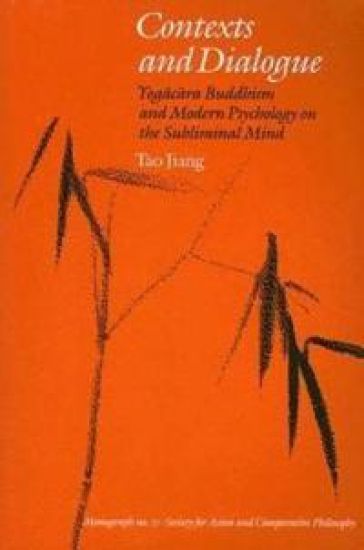
Contexts and Dialogue

Contexts and Dialogue

Tao Jiang

University of Hawai'i Press
2006
nidottu
Are there Buddhist conceptions of the unconscious? If so, are they more Freudian, Jungian, or something else? If not, can Buddhist conceptions be reconciled with the Freudian, Jungian, or other models? These are some of the questions that have motivated modern scholarship to approach alayavijnana, the storehouse consciousness, formulated in Yogacara Buddhism as a subliminal reservoir of tendencies, habits, and future possibilities. Tao Jiang argues convincingly that such questions are inherently problematic because they frame their interpretations of the Buddhist notion largely in terms of responses to modern psychology. He proposes that, if we are to understand alayavijnana properly and compare it with the unconscious responsibly, we need to change the way the questions are posed so that alayavijnana and the unconscious can first be understood within their own contexts and then recontextualized within a dialogical setting. In so doing, certain paradigmatic assumptions embedded in the original frameworks of Buddhist and modern psychological theories are exposed. Jiang brings together Xuan Zang's alayavijnana and Freud's and Jung's unconscious to focus on what the differences are in the thematic concerns of the three theories, why such differences exist in terms of their objectives, and how their methods of theorization contribute to these differences. ""Contexts and Dialogue"" puts forth a fascinating, erudite, and carefully argued presentation of the subliminal mind. It proposes a new paradigm in comparative philosophy that examines the what, why, and how in navigating the similarities and differences of philosophical systems through contextualization and recontextualization.