Kirjojen hintavertailu – 12 903 725 kirjaa ja 27 kauppaa

Kirjailija

Taras Kuzio

Kirjat ja teokset yhdessä paikassa: 22 kirjaa, julkaisuja vuosilta 1995–2025, suosituimpiin kuuluu Russia's War on Ukraine. Vertaile teosten hintoja ja tarkista saatavuus suomalaisista kirjakaupoista.

22 kirjaa

Kirjojen julkaisuvuodet: 1995–2025.

Russia's War on Ukraine

Russia's War on Ukraine

Taras Kuzio; Michal Wawrzonek

Cambridge University Press
2025
pokkari

Halvin toimitettuna 34,00 €

Understanding why Russia invaded Ukraine in 2014 and 2022 is vital for preparing for what may come next. This groundbreaking book is the first to provide an interdisciplinary study of the first full-scale war in Europe since 1945, which is having global ramifications on interstate relations, international law, international organisations, energy questions and economies. Written by two leading scholars of Ukrainian and Russian politics and history, and based on extensive field work and primary sources, the book moves beyond established Western ideas about Russia to show that Russian military aggression against Ukraine is domestically, not externally, driven. The authors analyse the statements and policies of the Russian leadership under Putin, Russia's post-communist political culture and Russia's understanding of itself as a civilisation without borders. Imperial nationalism, nostalgia, Russia's divergent identity and political system to Ukraine's, and Kremlin anti-Western xenophobia are the key elements underlying Russian aggression.
Russia's War on Ukraine

Russia's War on Ukraine

Taras Kuzio; Michal Wawrzonek

Cambridge University Press
2025
sidottu
Understanding why Russia invaded Ukraine in 2014 and 2022 is vital for preparing for what may come next. This groundbreaking book is the first to provide an interdisciplinary study of the first full-scale war in Europe since 1945, which is having global ramifications on interstate relations, international law, international organisations, energy questions and economies. Written by two leading scholars of Ukrainian and Russian politics and history, and based on extensive field work and primary sources, the book moves beyond established Western ideas about Russia to show that Russian military aggression against Ukraine is domestically, not externally, driven. The authors analyse the statements and policies of the Russian leadership under Putin, Russia's post-communist political culture and Russia's understanding of itself as a civilisation without borders. Imperial nationalism, nostalgia, Russia's divergent identity and political system to Ukraine's, and Kremlin anti-Western xenophobia are the key elements underlying Russian aggression.
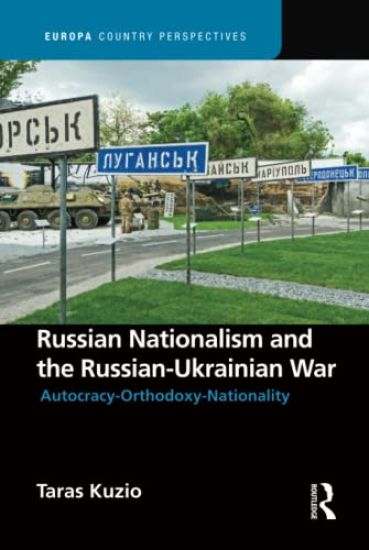
Russian Nationalism and the Russian-Ukrainian War

Russian Nationalism and the Russian-Ukrainian War

Taras Kuzio

TAYLOR FRANCIS LTD
2024
nidottu

Halvin toimitettuna 80,80 €

This book is the first to provide an in-depth understanding of the 2014 crisis, Russia’s annexation of Crimea and Europe’s de facto war between Russia and Ukraine. The book provides a historical and contemporary understanding behind President Vladimir Putin Russia’s obsession with Ukraine and why Western opprobrium and sanctions have not deterred Russian military aggression. The volume provides a wealth of detail about the inability of Russia, from the time of the Tsarist Empire, throughout the era of the Union of Soviet Socialist Republics (USSR), and since the dissolution of the latter in 1991, to accept Ukraine as an independent country and Ukrainians as a people distinct and separate from Russians. The book highlights the sources of this lack of acceptance in aspects of Russian national identity. In the Soviet period, Russians principally identified themselves not with the Russian Soviet Federative Republic, but rather with the USSR as a whole. Attempts in the 1990s to forge a post-imperial Russian civic identity grounded in the newly independent Russian Federation were unpopular, and notions of a far larger Russian ‘imagined community’ came to the fore. A post-Soviet integration of Tsarist Russian great power nationalism and White Russian émigré chauvinism had already transformed and hardened Russian denial of the existence of Ukraine and Ukrainians as a people, even prior to the 2014 crises in Crimea and the Donbas. Bringing an end to both the Russian occupation of Crimea and to the broader Russian–Ukrainian conflict can be expected to meet obstacles not only from the Russian de facto President-for-life, Vladimir Putin, but also from how Russia perceives its national identity.
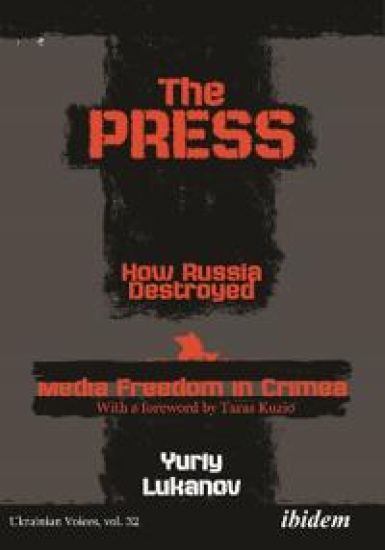
The Press: How Russia destroyed Media Freedom in Crimea

The Press: How Russia destroyed Media Freedom in Crimea

Taras Kuzio; Yuriy Lukanov

ibidem-Verlag, Jessica Haunschild u Christian Schon
2023
nidottu
This book tells us about how Russia fought against journalists and the freedom of speech during the occupation of Crimea and thereafter. Yuriy Lukanov, a journalist who covered these events, describes not only his own impressions, but present us also many interviews he conducted with journalists who worked in Crimea at that time. The book shows that how Russia systematically fought against free press and free reporting--from simple restriction of access to information to physical beatings and criminal prosecution of journalist. The volume is illustrated with photos by the author and his colleagues. With a foreword by Taras Kuzio.
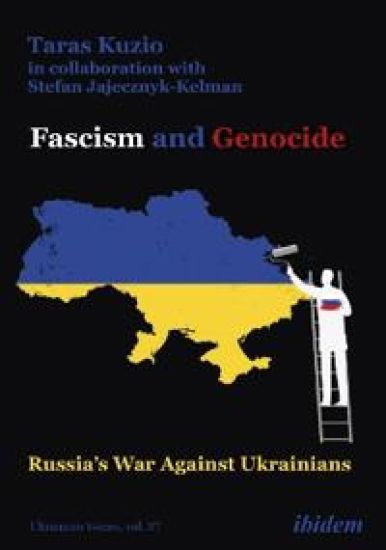
Fascism and Genocide: Russia’s War Against Ukrainians

Fascism and Genocide: Russia’s War Against Ukrainians

Taras Kuzio; Stefan Jajecznyk-Kelman

ibidem-Verlag, Jessica Haunschild u Christian Schon
2023
nidottu

Halvin toimitettuna 48,80 €

This book details how Russia's February 2022 open invasion of Ukraine has led to the biggest military conflagration and refugee crisis in Europe since World War II--a development with global ramifications. Co-written by a leading Western political expert, with three decades of research on contemporary Ukraine, and a prolific British journalist, the book explains why Russian President Vladimir Putin has been long obsessed with Ukraine and how his reliance on dated nationalist myths as well as anti-Western xenophobia led him to miscalculate Ukrainian and Western reactions to his brazen aggression against a sovereign country and founding member of the United Nations since 1945. Taras Kuzio and Stefan Jajecznyk-Kelman analyze how Putin's blunders have led to the collapse of Russia's Eurasian sphere of influence, to the growth of China's presence in Russia's backyard in Central Asia, and to conditions for the toppling of Putin's regime. The book focuses on: - the roots of Putin's obsession with Ukraine and the genocidal policies his army is pursuing through war crimes, deportations of millions of Ukrainians as well as destruction of property and infrastructure, - why the supposed 'second biggest army in the world' is being defeated by Ukraine, a country Russian nationalists argue is fictitious, and by a Ukrainian people they claim does not exist, - how Ukraine is fighting a people's war with a nation-wide volunteer movement, civil society, and international supporters who are backing the Ukrainian army through fund raising, purchasing of supplies and military equipment, such as drones, and through an 'IT Army' fighting Russia's invasion in cyber space and the hacking of Russian media, - how the invasion is having profound negative implications for Russian-Ukrainian relations and why in breaking from Moscow, Ukraine is again the key actor--as it was in 1991--in the disintegration of the Soviet and Russian empires, and - how Russia's invasion of Ukraine has led to global crises in economic growth, trade, and finances, as well as to changing geopolitical alliances, with the decline of Russia creating a vacuum that allows for the rise of China.
Russian Nationalism and the Russian-Ukrainian War

Russian Nationalism and the Russian-Ukrainian War

Taras Kuzio

TAYLOR FRANCIS LTD
2022
sidottu

Halvin toimitettuna 226,20 €

This book is the first to provide an in-depth understanding of the 2014 crisis, Russia’s annexation of Crimea and Europe’s de facto war between Russia and Ukraine. The book provides a historical and contemporary understanding behind President Vladimir Putin Russia’s obsession with Ukraine and why Western opprobrium and sanctions have not deterred Russian military aggression. The volume provides a wealth of detail about the inability of Russia, from the time of the Tsarist Empire, throughout the era of the Union of Soviet Socialist Republics (USSR), and since the dissolution of the latter in 1991, to accept Ukraine as an independent country and Ukrainians as a people distinct and separate from Russians. The book highlights the sources of this lack of acceptance in aspects of Russian national identity. In the Soviet period, Russians principally identified themselves not with the Russian Soviet Federative Republic, but rather with the USSR as a whole. Attempts in the 1990s to forge a post-imperial Russian civic identity grounded in the newly independent Russian Federation were unpopular, and notions of a far larger Russian ‘imagined community’ came to the fore. A post-Soviet integration of Tsarist Russian great power nationalism and White Russian émigré chauvinism had already transformed and hardened Russian denial of the existence of Ukraine and Ukrainians as a people, even prior to the 2014 crises in Crimea and the Donbas. Bringing an end to both the Russian occupation of Crimea and to the broader Russian–Ukrainian conflict can be expected to meet obstacles not only from the Russian de facto President-for-life, Vladimir Putin, but also from how Russia perceives its national identity.
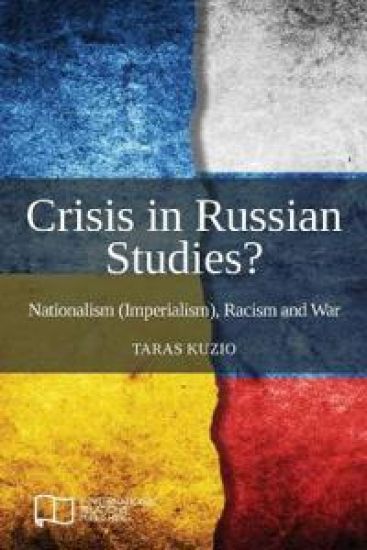
Crisis in Russian Studies? Nationalism (Imperialism), Racism and War
The goal of this book is to launch a discussion of the crisis in Russian studies following the 2014 European crisis and Russian-Ukrainian war which has yet to be acknowledged by historians and political scientists in Russian and Eurasian studies. The book analyses the crisis through five perspectives. The first is how Western historians continue to include Ukrainians within an imperial history of 'Russia' which denies Ukrainians a separate history. The second perspective is to counter the common narrative of Crimea as 'always' having been 'Russian' which denies that Tatars are the indigenous people of Crimea - not Russians. The third perspective focuses on academic orientalist approaches to writing about Ukraine and the Russian-Ukrainian war. The fourth perspective downplays Russian nationalism (imperialism) in Vladimir Putin's Russia and completely ignores the revival of Tsarist and White émigré Russian nationalism that denies the existence of Ukraine and Ukrainians. Meanwhile, academic orientalism exaggerates the influence of Ukrainian nationalism in post-Euromaidan Ukraine. The fifth perspective counters the claim of Putinversteher (Putin-Understander) scholars of a 'civil war' taking place in Ukraine through extensive evidence of Russian military aggression and imperialism. Finally, these five factors taken together show Russian studies will be unable to escape its crisis if it cannot come to understand how the source of the Russian-Ukrainian war lies in Russian national identity and its attitudes towards Ukraine and Ukrainians and why therefore the chances for peace are slim.
Politics And Society In Ukraine

Politics And Society In Ukraine

Paul D'anieri; Robert S. Kravchuk; Taras Kuzio

Routledge
2019
sidottu
With the expansion of NATO, Ukraine is frequently described as the ?linchpin? of security in Central Europe. And after Russia, it is the largest and most important of the post-Soviet states. Yet it is a country about which most westerners know very little, subsumed as it was for decades beneath the Russian Empire and the Soviet Union. Ukrainian Pol
Ukraine

Ukraine

Taras Kuzio

Routledge
2016
nidottu
Ukraine: State and Nation Building explores the transformation of Soviet Ukraine into an independent state and examines the new elites and their role in the state building process, as well as other attributes of the modern nation-state such as borders, symbols, myths and national histories. Extensive primary sources and interviews with leading members of Ukranian elites, show that state building is an integral part of the transition process and cannot be divorced from democratization and the establishment of a market economy.
Ukraine

Ukraine

Taras Kuzio

Praeger Publishers Inc
2015
sidottu
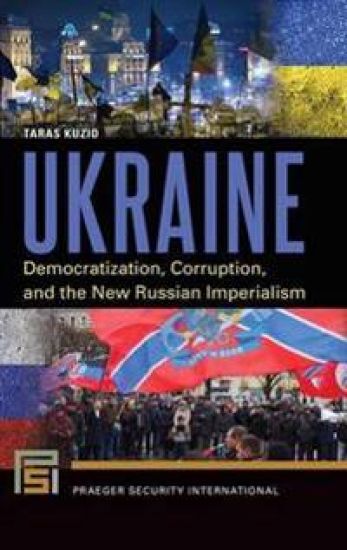
A definitive contemporary political, economic, and cultural history from a leading international expert, this is the first single-volume work to survey and analyze Soviet and post-Soviet Ukrainian history since 1953 as the basis for understanding the nation today. Ukraine dominated international headlines as the Euromaidan protests engulfed Ukraine in 2013–2014 and Russia invaded the Crimea and the Donbas, igniting a new Cold War. Written from an insider's perspective by the leading expert on Ukraine, this book analyzes key domestic and external developments and provides an understanding as to why the nation's future is central to European security. In contrast with traditional books that survey a millennium of Ukrainian history, author Taras Kuzio provides a contemporary perspective that integrates the late Soviet and post-Soviet eras. The book begins in 1953 when Soviet leader Joseph Stalin died during the Cold War and carries the story to the present day, showing the roots of a complicated transition from communism and the weight of history on its relations with Russia. It then goes on to examine in depth key aspects of Soviet and post-Soviet Ukrainian politics; the drive to independence, Orange Revolution, and Euromaidan protests; national identity; regionalism and separatism; economics; oligarchs; rule of law and corruption; and foreign and military policies. Moving away from a traditional dichotomy of "good pro-Western" and "bad pro-Russian" politicians, this volume presents an original framework for understanding Ukraine's history as a series of historic cycles that represent a competition between mutually exclusive and multiple identities. Regionally diverse contemporary Ukraine is an outgrowth of multiple historical Austrian-Hungarian, Polish, Russian, and especially Soviet legacies, and the book succinctly integrates these influences with post-Soviet Ukraine, determining the manner in which political and business elites and everyday Ukrainians think, act, operate, and relate to the outside world.
Theoretical and Comparative Perspectives on Nationalism

Theoretical and Comparative Perspectives on Nationalism

Taras Kuzio; Paul Robert Magocsi

ibidem-Verlag, Jessica Haunschild u Christian Schon
2007
nidottu
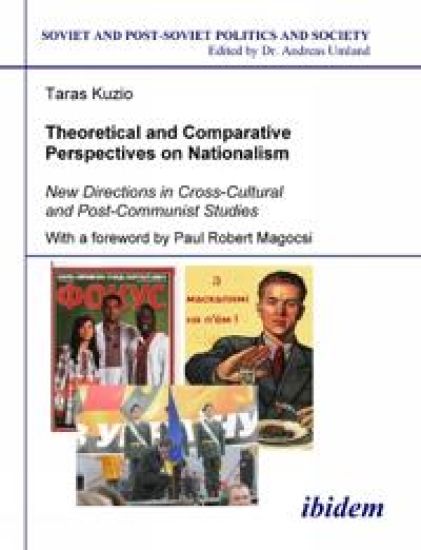
This volume brings together 15 articles divided into four sections on the role of nationalism in transitions to democracy, the application of theory to country case studies, and the role played by history and myths in the forging of national identities and nationalisms. The book develops new theories and frameworks through engaging with leading scholars of nationalism: Hans Kohn's propositions are discussed in relation to the applicability of the term 'civic' (with no ethno-cultural connotations) to liberal democracies, Rogers Brubaker over the usefulness of dividing European states into 'civic' and 'nationalizing' states when the former have historically been 'nationalizers', Will Kymlicka on the applicability of multiculturalism to post-communist states, and Paul Robert Magocsi on the lack of data to support claims of revivals by national minorities in Ukraine. The book also engages with 'transitology' over the usefulness of comparative studies of transitions in regions that underwent only political reforms, and those that had 'quadruple transitions', implying simultaneous democratic and market reforms, as well as state and nation building. A comparative study of Serbian and Russian diasporas focuses on why ethnic Serbs and Russians living outside Serbia and Russia reacted differently to the disintegration of Yugoslavia and the USSR. The book dissects the writing of Russian and Soviet history that continues to utilize imperial frameworks of history, analyzes the re-writing of Ukrainian history within post-colonial theories, and discusses the forging of Ukraine's identity within theories of 'Others' as central to the shaping of identities. The collection of articles proposes a new framework for the study of Ukrainian nationalism as a broader research phenomenon by placing nationalism in Ukraine within a theoretical and comparative perspective.
Ukraine – Crimea – Russia

Ukraine – Crimea – Russia

Taras Kuzio

ibidem-Verlag, Jessica Haunschild u Christian Schon
2007
nidottu
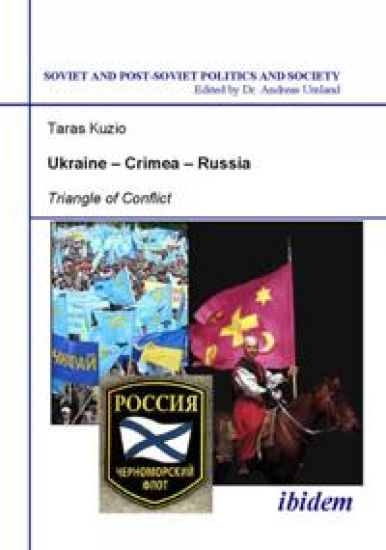
The Crimea was the only region of Ukraine in the 1990s where separatism arose and inter-ethnic conflict potentially could have taken place between the Ukrainian central government, ethnic Russians in the Crimea, and Crimean Tatars. Such a conflict would have inevitably drawn in Russia and Turkey. Russia had large numbers of troops in the Crimea within the former Soviet Black Sea Fleet. Ukraine also was a nuclear military power until 1996. This book analyses two inter-related issues. Firstly, it answers the question why Ukraine-Crimea-Russia traditionally have been a triangle of conflict over a region that Ukraine, Tatars and Russia have historically claimed. Secondly, it explains why inter-ethnic violence was averted in Ukraine despite Crimea possessing many of the ingredients that existed for Ukraine to follow in the footsteps of inter-ethnic strife in its former Soviet neighbourhood in Moldova (Trans-Dniestr), Azerbaijan (Nagorno Karabakh), Georgia (Abkhazia, South Ossetia), and Russia (Chechnya).
Politics And Society In Ukraine

Politics And Society In Ukraine

Paul D'Anieri; Robert S. Kravchuk; Taras Kuzio

Westview Press Inc
1999
nidottu
With the expansion of NATO, Ukraine is frequently described as the ?linchpin? of security in Central Europe. And after Russia, it is the largest and most important of the post-Soviet states. Yet it is a country about which most westerners know very little, subsumed as it was for decades beneath the Russian Empire and the Soviet Union. Ukrainian Politics and Society is the first comprehensive study of politics in post-Soviet Ukraine, and is therefore vital reading for anyone concerned with European security, or with politics in the former Soviet Union. The authors' extensive experience in Ukraine allows them to explain the paradoxes of Ukrainian politics that have led to so many false predictions concerning the future of the Ukrainian state. Their examination of nationality politics shows why ethnic and regional differences have tended to recede rather than to spin out of control, as they have elsewhere in the region. At the same time, these differences hamstring the country's political system, and the authors show how difficult a task it is for democratic institutions to provide effective government in a country with little consensus. By viewing economic reform in its profoundly political context, the authors expose the chasm between the theory and practice of economic reform. Understanding of how to make profits has not been lacking, but government regulation to ensure that profit-seeking behavior leads to functioning markets has been conspicuously absent. By examining in detail how Ukrainian politics has followed theoretical expectations and where it has contradicted them, the authors arrive at conclusions with implications well beyond Ukraine. Ukraine must first build a state and a nation before it can successfully reform its economy or build a genuine democracy. For Ukraine and its people, the task is daunting. For the west, whose security increasingly relies on stability in Ukraine, this book provides the knowledge necessary to approach the problem, as well as good reason not to ignore it.
Ukraine

Ukraine

Taras Kuzio

Routledge
1998
sidottu
Ukraine: State and Nation Building explores the transformation of Soviet Ukraine into an independent state and examines the new elites and their role in the state building process, as well as other attributes of the modern nation-state such as borders, symbols, myths and national histories. Extensive primary sources and interviews with leading members of Ukranian elites, show that state building is an integral part of the transition process and cannot be divorced from democratization and the establishment of a market economy.
Contemporary Ukraine

Contemporary Ukraine

Taras Kuzio

Routledge
1998
nidottu
Exploring the post-Communist transition that has taken place in the Ukraine, this text covers: nation and state building; national identity and regionalism; politics and civil society; economic transition; and security policy.
Contemporary Ukraine

Contemporary Ukraine

Taras Kuzio

Routledge
1998
sidottu
Exploring the post-Communist transition that has taken place in the Ukraine, this text covers: nation and state building; national identity and regionalism; politics and civil society; economic transition; and security policy.
Ukraine under Kuchma

Ukraine under Kuchma

Taras Kuzio

Palgrave Macmillan
1997
nidottu
Ukraine under Kuchma is the first survey of recent developments in post-soviet Ukraine. The book covers in an in-depth manner the entire range of key developments since the 1994 parliamentary and presidential elections, the first elections held in post-soviet Ukraine. The new era ushered in by these elections led to Ukraine's launch of radical economic and political reforms which aim to domestically dismantle soviet power within Ukraine, stabilise relations with the separatist Crimean region and normalise relations with Russia and the West.