
Kirjojen hintavertailu – 12 903 724 kirjaa ja 27 kauppaa

Kirjailija

Ted J. Smith

Kirjat ja teokset yhdessä paikassa: 2 kirjaa, julkaisuja vuosilta 1989–2013, suosituimpiin kuuluu Propaganda. Vertaile teosten hintoja ja tarkista saatavuus suomalaisista kirjakaupoista.

2 kirjaa

Kirjojen julkaisuvuodet: 1989–2013.

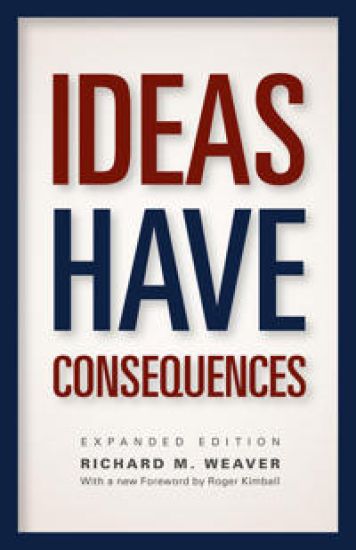
Ideas Have Consequences

Ideas Have Consequences

Richard M. Weaver; Roger Kimball; Ted J. Smith

University of Chicago Press
2013
nidottu
Originally published in 1948, at the height of post-World War II optimism and confidence in collective security, Ideas Have Consequences uses "words hard as cannonballs" to present an unsparing diagnosis of the ills of the modern age. Widely read and debated at the time of its first publication, the book is now seen as one of the foundational texts of the modern conservative movement. In its pages, Richard M. Weaver argues that the decline of Western civilization resulted from the rising acceptance of relativism over absolute reality. In spite of increased knowledge, this retreat from the realist intellectual tradition has weakened the Western capacity to reason, with catastrophic consequences for social order and individual rights. But Weaver also offers a realistic remedy. These difficulties are the product not of necessity but of intelligent choice. And, today, as decades ago, the remedy lies in the renewed acceptance of absolute reality and the recognition that ideas-like actions-have consequences. This expanded edition of the classic work contains a foreword by New Criterion editor Roger Kimball that offers insight into the rich intellectual and historical contexts of Weaver and his work and an afterword by Ted J. Smith III that relates the remarkable story of the book's writing and publication.
Propaganda

Propaganda

Ted J. Smith

Praeger Publishers Inc
1989
sidottu
This important new book assembles the work of leading figures in contemporary propaganda scholarship. Analyzing propaganda from a multidisciplinary focus, the book presents several contemporary theoretical perspectives, explores key issues in propaganda analysis, and defines two major research traditions while providing examples of their applications. The contributors examine many of the most complicated issues in the field: the nature of suggestion, the relation of propaganda to ideology, and the interaction of pluralism and truth. Various chapters, written by scholars of communication, rhetoric, journalism, mass communication, government, history, and political science, consider both historical and contemporary issues and events in relation to propaganda. Propaganda: A Pluralistic Perspective marks the renewed development of scholarship in this fascinating field and extends the depth and range of propaganda analysis. The book begins with a focus on theoretical and definitional concerns, including a history of American propaganda analysis and traces four social responses to the subject. Further chapters develop different theoretical positions from diverse perspectives. The book concludes with a focus on key issues in propaganda research, including a study of First Amendment issues in the recent legal controversy over the classification of three Canadian films as political propaganda. Students and scholars of communication, rhetoric, journalism, history, political science, sociology, and many other disciplines will find Propaganda: A Pluralistic Perspective a provocative book full of stimulating ideas.