Kirjojen hintavertailu – 12 903 735 kirjaa ja 27 kauppaa

Kirjailija

Tennessee Williams

Kirjat ja teokset yhdessä paikassa: 142 kirjaa, julkaisuja vuosilta 1948–2026, suosituimpiin kuuluu Mister Paradise. Vertaile teosten hintoja ja tarkista saatavuus suomalaisista kirjakaupoista.

142 kirjaa

Kirjojen julkaisuvuodet: 1948–2026.

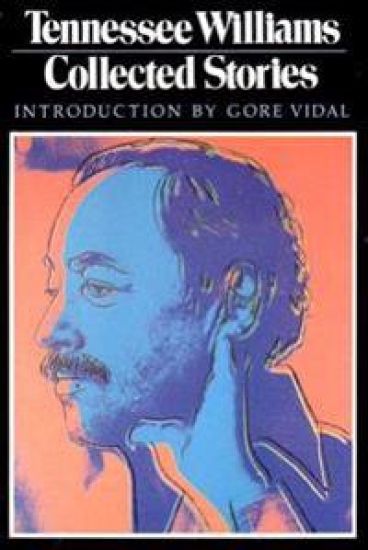
Collected Stories

Collected Stories

Tennessee Williams

New Directions Publishing Corporation
1994
pokkari
Tennessee Williams was famous for insisting he write every morning. Even during his darkest days, while mourning a lover, or abusing some substance -- and he abused most of them at one time or another -- he'd write. The stories in this volume, arranged chronologically, are from every period of his long life, and recreate the milieux Williams knew and chronicled so movingly -- from his gypsy youth in St. Louis and New Orleans to his days of celebrity in Hollywood and New York. Some are studies for his plays, and like them, their language can suddenly surprise you with a poetic image that shines like a jewel. This edition includes a useful publishing history for each of the fifty stories." One overpowering impression emerges from all these stories put together: Tennessee Williams knew more about the hidden life of far-flung America than any of us really suspected." -- Seymour Krim, Washington Post Book World"By turns disturbing, moving, and funny; these stories help amplify Williams's tragic vision, for like the plays, they underline his preoccupation and insight into the conflicts of the human heart."-- Michiko Kakutani, The New York Times
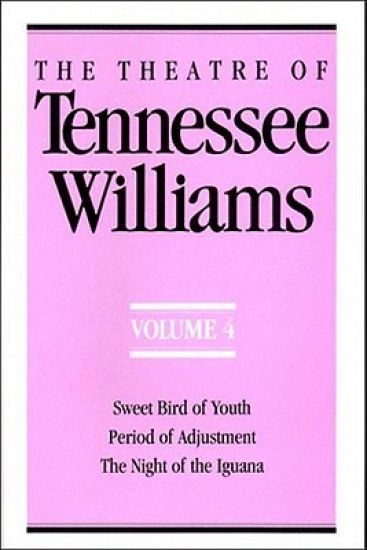
The Theatre of Tennessee Williams Volume IV: Sweet Bird of Youth, Period of Adjustment, Night of the Iguana
The Theatre of Tennessee Williams brings together in matching format the plays of one of America's most persistently influential and innovative dramatists. Arranged in chronological order, this ongoing series includes the original cast listings and production notes for all full-length plays. Now available as a New Directions Paperbook, Volume IV contains a wonderfully diverse collection of Williams's works. Sweet Bird of Youth (1959) is a dramatic study of a fading Hollywood actress, who tries to recapture her youth through a young drifter half her age. In a lighter mood, Period of Adjustment (1960) tells of the marital troubles of two "Middle American couples, a departure for the playwright who himself labeled it a 'serious comedy.'" The Night of the Iguana (1961), in sharp contrast, tells of human frailty and redemptive strength on the West Coast of Mexico.
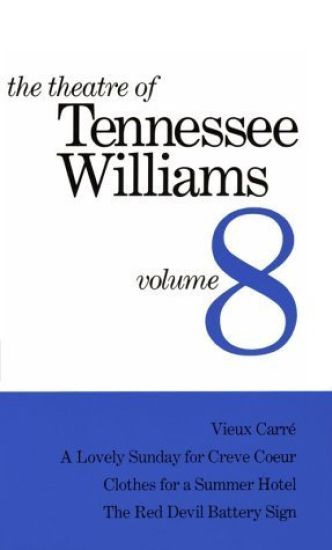
The Theatre of Tennessee Williams Volume VIII: Vieux Carré, a Lovely Summer for Creve Coeur, Clothes for a Summer Hotel, the Red Devil Battery Sign
The Theatre of Tennessee Williams presents, in matching format, the plays of one of America's most consistently influential and innovative dramatists. The first five volumes of this ongoing series contain Williams's full-length plays through 1975 and, in addition to the texts themselves, include original cast listings and production notes. Volumes 6 and 7 contain Williams's collected shorter plays. Now available as a paperback, Volume 8 adds to the series four full-length plays written and produced during the last decade of Williams's life.
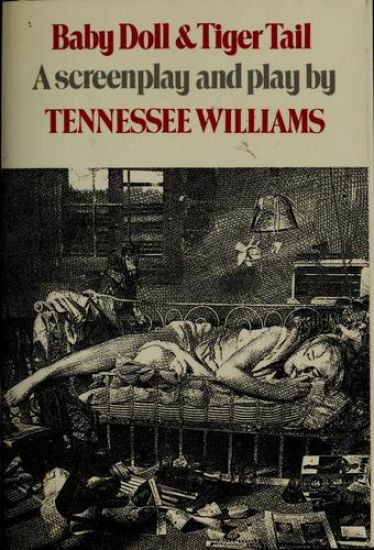
Baby Doll & Tiger Tail

Baby Doll & Tiger Tail

Tennessee Williams

New Directions Publishing Corporation
1991
nidottu
In 1956, Time magazine called Tennessee Williams’ Baby Doll "just possibly the dirtiest American-made motion picture that has ever been legally exhibited." The taut, vivid drama of a voluptuous child-bridge, who refuses to consummate her marriage to an older, down-on-his-luck cotton-gin owner in Tiger Tail County, Mississippi until she is "ready," has gained in humor and pathos over the years as society has caught up with the author’s savagely honest view of bigotry and lust in the rural South. But Tennessee Williams was first and foremost a writer for the stage, and this reissue of his original screenplay for the Elia Kazan movie of Baby Doll is now accompanied by the script of the full-length stage play, Tiger Tail, developed from that screenplay during the ’70s. The text, which incorporates the author’s final revisions, records the play as it was produced at the Hippodrome Theatre Workshop in Gainesville, Florida, in 1979.
Baby Doll & Tiger Tail

Baby Doll & Tiger Tail

Tennessee Williams

New Directions Publishing Corporation
1991
sidottu
In 1956, Time magazine called Tennessee Williams’ Baby Doll “just possibly the dirtiest American-made motion picture that has ever been legally exhibited.” The taut, vivid drama of a voluptuous child-bridge, who refuses to consummate her marriage to an older, down-on-his-luck cotton-gin owner in Tiger Tail County, Mississippi until she is “ready,” has gained in humor and pathos over the years as society has caught up with the author’s savagely honest view of bigotry and lust in the rural South. But Tennessee Williams was first and foremost a writer for the stage, and this reissue of his original screenplay for the Elia Kazan movie of Baby Doll is now accompanied by the script of the full-length stage play, Tiger Tail, developed from that screenplay during the ’70s. The text, which incorporates the author’s final revisions, records the play as it was produced at the Hippodrome Theatre Workshop in Gainesville, Florida, in 1979.
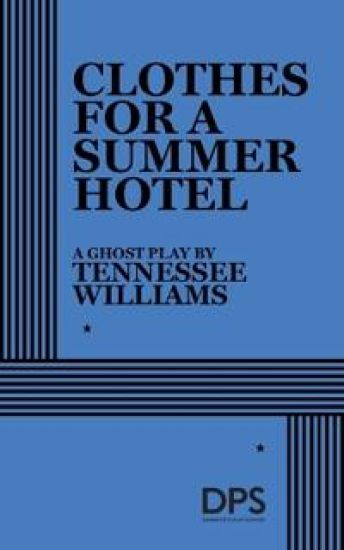
Clothes for a Summer Hotel

Clothes for a Summer Hotel

Tennessee Williams

New Directions Publishing Corporation
1986
nidottu
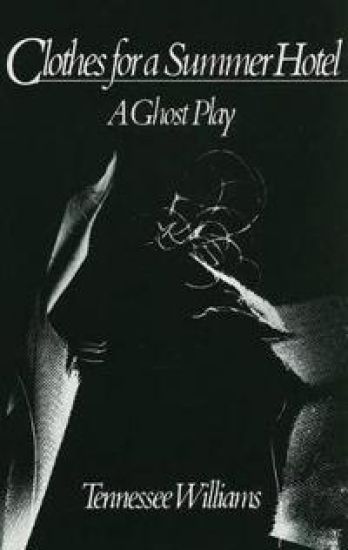
The late Tennessee Williams’s Clothes for a Summer Hotelmade its New York debut in 1980. Here Scott and Zelda Fitzgerald, often seen as symbols of the doomed youth of the jazz age, become two halves of a single creative psyche, each part alternately feeding and then devouring the other. Set in Highland Hospital near Asheville, North Carolina, where Zelda spent her last confinement, this "ghost play" begins several years after Scott’s death of a heart attack in California. But the past is "still always present" in Zelda, and Williams’s constant shifting of chronology and mixing of remembrance with ghostly re-enactment suggest that our real intimacy is with the shadow characters of our own minds. As Williams said in the Author’s Note to the Broadway production: "Our reason for taking extraordinary license with time and place is that in an asylum and on its grounds liberties of this kind are quite prevalent: and also these liberties allow us to explore in more depth what we believe is truth of character." Williams poses the inevitable, unanswerable questions: Did Scott prevent Zelda from achieving an independent creativity? Did Zelda’s demands force Scott to squander his talents and turn to alcohol? Whose betrayal––emotional, creative, sexual––destroyed the other? But he poses these questions in a new way: in the act of creation, Zelda and Scott are now aware of their eventual destruction, and the creative fire that consumed two artists combines symbolically with the fire that ended Zelda’s life.
Die Katze auf dem heißen Blechdach

Die Katze auf dem heißen Blechdach

Tennessee Williams

S. Fischer Verlag
1986
pokkari
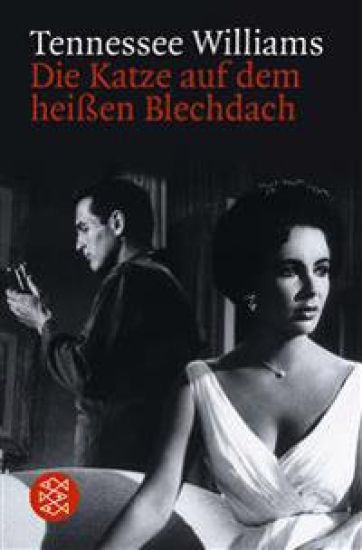
Anläßlich "Big Daddys" Geburtstag trifft die gesamte Familie zusammen. Zeit, alte Familienstreitigkeiten wieder aufbrechen zu lassen, alte Haßgefühle zu aktivieren, aber auch Zeit, um sich endlich der Wahrheit zu stellen. Die Katze ist die sexgeladene Maggie, die mit ihrer Vitalität versucht, den Bannkreis von Heuchelei, Selbsttäuschung und verlogener Moral zu durchbrechen, um ihren Mann Brick und ihre Ehe zu retten und sich dabei selbst einer Lüge bedienen muß. >Die Katze auf dem heißen Blechdach< brachte seinem Autor zum zweitenmal den Pulitzerpreis und Liz Taylor in der Filmrolle der Maggie Pollitt Weltruhm ein. Tennessee Williams' berühmtestes Theaterstück liegt nun in einer neuen Übersetzung von Jörn van Dyck vor. Der Band enthält jedoch nicht nur das für die Broadway-Uraufführung geschönte Ende der zweiten Fassung von Tennessee Williams, sondern auch das ursprüngliche Ende der Originalfassung.
Stopped Rocking and Other Screenplays

Stopped Rocking and Other Screenplays

Tennessee Williams

New Directions Publishing Corporation
1984
sidottu
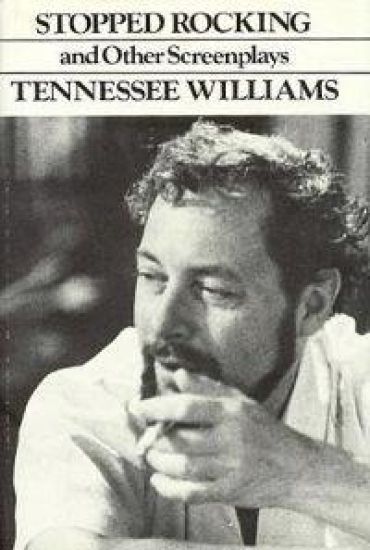
Written at various times over the last twenty-five years but never produced, the four scripts included in Tennessee Williams’s Stopped Rocking and Other Screenplays encompass both the realistic style of “the early Williams” (the author’s quotes) and the more experimental dramatic devices of many of his “later” plays. Two screenplays from the fifties, All Gaul Is Divided and The Loss of a Teardrop Diamond, remained in the files of Williams’s New Orleans apartment until a thorough cleaning uncovered them in the mid-seventies. Thus, All Gaul, an expanded version of the story of a St. Louis teacher’s dreams of love told in A Lovely Sunday for Creve Coeur (1978) actually predates that play. A companion piece in mood and style, The Loss of a Teardrop Diamond lyrically evokes the late twenties debutante society of Memphis and the Delta plantations. Adapted from the graphic short story of the same name, One Arm concerns a young male hustler awaiting execution for murder. Because much of the visual action is combined with a voice-over narration, Williams considered the form of this “film-play” from the late sixties somewhat experimental. In Stopped Rocking (1977), Williams returns to a familiar theme, the institution as the last haven of those who cannot cope with daily conflict and have “resigned from life.” He was confident that this play, like so many of his others, would eventually find its audience: “I know that the ’dark’ of the work is more than balanced by its humanity, and that this light of humanity will tip the balance favorably, as a natural act of grace.”
Die Glasmenagerie

Die Glasmenagerie

Tennessee Williams

S. Fischer Verlag
1984
pokkari
Amanda Wingfield lebt mit ihren zwei erwachsenen Kindern in einer kleinen Wohnung in St. Louis. Amanda, frühzeitig von ihrem Ehemann verlassen, flüchtet sich ebenso in eine Traumwelt wie ihre beiden Kinder. Tom entflieht seinem trostlosen Dasein in die illusionäre Wirklichkeit des Kinos und träumt davon, Dichter zu werden. Lauras Lebensinhalt besteht darin, zerbrechliche Glastierchen zu sammeln. Mit Jim O'Connor tritt die Realität ins Leben der Familie. O'Connor, von der Mutter als Heiratskandidat für die Tochter betrachtet, ist bereits anderweits gebunden und zerbricht nicht nur eines von Lauras Glastierchen. :Die Glasmenagerie9 war Tennessee Williams' Durchbruch als Dramatiker und wurde 1945 mit überwältigendem Erfolg uraufgeführt. Wie fast alle seine Stücke wurde auch :Die Glasmenagerie9 in Hollywood verfilmt. :Die Glasmenagerie9 wurde von Jörn van Dyck neu übersetzt.
Where I Live

Where I Live

Tennessee Williams

New Directions Publishing Corporation
1982
nidottu
For most of his Broadway plays Tennessee Williams composed an essay, most often for The New York Times, to be published just prior to opening—something to whet the theatergoers’ appetites and to get the critics thinking. Many of these were collected in the 1978 volume Where I Live, which is now expanded by noted Williams scholar John S. Bak to include all of Williams’ theater essays, biographical pieces, introductions and reviews. This volume also includes a few occasional pieces, program notes, and a discreet selection of juvenilia such as his 1927 essay published in Smart Set, which answers the question “Can a good wife be a good sport?” Wonderful and candid stories abound in these essays—from erudite observations on the theater to veneration for great actresses. In “Five Fiery Ladies” Williams describes his fascinated, deep appreciation of Vivien Leigh, Geraldine Page, Anna Magnani, Katharine Hepburn, and Elizabeth Taylor, all of whom created roles in stage or film versions of his plays. There are two tributes to his great friend Carson McCullers; reviews of Cocteau’s film Orpheus and of two novels by Paul Bowles; a portrait of Williams’ longtime agent Audrey Wood; a salute to Tallulah Bankhead; a political statement from 1972, “We Are Dissenters Now”; some hilarious stories in response to Elia Kazan’s frequent admonition, “Tennessee, Never Talk to An Actress”; and Williams’ most moving and astute autobiographical essay, “The Man in the Overstuffed Chair.” Theater critic and essayist John Lahr has provided a terrific foreword which sheds further light on Tennessee Williams’ writing process, always fueled by Williams’ self-deprecating humor and his empathy for life’s nonconformists.
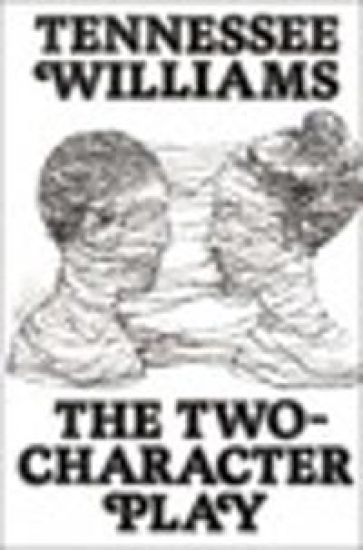
The Two-Character Play

The Two-Character Play

Tennessee Williams

New Directions Publishing Corporation
1982
nidottu
Reality and fantasy are interwoven with terrifying power as two actors on tour—brother and sister—find themselves deserted by the trope in a decrepit "state theatre in an unknown state." Faced (perhaps) by an audience expecting a performance, they enact "The Two-Character Play"—an illusions within an illusion, and "out cry" from isolation, panic and fear. "I think it is my most beautiful play since Streetcar," Tennessee Williams said, "and I've never stopped working on it.... It is a cri de coeur, but then all creative work,all life, in a sense is a cri de coeur." In the course of its evolution, several earlier versions of The Two-Character Play have been produced. The first of them was presented in 1967 in London and Chicago and brought out in 1969 by New Directions in a signed limited edition. The next, staged in 1973 in New York under the title Out Cry, was published by New Directions in 1973 The third version (New York, 1975), again titled The Two-Character Play, is the one Tennessee Williams wished to include in New Directions' The Theatre of Tennessee Williams series. It is this version which is presented in this ND paperback.