Kirjojen hintavertailu – 12 903 724 kirjaa ja 27 kauppaa

Kirjailija

Teodoro Sanchez

Kirjat ja teokset yhdessä paikassa: 3 kirjaa, julkaisuja vuosilta 2005–2011, suosituimpiin kuuluu Electricity Services in Remote Rural Communities. Vertaile teosten hintoja ja tarkista saatavuus suomalaisista kirjakaupoista.

3 kirjaa

Kirjojen julkaisuvuodet: 2005–2011.

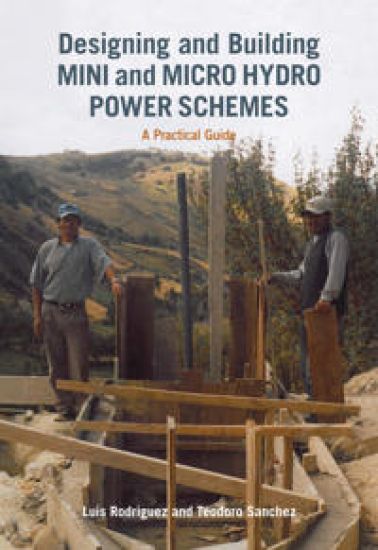
Designing and Building Mini and Micro Hydro Power Schemes

Designing and Building Mini and Micro Hydro Power Schemes

Luis Rodriguez; Teodoro Sanchez

Practical Action Publishing
2011
nidottu
Small hydro power installations have the potential to provide a renewable supply of energy to people in remote, hilly communities, far from the national gird. This book is based on the authors' considerable experience of installing hydroelectric schemes that produce up to 500kW for powering small communities. The book describes not only the electro-mechanical equipment and how it is installed, but also the correct setting of the installation and how to design and build the channels leading up to the turbine so as to optimize performance. These civil works can be carried out by local manpower, using materials that are usually available locally. Chapters cover the main components of small hydroelectric plants from the intake and the headrace channel, via the conveyance channel, to the forebay tank, penstock, turbine, and generator. This practical manual is a major new addition to the resources available for micro-hydro power project and programme managers worldwide and represents excellent value for such a detailed technical reference handbook.
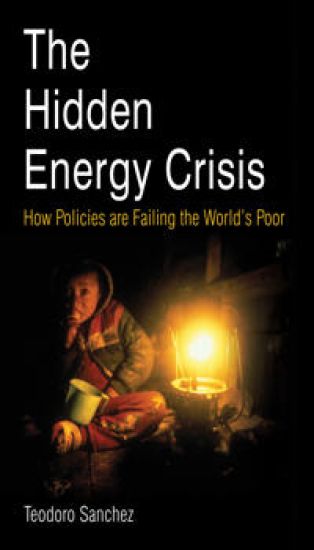
The Hidden Energy Crisis

The Hidden Energy Crisis

Teodoro Sanchez

Practical Action Publishing
2010
nidottu
Over two billion people worldwide are without access to clean, modern energy, which leads to drudgery, ill health and sometimes death. Although a lack of adequate energy affects people's health and well-being, as well as their productive and educational capacities, addressing this deficit is a low priority for governments and donor agencies. The Hidden Energy Crisis outlines why we have failed so far to extend energy access to the world's poor, and suggests operating models that have greater potential to make a difference. It argues that meeting the basic needs of the world's energy poor will not make a significant to global carbon emissions. However, it will take significant effort and finance from international donors, multinational and national governments to scale up successful pilot projects dramatically to make a significant impact on the poor. This book presents a call to action to address the energy crisis. It should be read by policymakers in governments and donor agencies, as well as academics, students and staff of donor agencies.
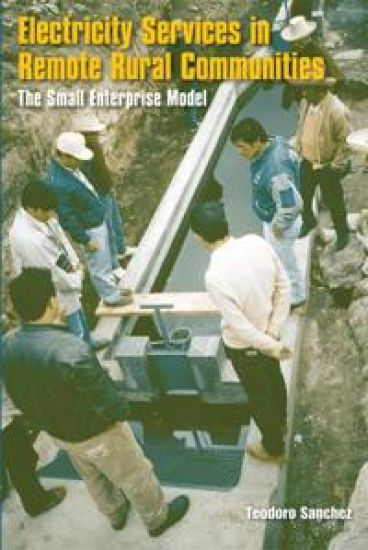
Electricity Services in Remote Rural Communities

Electricity Services in Remote Rural Communities

Teodoro Sanchez

Practical Action Publishing
2005
nidottu
This book describes the design and use of a particular management model for electricity services in isolated rural communities. This model was designed with the clear objective of efficient financial and technical management, taking into account the social and economic environment and the committed participation of the community. The concept of private management is introduced, where a micro-enterprise is responsible for the running of the system and receives payment in exchange for the management of the service. A new tariff model for rural areas (the model of descending blocks) is used. Its application requires four important components: 1)The tariff scheme, the design of which is based on previous studies of socio-economic conditions and the development potential of electricity in the region. 2)The regulation of the use of electric energy, which highlights the responsibilities of the different actors and the activities that need to be performed for the system to function smoothly. 3) Contracts between the owner of the generating system and the service operator.4) Contract between the service operator and the users It is estimated that this model could be used successfully in other energy generating systems (diesel, solar, wind-powered) with small changes, especially to the tariff scheme.